Tuesday, April 14, 2020

BEYOND THE VISIBLE--HILMA AF KLINT could change what we know of abstract-art history


Yours truly follows the art world only cursorily -- very cursorily -- so he had never heard of the eponymous subject of the new documentary, BEYOND THE VISIBLE -- HILMA AF KLINT. It will turn out, I suspect, that many of the folk who follow art more closely than I may not have heard of Ms Klint, either. So this new documentary should go far in terms of introducing viewers to an unusual woman who was a contemporary of Kandinsky and who, some feel, was his superior --  not to mention his forerunner -- regarding abstract art.

The documentary's director, Halina Dyrschka (shown at left), whose first full-length film this is, combines the history of her subject with that of art history, art criticism and the usual talking heads so many documentaries include in order to make their salient points.

The most important of these points would seem to be that Klint (shown below) has been deliberately overlooked by the art establishment, first, because she was female, and second, because she believed in and painted the "spiritual." That she was also involved in various seances -- so popular around the turn of the twentieth century -- didn't much help her reputation, either.

Yet seeing some of this woman's very large and gloriously colored work early on in the film makes a good case for her inclusion, and listening to some of the talking heads remark on the reasons why Klint was not included should raise your hackles properly. The most incisive of these is German Art Critic and Historian, Julia Voss (below), whose follow-the-money explanation at film's finale makes a good deal of sense ("It's all about how much money you can make, and with Hilma, you can't make any!"), while the most charming and resonant voice belongs to German Historian of Science, Ernst Peter Fischer, who cleverly links Klint a little more to science than to spirituality.

In fact, it's this spirituality connection, along with the corresponding work Klint did during this rather lengthy period of her life that seems to me the least interesting and accomplished of her oeuvre. This stuff more often resembles exercises than real art, and unfortunately the filmmaker spends an awfully long time with and on it all.

Part of the reason for this, I suspect, is that Klint was a very private person, so not much of her personal life is (or maybe can be) explored here. Instead we get more of who she knew and what they thought and why all this added up to her exclusion.

While not uninteresting, this finally becomes a bit repetitive, as does the art that goes along with this period. It's less than overwhelming. (So are the repetitive shots of someone we assume to be standing in for Klint, recreating the painting of her large canvases.)

TrustMovies was about to decide that, overall, he wasn't much taken with this Klint-o-mania, but then we get to the point at which a huge array of her work has a showing at last in her home country of Sweden. Now, we begin to see a fuller picture and, yes, we're caught up in the beauty and originality of her paintings all over again.

Now, what we viewed toward the beginning of the film -- comparison of Klint's work with that of Albers, Klee, Twobly and even Warhol -- seems even more telling. As does the unwillingness of the art establishment -- then and now -- to give this artist anywhere near full entry or to recognize her place as a pioneer of abstract art. Thankfully this is changing, and Beyond the Visible: Hilma Af Klint should only add to the change.

From Zeitgeist Films and Kino Lorber, the documentary was to have had its theatrical release last week in New York City, but will now get a virtual theatrical release across the USA digitally beginning this Friday, April 17, via Kino Marquee.  Click here for more information.

Sunday, April 12, 2020

Tyler Cornack's BUTT BOY arrives for Easter Sunday. And, no, it's not a gay porno film.


It is, however, just about everything else you can imagine, should you decide you mash one genre into another into another into another until you've exhausted the field, yourself and perhaps your audience, as well. 

BUTT BOY, the new film directed and co-written (with Ryan Koch) by Tyler Cornack (who also co-stars) is an utterly weird combination of (all deadpan) comedy, workplace/business satire, fantasy, family movie, kidnap thriller, police procedural, and neo-noir featuring kinky-sexual-pleasure. There's no science-fiction, however (even if the publicity material suggests there is), because there's absolutely no science present here, just some bizarre fantasy.

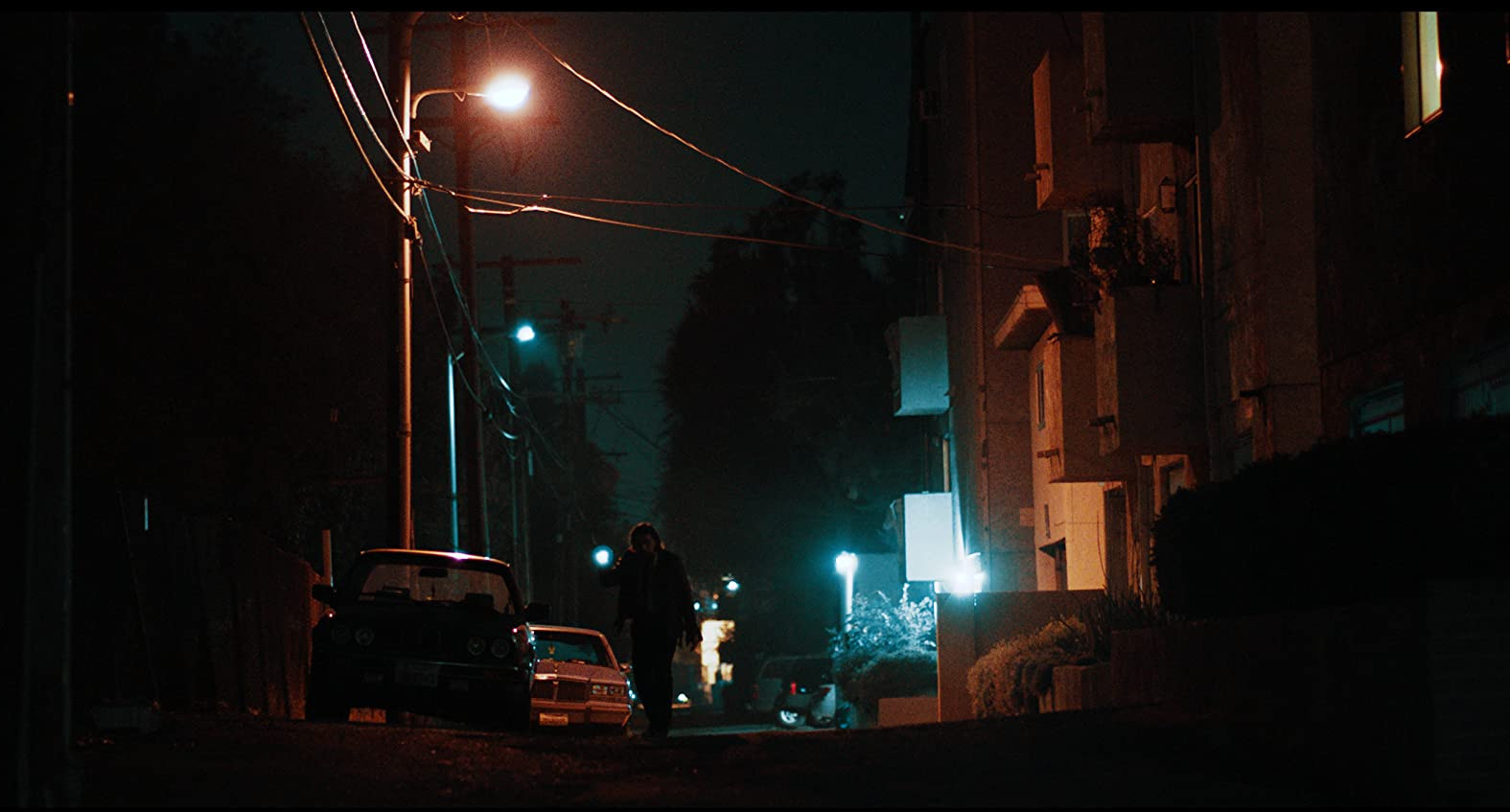
Mr. Cornack, shown at right and in some of the stills below, has created something different, all right, and for a good portion of this 100-minute movie, his initial quiet, suggestive style -- perhaps due to a very low budget not allowing for many special effects, which he saves in any case for his finale -- keeps us guessing and often in thrall.

The story here takes us into the seemingly tired, boring workplace and marital life of a man named Chip (Cornack, below), who, during a routine visit to his urologist/proctologist. experiences something so life-changing that he discovers he is able, and so begins, to suck various items -- these grow larger and larger -- up his butt. When a local child goes missing, things come to a halt and suddenly it's nine years later, when Chip's s addiction re-surfaces.

Oddly enough, the movie Butt Boy most reminds me of is the very recent film, Swallow, in which a newly-married and wealthy housewife begins swallowing small-but-dangerous items until something needs to be done about this.  The style and theme of both films are quite different however, but the premise of a woman who inserts odd objects down her mouth and a man who does this up his butt seems bizarrely similar. (Even one or two of the swallowed/sucked-up objects are rather alike.) 

Swallow is a serious film, while Butt Boy is anything but, and so, for a while, the deadpan comedy -- as a suspicious detective (Tyler Rice, above) tracks our non-hero -- helps keep things afloat. How and why this detective has managed to put together his theory is neither intelligent nor believable (one single clue is all it takes?), but once past this point the movie opts for total fantasy and then, during the final third, the special effects kick in and the film becomes downright silly/crazy.

One must  give Butt Boy, along with Cornack, credit for doing something original, at least, even if his movie goes on for ten to twenty minutes too long. With this kind of thing, less is definitely more. And during the first half of the film, Cornack's elliptical, suggestive style works well with his deadpan humor; then the too-muchness takes over.

Those who prefer "too much" may embrace Butt Boy more easily than did TrustMovies. Either way, this is pretty much a one-off kind of film -- something you might have seen in days of yore from Troma Entertainment, but handled with more taste and subtlety (for awhile, at least.) And the film's final "they are risen!" moment makes it a shoo-in for coverage today, Easter Sunday.

From Epic Pictures and running 100 minutes, the movie makes its debut -- now that theaters seem a thing of the past -- via VOD, digital streaming and Blu-ray disc, beginning this Tuesday, April 14. Click here to learn how you can view.


Saturday, April 11, 2020

DVDebut for Valerio Miele's his/hers fantasy/memory tale, RICORDI?


RICORDI? translates from the Italian to the English question Remember?, which seems a most appropriate title for this 2018 film about memory, desire, fantasy and lost love. Early on, one character proclaims: "Memories lie -- making things that were bad seem good. Otherwise life would be unbearable."

Fair enough. And that seems to be the point (one of  them, anyway) that the writer/director of this film -- Valerio Miele (shown below), whose terrific Ten Winters  was shown at the FSLC's Open Roads festival of new Italian films some years back -- is making here.

From the moment that Miele's two leading characters, known only as He and She, first meet (below), we experience their view/memory of both the setting and the mood of this meeting, and their recall of these two things could hardly be more different.

She sees it all as a happy, lovely, brightly colored meeting, whereas he experiences the whole thing as something darker -- exciting maybe, as he's clearly quite attracted to her -- but as an event more than little tinged with the glum.

And is there any other actor who plays glum better than Luca Marinelli (above, left, and below)? I doubt it. This actor has one of those unusual hangdog handsome/ugly faces over which the camera consistently creams. Marinelli can play tragic (The Solitude of Prime Numbers), comic (Let Yourself Go) and just about everything in between.

His co-star, the lithe and lovely Linda Caridi (below and at right, two photos up), has a happier job of playing, for awhile at least, the more positive, glass-nearly-full member of the duo. He likes and encourages this, if only to balance out his own negativity, and so their relationship blossoms and even appears to grow.

But memory, though encouraged, also intrudes, and we learn that her life has been anything but idyllic, even though she would rather recall it that way, while his, if not nearly as awful as we'd imagine, has had plenty of low points -- mostly due to his own behavior. Late in the film, he observes, "It's not our fault. It started ending when it began." Well, yes, but doesn't everything, including life itself?

Memories, it turns out, are not quite the same thing as character, and finally, that is what's most missing from Ricordi? He and She prove to be a little too generic to pass muster. They're not one-note, exactly. But they are barely more than two: They're up or they're down.

The memories we see here don't finally coalesce into full or interesting human beings. What saves the film, however, are its often gorgeous visuals. The locations are memorable -- from the seaside (above) and an underwater swim (below)

to the sunlit woods (below) and the several fascinatingly appointed apartments, homes and general architecture seen throughout the film. Finally, it's these visuals, rather than the people, that carry us along.

Giovanni Anzaldo, below, does a nice job playing -- depending on whose viewpoint -- the third wheel, best friend or other man in our duo's relationship. Still, as artfully constructed as is Ricordi?, real, fully-rounded people are what's missing from this otherwise interesting, often beautiful, but incomplete movie.

From Distrib Films US and released here via Icarus Home Video, the film hits the street on DVD this coming Tuesday, April 14 -- for purchase and/or (eventually) rental.

Thursday, April 9, 2020

SEEING IS BELIEVING: the latest compilation of short gay films from NQV is exemplary


On the basis of the first two collections I've seen from New Queer Visions -- The Israeli Boys and now SEEING IS BELIEVING -- this new distribution company that began as a film festival in 2014, then after five years morphed into a distribution company now called NQV Media, is bringing together some of the most interesting, versatile and high-quality GLBT short films I've seen.

What's especially noticeable is how different in style, theme and techniques is each of the six films in this newest collection. Yet each pulls you in and holds you both intellectually and emotionally. Not to mention how diverse the interesting locations here are.

The first of these films, ADULT, introduces you to a mother and son in two different time frames, as mom discovers something about her grown son's occupation, even as she remembers him and herself in former times. From Australia, in English and Greek with English subtitles, this eleven minute-movie, directed by Jamieson Pearce, subtle and smart, with not much dialog at all, makes quite a mark in very little time.

Belgium is the location of HELLO, STRANGER, during which a male drag performer with a young son must decide if the boy can see again his mother, who had abandoned the pair earlier and is now suddenly back in the picture. As directed by Anthony Schatteman with color and pizzazz, this 20-minute movie genuinely earns its smiles, emotion and surprises via fine performances and solid writing/direction.

All the shorts here are lovely, but my favorite and something I'd have to recommend to just about everyone -- gay, straight or otherwise -- is the third of of the six: LITTLE POTATO.  Directed by Wes Hurley and Nathan M. Miller, this is a kind of family-history faux documentary, based on life, in which a young man and his mother explain their lives, first in Russia and then in America. Their story is a keeper indeed (I can easily see a full-length narrative film arising out of this 14-minute short) and so full of surprise, delight and out-and-out patriotism -- as well as being just about perfectly filmed and told -- that it makes this entire project a must-see.

Mexico is the setting for JUAN GABRIEL IS DEAD, in Spanish and mostly black-and-white cinematography (which suddenly turn to color during a finale in which this change seems to reflect a change in our main characters' perceptions, as well), a first-love story told with a great deal of charm and vitality. Filmmaker Tavo Ruiz draws lovely performances from his two leads, both of whom are attractive and attuned to the subtleties of male bonding and sexual attraction. This may be the most playful and simultaneously artistic of the six films.

The Tunisian closet and its uses are in full bloom in LE CONVIVE, an Arabic language, 20-minute movie in which one of our three leading character's sexuality seems to be very nearly an open secret -- though what the secret actually is turns out to be a good deal more interesting that we've imagined. Taking place the weekend of a huge wedding to which family and, it seems, an entire town has been invited, filmmaker Hakim Mastour builds suspense handily, even as character -- of the bride, groom, and his "best man" -- is revealed. This one's entertaining, colorful and nicely subversive.

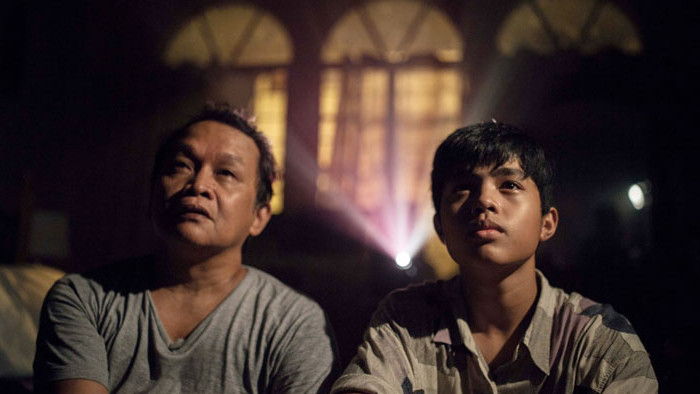
The final film, CONTESTANT #4 from the Philippines via Jared Joven and Kaj Palanca, is definitely the quietest of the six movies included here, and it is also perhaps the sweetest and most subtle. Little happens except the further bonding of two males: a much older man and a younger one, barely even of age as yet, for whom the older is clearly a kind of mentor and much-needed friend. Archival film plays a large part in this graceful, generous 19-minute movie, as does dance and the Asian tendency toward restraint, all of which makes for a first-rate close to this six-part endeavor.

From NQV Media and running a total of 95 minutes, Seeing Is Believing was released digitally this past Monday, April 6, and is available worldwide now via Amazon and Vimeo (this second link will be arriving soon).

Tuesday, April 7, 2020

Blu-ray debut for ICE COLD IN ALEX -- J. Lee Thompson's World War II desert road trip -- part of Film Movement's new five-disc set, THEIR FINEST HOUR


Forget having ever seen ICE COLD IN ALEX, I had never even heard of the movie prior to receiving news of Film Movement's new five-film/five-disc series entitled Their Finest Hour, devoted to classic World War II films. (Also included in the set are the unusual and quietly spectacular Went the Day Well?, German prison-escape thriller The Colditz Story, deservedly heralded The Dam Busters and the original 1958 version of Dunkirk.)

All these are worth seeing (probably more than once), but Ice Cold in Alex, TrustMovies feels, proves a splendid discovery for those of us viewing it for the first time, and very likely a rediscovery for anyone who saw it long ago.

Made in 1958, it is also one more reason to re-assess the career of journeyman filmmaker J. Lee Thompson (shown at left) -- not only for his well-known and popular movies such as Guns of Navarone and Cape Fear, but for his even better, lesser-known work like Yield to the Night and this first-rate genre-jumping film.

Ice Cold in Alex derives its title from the delicious cold beer one of its main characters hopes to have a glass full of, once he and his party reach Alexandria, Egypt -- if the place has not been already conquered by the German army by the time the rickety ambulance, by which the party is crossing the desert, arrives there.

En route from the military base at which the film begins, this quartet of characters faces all sorts of hazards -- from a minefield to pursuing German troops, a collapsing axle to, yes, desert quicksand -- all of which makes the movie off and on extremely suspenseful, in addition to its much-better-than-average ability to create complex, full-bodied, emotionally resonant characters who consistently engage and surprise us.

Those characters are played by (left to right, above) John Mills, Anthony Quayle, Harry Andrews and Sylvia Syms, and each could hardly be bettered -- either in choice of casting (Ms Thompson was a master at this) or via the performance each actor gives.

Mr. Mills, in particular seems cast against type (not to mention his platinum blond locks!) as an angry, alcoholic, often petulant fellow who still manages to almost rise to most occasions, while Ms Syms -- so gorgeous in her younger years -- helps transform a role that could have been played in fairly standard fashion into something rather feminist, considering its time frame. (Be sure to watch the terrific interview with the actress today, as she recalls, wittily and with great pleasure, what it was like to be a part of this movie.)

The crack supporting actor Harry Andrews (above, left) gives another of his subtly memorable performances as the fellow who provides the most help whenever needed, while Anthony Quayle (below, center left) essays the film's most interesting personality: a South African of beefy body, questionable character (and maybe suspect nationality) who consistently surprises us -- not to mention his effect on the other characters.

The screenplay by T. J. Morrison and Christopher Landon (based on the novel by Landon, which in turn is said to have been based on a real incident that happened during the African campaign) is replete with smart pacing, crisp dialog and plenty of "incident." The movie movie never lags, despite its 130-minute length.

Even though Ice Cold in Alex was made a bit more than a decade after WWII, its attitude toward the Germans is surprisingly benign -- which, as we learn via some of the Bonus Features on the disc, didn't prevent the film from becoming a huge hit both in its home country and internationally.

And the finale -- funny, witty, suspenseful, moving and surprising -- could hardly be better. This is a wonderful war film, even without any battle scenes, as well as a fine road movie, character study, suspense thriller and more. And given our current age of everything black and white, good and evil, truth and lies, it's a salutary reminder of a time when we were still able to modulate and see those necessary shades of gray.

From Film Movement in a sparkling new Blu-ray transfer, Ice Cold in Alex is available now as part of the five-disc set, Their Finest Hour, for purchase and (I hope soon for rental, too). My single caveat regarding this transfer -- and this entire new set of discs -- is that there are no SDH English subtitles to be found. Shameful!

Sunday, April 5, 2020

Digital streaming debut for the pet-lovers' movie of the year: Cindy Meehl's THE DOG DOC


It took but ten minutes into the new opened-theatrically-but-then-the-theaters-all-closed-so-now-it's-streaming-digitally documentary, THE DOG DOC, before my tears began flowing. If you, too, are a sucker for needy animals and the people who help them, this is certainly the movie for you.

For many of us, that would be enough, but this particular film, produced and directed by Cindy Meehl (shown at right), offers a lot more, TrustMovies believes, because it and the main physician in it, the veterinarian Dr. Martin Goldstein, practices a form of integrative medicine that the farther you get into this documentary the more you may question why we humans are not being treated in this manner by our own current medical establishment.

Dr. Goldstein (below, with patient) has been practicing for some 45 years now, and from what we see of him, his staff and the satisfied owners of his clients, he has been pretty damned successful. Less successful has been his attempts to bring his form of Integrative veterinary medicine -- which "combines conventional therapies with complementary and alternative medicine for a comprehensive collaboration of diagnosis and treatment" -- into greater usage throughout the veterinary establishment.

His results with patients -- granted they're anecdotal and piecemeal -- remain awfully impressive. Dr. Marty, as he is known, invites naysayers to come into his establishment and watch what goes on. When one of these professionals does just that -- we hear about this from the formerly disbelieving doctor himself, after the fact -- he literally faints dead away. Not out of horror but from pure amazement.

Ms Meehl knows how to make a smart, appealing movie. From the outset, as she introduces our hero and shows us the patients he treats, the documentary amuses and informs. One of the doc's first patients we meet is Waffles, a short-haired white dog near death from a rabies shot that probably oughtn't have been administered. Goldstein is definitely not anti-vaccine, but only healthy dogs ought to be vaccinated, he insists ("It says this right on the label of the medicine!"). Otherwise, you are further compromising an already compromised immune system.

We return to Waffles (above) and his recovery and further slippage a number of times throughout the film, which is salutary, since this dog's case brings up so many germane issues -- from vaccinations and treatments to how long to keep an animal alive despite its sickness, together with how the dollar cost of treatment impacts on the whole scenario.

Two other dogs, given up on by conventional methods, are brought to Goldstein with cancer of the jaw. How these play out are quite different but, again, both are handled intelligently and with great care by doctor and pet owners, while giving us a most interesting look into cryosurgery.

Along the way, we learn about Goldstein's history and his current family life, all of which adds to our enjoyment and understanding. At the inspiring finale, we're with the good doctor as he addresses a class of veterinary medicine students at his alma mater, Cornell University. Over the end credits we're treated to a great old Cat Stevens song that, if you've never heard it, will put a smile on your face. If you already know it, what a delight to hear it again!

From FilmRise and running 101 minutes, The Dog Doc is available now to stream digitally via Amazon and/or iTunes.