"Golden"? How ironic, almost anti-nostalgic, considering that the days shown here -- the whole life, really -- are pretty damned fraught. The films of
Arnaud Desplechin, who just recently won a
César award as Best Director for this movie, just keep getting better. On-the-job training is certainly paying off for this guy, who in recent years has given us the likes of
A Christmas Tale and
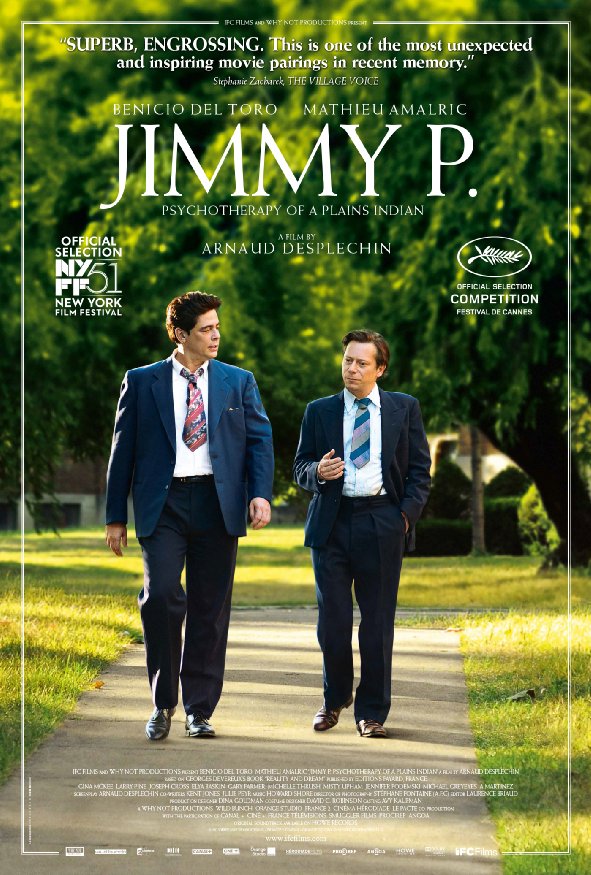
Jimmy P. With
MY GOLDEN DAYS (
Trois souvenirs de ma jeunesse), opening today in New York and Los Angeles, Desplechin has created in some ways his best film yet, the one that is likely to be the most appreciated by American mainstream/arthouse audiences.
M. Desplechin, pictured at left, begins with his hero as an adult (played by the always terrific
Mathieu Amalric, below), who has a little passport trouble, as is often the case in these post 9-11 times, and while speaking with the authorities (in the person of the great
André Dussollier), relives some of those golden days for our delectation. And while the movie may be a kind of memory piece, the style in which Deplechin has chosen to film it is every bit his own.
The young actor selected to portray the adolescent and young adult version of Amalric -- newcomer
Quentin Dolmaire, below -- is so exquisitely beautiful (he possess one of those faces on which the camera simply dotes: think the young
Alain Delon) that you may have trouble imagining that he could turn into the older Amalric. But his beauty is such that I doubt you'd want to replace him. Dolmaire proves up to the role, acting-wise, as well. He brings a quietly thoughtful, almost deliberately philosophically transgressive presence to these proceedings which helps carry the film along.
Divided into not particularly necessary "episodes" -- Childhood, Russia, Esther, Epilog -- the movie tracks our hero, Paul Dédalus, and his longtime, long-germinating affair with another oddball, but more obviously transgressive character, Esther (played by first-timer,
Lou Roy-Lecollinet, below). How these two meet, spar and slowly join forces makes for quite an original look at "first love."
The first half of the film moves pretty much like a house afire, what with a school trip to Russia, during which Paul and a friend take a sidetrip into helping some Russian Jews illegally emigrate to Israel. Later our hero gets a nasty beat-down (below) by a jealous would-be boyfriend. (Desplechin also offers up some of the kind of split-screen moviemaking that will take us oldsters back to the 1960s.)
The movie. being both French and well-done, is philosophical without even trying, and when at last the lovemaking begins, it is gentle and exploratory, which seems exactly right, given Paul's history and situation at this point in those "golden days." Our boy will confront death, loss and, most important, living -- and at one point along the way, you'll realize with shock that, OMG, for his mate he has chosen someone far too like his mother. Oh, right: We all do that....
The film also includes a lovely, direct and no-nonsense fantasy sequence that further shows off Desplechin's growing skills, and if the movie's pace lessens noticeably during its second half and the on-again/off-again romance grows just a tad tiresome, things pick up toward the end. (That's the very fine actor,
Olivier Rabourdin -- of
Eastern Boys -- above, left, as Paul's dad, with
Lily Taieb, as his sister, Delphine.)
The finale brings us back to Amalric, and it may briefly put you in mind of
Paolo Sorrentino's recent
Youth, in that it involves young men's sexual jealousy still potent in later years and even includes a bit of operatic song. Not to worry: It will also be quite clear how very different these French are from those Italians.
Distributed by
Magnolia Pictures and running 124 minutes,
My Golden Days opens today at
The Landmark in West Los Angeles and in New York City at the
Film Society of Lincoln Center and the
IFC Center. Click
here to see all currently scheduled playdates, with dates, cities and theaters shown.