Showing posts with label Fatih Akin. Show all posts

Monday, December 25, 2017

Fatih Akin's revenge/morality tale, IN THE FADE, gives Diane Kruger a terrific role....


...which she tackles and wrests quite sadly and quietly to the ground. Ms Kruger is one of those actresses -- Farewell My Queen, The Bridge (American version), Disorder -- whose delicate beauty can easily mask her talent, or at least sometimes overwhelm the viewer's ability to concentrate on the latter. In her latest (Cannes-winning Best Actress) role of Katja, the wife and mother, who, near the beginning of IN THE FADE, suffers an unimaginable loss, that beauty is tamped down some, while the talent remains strong.

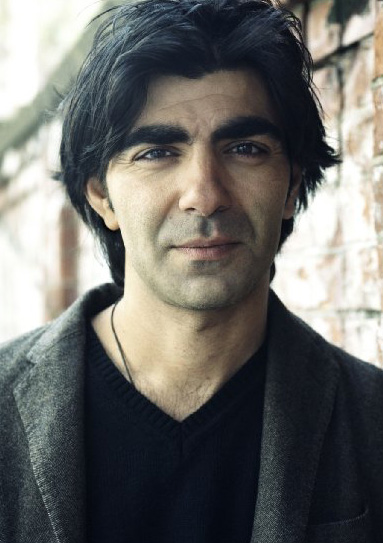
The co-writer (with Hark Bohm) and director of the film is Fatih Akin (shown below), the well-known and well-regarded German filmmaker born (in 1973) of Turkish parents, whose previous films, as well as this one, tend to deal with "outsiders," along with society's reaction to them.

Whether these films are drama (Head-On), comedy (Soul Kitchen) or tinged with mystery/thriller elements (The Edge of Heaven and this latest addition), the movies always seem to bulge out of their genre: the comedy grows dark, the drama gets crazy, and now, with In the Fade, what at first looks like a thriller complete with aspects of terrorism and revenge, grows into something more. As usual, it's the "more" that makes Herr Akin such an interesting but also somewhat elusive and less conventionally satisfying filmmaker. I am not certain that he will ever manage a typically mainstream movie (nor, I suspect, would he want to), but this is why TrustMovies will never miss a film of his if I can help it.

As usual, the less you know about the movie, plot-wise, the better in terms of your enjoyment and surprise. Ms Kruger (above, left, and below, right) plays a character who fell in love with her drug dealer (Numan Acar, above, right) when still a very young woman, waited for him to finish his relatively small prison term, married him, conceived a child (below) and is in the process of the (relatively) happy-ever-after section of life -- when all this is suddenly interrupted.

The event leads to a police investigation, during which Katja's history comes back to haunt, a trial (below and further below) involving home-grown terrorists (some of the details of which will set your teeth on edge), and then a judgement that results in vengeance, along with quite a bit more.

Mr. Akin is concerned with themes of immigration (of which he himself is a product), and a Germany in which neo-Nazis, who have been alive and consistently kicking since just post-World War II, are gaining strength and seem even stronger in today's world, where alternative "facts" via the internet seem ever more available and aggressive.

Akin's movie moves from the simpler questions of why and then how to the more complicated ones of now what? and is this justice? and then to the queasy convolutions that right and wrong can sometimes take. Along the way, there is plenty of suspense and even a few thrills, and if the filmmaker were merely making a revenge tale, we would probably have had a much more conventional and obviously enjoyable, if simplistic time.

Instead, we're put into the mind and soul of Katja, her grief and her anger, and Ms Kruger sees to it that we respond to this darkness, finally asking ourselves, Might be do something similar -- if we had the guts and commitment? The journey, let alone the destination, is not an easy one, but it is certainly worthwhile. Just don't expect the simple-mindedness of a Charles Bronson or Clint Eastwood movie. In the Fade may be neither blockbuster entertainment nor great art, but it is good film-making -- with a mind, heart and morality all its own.

From Magnolia Pictures and running 106 minutes, the movie opens this Wednesday, December 27, in New York City (at the IFC Center and the new Landmark 57th Street) and Los Angeles (at Laemmle's Royal) before making its way around the rest of the country in limited release over the weeks to come. It hits South Florida on January 26 at Fort Lauderdale's Savor Cinema, Hollywood's Cinema Paradiso, and Miami's Tower Theater. Click here to see all currently scheduled playdates, cities and theaters. 

Thursday, September 17, 2015

A vast-canvas road trip of genocide and longing: Fatih Akin's surprising saga, THE CUT


As much as I have welcomed the disparate work of German-born, Turkish-descended filmmaker Fatih Akin, whose creative, energetic and moving films have run the gamut from In July and Soul Kitchen to Head On and The Edge of Heaven, I would never have pegged him to tackle such a vast-canvas, very nearly epic family saga of genocide and search like his new film, THE CUT. Yet Herr Akin has come through with a movie that's rich, colorful and relatively "epic," yet small enough to be intimate, as needed.

The filmmaker, shown at right, who directed and co-wrote (with Mardik Martin) is here addressing the Armenian genocide which has its 100th anniversary this year and remains unacknowledged still by the Turkish nation. (Where would justice lie had the Germans refused to acknowledge their somewhat later Holocaust? I suppose if Turkey had been bent on world domination -- and stopped from that goal -- responsibility would have had to be accepted by now. I find it interesting that Akin comes from both these cultures, and that his films, among other surface things, are always about bringing together supposedly opposites, outsiders and insiders, while finding a place for "the other."

I would guess that The Cut is his biggest-budget effort thus far. An international co-production involving France, Germany, Italy, Russia, Poland, Canada and (yes), Turkey, and filmed in five countries (Jordan, Germany, Malta, Cuba and Canada), the movie looks terrific and seems utterly place-specific.

Its star is the French actor of Algerian descent, Tahar Rahim (above, of A ProphetFree Men, Day of the Falcon and The Past), whose ability to make much using little is in rare form here. The film's title refers to a particularly nasty and life-threatening wound, given early on in the movie that deprives our hero, Nazaret, of his voice. M. Rahim makes the most of his facial expressions, hand movements and body language to communicate throughout.

Initially, The Cut is about our hero's ability to simply stay alive in the face of the genocide around him. Once some kind of freedom presents itself, reuniting with his family take precedence and leads to the road-trip/search that makes up the remainder of the movie. Along the route, Nazaret encounters a wealth of varied characters, helpful or harmful, and these people help make the movie a more interesting one (they also help pass the pretty lengthy two-hour-and-nineteen-minute running time). Good and bad characteristics are doled out with enough (but not too obvious) equanimity -- amongst Muslims and Christians, men and women, along with the differing countries -- that few hackles will be raised. In a particularly sweet/sour irony, the man who gives Nazaret his wound is also the one who saves his life.

Among the most memorable, if terrible, of this movie's scenes takes place, post genocide, in a kind of camp in which women and children have been left dead or to die, in which Nazaret encounters his sister-in-law. The "look" of this scene, with its dreck-tinged colors and design, is something that may stick with me forever. I don't recall seeing anything quite like it previously. (The production design comes via Allan Starski.)

Movies like The Cut depend somewhat on an audience's good will and its need for that feeling of satisfaction and closure that "search" films demand. Akin delivers this at the same time as he offers up its cost, with a finale is moving but reticent. Overall, this is a fine addition to the filmmaker's oeuvre, as well as to the continuing history of bringing to light (and keeping it there) the Armenian genocide.

The Cut -- from Strand Releasing -- opens tomorrow, Friday, September 18, in New York City at the Lincoln Plaza Cinema and Landmark Sunshine Cinema, as well as in the Los Angeles area at Laemmle's Playhouse 7 and Royal theaters.

Wednesday, August 18, 2010

SOUL KITCHEN, from Fatih Akin & Adam Bousdoukos, proves anarchic, feel-good fun -- plus a very short Q&A with filmmaker

Anarchy runs rampant throughout SOUL KITCHEN, the new film from German/
Turkish writer/director Fatih Akin, but fortunately, since this is Mr. Akins's first comedy in a long while (rent In July, if you want another example of the filmmaker in a lighter mood), the anarchy is somehow productive and fun. Akin’s lead character Zinos (played by Adam Bousdoukos) is the young owner of (and cook at) a restaurant called, yes, Soul Kitchen, that serves up greasy-but-faithful grub to an equally faithful clientele. He’s got a gorgeous girlfriend, Nadine (Pheline Roggan: the blond in the poster, above), who’s about to leave for China on business, with whom he fights and then fucks as though each time were the first and most fabulous (Nadine’s response to one of these sessions is particularly funny).  Also in tow are a faithful barmaid, who, on the strength of the rich performance by Anna Bederke (shown three photos down), turns a subsidiary character into someone absolutely central, and a brother Illias (the great Moritz Bleibtreu) halfway out of prison (he returns there each night) and still addicted to gambling.

In the midst of all this, a new chef enters Zinos’ life, changing Soul Kitchen’s menu from greasy to gourmet, and what had seemed previously simply crazy now goes into overdrive. Mr. Akin (shown in action at right) has never been a subtle filmmaker: Energy and event are vital in all of his work, whether dramatic or humorous. Yet he manages to rein in his lesser impulses, while allowing the life force to explode, sometime disastrously for certain characters (in his dramas), sometimes with glee and a wild delight, as here. He drags his leading man through all kinds of horror -- from a back out-of-whack to major tax problems to a beating at the hands of thugs -- and still keeps us enjoying the pain.

This is due in large part of the performance of his leading man, Adam Bousdoukos (shown above), who also co-wrote the script (which is said to be based a good deal upon his own life: He was a Hamburg restaurant owner for nearly a decade). Zinos/Adam is a genuine force of nature. So full of energy, sexuality and (most important) the kind of active/positive personality that barrels through life, he’s simply unstoppable. To find a similar performance on this side of the Atlantic, you’d have to look to some of America’s great female performers -- Bette Midler or Renée Zellweger, to name a couple. This is not to say that Bousdoukos comes off in any sense as feminine. Nah: he’s a guy all the way. We don’t seem to have male actors with this much crazy flair for life, love and work. Our crazy guys – Christopher Walken and the late Dennis Hopper, for instance -- are/were a little too scary to be crazy-guy role models. Zinos is not, and Mr. Bousdoukos is in a class by himself.

As we follow Zinos and his crew, friends and enemies on their journey, events range from far-out and funny to quite over-the-top. Fortunately Akin pulls back from that brink and allows us to mostly enjoy the nuttiness. I can’t remember another movie (not even The Answer Man) that gets so many laughs out of a bad back, with Bousdoukos expertly mining the comedy and pain. Bleibtreu makes a wonderfully charming scamp brother; despite his dreadful misdeeds, you love him. Also in the cast are Birol Ünel (real-and-then-some as the temperamental new chef; Dorka Gryllus (from Irina Palm), shown below, as a helpful masseuse/chiropractor; Wotan Wilke Möhring as an old "friend" of Zinos; and everyone’s favorite German creep Udo Kier, as an over-eager investor.

Fortunately, the movie runs only 99 minutes; even then it some-
times threatens “too-muchness.” But that spirit of positive anarchy always, if barely, wins out. By the finale, you’ll feel good, all right, but you’ll also have been put through the mill. Soul Kitchen opens Friday, Aug. 20, at the IFC Center and the Lincoln Plaza Cinema.

**********

At the press screening/party for Soul Kitchen held two weeks ago at Manhattan’s Crosby Street Hotel (what a terrific screening room that place has!), Filmmaker Fatih Akin (shown below) welcomed guests, chatting them up in friendly, easy fashion, one by one. We managed to get him outside the door of the noisy party room for a quick chat, during which we asked why a guy as good looking as he does not work in front of the camera more often (you can see him playing a border guard in In July). “The actor who was supposed to play the role didn’t show up,” he explained, “so I had to step in. But no, I really prefer to be on the other side of the camera!”

We also asked about how Fatih had managed to corral such a great cast, with everyone so right for each role? “You get to know people, and you work with them, and you understand how and where they will best fit.” We also asked how he managed to get an actor as big and important as Bleibtreu, shown below, one of Germany’s most famous. “Moritz is an old friend:  We go way back. I also worked with him on In July and on Solino, and he was just as famous in Germany back then. But now, I think, he is more famous internationally. But he’s been big in Germany for many years.” (TrustMovies had forgotten that the actor was even present In July; it’s been over a decade since he's seen that film, and at the time he didn’t know who Bleib-
treu -- who’s done terrific work in everything from The Experiment to The Walker to The Baader Meinhoff Complex -- was.)

We didn’t want to take up too much of the director’s time, as many more folk were awaiting their chance to chat. So we thanked him for his very enjoyable film and will hope to see his next one soon.