Showing posts with label France. Show all posts

Wednesday, November 25, 2020

France, surrogacy and a pair of gay would-be parents in Jonathon Narducci's lovely doc, GHOSTS OF THE RÉPUBLIQUE

Who knew? But I supposed we ought to have been able to figure it out: France, that storied land of liberté, égalité, fraternité proves not quite that if you're gay. And god help you if you want to be a parent and perhaps use a surrogate. Initially, the title of the new film, GHOSTS OF THE RÉPUBLIQUE, sounded to me like some French political documentary, and it turns out to be exactly that. But hardly in the manner I had imagined. 

Surrogacy is illegal in France, and the film's title actually refers to the offspring of a surrogate mother, who, when that child is brought back to France by his French parents, is refused French citizenship. France is still, it would seem, far too Catholic a country. And God, as we all know, absolutely condemns surrogacy. Oy.

The movie's very able director, Jonathon Narducci (shown at right) is not making a case for the wonders of (or how wonderful is) surrogacy. In fact, he includes a hefty section of the film in which a woman fighting against this practice explains the various reasons why she feels it is not healthy. 


Adoption by gay or lesbian parents
, though not illegal in France, has certainly not been made easy, and what happens when a gay couple would like one member's sperm to be involved in the birth? So, yes, surrogacy. And that's the journey -- from France to Las Vegas and back again several times -- on which Mr. Narducci and his several heroes and heroines take us.


TrustMovies
cannot imagine any better subjects than the gay couple -- Nicolas and Aurelien (shown above and below) -- together with their quite lovely egg donor (Diana, above, right) and surrogate (Crystal, below, right). One of the things we learn from the film is why it is less problematic to have the egg donor and surrogate as separate women. When so many things, from the state itself to the rigors and risks involved in pregnancy (let alone surrogacy), seem to conspire against the best outcome, the road ahead is pretty fraught.


Since every last publicity photo available (include even the poster image) doubles as a spoiler, I must apologize in advance. Still, the journey is a fascinating and very moving one. These are people you'll come to know and love every bit as much as you would in any lengthy narrative movie. 

As a bisexual man who was lucky enough have had a child with his first wife, and who grew up in a time when the very idea of gay marriage seemed utterly impossible -- prison and/or shock treatments were the "remedies" for homosexuality in my coming-of-age era -- I would have found the idea of gay marriage, let alone parenting and surrogacy, ridiculously far-fetched. 

Yet Ghosts of the République makes it all seem not simply real but pretty damned wonderful. It would be salutary to learn, in a few years' time, how all of the parties involved feel then about the whole process. In the meantime, we, as they, can exult in the glories of the here and now. The world, including France, has a long way to go toward real liberté, égalité and fraternité. But it is worth acknowledging that we seem to have come quite a distance already.


From Gravitas Ventures and running just 81 minutes, the documentary arrived on VOD and streaming venues last week and is available for purchase and/or rental nearly everywhere now. Click here and scroll down to see many of the current venues. (This documentary, by the way is both narrated and executive-produced by gay activist and writer Dan Savage.)

Sunday, August 18, 2019

DVD/VOD debut for Pamela B. Green's BE NATURAL: The Untold Story of Alice Guy-Blaché


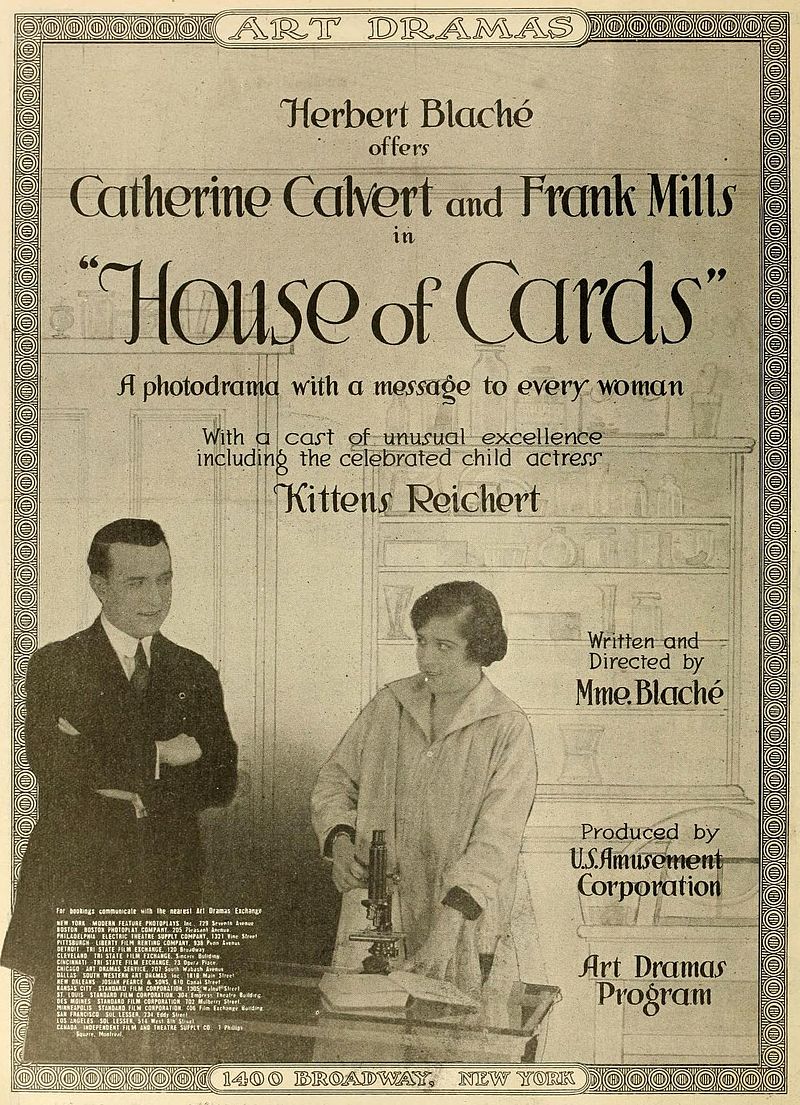
Among the best documentaries of the current year, and certainly among the best ever about the art and history of cinema, BE NATURAL: The Untold Story of Alice Guy-Blaché grabs you by the mind and heart from its first few frames and simply never lets you go for its following 103 minutes.

The obvious source of this huge pull would be the documentary's subject, cinema's early French woman writer/director/ producer/manager/and-much-else-too, Alice Guy-Blaché. Yet equal (or very near) credit must also go to the filmmaker of this doc, director, co-writer (with Joan Simon) and editor of the movie, Pamela B. Green, shown at right. And as fine as Ms Green proves as writer and director, it is as editor that she shines brightest. I don't know that I have ever seen a documentary packed with this much information -- visual and verbal -- that consistently moves like a house afire, during which you can't look away or take an extra-lengthy breath for fear of missing something wonderful.

From this film's first moments, as we see and hear the near-90-year-old Ms Guy-Blaché (that's Alice, shown at left, earlier in her career) speaking so beautifully and looking so alert and lovely -- and then suddenly we cut to a gorgeously animated version of the Hollywood sign and the storied city itself, along with the many movie studios, hit films and memorable characters given us down the decades -- this is rapturous, amazing filmmaking. And damned if it doesn't continue, pretty much intact and just as compelling and fascinating, for the remainder of this doc's duration.

Sure, there are a few repetitive moments and toward the end a little too much hagiographic obeisance. But by then, so enamored are you likely to be of both Alice and her oeuvre (scenes from which are shown above and below), you won't give a good god-damn.

Along the way we meet more filmmakers and industry greats -- from Gillian Armstrong and Julie Taymor to Oscar-winning film editor Walter Murch and historian/documentarian/filmmaker Kevin Brownlow -- than you can shake a stick at (I counted 84 but could be off a bit), yet all this goes by in such a flash, with just enough time alloted to each that we take in what has been said and move quickly on the next moment. This is brilliant editing, and TrustMovies should think that documentary filmmakers may take a lesson from Ms Green and maybe speed things up from now on.
Audiences and critics clearly can handle this zesty, speedboat style, so why not? (On Rotten Tomatoes, the film has a critical rating of 95 per cent -- and an audience score of 98!)

Interspersed with all these talking heads are snippets of the many (more than 1,000!) films directed by Guy-Blaché, and they look quite worth seeking out and viewing. This woman's story -- of youth, early career, family, and filmmaking-against-the-odds -- is a fascinating one, and though it is staunchly feminist, the filmmaker does not beat this idea into the ground.

The feminism is there, all right (the doc is narrated by Jodie Foster), and Guy-Blaché's gender certainly accounts for why, until fairly recently, she was not nearly as well-known as she ought to have been.

Yet filmmaker Green puts the woman and her work first, above everything else, and the result is a major and marvelous documentary that should stick with you for years to come -- and perhaps send you in search of that work itself.

The movie, by necessity, is also something of a detective story via the manner in which Green must find, investigate, then put together the various puzzle pieces she needs in order to assemble the Guy-Blaché saga. This, too, she makes fast, frisky, fascinating -- and eminently followable.

From Kino-Lorber and released theatrically by Zeitgeist Films,
BE NATURAL: The Untold Story of Alice Guy-Blaché, is available now on VOD and will hit the street this coming Tuesday, August 20 on DVD -- for purchase and/or rental. One way or another, do view it!

"Be Natural," by the way, was Guy-Blaché's directive to her actors -- and was posted on a huge sign that hung atop the movie studio, Solax, that she started in Fort Lee, New Jersey, and which became the largest pre-Hollywood studio in the entire USA.

Wednesday, August 15, 2018

World War II France, the Holocaust, and Marguerite Duras combine in Emmanuel Finkiel's exceptional MEMOIR OF WAR


Marguerite Duras was certainly among France's most fascinating modern writers -- in terms of both her work and her life, the latter of which spanned 1914-1996. She was a prolific writer, with many of her works brought to the screen, and she was also a filmmaker of some note and even an occasional actress. Of everything TrustMovies has seen by her and about her, however, perhaps the strongest so far is the new film MEMOIR OF WAR by French filmmaker Emmanuel Finkiel, which, in its original French title, La douleur, translates simply as "the pain."

M. Finkiel (shown at right) has made a small but resonant work of art that manages to simultaneously capture a slice of World War II France under Nazi control; a very good sense of the kind of impressionistic writing at which Ms Duras sometimes excelled, as well as something of her difficult but decidedly bracing character; and most especially, I think, a clear-eyed look at the pain caused by the Holocaust -- by focusing not on the victims themselves but rather on those family members and friends who hoped against hope that their husbands/wives/ children/friends/lovers had somehow survived.

Though the star of this film is Mélanie Thierry (above), who is giving here the performance of her career (so far), for me and from this point onward, the face of The Holocaust will probably be that of the incredible actress, Shulamnit Adar, shown below, who has a major supporting role as the Jewish mother who awaits news of her handicapped daughter taken from her early in the Nazi's despicable war on humanity.

Ms Adar has a face that seems to register multiple feelings at once, each of them strong and true. What she goes through here and how she does it should imprint on your memory indelibly. The plot, such as it is, goes back and forth in time and involves Duras' husband (her married name was Antelme), his disappearance, her affair with his best friend Dionys (Benjamin Biolay, below),

and her having to chat up (and perhaps do a lot more than that) a French collaborator (Benoît Magimel, below) who may or may not be able to offer help to her imprisoned husband. The tale, as such, might not seem like much. But the manner in which the filmmaker chooses to tell is very much in keeping with the Duras style: impressionistic, elliptical, full of hesitation and the kind of self-condemnation that can easily double as self-exoneration.

Finkiel, who adapted Duras' autobiographical novel as well as directed, makes such excellent choices in terms of how much to show and how much to leave unseen, and he draws terrific performances from his cast, especially from Ms Thierry, who, as good as she has been elsewhere, has never had a role this encompassing and demanding.

How Finkiel weaves all this together so artfully yet provocatively is pretty close to brilliant. Memoir of War takes its place in the front rank of films about WWII France, the Holocaust, and a woman's sacrifices and needs.

From Music Box Films and running 127 minutes, the movie opens this Friday, August 17, in New York at Film Forum and The Film Society of Lincoln Center, and the following Friday, August 24, in Los Angeles at Laemmle's Royal, Playhouse 7 and Town Center theaters and elsewhere, including here in South Florida at the Coral Gables Art Cinema in Miami. Over the weeks and months to come, it will play all around the country. Click here, then click on THEATERS on the task bar halfway down the screen to view all currently scheduled playdates, cities and theaters. 

Monday, August 21, 2017

In Valérie Müller and Angelin Preljocaj's POLINA, a young dancer must find her identity


Art, creativity, dance, choreography, and finally finding oneself: all of these themes shimmer and glow, wax and wane in the course of the new and unusual movie, POLINA. A French film with Russian roots, it is co-directed by Valérie Müller and her husband, French choreographer Angelin Preljocaj. This pairing of filmmaker and choreographer results in one of the better examples of a movie that tackles art and creativity and actually allows its audience to discover in a believable and dramatic fashion exactly how these things come into being.

There is still a mystery at the movie's core. There must be where creativity is concerned. But the filmmakers (shown above, with Mr. Preljocaj on the right) manage to get so much right -- from a youth spent in the service of one's parents' desires for their children's future to the awakening of a classical ballet dancer to the surprise and joy to be found in modern dance -- that Polina, both the character and her film, seems by virtue of how she blooms and evolves, to be quite an original creation.

As played by two actresses (Veronika Zhovnytska, above, center, is the young schoolgirl, while Anastasia Shevtsova, below, with Niels Schneider, portrays the more mature version), Polina is fascinating figure who never reveals herself fully. This makes the movie even richer, I suspect. She's very talented, smart and caring, and her love for dance -- ballet, modern and finally choreography itself -- is clearly and beautifully demonstrated by both the actresses and the filmmakers.

Director Müller has made two documentaries previously (this is her second feature-length film) but Preljocaj is both a filmmaker and a rather famous choreographer. This film collaboration seems an inspired one, especially in its use of choreography, which is first-class throughout. In fact, TrustMovies does not recall another narrative film (except maybe The Red Shoes and some of Gene Kelly's work) in which choreography proved this vital and important to the tale being told.

From Polina's ballet training to her sudden but full-out revelation of the beauty of modern dance to her first experience with improvisation and finally to her incipient choreography, each step, and its accompanying dancing, seems wonderfully on-the-mark, giving us access not only to the dance itself, but to Polina's experience of it. The film's finale offers one of the most beautiful, moving, and glorious dance duets I can recall -- giving us Polina, her partner (Paris Opera star Jérémie Bélingard, above, a knock-out) and Preljocaj at the top of their game.

Along the path of Polina's education, she is introduced to modern dance via the choreography and person of the head of dance company, played with enormous heat, heart and understanding by the great Juliette Binoche, above. (Is there nothing Ms Binoche cannot do, I wonder? Except play comedy, when the director is as graceless as Bruno Dumont.) This section is as fascinating and full as the rest of the film, and marks yet another change of direction for our troubled heroine.

Ms Müller allows Polina to work out her pathway and life without resorting to melodramatic flourishes. Thus the movie is relatively quiet, despite the fact of her father's involvement with what looks like the Russian mafia. Without even a mention of it, the film is absolutely feminist, and it also offers life lessons without unduly pushing them upon us. Polina is a positive, engaging surprise in just about every way. (That's Alexsey Guskov, below, who plays Polina's smart, stern and caring ballet instructor with just the right degree of rectitude and sentiment.)

From Oscilloscope Films and running 109 minutes, the movie opens this Friday, August 25 in New York City at the Angelika Film Center and the Lincoln Plaza Cinema. On September 1, it opens in Los Angeles (at the Landmark NuArt) and Washignton DC (at the Landmark E Street), with a limited nationwide rollout to follow. Here in South Florida it opens on Friday, September 15, in Miami at the Bill Cosford Cinema, in Boca Raton at the Living Room Theater, at The Movies of Delray and Lake Worth, and maybe elsewhere, too. Click here then scroll down to see all currently scheduled playdates, cities and theaters.