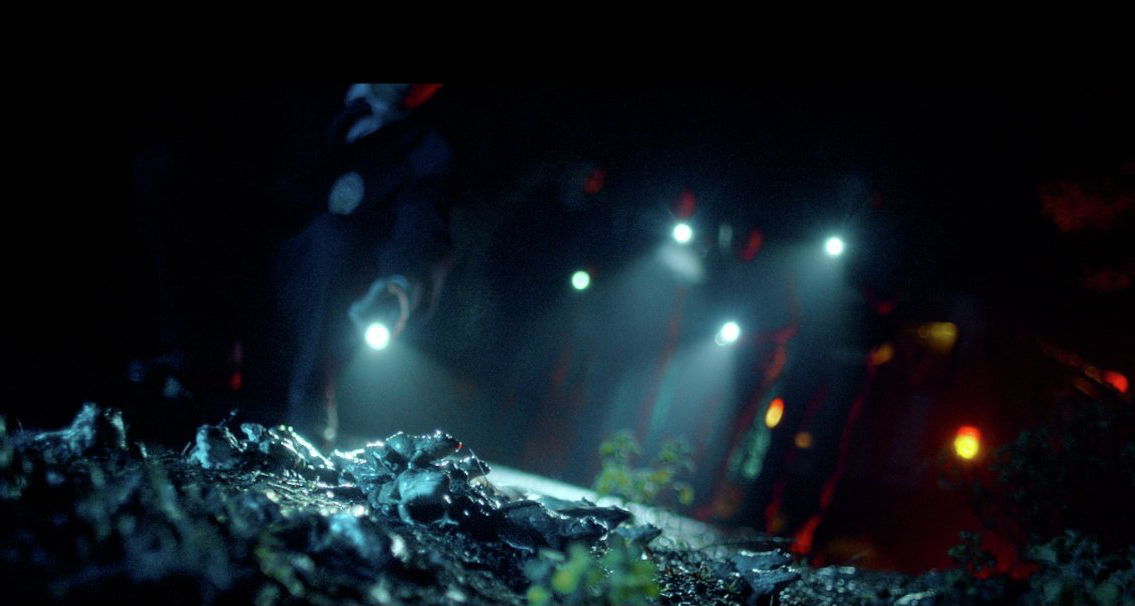
What you will see in the new documentary
HENRI-GEORGES CLOUZOT'S INFERNO is more of a meditation on jealousy -- and film-making -- than any kind of "real" documentary you'll have viewed in your movie-going career. As famous a non-existent film as
Terry Gilliam's never-happened
Don Quixote movie (which is said to be not happening
yet again!), Clouzot's "Inferno," I would guess, holds a similar place in the annals of French filmmaking.
In 1964, fabled French filmmaker
Henri George Clouzot began directing
Romy Schneider, then 26, and
Serge Reggiani, 42, in his new film
L'Enfer (Hell). By the end of three weeks, all
enfer had broken loose, worst followed worse, and what existed of this film -- never completed -- was stowed away in a vault, until... One day,
Serge Bromberg (below, right), the co-director (with
Ruxandra Medrea, below, left) of this documentary, found himself stuck in an suddenly out-of-service elevator with a woman who turned out to be Clouzot's widow. Chatting away their time together while the lift was repaired, she told him the story -- a whopping good one -- of the history and making of that never-completed film.
On the spot, it seems, Bromberg decided he must bring that story to the screen. He and Ms Medrea now have, but they have also tried to pull off a number of other things: create a vision of what L'Enfer might have been, while giving us a sense of the character of Clouzot himself and what he was going through at the time (a heavy dose of hell/jealousy all his own). To this end the two documentarians have diddled considerably with their basic premise, and although the result is only partially successful, so unusual is their film in so many ways that it becomes a fairly fascinating and certainly one-of-a-kind achievement.

Clouzot (shown above with Ms Schneider), always a perfectionist -- of a sort, at least; the French New Wave was critical of his "meticulousness" -- was evidently given an unlimited budget on this film. And while "unlimited" back then was hardly commensurate with even most limited budgets today, this proved enough to become probably the single biggest problem for the production. The director began to "experiment." And then experiment again. And then some more. We see the results, which seem to make up a large portion of the documentary, and we can fully understand why Clouzot became so enrapt with his creations -- most of which use the lusciously pert Ms Schneider as their subject.
He experiments with unusual uses of color,
background,
effects.
And though the "stills" above give you a hint of what was created, they are no match for what the director actually accomplished in terms of "film." His images are alternately striking, artful, creepy and strange. We also note how lighting can appear to change the same expression, and even discover a
very early example of those fast-moving clouds that bore me silly -- decades, I believe, before anyone else used them. Yes, these may be no match for the special effects we see today, but as they are done by a movie master, they deliver the heft and visual appeal of an artist at work.
Schneider looks ravishing, as usual, and since she usually turned in a good performance, we could probably have expected the same from her here. We also get a taste of M. Regianni (
Le Doulos), a fine actor not so well known on these shores. The oddest thing the filmmakers have done is to use present-day performers, who fit relatively well into the Schneider/Reggianni mode, and have them act out sections of the "Enfer" script.
Jacques Gamblin (at right, below,
The Color of Lies) and
Berénice Bejo (at left, below,
OSS 117: Cairo Nest of Spies) do just fine with this, but because the idea is not particularly intrinsic, it ends up seeming more like filler.
We hear from other filmmakers, such as
Costa-Gavras, of what was going on during the shoot, and we begin to see, hear and even feel the film -- and Clouzot -- beginning to fall apart. It's odd and creepy, but if jealousy is indeed to blame, we don't really get close enough to the source of it to begin to understand it. However, I warrant that we've all suffered from the green-eyed monster at one time or other, so putting ourselves in the place of the filmmaker, we can at least identify a bit. And the sense of sadness and waste only grows stronger as the documentary moves along and we learn what happened to
Inferno and its would-be creators. Even so, and with all the
tsuris experienced from within and without, I left this movie with absolute surety of only one thing: The biggest curse any filmmaker can have fall on him is his producer giving him an unlimited budget.
Henri-Georges Clouzot's Inferno, a
Flicker Alley/
MK2/
Lobster Films release, begins its theatrical run this Friday, July 16, at Manhattan's
IFC Center. You can find further screenings -- dates and cities --
here.