Showing posts with label Indian film. Show all posts

Thursday, July 5, 2018

Shubhashish Bhutiani's HOTEL SALVATION explores life, death and family in India


When the grandfather of the family suddenly announces that he is soon going to die and wants to make his final pilgrimage to a holy city on the banks of the Ganges River, his adult son -- an overworked accountant or financial planner, from the sound of things -- first tries to convince his father otherwise but then finally agrees to accompany him on the trip.

From this unusual premise comes a movie -- HOTEL SALVATION, co-written (with Asad Hussain) and directed by first-time full-length filmmaker, Shubhashish Bhutiani, shown at right) -- that offers up almost all the usual and expected results: father-son arguments, followed by some bonding, family problems and relationships brought to the fore and then solved. Surely you know the routine by now.

What makes this movie a bit different is all the detail that arrives via its sub-continent setting: the religion, the life, the culture and the cuisine in which we're steeped.

The immediate family (shown below) provides our main characters: the grandfather Daya (Lalit Behl, center), father Rajiv (Adil Hussan, left), mother Lata (Geetanjali Kulkarni, near right) and daughter Sunita (, far right).

Once Daya and Rajiv have reached their Ganges destination and its titular hotel, we meet more diverse and interesting characters such as the hotel proprietor and a widow woman (, below, right), who, it turns out, has been waiting quite a few years for her time to die.

Along the way we get a number of light philosophical discussions about life, death and religion (this is definitely Salvation-lite), some family history to sort out, and interesting religious practices such as bathing a corpse in the Ganges and then cremating it, drinking "holy" water from that same river (yikes!) and donating a cow (wow!).

Interestingly enough, what looks like the film's climax arrives in the middle, but then we're suddenly up and running again. And if the movie -- except for its location -- takes us nowhere we've not been previously, in one culture or another, its actual finale provides a nice mix of sorrow and an odd sort of joy. It is both predictable and moving.

From Film Movement, in Hindi with English subtitles and running 100 minutes, Hotel Salvation hits DVD and digital this coming Tuesday, July 10 -- for purchase and/or rental.

Tuesday, August 8, 2017

Life (or something like it) in an Indian textiles plant: Rahul Jain's bleak/beautiful MACHINES


Documentaries about the workplace don't come much bleaker-- nor more beautiful in terms of composition, color and artistry -- than MACHINES, the new 71-minute movie from Rahul Jain. This is his debut feature and on which he acted as director, co-editor and -producer, and even helped with the sound. Visually, it's a stunning debut, but it's a good deal more than that. Via visuals and interviews with a number of the workers, the film puts you pretty firmly into their shoes -- if and when they mange to have shoes, that is.

The first thing you may notice in Mr. Jain's doc (the filmmaker is shown at right) is that the initial worker we see manning the ovens has no goggles to protect his eyes form the sparks and flames. This, as it turns out, proves the least of the problems. Because there is no narration/ explanation (other than the visual one), we simply follow along as we see different parts of the factory in which some beautiful textiles are made, along with the workers and their various jobs.

We may have questions -- what's that dark liquid that looks like chocolate in the vat the worker is dragging along behind him via some wide white material? -- but, too bad. Just watch and learn what you can.

Fortunately we see plenty that's educational here. And after awhile, Jain begins allowing the workers to talk to us, telling us about their experience in this factory. In the background, and nearly ever-present, is the noise of the machines, whirring, whirring, whirring.

When the interviews begin, we learn some very interesting things: For instance, one man actually must take a loan out in order to get to work and earn some money at this factory. "Poverty is harassment," notes one fellow. "You can't do anything. There is no cure." Workers travels 36 hours on a train, standing up the entire time, with nothing to eat or drink unless they bring it themselves.

By the time we get to the child labor (though the kids look at least like early or middle teenagers), we're privy to moments such as one child yawning, then briefly falling asleep as he works. We also get a montage of workers sleeping. Then we finally meet or observe the owners (or maybe just their salesmen) talking about fabrics and pricing.

The coup de grâce comes with the interview with a manager/or maybe owner who is so pompous, entitled and nasty that you'll want to put your fist through his ugly face. Unionization? Well, we're told by one person here that "the workers don't unite. There is no unity here." Another explains that when the workers do unite, the bosses then learn who their leader is and have him killed. This has happened over and over again.

The end result -- those textiles -- are certainly beautiful, but at what price? As one worker explains it: "I know from my room to here, and from here back to my room. Neither do I know who the boss is nor how he looks." This may bring to mind that wonderful James Taylor song, Millworker, from the splendid but sadly unsuccessful Broadway musical, Working:
"May I work this mill for as long as I am able, and never meet the man whose name is on the label."

Finally, Mr. Jain does something both bracing and brave, as the workers confront him and his crew to tell him, "People just come here, look at our problems, and leave. Nobody takes any action." And then the fellow looks at the filmmaker and asks, "What will you do?" I would sure as hell like to think that this film might make some difference. But as one of those interviewed caps it off: "My only satisfaction is that everyone dies. Even the rich take nothing with them." Yeah -- but if India is anything like America, they leave it all to their kids.

From Kino Lorber, in English and Hindi with English subtitles, Machines has its U.S. theatrical premiere in New York City at Film Forum tomorrow, Wednesday, August 9, for a one-week run. Elsewhere? Nothing, it seems, has been booked as yet (click here and scroll down to keep current on this). But let's hope for a wider audience soon, as this documentary deserves to be seen and will pay off time spent in major dividends.

Friday, November 4, 2016

Something different from India: the college-theater fantasia from Kranti Kanadé, CRD


Said to have set the critical establishment of India on its collective ear, CRD -- the new film all about college theater, competition, fascism (or so the publicity materials note), love, sexuality and family -- from writer/director Kranti Kanadé, does indeed look like no other Indian movie that TrustMovies has heretofore seen. We are also told that India's leading film critic, Namrata Joshi had this to say: “Kanadé breaks all the rules of filmmaking in creating CRD, which boldly goes where no Indian film has gone before.” The key words in both Joshi's and my assessment of CRD are these: "Indian film."

Plenty of other movies from all over the world have broken the rules in just about every way imaginable, and what Mr. Kanadé does here (the filmmaker is shown  at left), while entertaining and impressive as filmmaking, will not seem so unusual -- except, I think, to Indians themselves, or to film buffs who mostly know Indian film from the spectrum of Bollywood on one hand and the pure, pristine work of Satyajit Ray on the other.

India, it would seem, is rather late in coming to the "modern filmmaking" table. Think of CRD's effect on the sub-continent as something like what Bryan Singer's The Usual Suspects had on American critics and audiences. Kanadé does all sorts of tricks with time and place, editing, intercutting (there's even a short slice of Bollywood here), fantasy, reality, sexuality and sexual preference. (At one point our hero muses that he could be "the wife.")

The story is that of a group of college students who enter an annual content for Best New Play and then try to bring about the winning of that contest. We never get to see much of the actual play but instead work around and through it via getting to know something about the students involved (along with their very break-all-the-rules teacher). Love and lust and family and class (and caste) are all included, along with, I suspect, lots more -- the allusions, visual and verbal to which, only Indians or those who know that country's mores and culture very well, will pick up.

But even for someone like me, who does not know these things, the movie proved worth watching and was easy enough to enjoy and wonder at. While its hero, as well as that scary/sexy teacher (shown above), may sometimes strike you as too much like that smarty-pants kids in your drama class who always knew everything better than anyone else and never wanted to abide by any rule, still, these characters and the movie they inhabit consistently strike a chord of genuine exploration, caring and the will to change.

For me the movie's most moving moment comes near its close, when our hero can finally admit and accept what and who his mother actually was. There is plenty else here, too -- from humor and surprise to amazement and shock. And lots of enjoyment. The biggest problem I had with the film is that it switches back and forth over and over again from Hindi (and occasionally French) with English subtitles to English spoken with rather thick Indian accents without subtitles. I think it would have been wiser to have English subtitles throughout.

In any case, the big screen is the place to see CRD, and it opens today in the Los Angeles area at Laemmle's Town Center 5 and Monica Film Center. Elsewhere? I don't know. But watch for it -- if not at a theater near you then on DVD or digital. Eventually, I hope.

Friday, August 5, 2016

VOD/DVDebut: Leena Yadav's PARCHED tracks women's struggle for freedom in today's India


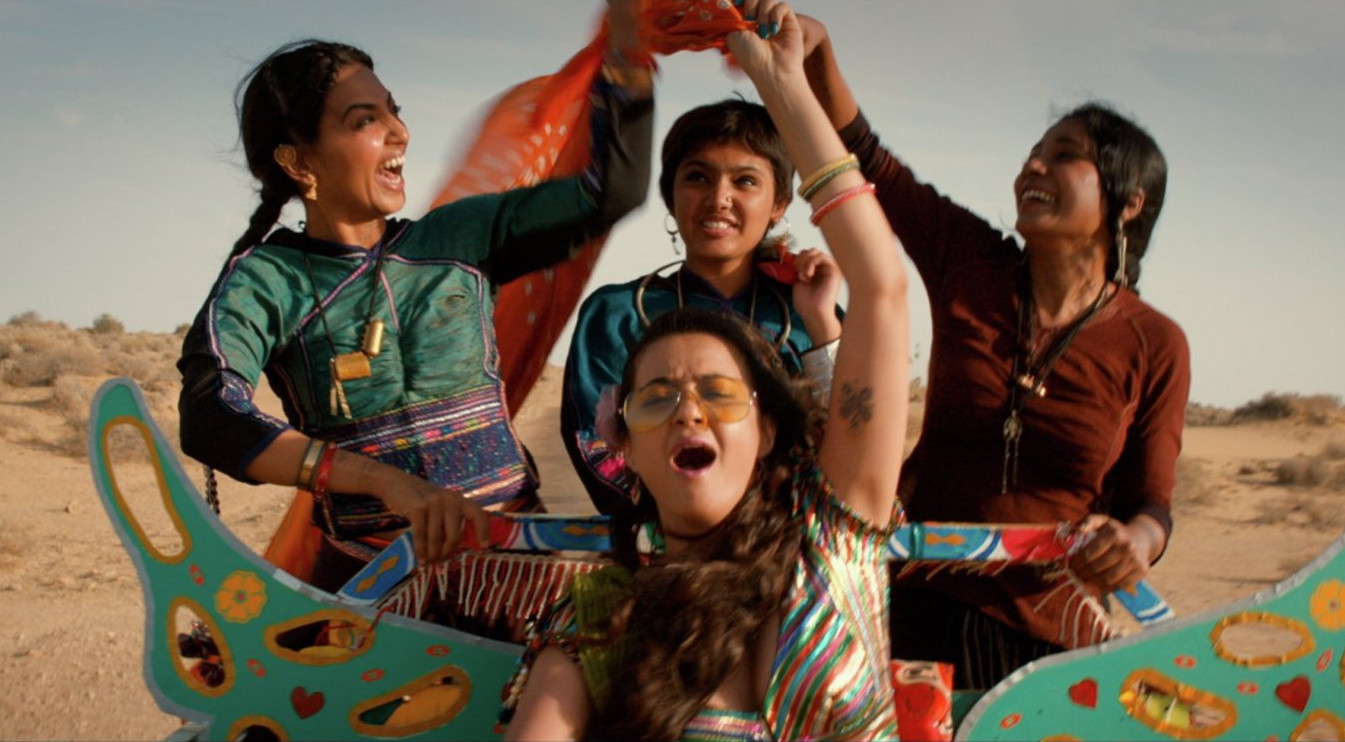
A soap opera that offers just about everything a woman (along with certain men) could want in a juicy, enjoyable melodrama -- from a nasty, vicious husband who abuses his barren wife to a zipless fuck with a hot, horny and super-caring sex partner, and even a little lesbian-leaning massage for good measure -- PARCHED is a movie with a lot on its mind and a nearly two-hour time span to work out all of its various plot lines. These involve a widow raising a problemed son, that son's new-and-not-so-willing bride, the widow's best friend who works as a stripper-and-paid-sex-partner for the town's horny husbands, and -- oh, yes -- that aforementioned abused wife.

Filmmaker Leena Yadav, shown at right, manages to juggle all these plot lines quite well, so that we easily follow their machinations, together with all the ups and downs of our quartet who are doing their best to bring India and its women into some kind of state of modernity. It ain't easy, given the patriarchy that has ruled this country (despite the blip that was Indira Gandhi) for so long. As writer, producer and director of the film, Ms Yadav sees to it that all these stories and characters get served -- eventually with their just desserts. And while the movie allows too much coincidence for us to take it all that seriously as drama, it also turns its main character, the mother known as Rani (Tanishtha Chaterjee, below), into a full-bodied warts-and-all woman.

In movies such as this one, the men are usually pictured as less than sterling. And so it is here, with the exception of the fellow who has brought his "foreign" wife to town and is helping the women start and run their own little weaving/textiles/tchotchke business. The remainder of the guys -- with the exception of that "sex therapist" who is rather like a deus ex machina with penis -- are either venal and nasty or, as in the case of the fellow (below) who pines for that stripper (and also works for her boss), simply stupid.

Especially nasty is the abusive husband, below, who manages to lambast his poor wife at every turn, no matter what. (His comeuppance proves particularly awful and more than deserved.)

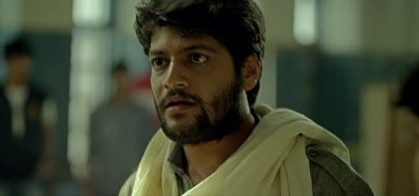
But it is the women who count most, and they are brought of fine life by the quartet of actresses who play the roles. The stripper/sex worker (Suveen Chawla, two photos above) is gorgeous and feisty. In real life, however her attitude would probably have gotten her a number of good beatings by now. Their lack is part of the melodramatic fun here.

As the abused wife, Radhika Apte, above, is properly submissive, slow and sweet, and her quiet growth into a stronger woman is one of the more real aspects of the movie.

The young bride of Rani's shithead son is the female we learn least about, but, as played by Lehar Khan, above, she is innocence and sweetness personified. And since the character has most of her life still in front of her, we can simply be happy at the prospect of her eventual freedom. How and why this happens is among the movie's more moving moments.

Visually, Parched is a knockout, featuring some great locations and excellent cinematography (by Russell Carpenter); the consciousness-raising among the women proves intelligent and enjoyable; and overall the film is a perfectly good example of soap-opera, Indian style -- feminist and a lot of fun.

From Wolfe Releasing/Wolfe Video, after a limited theatrical run, the movie hits both DVD and VOD this coming Tuesday, August 9 -- for purchase and/or rental.

Monday, July 13, 2015

In his new narrative film, COURT, Chaitanya Tamhane explores India's idea of "justice"


The first shock of COURT -- the new Indian film that has its U.S. theatrical premiere this week at New York City's Film Forum -- comes from the riot of color that greets your eyes: rich, varied and beautiful. The we meet one of our main characters, an elderly teacher/performer/poet whom we first encounter in his teaching mode and then performing al fresco a poem about the times in which we live. This is India, but from the sound of things -- what our boy is railing against -- it might as well be right here in the good old US of A. Then the event occurs that sets the movie in motion, as police crack down on what is a remarkably peaceful, even dignified protest, arresting our performer in the process.

Though he finds some humor in the goings-on, the writer/director of Court, Chaitanya Tamhane (pictured at left), whose first full-length film this is, has given us less a satire, I think, than a sadly realistic look at what passes for justice in India today. From the police, who are clearly acting on orders from their superiors (though no higher-ups are named or shown, except perhaps by certain portraits hanging on the wall) to the chief prosecutor to the somewhat lazy and not-very-intelligent judge, it is clear from almost the first that this is a set up and railroaded job.

Yet none of this can be baldly stated -- by either the filmmaker or his besieged hero, the defense attorney (a fine performance by Vivek Gomber, above). Thanks most likely to the country's heritage of colonialism, decorum, along with way too many outdated laws from that British rule, must be preserved.

We learn a few of these laws along with decorum -- the judge (Pradeep Joshi, in background, below) refuses to hear one woman's case because she wears a sleeveless dress to court) -- via the public prosecutor (Geetanjali Kulkarni, above), whose main interest is getting this case over with and her career in higher gear.

The filmmaker takes us away from court as often as he lets us in: investigating the family of the man his client is accused of inducing-into-suicide (yes!) via his political rabble-rousing; into the family life of both the defense and prosecuting attorney; and finally allowing us to meet the wife of the dead man at the center of it all.

The scene in which our hero simply drives the widow and her children to their home speaks volumes about class differences in India. Mr.Tamhane and his cinematographer (Mrinal Desai) often use a stationary camera to capture their scenes, as characters move in and out of the frame very effectively.  (This also allows for the movie's most violent scene to take place -- charmingly and amusingly -- off-camera.)

The filmmaker's initial ending uses that stationary camera again to fine advantage, leaving us -- and Indian justice -- in darkness, while his actual finale offers a little too heavy-handedly a mash-up of a country in which tradition & modernity, magical thinking & science, raw youth & grizzled stupidity constantly lock horns.  And, as in so many of the world's so-called democracies today, power finds a way to stymie protest every time.

Court, from Zeitgeist Films -- in several different languages, including English, all with English subtitles -- and running a long but never boring 116 minutes, opens this Wednesday at NYC's Film Forum and next Friday in Chicago and Santa Fe. In the weeks and month to come, it will play another dozen cities throughout the country. For all currently scheduled playdates, cities and theaters, click here and scroll down.

Note: Geetanjali Kulkarni will appear in person 
at the 7pm show at Film Forum on opening night, 
Wednesday, July 15.

Friday, July 13, 2012

Michael Winterbottom's India-set, Hardy-inspired TRISHNA gives Pinto a plum role

Best not to make too much of the fact that TRISHNA -- the latest endeavor from British filmmaker Michael Winterbottom -- is based on the Thomas Hardy novel Tess of the D'Urbervilles. It's been more than fifty years since I've read that book (as a high-school student, I read it too soon) and over two decades since seeing the earlier filmed version from Polanski. Because that version ran over three hours, it was able to be more faithful (but not nearly enough) to Hardy's work; it would take an eight-hour miniseries, done well, to do the novel justice (this four-hour version starring Gemma Arterton and Eddie Redmayne may come closer to the mark).

No matter: Hardy's theme -- how class, together with the place of women in society, affects our lives -- travels, it turns out, quite well to the sub-continent. (Just as England was going through major economic and social change at the end of the 19th Century, India is going through its own version currently.) Who better than a Brit to explore all this in a country his own country colonized, to the former's detriment on many levels. (And betterment on a few? Surely the effects of this colonization cannot have been entirely negative?) Class struggle and the genuine empowerment of women were and are still necessary in England, just as they remain needed pretty much all over the globe, and Winterbottom (shown above) grabs and runs with this idea, weaving it into his story with strong threads. Thomas Hardy himself is the only writer credited to the film on its IMDB site, but this seems disingenuous; this long-dead titan certainly did not write the dialog we hear, which according to an interview/review in the Village Voice, the actors often improvised from a draft that Winterbottom himself had written.

For me, Trishna (the character and the movie itself) succeeds mightily in its endeavor to bring these themes artfully to life. And it does so on the back (and the gorgeous face) of the beautiful and graceful actress, Freida Pinto, who here has her best role so far. After her debut in the over-rated Slumdog Millionaire; her lovely, brief stint in You Will Meet a Tall Dark Stranger; her work-to-no-avail in (and as) the tiresome Miral; a pointless role in the tiresome-in-another-manner Immortals; and despite even her satisfactory work as the necessary woman in the terrific but practically all-male blockbuster Rise of the Planet of the Apes -- finally, a filmmaker has made glorious use of this extraordinarily delicate and subdued performer, shown above and below.

Ms Pinto is rather a passive actress, whose great beauty never needs pushing. In the role of Trishna, an Indian country girl of poor parents who attracts the eye of the wealthy British-educated son (Riz Ahmed, below) of an Indian entrepreneur (Roshan Seth), with Winterbottom's help, she uses this passivity to remarkable effect. It becomes, finally, a kind of passionate strength.

Ahmed, after a few turns ranging from startling to impressive in films like The Road to Guantanamo, Rage, Four Lions and Centurion, also has a role that should goose him further into leading man status. He has buffed up some in the interim and proves very sexy here. Initially, he appears to care for Trishna, yet his character, as much as hers, is trapped in India's own cultural/societal class-conscious slavery. Because he has never had to work, to test himself, to actually fend for himself, he's weak in a manner than Trishna could never be. And yet, she knows her place, just as he knows his.

What eventually happens is as shocking as it is believable, and Ms Pinto rises to the awful occasion in a manner that's just about perfect: still somehow passive, even in an act that seems anything but. Having cast his film so well, using both professionals and real people who simply play the roles they do in their day job, Winter-bottom also allows them to improvise some of their dialog. The result, whether it's in the posh hotel where Trishna begins her "career" or the Bollywood dance class she joins and proves good at, carries a sense of reality that something like The Best Exotic Marigold Hotel can't come near (and probably wouldn't want to).

Trishna, 108 minutes, from IFC FIlms, opens today, Friday, July 13, in New York City at the IFC Center and the Lincoln Plaza Cinema.  It will open in the Los Angeles area later this month at several of the Laemmle locations. For couch potatoes, it begins its IFC VOD run next week on Friday, July 20.

Sunday, March 20, 2011

Bollywood worth watching: Ashutosh Gowariker's spectacular JODHAA AKBAR


What? TrustMovies is watching Bollywood? Of his own accord? And more than three-and-a-half hours of it -- in a single sitting?  (Two sittings, actually. He took a few-hour break between his breakfast and lunch-time viewings.) The reason? To see more of two of the most beautiful actors -- face and body -- at work today: Hrithik Roshan (of the recent Kites) and Aishwarya Rai (of The Last Legion, The Mistress of Spices and Bride and Prejudice). Instead of fast-forwarding or giving up midway, he actually finished the film in a state of sated pleasure, for the movie, as much as any he's seen, puts the "ollywood" in Bollywood -- and does so in a manner that might make Cecil B. DeMille proud.

JODHAA AKBAR, from the fellow (Ashutosh Gowariker, shown at right) who gave us the Oscar-nominated Lagaan a decade back, contains just about everything you could ask for in historical spectacle -- except of course true history.  But that's the last thing we'd want in a movie like this. Instead we get glamor and gold aplenty, battles large-scale and small, love, devotion, betrayal and comeuppance, all handled in a smart, efficient manner that allows them to spread out across a vast canvas that will solicit our ooohs and aaahs, but also pass fast enough to make those three-and-a-half hours, if not fly by, at least move with surprising speed.

The story, which tells (as the movie admits upfront via opening title cards) its own version of the marriage that united a 16th Century Mughal emperor with a Rajput princess, thus brings together Hindu and Muslim religion and culture. As a writer Mr. Gowariker stresses time and again the need for religious tolerance -- a not-bad notion for our trying times. The storybook quality of the film is maintained nicely throughout, and even the several songs scattered through the film are used, not as the usual Bollywood interruptions to the story, but as either cultural artifacts (complete with dance) or musical background to the stunning visuals.

Both Ms Rai (above) and Mr Roshan (elephant-training, below) are as gorgeous as expected, and if we don't get to see much of their physical bodies, their sublime faces are much on display. In fact, there is a single extended scene in the movie in which Roshan, stripped to the waist, practices his swordplay, as Ms Rai looks on, hidden behind a curtain. For those interested in viewing the perfection of the masculine physique, the scene is a must, for Roshan combines the ideal body with the grace, strength and balance of a dancer in a way that even the most buffed of Hollywood actors can only view with envy and disbelief.

Jodhaa Akbar, on DVD and Blu-ray, is available for rental or sale, and the Blu-ray, incidentally, is a stunning transfer -- the best I've so-far seen (granted, I'm new to Blu-ray) with the exception of Criterion's The Leopard.