Multi-award-winning (including an honorary "Oscar") Polish filmmaker
Andrzej Wajda, who died this past year, directed some 56 movie and television projects and wrote, co-wrote or supplied the idea for 36 of them. Seldom out of the spotlight for long, his work, beginning in the 1950s with classics like
Kanal and
Ashes and Diamonds, continued through the decades and included his famous "Men" movies (
Marble and
Iron),
Danton, his well-received
Katyn (2007), and now finally
AFTERIMAGE -- his latest and last film.
Wajda, shown at left, has moved, over the decades, from a somewhat experimental and challenging filmmaker to a more conventional one, albeit with a very good understanding of film technique, storytelling and visual smarts. If this final film -- that details the downward spiral of the career of the Polish artist
Władysław Strzemiński, once Poland had come, post- World War II, under the thumb of the idiotic Russian Communist rule --
is something less than much of Wajda's oeuvre, it is still worth seeing, as a goodbye to this talented, innovative filmmaker, as well as introducing many of us to the life and work of this renowned Polish modern artist. As portrayed by
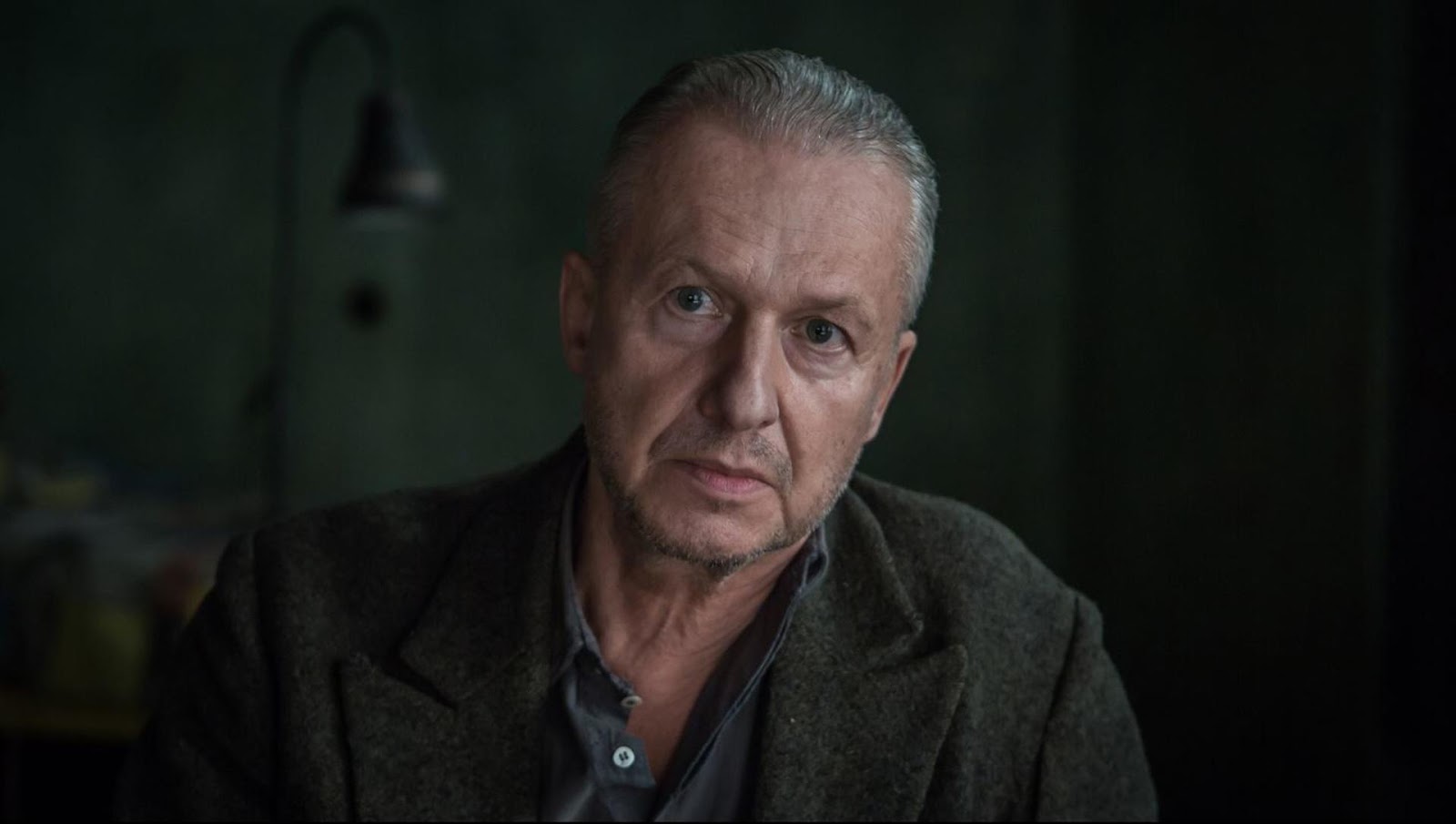
Bogusław Linda (above), Strzemiński is seen as both a talented artist and teacher, obsessed with art to the dereliction of his duty as husband and parent. His wife, as best I can recall, has already died when the film begins, but his daughter -- sadly but beautifully portrayed as child forced to grow up too soon by
Bronislawa Zamachowska (below) -- is in desperate need of a loving and providing parent.
This is clearly beyond the scope of our artist's understanding or ability, and the movie does not try to sugar-coat his failings. It is much more interested, however, in Strzemiński's work as artist and professor at the art school he helped to found and run.
We see how, once Russia controls Poland, Communist philosophy and politics rule all, and how the career and indeed the entire life of someone who opposes this in the name and spirit of art, is all too easily destroyed. In this case, the artist -- unlike so many others in so many places throughout the world -- refuses to kowtow to the power of the new state and so pays for it by having his art destroyed, his opportunity for any employment taken from him, and finally by being unable to eat and eventually to live.
This downward spiral is beautifully filmed, however, with some exquisite compositions and, amidst the drab Eastern European surrounding, an occasional popping of color (via that modern art), and some lush outdoor landscapes (the cinematographer is
Pawel Edelman).
We also meet the artist's students (above), who clearly love and cherish him and his ideas, a few of which we hear over the course of the film. I wish the movie has given us more of these, however, as the primary one would seem to be:
Be true to yourself in your art. Even if, as appears the case with some of these students, you have not a lick of talent.
The look the movie gives us into "state-sanctioned art" (above) proves fun and interesting, too. Ah, those paintings of "workers" and posters depicting the Communist leaders that keep popping up -- particularly in the factory where Strzemiński finally finds work (until the state gets wind that he's employed once again and immediately has him fired).

Overall, the tale told here is so unrelentingly bleak and obvious, with nary a surprise in store, that we know exactly where we're going from scene two onward. (The movie's opening scene, taking place in the lush outdoors, is gorgeous and funny. Hang on to it.) Granted, the lessons to be learned from the history of dictator-led Communism (none of them benign) bear repeating, lest we forget. And now, with Donald Trump at our helm, together with a large percentage of our populace that appears neither to know history nor care about it, I suppose we'll have to learn that "dictator" lesson all over again. And it really does not matter whether the political philosophy behind the dictator is Communism, Capitalism, or -- as in the case of Trump -- just make money and garner fame. The result is the same: Toe the line or else.

So, Mr. Wajda's final film, then, is a warning, as well as a history lesson and a look at a famous artist whom many of us will not know. It's worth seeing, even if we may choose to remember other of Wajda's movies more fondly and/or find them more memorable.
From
Film Movement, in Polish with English subtitles and running just 98 minutes,
Afterimage opens tomorrow, Friday, May 19, in New York City at n NYC at
Lincoln Plaza Cinemas on May 19th and in LA at
Laemmle's Royal andPlayhouse 7 on May 26th. A national release will follow.
Click
here (then scroll down) to see all currently scheduled playdates, cities and theaters.