Showing posts with label culture. Show all posts

Tuesday, February 16, 2021

Shaka King's JUDAS AND THE BLACK MESSIAH shines a necessary light on 50-year-old history

Hot on the heels of several other important -- as well as hugely entertaining and necessary -- films about the Black experience in America comes one of the best: JUDAS AND THE BLACK MESSIAH, directed by Shaka King, with a screenplay by Mr. King and Will Berson. Their movie details the shameful and unlawful treatment by Chicago police and the FBI of Fred Hampton (along with the entire Black Panther movement during the mid-to-late 1960s). 

The title itself comes from the fear expressed by the FBI's J. Edgar Hoover of Mr. Hampton's becoming the new Black Messiah, once Martin Luther King, Jr., had been assassinated. Judas refers to the Biblical betrayer -- here a low-life, con-man/thief named William O'Neal, blackmailed into infiltrating and spying on Hampton and the Panthers

While the actions of Hoover and the police are digusting and thoroughly racist, King (pictured at left) and Berson don't try to sugar-coat the fact that the Panthers had to do some bad shit, too. Yet the amount of this the Panthers perpetrated, together with their reasons for doing it, do not even begin to approach that of "law enforcement." 

In telling their awful (and seemingly, from what TrustMovies remembers, of that time itself, barely fictionalized) tale, the filmmakers take what seems like pretty much a direct route: This happened, followed by this and this and this. 


Because the filmmaking and the writing is so direct and real -- as well as pointed and very political (I did not realize nor remember how anti-Capitalism Hampton was), the movie plows ahead with a speed and energy that belies its two-hour-plus running time. It has taken more than a half century for even a portion of the American populace to catch up with Hampton's ideas, thanks to the continued racist behavior of the police and FBI, along with the continual anti-Socialist message put out by our ever-more corporate controlled mainstream media. Now, finally, this is being fought against via the Black Lives Matter and "Occupy" movements, minimal media (subscribe to The Baffler) and a handful of progressive politicians. 


King's movie tells its story via extremely strong performances from its leading actors: Daniel Kaluuya (above) as Hampton, LaKeith Stanfield (at left, two photos below) as O'Neal, and Dominique Fishback (below) as Hampton's poet, guiding light and eventual lover -- with Jesse Plemons (at right, two photos below) doing his usual excellent work as the blackmailing FBI Agent, and Martin Sheen as certainly the nastiest, deservedly so, J. Edgar we've so far seen.


Considering what the USA was fed by its mainstream media and powers-that-were back in the day, how salutary and necessarily disturbing it is to finally have Hampton's story told this close to truly -- and this well. Judas and the Black Messiah is also the first must-see of the so-far much-vaunted Warner Brothers movies to be released theatrically and via HBO Max


The Witches
 is a lot of fun, but Wonder Woman 1984 is utter crap, The Little Things perhaps the stupidest would-be thriller/serial killer movie ever foisted on the public, and Locked Down much better in its first hour than its second. Let's hope that the up-next Tom and Jerry offers some good, entertaining fun.


Meanwhile, however you can view it, make a bee-line for Judas and the Black Messiah, which hit streaming this past week and will remain in theaters for some time to come, I hope.

Sunday, February 7, 2021

Senior same-sex love in Hong Kong: Ray Leung's quiet study of character and culture, TWILIGHT'S KISS

Having just seen a French film detailing senior lesbian love and the damages of the closet, here comes another that covers gay seniors in Hong Kong, both grandfather-age and both quite firmly in the closet so far as their respective families are concerned. 

Unlike the heavy melodrama that drives (and plagues) Two of Us, TWILIGHT'S KISS, quiet and concerned, gives over to character and the culture that has helped mold this in our two heroes, as well as in their families, friends and society at large.

Written and directed by Ray Yeung (at right), whose charming, slightly-dark rom-rom Front Cover, I enjoyed a few years back, this new film of his -- made prior to the seemingly endless protests now roiling Hong Kong -- is surprisingly immersive, given how quiet and small-scale it consistently proves to be.

Yeung's two leading actors -- Tai-Bo (below, right) and Ben Yuen (below, left) -- are triumphs of low-key detailing. Bit by bit, they lead us into character, life and the culture of Hong Kong, as each experiences it. Because Yeung and his cast are so full of specifics, all these details quickly pull us into the narrative, which only grows more specific and fascinating, the more complex and problematic it slowly becomes.


There are no real villains here -- not even society or the State itself. While it is obvious that things could be better in terms of acceptance for the GLBT population, the movie has a welcome lack of finger-pointing or -wagging. Instead our two guys make the best of what they have, even as they try to push  the boundaries, at least slightly. (Along the way we also get to see what Hong Kong's younger generation is doing for gay rights and how the semi-necessary closet is still holding back many in the older generation.)


The two men's families are perhaps more of a hindrance than a help, yet it is clear that they are all doing the best they can, given their circumstances and beliefs. Religion -- Buddhism vs Christianity vs agnosticism -- plays into things -- yet so kindly and fair is his perspective that the filmmaker never dips to easy satire nor simplistic views. 


Some viewers will wish for more explicit drama here, but TrustMovies is more than happy with the level to which Twilight's Kiss rises. The final sequence -- which for me, at least, seemed to indicate a willingness for exploration (and/or perhaps compromise) -- proves as quiet, subtle, thoughtful and lovely as all that has come before.


From Strand Releasing and presented with support from the R.G. Rifkind Foundation Endowment for Queer Cinema, in Cantonese with English subtitles, and running just 92 minutes, the movie opens virtually at New York City's Film Forum this Wednesday, February 9, and will very soon open elsewhere around the country. Click here for more information on viewing at Film Forum, and here for info on further nationwide playdates.

Tuesday, August 27, 2019

That internationally famous, uber-popular book is back again in Marjoleine Boonstra's THE MIRACLE OF THE LITTLE PRINCE


If you are an adherent of The Little Prince, the book by Antoine de Saint-Exupéry first published in 1943, to the point that you find this little tome to contain just about everything the world needs in terms of guidance, philosophy and ideas to live by, then this new documentary by Marjoleine Boonstra entitled THE MIRACLE OF THE LITTLE PRINCE will probably be quite up your (along with lots and lots of other people's) alley. After all, The Little Prince is said to be second only to The Bible in its popularity and the number of languages -- 375 -- into which it has been translated.

Ms Boonstra, shown at left, has gotten the idea to show us four of these cultures/languages that are currently in danger of disappearing, along with how Saint-Exupéry's novella is helping them to survive.

These languages would be Tamazight, spoken by the Berbers of Morocco; Nahuat, spoken by the Pipil of El Salvador; the Sami and their language of Northern Scandinavia; and Tibetan, the language spoken in Tibet (as long as those Chinese overlords don't hear you).

So we spend maybe 20 to 25 minutes in each of these locations, learning a bit about the people, their history and language, watching them read (from The Little Prince, of course) during which we hear some of Saint-Exupéry's verbiage. And in each of the locations (at least three out of four that I noticed) we catch sight of a child, usually in the background but still quite obvious, who is pretty clearly meant to stand in for that Little Prince (herewith to be signified as TLP).

And that's pretty much it. To call this movie slow would be to find a snail speedy, while to try to gain much more from the documentary than the notion that, yes, the famous book has served to help preserve these languages will prove difficult. Boonstra is unable to make any more thorough or specific connections that might pull us in more forcefully or creatively. Still, perhaps this will be enough for TLP lovers.

Along the way, we do learn an oddball thing or two -- most interestingly how to pack up three sheep and carry them on a motorcycle and that the Nahuat language has no specific word for rose -- and some of the settings, particularly the desert and El Salvador, look majestic or verdant, though Paris, where our Tibetan now resides thanks to the Chinese take-over, doesn't look nearly as lovely as usual.

Toward the end there is a very odd dead-bird story, and by the finale, you will see how the lessons of TLP can be applied here, as just about everywhere else. That's the point, I suppose. My question, after finishing The Miracle of The Little Prince (and of course, yes, it must be nothing less than a "miracle," right?) is how this movie ever got made, let alone how it managed to find a distributor.

From Film Movement, running 89 minutes, and in French, Tibetan, Tamazight, Sami and Nahuat with English subtitles, the film opens this Wednesday, August 28, in New York City for a one-week engagement at Film Forum. A couple more playdates are now scheduled; click here and scroll down to view them.

Thursday, April 4, 2019

DVD/streaming debut for João Moreira Salles' IN THE INTENSE NOW, a quiet yet rhapsodic look at revolution, politics, marketing, culture and home movies


It's hard to describe the spell cast by IN THE INTENSE NOW (No Intenso Agora), the 2017 documentary by João Moreira Salles that had its U.S theatrical debut a few months ago and hit DVD and streaming this week.

Although the film deals primarily with the students' and workers' revolution in France back in 1968, it also expands its view to the ill-fated Prague Spring of the same year, and other sort-of revolutions of similar hope, at the same time detailing bits and pieces of the filmmaker's own mother's trip to China and then to Japan -- and what these excursions meant to her.

If this sounds a bit all-over-the-place, the film actually coheres quite beautifully, thanks to Salles' visuals and narration -- the filmmaker, shown at right, who both wrote and directed the documentary, is brother of another noted Brazilian movie-maker, Walter Salles (of Central Station) --  which combine to create a kind of poetry, as well as yet another version of "people's history" (as opposed to what you'll find in most school textbooks).

Though often dealing with violence, trauma and intensity, the movie's overall tone is one of quiet intelligence and thoughtful conclusions, while offering some extraordinary (often actually conflicting) views about events that those of us old enough to remember may find troubling and/or surprising.

Salles is especially good at demonstrating the ways in which politicians, media and ad men can turn just about everything and anything into marketing. Yet he does this in such quiet tones and humble demeanor that, instead of becoming at all hostile to his words and pictures, you'll likely stop, think, and then agree.

The film is full of "home movies" taken at the time of the events that are not what most of us actually saw at the time. Early on Salles tells us that home movies often show us so much more than the filmmaker may have intended, and then proceeds to some fine examples of this, one after another.

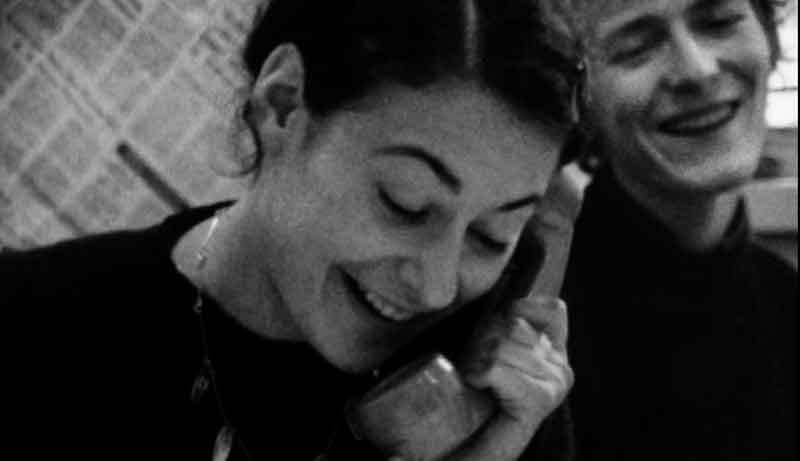
My favorite scene in the film (perhaps Salles' too, since he comes back to a still shot of this at his finale) is of a young woman (above) working in the office of the demonstrators during the French upheaval. She is trying her best to allay the fears of the mother of one of the demonstrators who did not come home the preceding night. It's one of the loveliest and most different scenes of this sort I've ever viewed, showing the human side of a would-be revolution in all its glory.

There is so much to see, hear and experience in this 127-minute documentary that I hope you will available yourself of the opportunity. In the Intense Now, from Icarus Films, hit the street on DVD and streaming (via Amazon and iTunes) this past Tuesday, April 2.

Monday, December 18, 2017

Luca Guadagnino's lush and luscious love story, CALL ME BY YOUR NAME, enchants


As fresh, ripe, succulent and gorgeous as the peach that gets its own memorable scene in the film, CALL ME BY YOUR NAME is as good as you've probably heard, a not-to-be-missed movie for anyone who treasures Italy, beauty, and tales of first-love, longing and rapturous consummation. Adapted by James Ivory from the novel by André Aciman and directed by Luca Guadagnino (shown below) with his usual visual flair and an even greater sense, this time 'round, for character building via the slow accretion of specific, exactingly chosen moments, the film casts a spell that never once breaks.

Here are longing, lust and love as you have seldom encountered them onscreen, and one of this unusual film's great strengths lies in the fact that, despite the difference in ages of the protagonists -- one is a graduate student, the other a highly gifted teenager -- so strong, growing and genuine is the attraction and bond between them that no taint of wrong-doing hovers over the relationship. This alone is an amazing accomplishment, thanks to the work of Ivory, Guadagnino and the two terrific star turns by actors Armie Hammer (shown above and two photos below) and Timothée Chalamet (the latter, below, seen to very different but also excellent effect in Lady Bird).

The atmosphere, as seems always the case in a Guadagnino film, is highly rarefied -- wealthy, cultured and entitled -- but here, finally, the leading characters are much easier to care about and their emotions more specifically explored than are those in I Am Love or A Bigger Splash, two of this director's earlier films.

The relationship that grows between Elio Perlman (Chalamet), the son of a famous scholar and comfortably assimilated Jew (played with his usual pitch-perfect poise and uncanny character exploration by Michael Stuhlbarg, below), and Oliver (Hammer), that scholar's research assistant for the summer, is a fraught one indeed.

As happens every summer, Elio must give up his bedroom in order to house the summer's new assistant, but this year's version is clearly a bit different. Big, blond and buffed to perfection, Oliver would seem the goy of one's dreams -- except that he, too, is Jewish, if we can judge from the Star of David he wears around his perfectly formed neck.

The feint-and-parry tactics via which the relationship begins eventually give way to, first, a "truce," as Oliver puts it, below, in a move that is charming, funny and also symbolic of just how much of himself our grad student is willing to commit, and slowly to all-out passion and sexual fulfillment.

Interestingly enough, Guadagnino holds back on anything highly explicit or full-frontal and instead concentrates on the passions and emotions generated in and by the relationship. One friend of mine missed the explicit and felt the director unnecessarily held back. Yet, given the immense beauty of our antagonists' faces and bodies, of which we see plenty (despite the lack of "money" shots), the gorgeous Italian surroundings, of which we also view a great deal, and the accent on longing and attraction, it seems clear that Guadagnino is going for emotional specificity over the sexual.

Despite how very good Mr. Hammer is in his role, the movie belongs to Chalamet, through whose eyes, mind, emotions and body we experience most of what occurs. If this young actor does not get at least an Academy nomination this year, we will know that, yet again, they're asleep at the wheel. Chalamet leads us through surprise, disbelief, attraction, exploration, passion and finally grief -- with every step honestly and fully taken, including that of the betrayal of his would-be girlfriend (Esther Garrel, above, right).

As usual in budding romances, the accent is on the here-and-now rather than where the relationship might be heading. Even so, this seasonal-only affair has such built-in limits that it must clearly be one of those "summer loves." What this means to Elio and to Oliver eventually comes clear, and the movie offers a double dose of knockout endings -- one a quiet conversation between father and son, the other in which the camera simply lingers and lingers as we watch and consider.

Call Me By Your Name should take its place as of the movies' great love stories, even if it is, finally, sadly one-sided.

From Sony Pictures Classics and running two hours and twelve minutes, after opening on the coasts a couple of weeks previous, the film hits South Florida (and elsewhere across the country) this Friday, December 22. Click here and then click on GET TICKETS on the task bar at top in order to find the theater(s) nearest you.

Tuesday, March 29, 2016

Alexander Sokurov's FRANCOFONIA explores culture & history, war & peace, art & museums


Alexander Sokurov surely is a versatile director. In this new century alone (he's been making movies for over 40 years), his work has spanned the groundbreaking "one-take" museum piece, Russian Ark, to the breathtakingly strange and beautiful Father and Son to The Sun (narratively documenting the abdication of the Japanese Emperor at the close of WWII) to the nearly unbearably moving Alexandra to his version of Faust and now, another "museum" movie that harks back to that Ark and yet is definitely its own thing: FRANCOFONIA.

Mr. Sokurov, pictured at left, often writes, as well as directs his films and he has done so here again. While his visual skills are as fine as ever, it's his memorable writing that turns Francofonia into the special thing that it is. He begins with what sound like phone conversations regarding the very film we're about to see, and then we get visuals of writers such as Chekhov and Tolstoi, then Skype-ing with a fellow named Dirk, during which we hear, "It's not human, dragging art across the ocean!" Only slowly does the content of the movie begin to take shape: art and culture, history and museums, war and peace -- and Sokurov's musings on all of these. And when I call them "musings," this is not to say that they aren't pretty delightful, thought-provoking,and oh, so beautifully spoken (if I am not mistaken, Sokurov does his own narration).

As usual with this man's movies, you'd best pay absolute attention to the visuals and the audio or miss something vital, as Sokurov combines archival footage with beautifully recreated film that looks quite "dated" (it even has that "tracking" strip that runs down the left hand side), making his modern stuff seem archival, too. This is quite nifty.

Rather than giving us a tour of the Louvre, as he did with the Hermitage Museum in Russian Ark, instead he zeros in on that period of the famous French museum during which the Nazis took over half of France, Paris and the museum itself. We get history recreated and narrated, with two fine actors portraying the Frenchman and the German who did the most to "save" the museum's artworks.

The ubiquitous Louis-Do de Lencquesaing (above) portrays Jacques Jaujard, the man in charge of the Louvre, while Benjamin Utzerath plays Franz Wolff-Metternich, the German officer charged with overseeing the art treasures the Nazis took ownership of as they conquered and occupied country after country.  The two men's story runs in and out and around Sokurov's musings in a way that brings us back again and again to the subjects at hand.

Also along for the ride (and the humor they bring) are little Napoleon Bonaparte (Vincent Nemeth, below, right) and Marianne, that symbol of French womanhood and liberty Johanna Korthals Altes, below, left). And while the filmmaker gets a lot of mileage out of Nappy, I wish he could have brought a little more thought and wit to his Marianne, who seems to exist mostly to flounce and gambol like one of those recent Terrence Malick heroines. This may have more to do with the usual filmmaker patriarchal entitlement to "stick with the guys" than anything else. But it does seem a missed opportunity.

Otherwise, Francofonia is a non-stop delight, offering up lovely visuals, even as it gives us non-stop ironies about art and culture, war and various kinds of peace/collaboration. The film would make a fine bookend to the popular French TV series, A French Village, about the country's occupation during WWII, At one point the narration mentions that the "same old slow-seller" has once again appeared on the market. "The product may be very expensive or be free. Yet the price of this product is always set by the buyer. What is it? Can you guess? Think it over...."

The movie rests on what Sokurov chooses to tell us, and how and when, and against which visuals he places all this. His choices could hardly be bettered, and his finale is as splendid as the rest of the film, as he gives his two main characters (and us) a look into their very interesting futures. The movie ends with a shot of two empty chairs, and then a blood-red screen which, in time, turns to a more peaceful blue. Quite fitting. And wonderful,

From Music Box Films, in Russian, French and German with English subtitles and running just 87 minutes, Francofonia opens this Friday, April 1, in New York City at Film Forum and the Lincoln Plaza Cinema, and then over the weeks and months to come, elsewhere across the country in some 30 cities. In the Los Angeles area, look for it to open on April 15 at Laemmle's Royal, Playhouse 7 and Town Center 5. Click here and then click on THEATERS (about one-third of the way down the screen) to see all currently scheduled playdates, cities and venues.