Showing posts with label drug movies. Show all posts

Saturday, February 20, 2016

It's "pot" luck for PAULETTE, as Jérôme Enrico's French charmer hits Blu-ray and DVD


My goodness: two new-to-the-USA movies in as many weeks about marijuana used in homemade baked goods! The second of these -- after the recent Dough -- is the 2012 French film, PAULETTE, directed and co-written by Jérôme Enrico and starring one of the old-time treasures of French cinema, Bernadette Lafont (remember Chabrol's Les Bonnes Femmes and Truffaut's Such a Gorgeous Kid Like Me?). Ms Lafont, who died the year after this film was made, had certainly aged some over a career that spanned nearly 60 years and 190 credits, but she had lost none of her power to charm, surprise, move and entertain us. In fact, as this choice role proved, she could still pack European audiences into cinemas and give them a royal good-time.

If M. Enrico, shown at right, whose work is new to me, doesn't break any ground in the feel-good sub-genre of that-crazy/nasty-old-lady-who-turns-out-to-have-a-heart-of-gold, he also plays by the rules cleverly enough to turn out a very smart of piece of entertainment that is plenty easy to sit back on your couch and enjoy. The cinematography by the fine Bruno Privat looks terrific on Blu-ray; everything from the locations to the pastries appears lovely/yummy. And Ms Lafont -- shown on poster, top, below and further below -- charts her moves from harridan to honeybun with great skill and charm.

Paulette, the character, initially takes no prisoners, reducing everyone from the immigrants who took over her failed restaurant to her mixed-race grandson (the adorable Ismaël Dramé, above, right) and black son-in-law with disdain and anger.

How she and her three cohorts -- left to right, below:  Carmen Maura, Françoise Bertin and Dominique Lavanant -- get into the drug trade proves quite funny (and about as believable as these kinds of movie ever get), and how they then must move from selling drugs to baking the stuff proves ever funnier and equally smart.

The filmmaker lets more "reality" seep into things than is usual in the genre (note the beating that our heroine takes midway along) and Ms Lafont rises to each new challenge from screenwriter or character (or even the drug-sniffing dog, below) with her usual aplomb.

There is little chance that the movie will veer from its indicated course, so best to just tag along merrily and enjoy. Watch this fine actress move slowly and carefully from reprobate to regenerate is delight enough, and will probably have you scurrying to look up her resume and peruse again some of her wonderful early films.

Among the more pointed barbs the movie offers is its smart look at The French Catholic Church (Paulette's father confessor is played very well by Pascal N'Zonzi, above, left) and the sometimes tricky uses of "donations to the cause."

From Cohen Media Group, and running a sleek 87 minutes, Paulette is out now on DVD and Blu-ray, for sale and/or rental.

Friday, November 20, 2015

Mexico and drugs--again--in Bernardo Ruiz's rather stock doc, KINGDOM OF SHADOWS


Anyone who has followed the seemingly eternal tale of this country's "war on drugs," and the connections provided by our own government (remember Iran-Contra?), drug runners, and dirty politicians and dirty police on both sides of the border will, I suspect, find little new or particularly riveting about the documentary that opened today, KINGDOM OF SHADOWS, written and directed by Bernardo Ruiz. This year, especially, there have a number of documen-taries and narrative films on the subject, with plenty more having reached us in past years.

Having seen many of these recent movies myself, I wasn't certain what to expect from Kingdom of Shadows, save for some new ideas, new information, and maybe other ways to look at the entire situation, in which our neighbor to the south, the forever drug-and-violence-addled Mexico, is front and center once again. Instead what I got was mostly more of the same, without any of it adding to the information I either already knew or could easily figure out. Filmmaker Ruiz, shown at left, has cobbled together stories from three participants: an old-time drug dealer (now, it seems, retired), a younger ex-dealer who becomes an undercover drug enforcement agent for the USA, and a woman whose job it is to find links to the "disappeared," folk of all ages and both sexes who have been lost and most likely murdered due to their involvement in the drug trade or simply to their being in the wrong place at the wrong time.

Don Henry Ford, Jr. (above), tells us what it was like in times past ("Back in the day, nobody carried a gun"), while Oscar Hagelsieb (below) tells his story, which includes how the violence so epidemic today began to spread from the narco-involved to those who were not. We hear about corrupt police (surprise!) and maybe the most interesting tidbit: How the Mexican community longs for the days when there was just one strong drug cartel in charge of it all. We also learn how the new(er) police force, the Fuerza Civil, is seen as a more trustworthy alternative. Really? OK.

The third wheel is Sister Consuelo Morales, below, who appears to have given up her life to tend to the needs of the families of those "disappeared." Her story (and the little we learn of those she tries to help) proves the saddest. But because none of these three stories connect in any way other than being obviously drug-related, there is little "build" to the movie. We got more involved in those "disappeared" in that very good Mexican soap opera of a few years back, Casi Divas.

Also interviewed is a member of Human Rights Watch, and we see, particularly at the finale, face after face of the grieving family members of those who've gone missing. Mexico seems to me even more troubled and deeper in despair than at anytime I can recall. Or maybe it's just that the Internet has brought down so many barriers that used to disguise how countries routinely lie about everything.

A perfectly acceptable, entry-level look at the "drug war" and its consequences, Kingdom of Shadows -- from Participant Media and running just 74 minutes -- opened in theaters today, as well as being available via VOD.

Wednesday, October 14, 2015

Rick Famuyiwa's DOPE is smart, funny entertainment--with a necessary message


You'll know you're in good hands almost immediately as DOPE begins, sporting a bevy of definitions for the title word: drugs, a dumb person, and something that's good (as opposed to wack -- or maybe it's whack -- which is bad). That last definition may take you back to the parlance of the 1980s, a time period much treasured by the movie's leading young man, Malcolm (played with a fine combination of budding everything -- from sex appeal to intelligence to, yes, even maturity -- by Shameik Moore. Malcolm wasn't around in those "halcyon" 80s days, but he loves the music of that period, which has inspired him and his friends to create some more of it. The movie was written and directed by Rick Famuyiwa (the filmmaker is shown below), who, back in 1999 gave us the overpraised but still worthwhile The Wood. After several movies in between, Dope proves his best so far and by far.

Above all Dope is an entertainment -- not a bad level to which to aspire, particularly when the outcome is as entertaining as it is in this case. Mr. Famuyiwa's screenplay -- his dialog, narration, pacing, events depicted and in particular his understanding of the way the world works in the black ghettos of Los Angeles (the movie is set in Inglewood, California, a city TrustMovies lived in back in the late 1940s and early 50s and recalls rather fondly) -- is smart, often witty and whenever it gets preachy, it does so in a way that should make you smile, if not outright laugh. As a director, Famuyiwa seems to be trying some new stylistic tricks, most of which work pretty well. His speedy cutting between scenes, occasionally going back to show us what was left out, or substituting a bit of fantasy for reality all seem in service to telling his story in the most appropriate, cliche-free way.

The key to the movie's success lies in Famuyiwa's focusing on kids who are geeks and nerds, rather than the usual street kids with problems we most often see in movies about blacks and other "minorities." This allows us to enjoy a kind of "revenge of the nerds, black-style." For most white audiences, this will mean the opportunity to identify with these kids more easily than usual. The movie's keenest insight, however, may be that, to succeed, our hero must be both "street" and not. How he does this -- involving a successful pillar of the black community who acts as adviser and mentor to the kids (played with exquisite nuance by Roger Guenveur Smith) -- proves Dope's ace-in-the-hole, grounding the film in a sad reality, even as it teases and entertains us into such high spirits.

The supporting cast includes the likes of  Kimberly Elise as Malcolm's mom, Tony Revolori (above, right and everyone's favorite bellhop from The Grand Budapest Hotel), Zoë Kravitz (below, right) as the apple of Malcolm's eye, and Kiersey Clemons (above, left) as the lesbian high-schooler and gal pal, Diggy. As strong as the movie is concerning its hero, it is equally weak regarding most of the subsidiary characters, who are, for the most part, one dimensional. This does not destroy the film by any means but it makes it a long way from great. Yet, as I say, it's a smart entertainment, as well as a look at an under-served portion of the black community. And that, these days, is nothing to sneeze at.

From Universal Pictures and running 104 minutes, Dope hit the streets on DVD/Blu-ray/Digital HD yesterday, October 13--for rental or purchase.

Monday, May 11, 2015

The French Connection, as seen from the French view, in Cédric Jimenez's THE CONNECTION


Same decade, same drugs, but mostly a different location (though we do get one scene that takes place in New York City), THE CONNECTION (called La French in its home country) takes us back to those thrilling days of yesteryear (Marseilles, 1975) as a single French police magistrate (played by Jean Dujardin) attempts to get the goods on a prime drug trafficker (Gilles Lellouche). Messieurs Dujardin and Lellouche have worked together several times now -- most uproariously and cleverly in The Players, which can be streamed digitally via Netflix and elsewhere -- and they make quite a team: French hunks who also possess a load of talent, with the former here portraying the good hunk, and the latter the bad.

As co-written (with Audrey Diwan) and directed by Cédric Jimenez (shown at left), this 135-minute movie does not exactly speed along but neither does it lag. The Connection simply lays out its tale, stringing together incident after connected incident, until at last the payoff arrives. If it is much less gritty (though a half-hour longer) than its American counter-part, The French Connection (the new film is said to be telling a similar tale from the European viewpoint), it is also much less flashy, though full of more beautiful scenery. Both films are fairly "surface" -- a necessity, I think, when dealing with this particular sub-genre (drugs) of the crime movie.

In between the various set-ups and "hits," we get an occasional few moments of "feeling" -- as when our magistrate (Dujardin, above) tries to get one of his drug-fueled informants to go straight and later pays his respects to her family, post-overdose. For his part, Mr. Drug King (Lellouche, below) has a few thoughtful moments, too, though not enough nor as deep to make him actually question his life-style or from where and how he obtains same.

There's a scene -- not particularly believable, but fun -- midway along in which our twosome face each other down only to bid each other adieu until a later day. The fact that these two actors look look so similar -- in body type, hair and skin coloring, even somewhat facially -- makes their pairing much the more interesting, and they and their director use this similarity quietly but effectively.

While this is, of course, mostly a man's movie -- that's Guillaume Gouix, above, as the clever law-enforcement rookie -- the females are given their minor moments, with Céline Sallette (below), as Dujardin's long-suffering wife (as usual in this genre) and Mélanie Doutey as the barely-seen spouse of our drug lord.

Prominent in the cast is another French notable, Benoît Magimel (below), who seems to have gone from a hot and sexy, young leading man to a first-class character actor in what looks (to us in America, at least) like the blink of an eye. Here, Magimel plays "The Wolf," whose unrestrained libido and violence, not to mention his surprisingly bullet-resistant body and head, helps bring things to a boil.

As I say, if you appreciate a decent policier/thriller, by all means take a look at The Connection. Full of lovely scenery, interesting architecture and camera angles, crack performances and enough violence to sate the current mainstream art crowd, it'll get you where you want to go.

The film's handling of its time-frame -- the 1970s -- is very well-done, too. Most everything, from the cars to the clothes to the large and clunky mobile phones with the long antennae (below), seems correct without having to scream "nostalgia!", as certain movies prefer to do it.

One thing you may wonder throughout, however -- particularly if you've watched as many Italian Mafia/drug movies as I -- is why, since we are dealing with some Italian mobsters here, they have not simply and more promptly wiped out their law enforcement antagonists. Well, this movie takes place mostly in France, where this is not, perhaps, quite so easily done. Never fear: By the end of our journey, France has become much closer to Italy in ways we might prefer were otherwise.

The Connection -- from Drafthouse Films, in French with English subtitles -- makes its American theatrical debut in Santa Barbara at the Plaza d'Oro this Wednesday, May 13, then opens in New York City and Los Angeles at, respectively Landmark's Sunshine Cinema and The Landmark on Friday, May 15. Over the weeks to come it will open all across the country. Click here and scroll down to see currently scheduled playdates, cities and theaters.  

Friday, June 13, 2014

Streaming non-tip: Edgar Marie's super-violent PARIS COUNTDOWN proves mostly glossy drivvel


Well, it looks good, anyway. And it stars one of our favorite Frenchmen, Jacques Gamblin, plus an OK-but-less-known-in-America costar, Olivier Marchal. Otherwise, PARIS COUNTDOWN (known as Le jour attendra in its home country) is pretty much your standard revenge/ chase thriller, but just a bit glossier/bloodier than others in this genre. And not nearly as exciting. Compare it to French genre treats like Point Blank and Sleepness Night (both streamable via Netflix) for a quick course in thriller filmmaking.

The movie's writer/ director, Edgar Marie, shown at right, begins in America, of all places -- somewhere outside Las Vegas in a parched piece of desert (below) where our fellows are about to do a drug deal, a deal, by the way, that one of the two (M. Gamblin's character, Victor, below, left) was not at all in favor of attempting. His long-time friend and partner, Milan (M. Marchal, below, right), however, was all for it, and so here they are, way beyond their depth and about to get the shit kicked out of them.

We pick up things some time later, after these "friends" have not communicated over several years. Suddenly, their nemesis (played by Carlo Brandt, below) -- a fellow who was in that desert with them and went to prison for his trouble -- is about to be released and, wouldn't you know it, hell bent on revenge.

Nice, if somewhat standard set-up. For awhile, Gamblin's smooth charm and alluringly oddball sex appeal, together with Marchal's energy and drive, carry things along. We have chases and shoot-outs and betrayals and twists. And lots more blood.

But around the midway point, things begin to grow stale, coincidence piles up, logic flies out the fenêtre, and the been-there-done-that button rings rather incessantly. Worst of all, it too often seems that the bad guys have never learned how to aim their guns. (We don't expect every bullet to hit its mark, but come on now....)

Other than the genre tropes on display, the underlying theme here is heavy-duty male friendship. So, yes, we get that macho bonding, along with all the love and sacrifice (and sentimentality) that this entails. There may be times when you'll want to shout out, "Come on, you guys: suck each other's dick and get it over with!" But no -- they can't, they mustn't. And, as usual in these genre ventures, the women are either expendable or barely seen.

If you're up for it, Paris Countdown can be streamed now via Netflix and maybe elsewhere. 

Tuesday, June 10, 2014

Can Mexico get any worse, movie-wise? View Amat Escalante's HELI and then we'll discuss....


If Oliver Stone's glossily over-the-top (and-up-through-the-asshole) Savages, followed by the more recent every-single-character-is-a-fucking-philosopher The Counselor didn't quell your desire for a visit to Mexico, then by all means take a chance on HELI, the new film from Amat Escalante (he's a Spaniard, actually), which has one scene of such shocking power and torture-porn possibili-ties that I think I can safely say you'll have seen nothing like it in either an arthouse or mainstream movie.

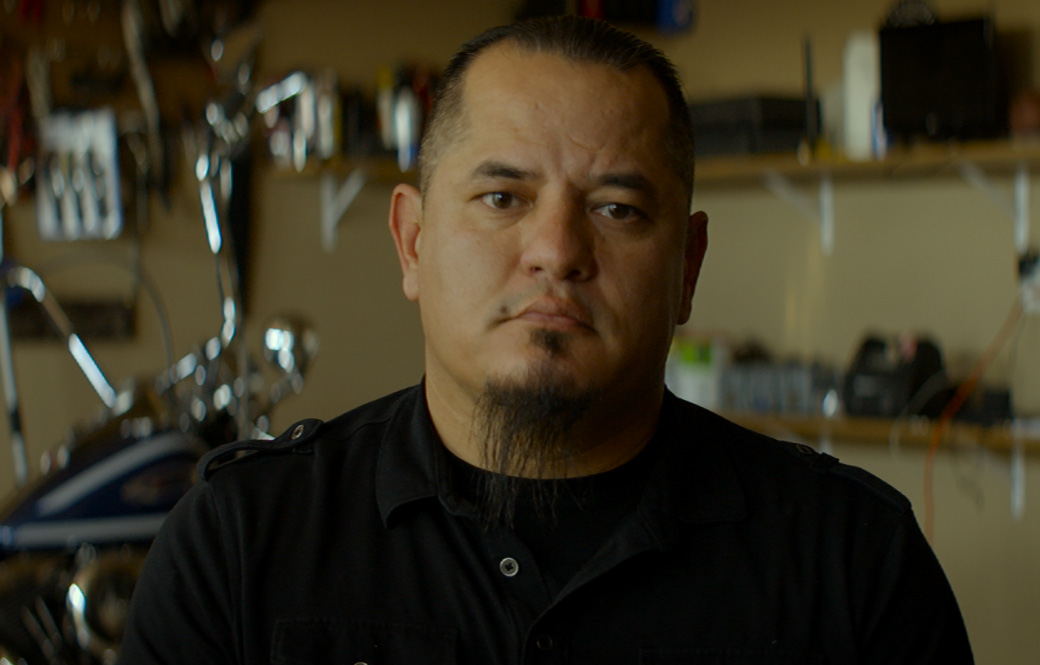
While this scene singles out the film for a queasy remembrance, Señor Escalante, shown at left, offers a tale of a poor and relatively uneducated family residing in the Mexican stix and characters who seem only marginally acquainted with the place in which they live and the people -- including their family, co-workers and friends (if they have any, that is) who live there, too. Perhaps this is exactly how it is in this area of Mexico. Still, at times, the movie's main character, the eponymous Heli, seems woefully unintelligent, at other moments, he's sharper than you'd expect. Ditto everyone around him, from his wife, his father, his younger sister, her older (but still a child) policeman-in-training boyfriend, and the police officers who "investigate" the slaughter that soon occurs.

You either, I think, accept all this and move on with the film, or you simply shut down as you wonder why you should pay attention to characters this dumb. You want to care for Heli (Armando Espitia, above) and his crew, but Escalante makes it more than a little difficult. His movie raises again the question: How do you make the lower classes real without seeming slow and/or boring? Ah -- just toss in a little uber-violence!

Do these folk know what cocaine is? Of course they do. Do they know about the drug cartels and the power these have. Most certainly. So why do they behave so stupidly, first to last? And why does not the cartel kill Heli when it has the opportunity? Well, then there would be no movie -- which, in the shape it's in, lasts too long by maybe fifteen minutes. I'd have been willing to sit even longer, though, had Escalante given me more genuine specifics.

As for the venal and corrupt police officers, at least the female of the two seems to want sex more than money, which is a switch of sorts -- while allowing us to view some very appealing cleavage, fully exposed: This filmmaker knows well what will sell his film. Despite his heavy-duty nods to the marketplace, I suspect Escalante is trying to be truthful to the behavior of someone like his main character, and so does not give him much of a backstory filled with undue exposition. Unfortunately, he doesn't give him much of a current story, either.

We're made privy to very little here -- not the younger sister's conversa-tions with her school mates, in which the boyfriend and cocaine tale would certainly come out and she'd be thoroughly warned about him and his actions. (If I know that local police officers and drug cartels are connected, I'd wager these kids do, too.) Likewise, Heli seems to have no friends at all -- on the job or elsewhere -- with which he'd share parts of his life.

So we go from event to event, most of them damned huge and life-changing (or ending). We're shocked, certainly, disgusted and frightened, and end up feeling, as we usually do, that Mexico is one of the larger cesspools of the world, for which there's no clean-up scheduled (or even possible) anytime soon. The cast, made up of mostly newcomers, achieves as good a likeness to reality as possible under these circumstances. (One of the investigating cops is played by the film's co-writer, Gabriel Reyes.)

From Outsider Pictrures, Heli -- which won the Best Director prize at last year's Cannes Film Fest and was nominated for the Palme d'Or -- opens this Friday, June 13, in New York City (at the Cinema Village), Los Angeles (at Laemmle's Playhouse 7 and Noho 7), and San Diego (at the Digital Gym Cinema). In the weeks to come it will hit Seattle, Chicago and San Francisco. To see all scheduled playdates, click here and then click on Now in Cinemas near the top of the screen.

Thursday, May 3, 2012

THE CONNECTION: Shirley Clarke's grubby classic returns to sport spiffy, silvery sheen

Milestone has done it again. The company that keeps turning out major restorations, with the help of the UCLA Film & Television Archive, of major (or minor, depending on how you view them) works of cinema -- from Araya to Rogosin, The Exiles to The Edge of the World -- has a new one opening tomorrow in New York City, fifty years from the time it first appeared, only to be shut down by the New York City Police Department. At the time of its debut in October of 1962, THE CONNECTION, directed by Shirley Clarke, from the stage play by Jack Gelber, was already a cause célèbre. Back in those days, the play itself was considered raw and real -- too raw and real for the more popular, affordable and accessible entertainment offered by the movies. (This was prior to the creation of our current and ever-ridiculous ratings board.)

At the time of the film's initial release TrustMovies was a very young man who had arrived in New York the month previous to begin drama school. He missed opening day and didn't see the film until it was once again allowed to be shown, at which point, that "raw and real" subject mater -- a group of junkies, including some fine jazz musicians, sitting around a dilapidated cold-water flat waiting for a fix from their connection who, unlike Godot, really does show up to service the guys -- did indeed seem shocking and much more frank than anything he had seen up until then. That's about all he remembers of the film -- except that the print did not seem particularly good. Certainly nothing like the gorgeous one we saw at the press screening of The Connection at the IFC Center, where the film opens this Friday, May 4th. (Is that even possible? That today's restoration might look better than the film projected at the time of the initial release?) The dismal apartment that is the set of the film still looks like shit, but the film itself -- all silvery sheen and so many lustrous shades of grey that you want to lick them off the screen -- is a jewel.

Are we now so carelessly used to watching DVDs at home and digital projection in theaters that we can be so easily shocked into renewed appreciation by something this beautiful? (This restoration is up there with the best of them -- like Rogosin's On The Bowery.) Past the film beauty on display, however, The Connection, as is true of a number of these restored films, has not been treated kindly by the passing of time. Gelber's play and Clarke's film of it is a kind of play-within-a-play/movie-within-a-movie that posits a filmmaker/journalist (William Redfield, above) and his crew making a documentary about these guys and their "habits."

What may have seemed like stark realism in the 1960s comes off now as not a little pompous and "arty." And Gelber's writing, which again, seemed so honest and pointed at the time can sound awfully "theatrical" now, with some of the more "dramatic" moments resounding as the least real. The apartment's owner, Leach (played by a terrific William Finnerty, above) is afflicted with a boil on his neck that pains him no end. It's a very theatrical boil, however, and the actor is often referencing it to huge dramatic effect. Just when we're thinking, "Will somebody please pop the damn thing so we and this poor actor can move on!", somebody does, and we do.

Fortunately, four of the junkies are musicians, so we get a nice dose of jazz (a form of music I appreciate much more now than when I first saw the film). Nearly half the cast is black, and though civil rights had barely begun to make its mark in our country by 1962, you can feel the shimmering beginnings in this film. Gelber, Clarke and the cast show us how things were, with just a hint of what's to come. The strongest character in the play/film is Cowboy (played by Carl Lee, below), the titular connection who provides a little bit of heaven -- drug-wise -- along with philosophy, strength and cynicism for his crew.

Clarke put together a grand crew of her own to man the film, with some movie greats doing great work. Arthur J. Ornitz (Serpico) was cinematographer, Albert Brenner (The Pawnbroker, The Hustler) did the art direction, and Richard Sylbert (with dozens of classic films to his credit) handled the production design. The still below gives you a sense of what was achieved by these three.

For her part Clarke has Ornitz's camera constantly prowling the apartment; she's seldom still, and her movement keeps us enrapt. At 103 minutes, the film still feels a tad too long for what it has to say. Yet, in its way, it is so visually stunning, I don't think you'll mind sitting, listening and looking. Then, too, there's all that jazz.

As I noted above, The Connection, from Milestone Films, opens Friday, May 4, at the IFC Center in New York City (and elsewhere, I hope?) -- with a promise of the institutional DVD and home DVD release available this coming winter, 2013.