Showing posts with label exposition on parade. Show all posts

Thursday, November 21, 2019

FRANKIE may not be up to the usual level of Ira Sachs movies, but it's still worth a view


Why? As they say in the real estate trade, location (I'll spare you the cliché of repeating this word another two times). FRANKIE, the new film from Ira Sachs (Love Is Strange, Keep the Lights On), has been filmed in Sintra, Portugal, in one of the loveliest locations -- the inside and outside architecture, as well as the lushly verdant landscapes -- I've seen in a movie in some time. Consequently just about every scene features a view or two that is drop-dead gorgeous. Another reason the film is worth seeing is its terrific international cast: Really, are you going to pass up a movie featuring Isabelle Huppert, Brendan Gleeson, Marisa Tomei, Greg Kinnear, Jérémie Renier, Pascal Greggory and the remaining international cast with whom TrustMovies was not as familiar but who are very, very good.

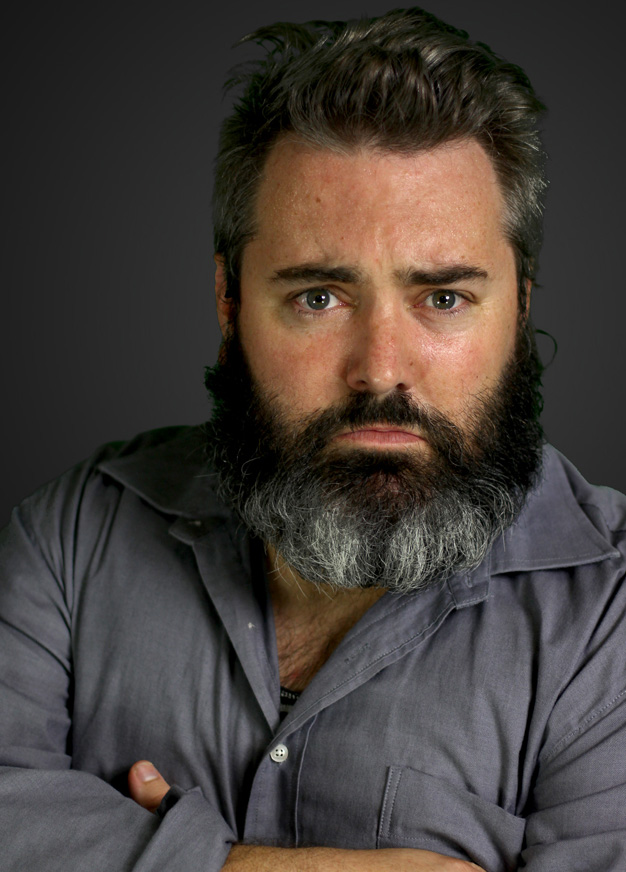
Mr. Sachs' (the filmmaker is shown at left) gift for largely doing away with exposition (or couching it so very well that we don't even notice) seems to have somewhat deserted him here so that we get more expo than we do action or plot.

There are probably times in which this would not mater. But here it eventually stalls the film to the point that we grow impatient for more to happen.

More never comes, so we fall back on the gorgeous cinematography (by the fine Rui Poças)  and the excellent work from the performers, for whom every moment rings true -- even if the movie as a whole doesn't quite make it. And then, Sachs drags his finale on well past the point of no return.

The tale told is one of internationally famous film star (played by Huppert, above) hosting a family-and-friends get together in Sintra during which much is revealed (much of which we, if not some of the other characters, already know). Revealing any of what is revealed risks spoilers -- in a movie that boasts so little plot that even spoiling a single thing seems too much.

So let's just concentrate on that cast of characters at this extended-family reunion to which a couple of outsiders are included. Ms Tomei (above) plays one of Huppert's dearest industry friends (she does hair for movies, as I recall) who brings along a director of photography (Mr. Kinnear) who surprises her with a sudden proposal.

Mr. Gleeson (above, right) essays the role of Huppert's current hubby, while Mr. Greggory plays her former spouse and M. Renier (below, right) is grumpy/sexy as Huppert's grown son who's equally concerned about his mother's health and what he'll inherit, once she has departed.

As I mentioned, we get all this via exposition that's not up to Sach's usual abilities, but the performances are good enough to carry us along, while the background locations, with their eye-popping visuals, keep us happy.

From Sony Pictures Classics, in mostly the English language with some English-subtitled French and Portuguese occasionally tossed in, and running 98 minutes, Frankie, which opened in our cultural centers a few weeks ago to not-so-hot critical notices, hits South Florida tomorrow, Friday, November 22, in the Miami area at AMC's Aventura 24 and in Boca Raton at the Living Room Theaters -- among other possible venues (Sony's Frankie website has not been updated to include any actual theater locations at this point in time).

Tuesday, November 20, 2018

In Ventura Pons' MISS DALÍ, we see that infamous artist from his sister's viewpoint


I have long enjoyed the oddball movies of Catalonia filmmaker Ventura Pons, who used to be something of a staple at the FSLC's Spanish Cinema Now. It has been several years since I've had the opportunity to see one, but the drought is now broken by the very limited release of his latest, ever-oddball work -- MISS DALÍ -- about narcissist nutcase and semi-talent, Salvador Dalí and his family and "friends." I use that last word loosely, as I am not at all sure if the artist's treatment of those people closest to him could qualify as anything approaching real friendship. I once knew briefly one of the handsome young men the artist used and abused (both emotionally and physically, I suspect), and the result was not a happy camper.

Though the "Miss" in the title refers to Dalí's younger sister Anna Maria, it could as easily apply to the artist himself, as campy and gay -- but closeted -- as they probably ever came. (Think John Waters -- but without the closet, or a lick of the honesty and moral clarity Mr. Waters possesses.) Writer/director Pons, shown at right, has based his film, I am guessing, upon the written works of Anna Maria about her brother, her family and their life. His framework consists of a daylong-into-evening conversation between the aged Anna Maria (played with vigor and great feeling by Siân Phillips, on poster, above, and below, left) and her long-time friend Maggie (played by Claire Bloom, below, right). This conversation covers much of a lifetime, allowing incident after incident to be recounted, as we move back and forth in time from present talk to past happenings.

The conversation comes at quite an artistic cost, however, as the exposition here is so bald-faced as to be near shocking. And while Ms Phillips is quite marvelous, having been given the better selection of dialog, Ms Bloom is utterly wasted, having to sit quietly by murmuring little more than the likes of "Ah, yes, I remember" throughout.

The movie is saved in part by the energetic and very well-acted flashbacks, often shot in black-and-white (sometimes sepia-esque), with but a single color very subtly on display: the blue of the sea, a bit of green in the shrubbery, or maybe the rust shade of a dress. In these past-time scenes, Anna Maria is played by another wonderful actress, who seems to be making her full-length film debut here, Eulàlia Ballart, above and below, center.

Ms Ballart beautifully communicates the longing of unrequited love (for playwright/poet Federico García Lorca), as well as the gnawing, if quiet pain that builds when one is considered the lesser light in the family (first, a female; second, a non-artist). Lorca, who, as shown here, was in love with the unable-to-respond Salvador, is played by the lovely and graceful young actor José Carmona (above, right, and below, left), who captures Lorca's yearning and passion, as well as, in his recitations, a fine understanding of the poet's work.

The film's liveliest performance is given by Joan Carreras, as Salvador (above, right, and below). Carreras captures Dalí's zeal for notoriety and fame above all else (with money not far behind), and the actor's energy, wit and, yes, charm, go a long way in reminding us how much fun the artist could be. In small doses and for while.

The other actor who shines brightest here is Senor Pons' long-time performance collaborator, Josef Maria Pou (below, right), who plays Dali's stern-but-way-too-forgiving-and-enabling father. Pou proves alternately angry, funny, caring and shocked, and he is, as always, marvelously entertaining.

Most of the drama here comes via the flashbacks. The exposition, which makes those flashbacks possible, is also somewhat draining (Miss Dalí lasts over two-and-three-quarter hours). TrustMovies was never bored, however. The lives and situations, as depicted here, are just too interesting, provocative and annoyingly enjoyable to look away from. And the locations, with their visual splendor, provide a most enjoyable, affordable vacation.

We also get glimpses of Salvador's wife, Gala (played by Rachel Lascar, above, left, and below, right) -- a woman who, according to what we see here, almost no one liked -- except, of course, Salvador and Gala herself.

I wish we'd seen some of the artist's work. We don't, so I suspect that the permissions and copyrights must be locked up tighter than a drum. Or they're way too expensive for a Ventura Pons budget. While I often found the artist's work a lot of fun, certainly original, full of symbols and Freudian-as-hell, I also feel they are about as deep/profound as that puddle left by yesterday's brief rain shower. If only for his wretched treatment of Lorca (an artist whose work was deep and profound), both before and after the poet was murdered by Franco's minions, Salvador deserves this film as his memorial.

From ELS Films de la Rambla and running 168 minutes, Miss Dalí opened this past weekend in New York City (at the Cinema Village) and will open in Los Angeles at Laemmle's Monica Film Center this Friday, November 23.

Monday, March 5, 2018

Alex Garland's ANNIHILATION proves pretty much the annihilation of Alex Garland


A sophomore slump for the record books in which the writer/director of the wonderful Ex Machina descends to ham-fisted, lugubrious and spell-it-all-out silliness, ANNIHILATION proves such a tiresome and obvious piece of science-fiction that you may have to watch Alex Garland's first foray into both writing and directing a second time, just to recall how classy, subtle, dark and intelligent a genre piece can really be.

His new film is dark, all right, but that's about all it has in common with its superior predecessor.

I admit to being completely befuddled as to why Mr. Garland, pictured at right, has chosen to be so tiresomely expository in terms of how he verbally explains so much to his audience. Initially, at least, he refrains from this, and it is not until maybe one-third of the way into this overlong, two-hour movie that we start getting the lectures by one character to another that make certain we understand what is happening plot-wise, "science"-wise and -- oh, yes -- morally speaking, too. Any ring of truth in terms of genuine conversation goes missing even as we're fed all this expository catch-up material.

Sure, the film is slow-moving (very, and it seems to grow slower even as it moves along), but intelligent adult audiences usually can put up with that, provided the plot and/or characters are strong enough to maintain interest. Here, the plot only grows more tiresome, while the characters are lucky to have a single defining feature.

Annihilation's plot has to do with a soldier husband (Oscar Issac, above) who disappears while on a top-secret mission then comes home to his scientist/professor wife (Natalie Portman, below) a mere shell of a man who then drops near-dead at the dining room table. So wife determines to discover what hubby was up to and what has happened to him.

This means becoming involved in that secret project, about which we learn much much more, and then traveling into something called "the shimmer" (below), about which we learn even more. Nothing looks promising in terms of anyone's survival here, including actually all of humanity. But on we go, as our Natalie joins a quartet of women who venture into this new kind of abyss, only to get picked off one by one. Hey, that's original!

Step by step everything that's going on is then explained to us, and the film -- which, throughout, has been a slough punctuated with a couple of scenes of suspense and slasher/monster thrills -- finally concludes with a bravura display of special effects that goes on so long that it achieves the kind of significant boredom that only CGI can these days manage.

The supporting cast supports as best it can, and Garland caries his theme home as expected. Perhaps he works better in the smaller scale of Ex Machina rather than in the much-bigger-budget realm of supposedly blockbuster sci-fi.

In any case, Paramount who is releasing this 120-minute movie, seems to have yet another dud on its hands. Too bad. The film hit theaters the last week in February and may still be playing at one or two near you. Click here to find out.

Thursday, August 24, 2017

"Dreck" the halls: Craig Anderson's "nut"meg eggnog, RED CHRISTMAS, hits a few theaters


Can you make a decent slasher movie while tossing in themes of religion, pregnancy, parenting and abortion, among other things? Yes, if your film is as good as, say, She Who Must Burn. But a big, fat "no," if the new RED CHRISTMAS, written and directed by Australian filmmaker Craig Anderson, serves as a more recent indication. Once the killing starts -- among family members gathered to celebrate here -- these characters begin acting stupider and stupider, breaking even the cardinal rule of this kind of film: When under siege, you idiots, stick the fuck together!

Mr. Anderson, pictured at right, proves pretty good when he keeps his gore effects on the subtle side, as in the "offing" of his first victim (below, left), a nasty Outback outlier who makes quite unnecessary fun of the movie's Michael Myers/Jason/Fred Krueger stand-in, a poor cobbled-together creature named Cletus, who arrives unbidden but hell-bent for revenge at the family gathering mentioned above.  The second killing (but the first, so far as this family is concerned) is also handled with exquisite tact/taste.

Following that, however, the bigtime stupidity sets it, and the movie, as well as all its further killings, never recovers. Characters begin doing things for either no discernible reason that makes any sense -- other than merely separating them from the pack so that each can be "offed" more easily -- or to give the filmmaker another opportunity to grace us with further tiresome past history/exposition.

The cast is mostly Australian, with the exception of Dee Wallace (below), who plays the family matriarch with appropriate fear and ferocity, though even she finally joins the full-out nonsense on parade here. If you're a fan of Ms Wallace, better to revisit The Howling (does she not make the cutest werewolf in film history?), or even E.T., than waste your time with this one.

Other cast members meet either grizzly ends, via very unbelievable-looking "special effects," as below, or find themselves on the wrong end of various lethal objects. Either way, you'll probably be drumming your fingers in something like boredom, waiting for the final body count, as it piles up with tiresome regularity.

What's particularly grueling about Red Christmas is the highly unlikable group of characters thrust upon us by Mr. Anderson. They argue incessantly, while they're not doing dumb things, and as the increasingly obvious chunks of wholesale exposition come plotzing out, you'll find yourself more than ready for this overlong-even-at-82-minutes movie to end.

The film opens with demonstrations pro and con regarding abortion, above, and with a flashback sequence on which a lot of what happens later depends (below), but whatever the filmmaker might imagine he's trying to say here

gets quickly and thoroughly lost within the extreme idiocy of his poorly concocted characters. As my spouse remarked wearily, post- viewing, "What should have been aborted was this movie."

From Artsploitation Films (great moniker, by the way!) and arriving in a Los Angeles theater (Laemmle's Music Hall 3) this Friday, August 25 (just four month prior to the holiday!) for a once-daily showing at 9:55 pm, Red Christmas will then expand to San Francisco, Denver, Dallas and other cities over the weeks to come.