Showing posts with label poetry. Show all posts

Thursday, September 12, 2019

Raúl de la Fuente and Damian Nenow's ANOTHER DAY OF LIFE offers some hot animation inspired by the cold war


Just the other day TrustMovies was wondering how many of us are all that familiar with British history, let alone with that of our own USA. And now here we are getting a good chunk of the history of the African country of Angola, which was, until winning its independence from Portugal in 1975, one of the many "colonized" African countries. That independence led to a decades-long struggle between the ruling party, the MPLA (supported by the Soviet Union and Cuba) and an insurgent group (UNITA) supported by the United States and South Africa. Yes, that ever-famous/infamous Cold War was full-swing in Angola, just as it was in so many other places around the globe.

The new combination-animated/live-action movie, ANOTHER DAY OF LIFE, is based upon the eponymously titled book by Ryszard Kapuściński, a noted Polish journalist/ photographer/poet/author.

If the story of a hugely difficult independence, mass killings and yet another nasty product of that seemingly endless (and maybe starting up all over again) cold war would seem to be an odd choice for animation, think again.

The film's directors (and co-writers), Raúl de la Fuente and Damian Nenow (pictured at left, with de la Fuente on the right), do full justice to Kapuściński's penchant for poetry and reportage.

The animation (above and below) is by turns beautiful, poetic, impressionistic and horrific -- as befits the story here told. Further, the animation and story are very well complemented by the use of live-action documentary footage in which a few of the true-life characters we meet are shown to us now, some forty years on, in old age.

The back and forth between animation and live-action is never jarring however; instead, it flows as easily as do the assorted moods, images and characters woven through the story. We meet everyone from our protagonist's fellow reporters and a gorgeous female rebel-in-chief (below)

to the famous hero-of-the-revolution, Farrusco (below), who oddly proves the film's most surprising and poignant creation, and some of the students Kapuściński teaches back home in Poland,

one of whom (below) poses a question to his instructor that lingers for good reason. The film is full of ideas, as well as visual appeal.

Given all we now know about our own country's involvement in the overthrow of numerous democratically elected foreign governments, as well as its happily propping up just about any bloody dictatorship, so long as that dictator says he's anti-Communist, what we see here will seem pretty much par for the course. (Except, of course, for the people of the foreign country in question.)

While the use of live-action in tandem with animation proves consistently compelling, Another Day of Life reaches its zenith at the end, as the credits roll and we learn more about Kapuściński, his life and work. The film is, deservedly, a paean meant to honor this man. It thoroughly does.

GKIDS will release the movie -- a Poland/Spain/Germany/Belgium/ Hungary/France co-production running 85 minutes, in English, Portuguese, Polish and Spanish (with English subtitles as needed) -- this Friday, September 13, in New York City (at the IFC Center) and Los Angeles (at Laemmle's Glendale).

Wednesday, February 7, 2018

Now on DVD and a "must" for poetry lovers -- A FANATIC HEART: Bob Geldof on W.B. Yeats


Those who love the poems of W. B. Yeats -- is there anyone who truly cares about poetry that could not? -- will make a bee-line for the Irish documentary, A FANATIC HEART: Bob Geldof on W.B. Yeats (produced, I believe, for television) that made its debut back in 2016 and is finally reaching our shores in a three-disc DVD package (two DVDs and one CD) via MVD Visual. Here you will get not only a good deal of the poetry but also the history, personality and character of Yeats, as well as a grounding regarding the poet's contribution to the making of modern Ireland.

As directed by Gerry Hoban (shown at left) and written by Roy Foster and Bob Geldof (the latter of whom, shown above, acts as our guide and narrator), this 100-minute documentary may not offer reams of new information to Yeats scholars, but for those of us who know his poetry but not that much about his life nor how it plays into the slow and sometimes fiery creation of an Ireland that is still evolving, the film should be eye-opening, thought-provoking and mind-expanding.

History and poetry, together with character, carnality, mysticism and politics have seldom come together in such a surprising and bracing manner. Best of all, perhaps, is how Geldof and company are able to give us Yeats the great poet and Yeats the bumbling, foolish man (both are pictured below),

without in any way demeaning either. As I guess we ought to know by now -- and as the life here makes abundantly clear -- great art often comes from anything-but-great human beings.

Granted, we must remember that this was a life lived over a century ago. Still, this one -- filled as it was with everything from a ridiculously lengthy unrequited love and coming-of-age sexually (if perhaps ever?) at a very advanced age to a bizarre reliance on seances, horoscopes and oh-god-so-much-more -- may have your jaw drops further and further as this documentary moves along. What a wild and crazy guy! And yet: There are those poems.

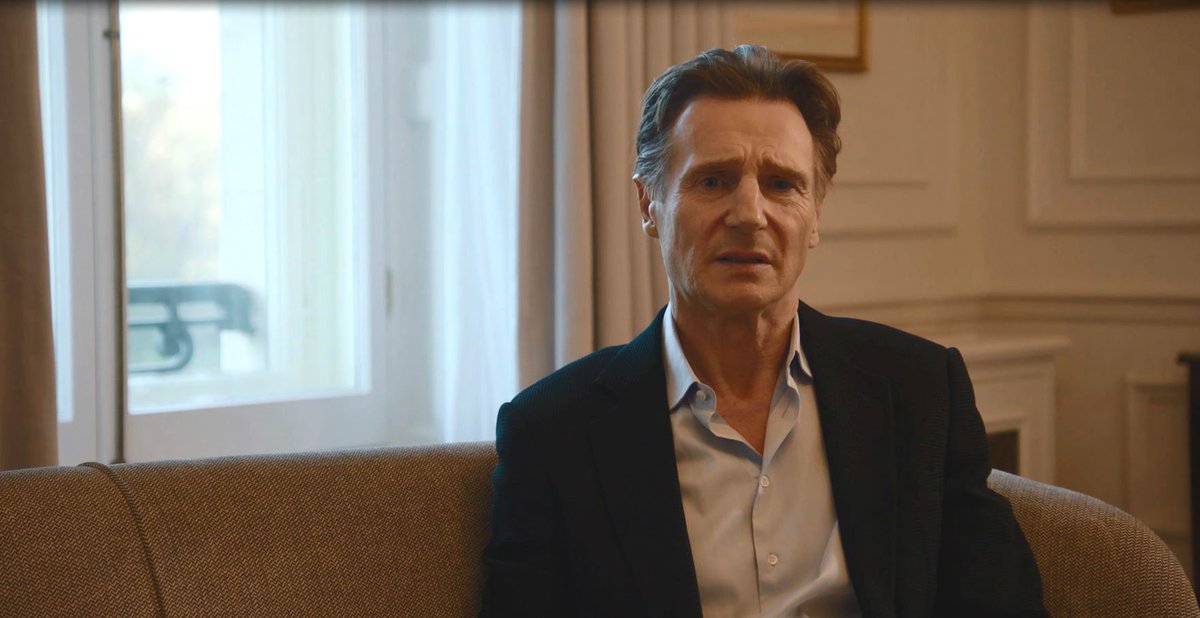
Reading them to us are about as fine array of Irish actors and writers as you'll find under one roof (or film). From Stephen FryEdna O'Brien and Liam Neeson (above, and the greatest living voice we now have, I believe) to Colin Farrell (below), Dominic West (who reads perhaps Yeats' greatest work, The Second Coming, which is suddenly timely all over again, thanks to Donald Trump) and Richard E. Grant (who tears up so beautifully, unexpectedly and yet appropriately as he reads a certain line), the list goes on and on, and their readings will have you going back again, very likely as soon as possible, to the source.

We also get some time spent with the film's co-writer Foster (as well as historian and Yeats biographer), below, who, along with Geldof, fills us in on the history and politics of the poet's time. And though what we're told, I think, comes rather strongly from Geldof's ideas and viewpoint, I must say that the fellow makes awfully good sense most of the time.

Yeats' own ideas and feelings about Ireland and what it could and should become are seen here within the history of his time that includes Lady Gregory, the Abbey theatre and J. M. Synge, as well as the poet's unrequited love, Maud Gonne, below.

As Geldof (at left, below, with Van Morrison) muses along the way, this man, who wrote such fine poems of love, may never have really understood the deeper meaning of that word at all. Even so, our narrator's final thoughts about Yeats and what Ireland has become, will very probably bring tears to your eyes. They did to mine. And I'm not even Irish. 

From MVD Entertainment Group, this enormous three-disc set features the documentary, a bonus disc full of extras, and a CD of readings of the poet's work, some of which has been set to music. In all there are nearly three hours of extras here, only a bit of which I've had time for -- as of the posting of this review. The package hits the street this Friday, February 9 -- for purchase (and I would hope) rental, too.

Tuesday, April 11, 2017

With A QUIET PASSION, Terence Davies has given us his masterpiece (so far, at least)...


... as well as gifting that fine actress Cynthia Nixon with the opportunity to shine brightly in the best role she's had thus far. So very good is Ms Nixon that her work bears comparison with that of last year's best actress, Rebecca Hall. In A QUIET PASSION -- which tells the story of one of America's greatest poets, Emily Dickinson -- writer/director Terence Davies has found the subject and the means to express it that puts into play all of what is best about his work (his great feeling for period style, speech and behavior) and none of what sometimes mars his efforts (extremely slow pacing in which meaning can disappear into the too lengthy moment). Here, everything works together to form what seems to me very close to film perfection. 

Most surprising of all is how wonderfully funny, genuinely witty and humorous so much of his movie turns out to be. (The filmmaker is shown at right.) Could Emily Dickinson have been this charming and delightful? I hope so, for together Ms Nixon and her director certainly make the poet seem so. And very believably, too. Granted, hers is very dry wit, but that would seem to befit the time and place --Massachusetts in the mid 1800s -- and Davies' dialog is endlessly enriching. Really, we hang on every word as we savor the humor, anger and, just as often, the surprise.

Dickinson was an original, a quiet rebel who simply stood her ground, as we note from the film's first scene, in which the head mistress of a girls' school gives the younger version of Emily (played by Emma Bell, above) a good dressing down -- at which our young poet stands her ground and gives us an appropriate taste of what is to come.  Mr. Davies has always preferred quiet, smooth elisions to any flashy effects in his films. Here his flashiest and most remarkably effective is a family photo session in which the younger Emily morphs subtly into the older Ms Nixon, below. This is brilliantly, beautifully handled, and I'd watch the entire film again just to see it once more.

The entire Dickinson family, in-laws included, is brought to wonderful life by the ace cast Mr. Davies has assembled. Keith Carradine (below) seems to grow into a better and stronger actor as he ages. This may be his finest hour playing Emily's stern but loving father who, as much as he is troubled by her behavior appears to somehow secretly treasure it. How Carradine exhibits this is one of the film's wonderful and most subtle accomplishments and also provides the chance for the actor to show a delightfully stern comedic sense. (His "I am smiling" is perhaps the movie's most hilarious line.)

The lovely Jennifer Ehle (below, right) plays Emily sister, Vinnie, with such graciousness and joy that you'll want a sister so tender but honest, while Duncan Duff handles the brotherly duties with typically patriarchal entitlement -- a state against which Emily smartly and rightly railed for most of her life.

Even the sad sister-in-law Susan (a fine turn by the splendid Jodhi May, shown below right) is given her due, in one scene in particular, in which sapphic love is alluded to but not directly addressed.

This seems wise, as -- from what we can tell by Davies' interpretation of Dickinson's life -- the poet would have wanted a heterosexual love but due to a combination of her moral stringency, fear of intimacy and health problems both physical and mental (very possibly a kind of agoraphobia or even something a bit bi-polar), any love relationship beyond that of her immediate family was not to be.

Throughout his movie, Davies intersperses Dickinson's poetry, as appropriate to the theme of the moment. This should send both newcomers and lovers of her work back to the source. The cinematography, too (by Florian Hoffmeister), as per usual for a Davies film, is first-rate.

But family -- ah, what that appears to have meant to Emily! The movie captures this as well as any film I've seen, yet without the usual attached sentimentality (think Little Women in any of its incarnations). There is a stringency here that befits Dickinson so very well, and there is marvelous good humor, too. There is also a coming-to-terms with sickness and death that's appropriate to a tale like this and characters such as these.

I would say that A Quiet Passion is a masterpiece of biographical film-making. But that is too puny. Let's just call it a masterpiece, period. From Music Box Films and running two hours and five minutes, the movie opens this Friday, April 14, in New York City (at the newly re-opened Quad Cinema and the Lincoln Plaza Cinema) and at three venues in Emily's home state of Massachusetts. On April 21 the film hits Ann Arbor and Los Angeles (at Laemmle's Royal), and from there it will soon open across the entire country. Here in South Florida, it opens on May 12 at the AMC Sunset Place, South Miami; the Living Room Theaters, Boca Raton; and the Bill Cosford Cinema in Coral Gables. To view all currently scheduled playdates, cities and venues.click here, then scroll down and click on THEATERS. 

Thursday, December 15, 2016

Poet, politico, man and myth: Pablo Larraín's multi-faceted biopic/fantasy, NERUDA


Older Americans of a progressive slant will be familiar with the Nobel-winning Chilean poet Pablo Neruda, I suspect. But unless they are very familiar with the man's history, much of NERUDA, a new film from Chilean director Pablo Larraín, whose new film Jackie is also currently playing (and will be reviewed here next week), may strike them as surprising and bizarre. That's just fine, however, because -- from what TrustMovies can gather about Larraín's film -- this is indeed a kind of fantasia of what-if? and what-then?

The movie builds off facts, all right -- what we may already know about Neruda's life and art -- and what the screenwriter, Guillermo Calderón (of The Club), does in his very nearly completely invented story, is to wrap it all around a real time in Neruda's life (the 1940s) when he had to go on the run from the anti-Communist Chilean authorities who were (as usual and as a few decades later: remember Pinochet?) in the pocket of their North America "teachers." In filming Calderón's screenplay, Señor Larraín, pictured at right, has given us his most poetic movie so far.

Neruda may move slowly but the tale it spins is strange and gorgeous, witty and ironic, buoyant and sad. In the leading role is an actor who looks remarkably like Neruda himself (at least in some of the extant photos we can access, as the one below), Luis Gnecco (shown at left). Gnecco captures the artist, the politician, and the man equally well, succeeding in making us understand how Neruda was able to concoct the myth that surrounded him via the help of both his friends/fans and even more so with the help of his enemies.

After all, when the right wing calls you a traitor to your country, isn't it rather a badge of honor? Pablo was evidently a man of very healthy appetites, many of which are shown us throughout the movie. And yet it is hard not to love him for his excesses, as much as for his talent and political savvy. But Señor Gnecco shares screen time with a co-star much better known in America and internationally, Gael García Bernal (below), who plays a fictional character named Óscar Peluchonneau, a full-of-himself policeman who is given the job of finding and arresting (or maybe even killing) Neruda.

Óscar also narrates the film, and a more unreliable narrator would be hard to come by. But this is part of what makes the movie so often such fun. The policeman's idea of life and art and his place in it all is far afield from any reality we can see, and as the film marches forward, Óscar's ideas grow funnier but also sadder, even a bit poignant.

Mercedes Morán, a beautiful actress with wonderful access to emotional depths (shown above), plays Neruda's woman, and she's a pleasure to watch in all her scenes. Also in the cast is Larraín regular, Alfredo Castro, in a role small enough that you might miss that notable face.

The movie plays with politics and art, reality and fantasy, storytelling and the "heroic protagonist" (this is the role our Óscar dearly wants to assume) -- all to very good effect. It is beautiful to look at, as well, never more so than in the film's final scenes in the snowy Andes mountains where predator and prey will finally meet. Sort of.

Along the way we get snippets of Neruda's poetry, too, and if I have not made if clear that more than a passing interest in this poet is probably a requirement of the film, then let me do that now. I suspect that Chileans probably flocked to the film in a similar way that Americans will do with Jackie, a north-of-the-border mythmaker in her own way.

Meanwhile, Neruda -- from The Orchard and Participant Media, running 107 minutes, in Spanish with English subtitles -- opens tomorrow, Friday, December 16, in New York City at the IFC Center and the Film Society of Lincoln Center, in Los Angeles at Laemmle's Royal, and in Toronto at the TIFF Bell Lightbox. In the weeks to come it will hit a number of other cities, too. Click here to see all currently scheduled playdates.

Saturday, June 18, 2016

At FIAF this coming Tuesday: Brigitte Sy's deep, dark and beautiful ASTRAGAL


Coming up at FIAF's CinéSalon this Tuesday, July 21, is a film of which I'd never heard but am very pleased to have now experienced. ASTRAGAL (L'Astragale) is a gift from actress/ writer/director Brigitte Sy, who, as director and adapter of a landmark French autobiographical novel of the same name (by Albertine Sarrazin), brings us the adventures, usually pretty dark, of a smart Algerian girl in France during the 1950s. TrustMovies best knows Ms Sy as an actress (Genealogies of a Crime, Regular Lovers, Declaration of War) but he has also seen her earlier work as writer/director, Free Hands. He finds Astragal an enormous improvement over that former film.

What seems most remarkable is how well Ms Sy (shown at left) succeeds on every level she attempts, all the more surprising because Astragale is a period piece, and Sy captures that period, with the help of her cinematographer (Frédéric Serve) and production and costume designer (Françoise Arnaud) so very well. The look, the feel, the detailing all seem extraordinarily precise and right. Even better, though, is the casting of the film, which includes two fine French actors: the beautiful Leila Bekhti, whom I've often enjoyed (A Prophet, All That Glitters) but had no clue that she possessed the ability to the handle a complex role like this one, and Reda Kateb (Me, Myself and Mum and Far From Men, among his many other choice roles) 

Ms Bekhti (above and below, right) plays Albertine, the heroine of the film, whom we first meet escaping from prison and taking a fall that will damage her ankle for life. Rescue comes in the form of M. Kateb (above and below, left), who plays Julien, a criminal with a kind heart but former obligations. And so begins a relationship that will start and stop and start again for a decade or more, as Julien attends to his life and loves and Albertine, constantly in hiding, finds employment as a prostitute, even as she begins writing poetry and prose that show a distinct and deepening talent.

Astragal is one of the more genuinely poetic films I've seen in a long time, and its poetry extends not only to the writing we occasionally hear spoken, but to the look of the film (the black-and-white cinematography is splendidly of its time and simply gorgeous to view); the "feel" of the period that Sy, along with her crew and actors, conjure; in the performance of the two leads and their supporting cast; and the entire "spirit" of this project -- in which incipient feminism appears on the French scene and the "place" of women begins to change. Albertine, of course, is in that double bind of being both female and Algerian.

Our heroine spends the film "on the lam," as it were, not exactly running from the authorities (she has broken out of prison, after all) but keeping quietly under wraps (she's often in a blond wig, as above, for disguise). As the small incidents build, so do the characters of Albertine and Julien. When her best friend from prison, Marie (Esther Garrel, above and below, left), suddenly reappears, Albertine must choose and grow.

How this works out and what happens to both the novelized and actual Albertine we learn as the end credits roll and more information is passed to us. The effect is sad because all this seems so unnecessary, but Astragal is about both the past and the change to come. The latter, I suppose is what makes the former more bearable. That, and this film's enormous truth, beauty and spirit.

You have the chance to view Astragal, this coming Tuesday, June 21, at FIAF in New York City. (There's one showing only, at 4pm!) Click here to learn more and/or to purchase tickets. (And remember: FIAF members get into the the CinéSalon programs free of charge.)

Friday, April 3, 2015

In John Martoccia's religious melodrama, DEATH OF A TREE, faith goes bonkers -- yet again


It begins with a seemingly endless round of preach, preach, preach, and closes with a climax of gun-fueled melodrama followed by a denouement of more preaching (and immediate conversion, of course, as most of these faith-based films allow for zero doubt). In between, DEATH OF A TREE, the second movie from John Martoccia, ambles along with scene after scene intended to show us how foul our current life style really is: How women wear clothes that are far too skimpy (never mind that our leading man is almost constantly seen in a tank top that reveals his arms and torso in all their glory: let the ladies take the blame, as usual); how one's reputation is far more important than what that person believes (wives, of course, are the culprits here; hus-bands do the right thing); and how abortion is the biggest crime imagin-able, while god, the Catholic Church and the Bible are the only true law.

If all this strikes you as the gospel to live by, you're gonna love the movie. If not, there may be a few problems, since Mr. Martoccia (pictured at right), as both writer and direc-tor, has saddled his film with characters who would rather yak about everything than probe their own behavior in more than cursory fashion or -- heaven forfend -- behave in a way that is more than cliché. This man is old school, for sure, and while this in itself could prove interesting if he were willing to go deeply into things, instead he relies on tried-and-true Catholic dogma to solve everything.

Further, he has his characters behave in ways that are simply too stupid to countenance, unless he intentionally wants to hand us a movie that keeps threatening to descend (then finally falls utterly) into the realm of camp. To give just the main example: He has his hero, the hot-looking Ronnie Marmo (above), keep placing temptation in his own way, despite the warning of friends and priest -- again and again and again -- until he falls for it.  Wow: That's a shockeroo.

Further, his leading lady, Gracie Tyrrell (above, left), exhibits most of the signs of a woman genuinely in love -- until his hero's narrow-minded obsessions or her own sudden mental instability do her in. Which is it, Mr. Martoccia? Is there simply no hope for anyone on this earth unless they bow down to patriarchy and Catholic dogma and "do the right thing"? (I suspect, on the basis of Death of a Tree, that the filmmaker is no fan of the current Pope.)

The movie begins with a poem written on the screen, and we see a man praying while being screamed at and threatened by another man. Then that prayerful one starts preaching -- at himself, at the other characters, and of course at us in the audience, and this simply never ends. The film turns out to be one long sermon by people who seem so limited in their understanding of life, human nature, and especially the enormity of that creation called god, that this constricts them and their movie entirely.

More poetry occurs now and then throughout, and we eventually discover that our hero is an artist. The surprisingly sophisticated art shown here looks actually pretty good, but the nitwit dialog given our hero to spout about it makes it seems nearly impossible that this guy could have created that art on his own. The dialog, in addition to the preaching, is full of male prerogative and scriptural cliche ("The spirit is willing but the flesh is weak), with a villain who, in addition to all else, is grammar-challenged. Says he: "There is a lot of girls I could bang."

Oddly, if audiences manage to sit through this debacle -- which, at only 79 minutes, is still far too repetitive -- they may actually emerge chastened, cleansed and finally understanding that, thanks to the stranglehold of religion on some brainwashed minds, no one in this movie has a chance in hell of leading an intelligent, fulfilling life.

Death of a Tree opens today at Manhattan's Quad Cinema, with a Q&A taking place by both John Martoccia (writer/director/producer) and Ronnie Marmo (lead actor) after the 7:45pm screenings on Wednesday April 8th and Thursday April 9th.