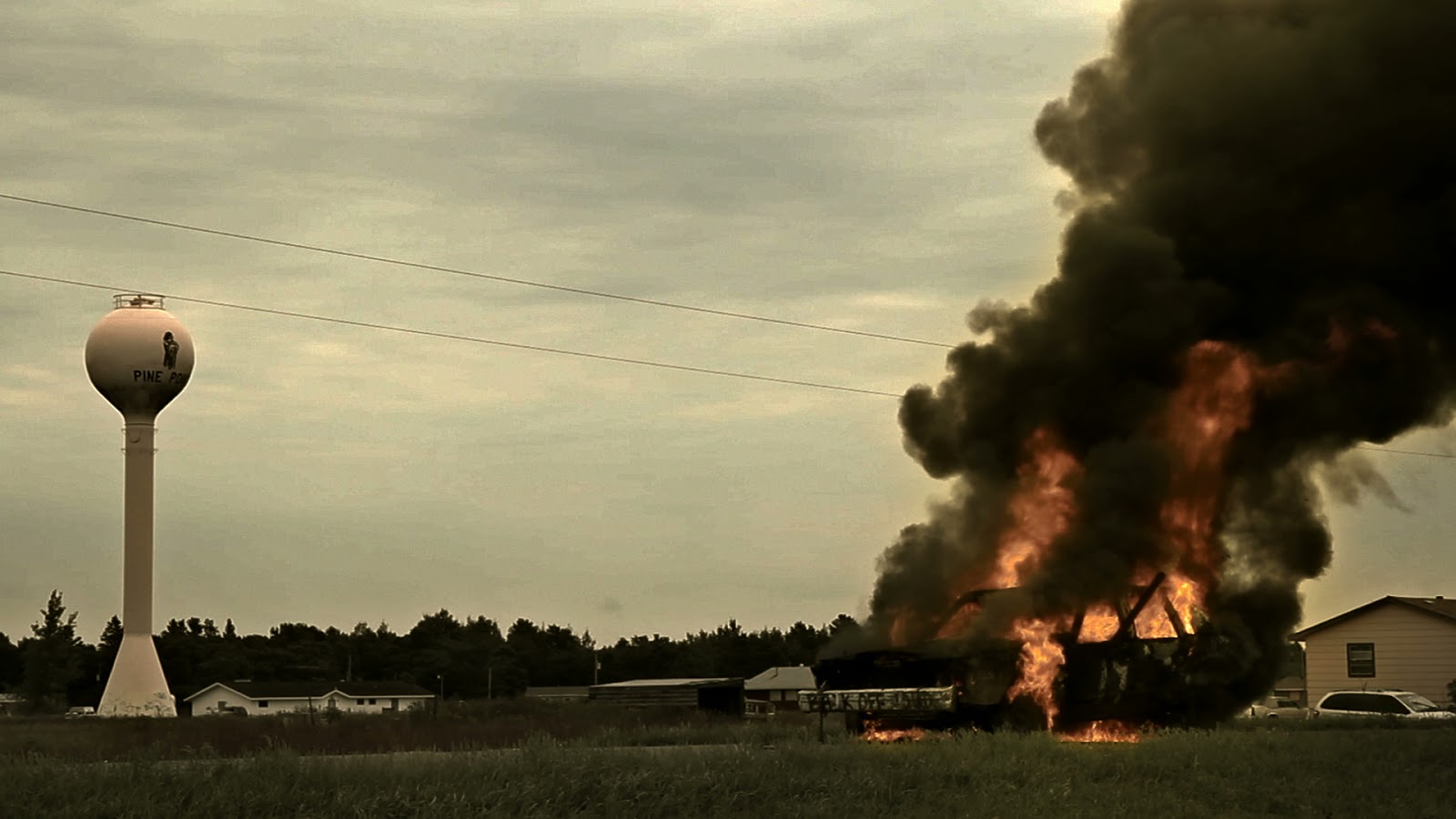
Is there a cinema subject as consistently, singularly depressing as that our American Indians and the
"reservations" on which they are living -- and hopefully, leaving? (Except that, since it is usually the most promising of those young Indians who leave, this just makes it more depressing and difficult for those who remain.) Add to the list of worthwhile movies on this subject, both narrative and documentary, the new one by filmmaker
Jack Pettibone Riccobono (shown below),
THE SEVENTH FIRE.
The reason for the depression is twofold: first, what our country's "settlers" gave the Indians (smallpox, death and destruction) and how we have treated them ever since (hoarding them into ever smaller and less comfortable living quarters; even now we continue to take away their tribal land). "Make America Great Again"? Yeah, right, Mr. Trump. Maybe you could think about starting
here. For all the horror of slavery, many Blacks survived, while the Indians were mostly decimated. What remains are condoned off and hidden away from most Americans.
The Seventh Fire -- that title has to do with some kind of spiritual incantation/episode/journey about which we learn very little -- takes us into the White Earth Indian Reservation in northern Minnesota, where we meet, among others, two males important to the reservation. The older of these is 37-year-old Rob Brown (above and below), a big, beefy, good-looking guy who, during his life, grew up in some 39 foster homes, has already served five prison terms, and is now, as we first meet him, about to go away to prison once again.
Rob is the "criminal kingpin" of the rez, even though his supplying drugs and what-not to the locals seems to extend no further than the borders of the reservation. He also has a young daughter whom he loves and tries to care for -- clearly at somewhat of a distance.
The other male is a young man named Kevin, above and two photos below, who appears to be a kind of acolyte of Rob, striving to carve out his own large patch of the kingdom. Early on, Rob (or maybe it was another of the characters) tells Kevin, "If you're gonna risk your freedom, make sure the reward is worth it." Quite. Notes another rez resident, "One out of ten young people, every ten years, will make it out of here." This is not exactly a happy prognosis.
Mr. Riccobono takes a discursive, disjointed, seemingly haphazard and sometimes near-surreal (above) look at all this, bouncing from time and place so that we are not always sure what's going on or why. Some of his images are strange and compelling, and the film never loses our interest for long, but had I not had access to the press kit that accompanied the film and that did some explaining that
The Seventh Fire itself fails to do, I am not sure I would have understood the documentary nearly so well.
On the plus side, Riccobono proves something of a smart investigator, following young Kevin around discreetly and perhaps on the sly. Initially we see and are charmed by the fact that Indians and whites in the local town get along so well. Well, sure and why not, since Kevin proves to be their drug dealer? We're privy here to everything from doing drugs and fighting to sexual connections. We even get an afternoon filled with Bingo.
All of this is, as expected, depressing as hell. You leave the film as you probably have so many others down the decades, narrative or documentary -- from
Smoke Signals (one of the most positive of these movies) through
Drunktown's Finest to the recent
Songs My Brothers Taught Me -- with that gnawing sense of justice trampled in perpetuity, with nothing at all being done about this.
From
Film Movement and running only 76 minutes (we probably could not take much more),
The Seventh Fire has its U.S. theatrical premiere on Friday, July 22, in New York City at the new
Metrograph theater, and on Friday, July 29 in Los Angeles at
Laemmle's Royal. Another ten cities are scheduled for screenings in the weeks to come. Click
here and scroll down to see all currently scheduled playdates, cities and theaters.