Thursday, September 24, 2015

The Bolings' MOVEMENT + LOCATION: sci-fi sans special effects but w/intelligence + spirit


I don't believe you hear the word "immigrant" mentioned once in the course of the new movie MOVEMENT + LOCATION -- which opened last week in New York City and will open next week in Los Angeles -- but you surely will better understand the immigrant experience once you view it. Oddly enough, this is also one very special science-fiction movie, completely lacking in special effects yet amazingly able to pull you into the world of its protagonist heroes, who are immigrants of a rather special nature. They're time travelers plopped down in present-day NYC.

TrustMovies has probably already given away too much of the plot, for part of the fun of the film lies in how slowly and sparingly it lets go of its -- and its characters' -- secrets. Beautifully acted by the entire well-chosen cast, written (by Bodine Boling, shown below, who also stars) with a tender specificity regarding each of the several characters on view, and directed quietly but confidently by Alexis Boling (pictured at right and husband to Bodine), Movement + Location proves a wonderful example of what can be accomplished by independent filmmakers on a tiny budget with a lot of intelligence and imagination.

The movie is also a kind of rom-com-drama, love story (a couple of them, actually), and a case study in how to get along when you're homeless. That it handles successfully every theme and situation it touches is further testament to its surprising, oddball success.

The story involves Ms Boling as Kim, our primary time traveler, pining for her lost love who evidently did not make it across the big barrier. Also on hand are a local cop, who falls hard for our "immigrant" (well played by Brendan Griffin, above, right),

as well as a sweet teenager (Catherine Missal, above) who is parented by just about all concerned but has her own important agenda, and another homeless man named Paul (David Andrew Macdonald, below), who has, among other skills, a terrific way to scam his fellow citizens (but for a very good cause).

Add to the mix Kim's caring, kindly boss (Haile Owusu) and her roommate (another spot-on performance from Anna Margaret Hollyman, and you have an expert cast giving on-the-nose performances that bring to fruition all that the writer and director hope to achieve.

Movement + Location is a surprise in a number of ways. If you don't catch it in theaters, at least add it to your Netflix queue. It opened this past Friday, September 18, in New York City at the Cinema Village, and will open in Los Angeles on Friday, October 2, at the Arena Cinema. If you're not located near either of these cities, don't despair: The Bolings' film is available online now (via iTunes, VHX) and on Verizon FiOS VOD. Click here to see the links.

Wednesday, September 23, 2015

Odd, subtle and exceedingly humane: Frank Hall Green's teen roadtrip tale, WILDLIKE


Stick with WILDLIKE. It may seem a bit off-putting in its initial stages. In fact, my spouse, oft-mentioned in these posts, while ready to call it a day early on, nonetheless stuck it out, and by the finale declared himself very happy that he did. In this, the first film of his to secure a theatrical release, writer/director /producer Frank Hall Green proves himself surprisingly adept at circumventing melo-drama. And since his movie includes plenty of subject matter that would (and in most movies repeatedly does) lend itself to melodrama, I think it's clear that Green intentionally wanted to avoid that pitfall.

How did the filmmaker, shown at left, manage this? Via quiet, unshowy camerawork (by Hillary Spera) that locates whenever possible the human face as the key to character, while plotwise avoiding confrontation, except in the most necessary circum-stances (and even then, Green withholds any push to go over the top). He also quite cannily allows us viewers to form conclusions (just as we so often do in life) before we really have enough information to understand a situation. Thus we imagine the movie is about a typically rebellious and withdrawn teenager (a lovely, still and deep performance from Ella Purnell, below) who is going to spend some time with another close family member while her mom is away.

Well, it's not quite so easy or typical as all that. And while what we soon begin to learn covers territory oft-trod in today's movies (particularly of the independent variety), it is not trod in anything like the manner we see here. Wildlike actually gives independent filmmakers a lesson in what can be achieved using tact and subtlety rather than a flashy style and pile-it-on theatrics.

Opposite Ms Purnell is starred one of Canada's leading actors, Bruce Greenwood, above, who throughout his nearly 40-year career in film and television has amassed a terrifically diverse and creative resume. That is he is not one of our most famous leading men still surprises me, as his acting chops, together with his good looks, ought to have catapulted him to stardom long ago. Instead he keeps appearing in smart little independent films like this one (or Meek's Cutoff, Barney's Version, or the marvellous but underseen And Now a Word From Our Sponsor). With 134 credits (so far) the actor no doubt has many years and roles ahead of him. Here, as the quiet man who grudgingly takes our heroine under his wing, Greenwood is aces once again.

In the supporting cast strong work is done by Brian Geraghty (below) and Noland Gerard Funk (above) as two other young men in Mackenzie's travels. Funk is fine as the surprised-into-sexuality semi-suitor, while Geraghty unveils even more of his seemingly non-stop versatility as he speeds from role to role, this one among his most unusual so far. Also giving another of her wonderful supporting performances is Ann Dowd (two photos below), as the smart and thoughtful woman the pair encounters on its travels.

One of the pleasures of the movie is that filmmaker sees life as more than cut-out cliches with villains and heroes who confirm to their types. He shows empathy for everyone on view, even, in one case, a character who usually gets blasted away with fear and loathing. This does not mean that Green does not know right from wrong, just that each situation demands its own special handling. The problem often is, of course, that it takes some time before certain situations fully reveal themselves.

Where does the title, Wildlike, comes from? The movie may have offered a clue, but if so, I didn't catch it. One thing I do know is this: Whenever the occasion arises where I have to type the word wildlife, I end up typing the world wildlike. I never understood why, since on a keyboard the f and the k are separated by three letters. Yet that's what my fingers insist on typing. Has this ever happened to you?

Meanwhile Wildlike, released via Amplify from Killer Films and Tandem Pictures, opens this Friday, September 25, in thirteen cities across the country. Click here to see all of them, with theaters included.

Monday, September 21, 2015

DVD debut -- and one of the year's best -- Granit and Maymon's THE FAREWELL PARTY


Treading that fine line -- between comedy and tragedy, smiles and sadness, the must-be-said-yet-can't-be-spoken -- about as well as any movie you'll have seen, the award-winning Israeli film THE FAREWELL PARTY makes its DVD debut tomorrow. If you missed its theatrical run, do yourself a favor and rent or even purchase the disc (yes, it's that special: the kind of movie you'll want to share with friends), Taking place in what looks like the Israeli equivalent of one of our American "senior communities," the film confronts end-of-life situations and what might be called mercy killing with great depth, honesty, strength and humour. The best thing I can say about this film is that it never betrays nor cheapens its very difficult subject.

Co-written and co-directed by Tal Granit and Sharon Maymon (pictured above, with Ms Maymon on the right), the movie comes to immediate and vital life (and stays there) based on the terrific set of characters the filmmakers have created, together with the fine actors who embody them with remarkable ease and perspicacity. Led by award-winning actor Ze'ev Revach (foreground below) and Levana Finkelshtein (background below), the actors create a delightful, surprising, moving ensemble.

How to end one's life with some kind of dignity and choice is a question that takes on ever more importance as we age and wither, but rather than confronting this as some kind of momentous horror story, the filmmakers simply dive into it and let their characters do the talking, walking, laughing, learning and, yes, even changing.

Granit and Maymon understand how to create and capture on-the-fly moments that will resound without unnecessary pushing, and they've found a cast to bring these moments to life in such as way that we follow along, often laughing, where we'd never imagine going. Consequently, everything from ending one's life to sexual preference, generosity to venality, grandparents to grandchildren, lung cancer to Alzheimer's comes to the fore and proves grist for the filmmakers' smart and humane mill.

How humour bubbles up from the darkest, saddest places (without ever seeming in the least crass) is one of the miracles of this little movie. To talk about the plot would be to already give away too much, so please bear with me as I simply ask you to treat yourself to The Farewell Party.

Even if, as is the case with one of our characters here, your objections to hastening the end of life in order to end the suffering of the most painful and terminal illness are so strong as to go against your religion and/or all you believe to be paramount, take a chance and view the movie. Just like that particular objecting character, you may find by the finale that you've had a change of heart. This is thoughtful, mainstream-arthouse entertainment of the highest order.

From Samuel Goldwyn Films (theatrical distribution) and First Run Features (video release), the movie -- running just 95 minutes, in Hebrew with English subtitles -- hits the street on DVD tomorrow, Tuesday, September 22, for sale or rental. 

Sunday, September 20, 2015

Two more ten-minute bizarrosities from fecund, short-form filmmaker, Jeremiah Kipp


TrustMovies first covered a few of the short films of director Jeremiah Kipp, shown at right, back in 2012 (that post can be found here). Now, a few years later, Mr. Kipp has placed two more of his short films --THE DAYS GOD SLEPT, made in 2013, and THE MINIONS (which has nothing to do with the recent animated block-buster), made in 2014 -- on Vimeo for interested viewers to peruse. I should have covered these two new short films several months ago, but what with our relocation to Florida and all that this entailed, I begged off until now. I'm glad I finally got around to viewing them, however, because both little movies are fun, beautiful to look at and definitely worth a watch. Once finished with each, I immediately viewed the film again and found more to like -- and to wonder about, as well.

Both films were written by Joseph Fiorillo and have a definitely otherworldly, magical/supernatural sense about them. They rely on narration as much as on dialog (a necessity, I should think, when trying to fit so much "plot" into such a short time frame).

Kipp's direction favors interesting use of black-and-white and color, with the latter used subtly only now and again, especially in The Minions (above), in which there's a wonderful use of a yellowish scarf clearly tinged with scent and memory, while The Days God Slept offers more color, much of it tinged with an icy blue, near-metallic cast.

Kipp employs suspense and shock technique, done rather quietly and subtly, and both these films are full of sexuality seen as both attraction and danger. The Minions offers a big, strapping guy (Lukas Hassel, above) , two women, a kiss and then enormous sexual attraction, complete with a narrative warning about witches and covens.

The Days God Slept gives us pole dancing, a sex club, gang rape, and some memories -- including maybe a Biblical reference or two -- from what just might be a very unreliable narrator.  Both films use two good and very attractive actors, Lauren Fox (above, right) and Mr. Hassel in a choice supporting role here, while Ms Fox is relegated to mostly narration and a bit of the visual in The Minions. There are several other good actors on view, too. Narrative-wise, Fiorillo appear to enjoy keeping us on our toes regarding what's real and what's not, and he is ably abetted by Kipp.

The films, including end credits, come in at between 10-1/2 and 11-1/4 minutes, and as good as they are, their short length begins to raise some questions about Kipp's work. Both stories here beg for elongation of content and specifics. They are interesting enough to make us want to learn more (this is particularly true of The Minions), yet the short form is appearing more and more to be a kind of tease from Mr. Kipp.

Is it lack of a bigger budget that is preventing a longer tale from being told? Probably. Some time back, Kipp signed on, as work-for-hire, to direct a slasher movie called The Sadist, featuring Tom Savini in the leading role. (I never saw that one -- I'm not even sure it found theatrical release -- since slasher movies are growing increasingly tiresome for me to care about or concentrate on.)

Still, I hold out hope that Kipp and Fiorillo will find a way to bankroll one of their short films into a longer version that will show us what they can do in stretching their very interesting ideas to full length.

Meanwhile, you can find out more about Kipp's two newer short films, along with all of his other work, by clicking here and scrolling around a bit.

Friday, September 18, 2015

Carlos Bolado's OLVIDADOS sheds some light on those South American dictators' dirty wars


The 1970s were not a good time for many South America countries, what with one dictator after another -- in Chile, Argentina, Bolivia, Brazil, Paraguay and Uruguay -- cracking down on any perceived rumblings of unrest by the populace: torturing, murdering and finally "disappearing" that portion of the people considered to be a left-wing threat. One of the strengths of the new film, OLVIDADOS (Forgotten), getting its U.S. theatrical debut today in New York City (it opens next month in Los Angeles) is that it demonstrates to a greater extent than I have seen previously in a narrative film how those South American dictators joined forces to do their dirty work, thus making it easier than ever to crush the opposition.

As directed by Mexican filmmaker Carlos Bolado, shown at left, and starring that fine Mexican actor, Damián Alcázar (seen below),  the movie is a Bolivian production, filmed in its home country, as well as in Chile, Argentina and the USA. Among other historically accurate things, it shows how much of the training for this multi-country repression and torture came from the United States, which provided the training and some military -- as well as funding -- to fight this "Communist threat," which is how the USA labeled it, though the general populace of the countries involved might as easily have called it a fight for government by the people.

Señor Alcázar plays José Mendieta, a high-level military Bolivian officer given the job of finding, imprisoning, torturing and obtaining evidence/confessions/names of co-conspirators from within the populace. He does all this with enormous relish and barely a second thought for the lives of the prisoners he and his henchmen destroy. Alcázar is capable of great versatility, from fine comedic acting through nearly all else. Here, he plays the Colonel at two ages: middle and old (in not very good "age" make-up), and is mostly asked to be cruel as his younger self and frightened/guilty in his older incarnation.

It is the rest of the ensemble cast that enliven the movie with their energy and fraught situation. Mostly, they are the victims, and our sympathy goes out to them, along with a good degree of horror at what they must endure. Movies like this -- and we have now seen quite a number of them in both narrative and documentary form -- almost by necessity demand a certain amount of realistic torture. My spouse found the film too much -- torture porn, he called it -- while I felt it did what was necessary to get across the message

The movie gives both sides the opportunity to advance their message (even within the protesters, there is disagreement about how far to go and how much to give up), but when one side accompanies its message with the kind of maiming and murder that so many South Americans were put through, this does tend, rightly I think, to stack the deck against it.

Stylistically, the film has enough flourish to make it easy to sit through. The torture is intercut with good memories from the victims' lives, while the past and present of the Colonel and his absent son are handled well, too. There is a particularly telling scene toward the end of the film between that son and an interrogator, when the son returns to Bolivia after a long absence.

A pregnant woman (Carla Ortiz, above, the film's female star and its producer) figures prominently in the story, too, which pushes open even farther the door to the subject of parenting, parentage and those babies said to have been stolen from their birth mothers and given to "better" families who would raise them "properly."

Olvidados covers a lot of territory in its 112-minute length. You can think of it as a kind of Holocaust movie with Latin American socialists taking the place of Jews (though some victims here are both). Just as it is vital not to forget what happened to the Jews, it is just as important to remember the "disappeared" of South and Central America. Otherwise, those olvidados will indeed be forgotten.

The movie, from the Cinema Libre Studio, opens today, Friday, September 18, in New York City at the Village East Cinema, and on Friday, October 2, in Los Angeles at Laemmle's Royal.  The DVD, Blu-ray and download-to-own option (via Amazon and Vimeo) will become available on December 1, with an iTunes debut scheduled for January 15, 2016. HBO and HBO Latino will join the parade in mid-December.

Thursday, September 17, 2015

A vast-canvas road trip of genocide and longing: Fatih Akin's surprising saga, THE CUT


As much as I have welcomed the disparate work of German-born, Turkish-descended filmmaker Fatih Akin, whose creative, energetic and moving films have run the gamut from In July and Soul Kitchen to Head On and The Edge of Heaven, I would never have pegged him to tackle such a vast-canvas, very nearly epic family saga of genocide and search like his new film, THE CUT. Yet Herr Akin has come through with a movie that's rich, colorful and relatively "epic," yet small enough to be intimate, as needed.

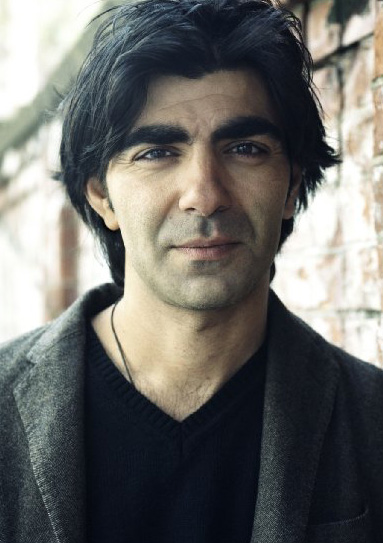
The filmmaker, shown at right, who directed and co-wrote (with Mardik Martin) is here addressing the Armenian genocide which has its 100th anniversary this year and remains unacknowledged still by the Turkish nation. (Where would justice lie had the Germans refused to acknowledge their somewhat later Holocaust? I suppose if Turkey had been bent on world domination -- and stopped from that goal -- responsibility would have had to be accepted by now. I find it interesting that Akin comes from both these cultures, and that his films, among other surface things, are always about bringing together supposedly opposites, outsiders and insiders, while finding a place for "the other."

I would guess that The Cut is his biggest-budget effort thus far. An international co-production involving France, Germany, Italy, Russia, Poland, Canada and (yes), Turkey, and filmed in five countries (Jordan, Germany, Malta, Cuba and Canada), the movie looks terrific and seems utterly place-specific.

Its star is the French actor of Algerian descent, Tahar Rahim (above, of A ProphetFree Men, Day of the Falcon and The Past), whose ability to make much using little is in rare form here. The film's title refers to a particularly nasty and life-threatening wound, given early on in the movie that deprives our hero, Nazaret, of his voice. M. Rahim makes the most of his facial expressions, hand movements and body language to communicate throughout.

Initially, The Cut is about our hero's ability to simply stay alive in the face of the genocide around him. Once some kind of freedom presents itself, reuniting with his family take precedence and leads to the road-trip/search that makes up the remainder of the movie. Along the route, Nazaret encounters a wealth of varied characters, helpful or harmful, and these people help make the movie a more interesting one (they also help pass the pretty lengthy two-hour-and-nineteen-minute running time). Good and bad characteristics are doled out with enough (but not too obvious) equanimity -- amongst Muslims and Christians, men and women, along with the differing countries -- that few hackles will be raised. In a particularly sweet/sour irony, the man who gives Nazaret his wound is also the one who saves his life.

Among the most memorable, if terrible, of this movie's scenes takes place, post genocide, in a kind of camp in which women and children have been left dead or to die, in which Nazaret encounters his sister-in-law. The "look" of this scene, with its dreck-tinged colors and design, is something that may stick with me forever. I don't recall seeing anything quite like it previously. (The production design comes via Allan Starski.)

Movies like The Cut depend somewhat on an audience's good will and its need for that feeling of satisfaction and closure that "search" films demand. Akin delivers this at the same time as he offers up its cost, with a finale is moving but reticent. Overall, this is a fine addition to the filmmaker's oeuvre, as well as to the continuing history of bringing to light (and keeping it there) the Armenian genocide.

The Cut -- from Strand Releasing -- opens tomorrow, Friday, September 18, in New York City at the Lincoln Plaza Cinema and Landmark Sunshine Cinema, as well as in the Los Angeles area at Laemmle's Playhouse 7 and Royal theaters.

Tuesday, September 15, 2015

François Ozon adapts Ruth Rendell in cross-dressing dram-com, THE NEW GIRLFRIEND


The first ten minutes of THE NEW GIRLFRIEND -- the latest in a long line of very interesting and mostly successful (to one degree or another) films by French auteur François Ozon -- are so witty, entertaining and compact that they give you something like the entire experience of Beaches done in delightful movie shorthand. These few minutes also features two stunningly beautiful young girls (M. Ozon, below, is very handy at discovering gorgeous young performers of either gender).

These young actresses -- Mayline Dubois and Anna Monedière -- morph into two beautiful and talented adult counterparts, Isild Le Besco (below, left) and Anaïs Demoustier (below, right). It's wonderful to see the former on screen again, while the latter is quickly garnering quite a lengthy resume of smart roles, well performed). The two play best friends since childhood, and the untimely death of one of them leaves the other, as well as the widower and his infant child, bereft. Normally, the result of all this would make for high drama or maybe middle-brow melodrama. But since the story comes from a Ruth Rendell novel adapted by Ozon, there clearly will be something different in store. And given what we know of Rendell's work, there may be some murder or crime involved.

Well, forget about that -- because Ozon himself evidently did. It's a red herring at best, and one of the critical quotes in the film's advertisement that references Hitchcock seems almost willfully wrongheaded. What we have instead is one of Rendell's journeys into the psyche of an odd and misplaced person -- this time a man whose greatest happiness comes from cross-dressing as a woman.

This does not, I should warn, have anything to do with homosexuality per se, as our gentleman still still prefers the ladies, nor does he appear to want to make any move toward transgendering. His cock, as we see in one particular scene, is still very much on active and pleasurable duty. What the film explores instead -- via its leading man Romain Duris, shown above and below, who gives another of his probing, insightful performances -- is the nature of cross-dressing: where it comes from, what it entails, and how the doer, as well as the world around him, must adapt to this new "stance."

All this is interesting -- alternately fun and unsettling -- for a time. Yet the movie begins to drag, as the back-and-forth situations and banter between David and his female side Virginia (M. Duris) and his late wife's best friend (Ms Demoustier) goes hot then cold, then hot again.

The performances are fine, as far as they are allowed to go, but because we also become a bit involved with the late woman's parents (Aurore Clément, above, right, plays her mom) and Demoustier's hubby (the gorgeous Raphaël Personnaz, shown below, and somewhat wasted in this role), we never get to spend the time necessary to probe David/Virginia deeply enough.

Still, the movie is never dull, even if coincidence plays a bit too large a role in all of it. And Ozon's explorations into the lives of the "other" and the perhaps thin line that separates what's normal from what's not -- here particularly noteworthy in a drag night club in which a thoughtful and poignant song is sung -- nearly always prove worth experiencing.

If this is one of the writer/director's lesser and more obvious efforts (for my taste In the House is by far his most mature and exceptional movie), it's still worth a viewing, especially for fans of this singular auteur.

The New Girlfriend -- from Cohen Media Group, in French with English subtitles, and running 108 minutes -- opens this Friday, September 18, in New York City at the Lincoln Plaza Cinema , the Bow Tie Chelsea, and the Landmark Sunshine Cinema; in Los Angeles at The Landmark; and in San Francisco, Boston, Philadelphia, Washington DC and Seattle -- with a limited national rollout across the country in the weeks to come. Click here and scroll down to see currently scheduled dates, cities & theaters.

Update: Cohen Media Group will release the Blu-ray 
and DVD of The New Girlfriend on January 26, 2016