Wednesday, October 25, 2017

Prevarication reigns (and rains): Phil Allocco's goofy, funny rom-com, THE TRUTH ABOUT LIES


Though it has been sitting around for two years now, hitting the festival circuit while waiting for release, a rom-com called THE TRUTH ABOUT LIES -- written and directed by Phil Allocco (shown below), who earlier made a name for himself as guitarist in the band, Law & Order  -- turns out to have been worth the wait. The movie is funny, charming and goofy as hell, and it sports a first-rate cast of good-looking actors who also know how to create the proper chemistry together, as well as nailing the humor as easily as the romance. 

You will have to suspend your disbelief a bit at some of the whoppers you'll be asked to accept here, but since Allocco has made his movie all about lying, and his leading man, the hugely under-appreciated comedic hottie, Fran Kranz (shown below in romantic mode and and further below in comedic), handles these lies with such amazing aplomb that, for maximum enjoyment and fun, it's best to simply go along on this wild ride. 

The filmmaker's point would seem to be that we all lie to each other all the time, but if we can just ground those lies in a healthier life style -- a decent job, apartment, mate, diet and more -- then we'll get by just fine. What? How dare he! 

Mr. Allocco dares, all right, and he pretty much gets away with it, too, thanks to some clever writing, decent direction, and the ministrations of his first-rate cast. Mr. Franz has long been one of my favorite rom-com actors, and once again he acquits himself royally. Whether he's falling in love, above, or killing time in the men's room, below, with a couple of rolls of toilet paper, he's alternately sexy and funny and always fun. 

His suddenly former and soon-to-become girlfriends are played by Mary Elizabeth Ellis (below) and Odette Annable (further below), the former with a lot of anger and sass, the latter with such graceful beauty and charm that she'll sweep you off your feet, just as she does our hero his.

Allocco peppers his movie, via title cards, with frequent and often terrific quotes about lies and truth -- and their effect on us all. Many of these quotes are first-rate, and they'll make you think (and laugh) as much as does the movie itself. 

In the supporting cast are other good (and good-looking) performers such as Miles Fisher (below, as Kranz's best friend) and Chris Diamantopoulos (at bottom, playing Annable's husband). 

From time to time the movie will put you in mind of early-Woody Allen. But, hey, early Woody Allen ain't bad. And neither is The Truth About Lies. And if the movie will not set the world on fire (we can leave that to Donald Trump), it's nonetheless a pleasurable enough outing for those who appreciate the rom-com genre.

Opening theatrically in some 25 cities across the country this Friday, October 27 -- in New York City, it hits the Cinema Village; in Los Angeles at Laemmle's Monica Film Center -- the movie, running 94 minutes, will be available digitally, as well. Click here, then click on Screenings in the task bar, to view all currently scheduled playdates, cities and theaters.

Tuesday, October 24, 2017

Brothers filming brothers: In AIDA'S SECRETS, Alon & Shaul Schwarz offer up a riveting and unusual post-Holocaust documentary


Yes, the Holocaust, as unfathomable and horrendous as it was, continues to unveil some of the more amazing tales the world has yet seen. Eventually some of these reach the screen in the form of either documentary or narrative movies, and this week one more of these, and certainly one of the strangest (as well as one that seems to be continually unfurling) opens here in South Florida (and elsewhere).

AIDA'S SECRETS, a fine and nourishing documentary by brothers Alon and Shaul Schwarz, takes us to Israel, Canada and back again, as a family -- most members of whom have no idea that they even are a family -- reunites. Of course the film packs an emotional wallop at times, but even more exceptional is how much food for thought it consistently provides.

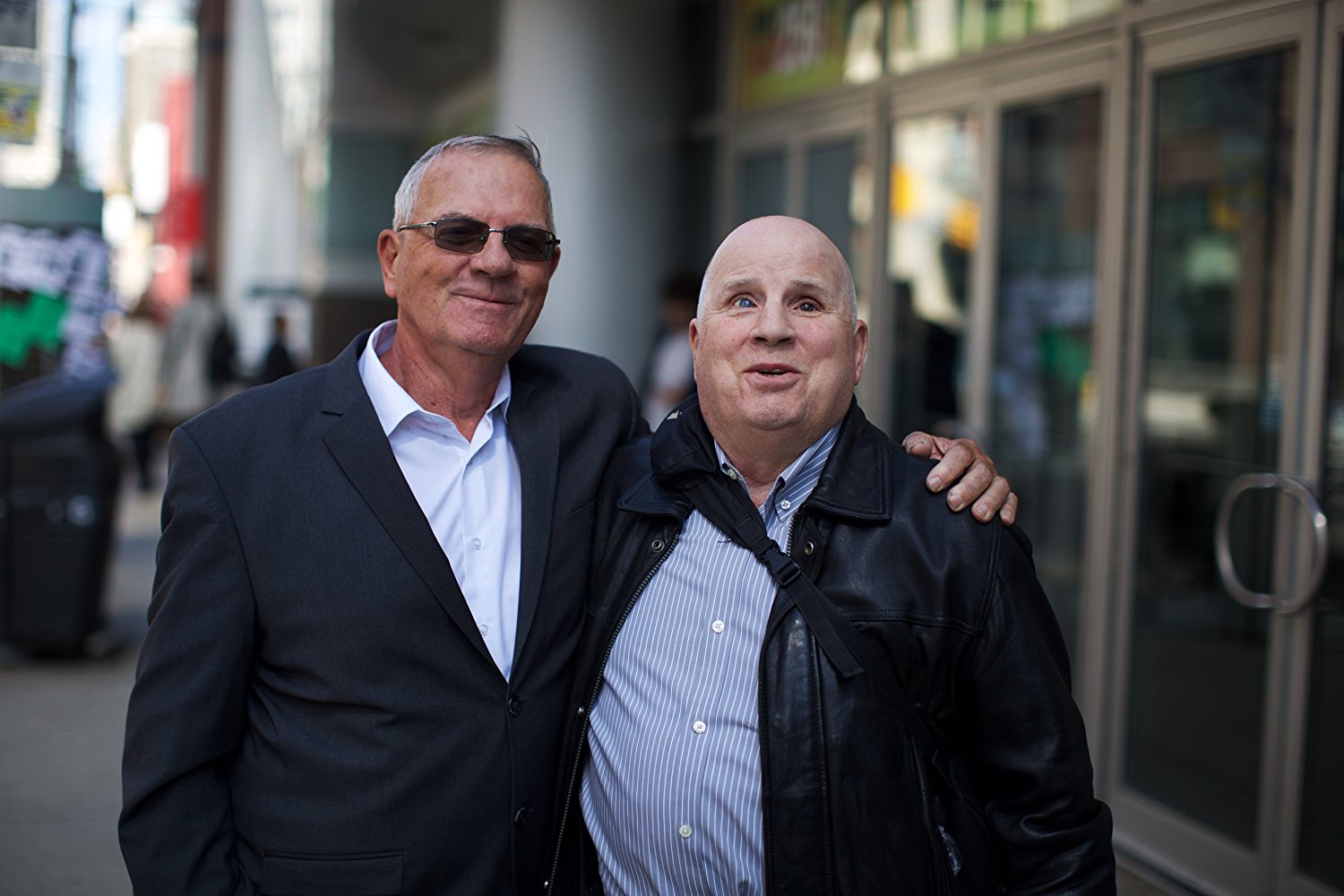
The filmmakers, shown above with Alon Schwarz on the left, bring us here a story so filled with surprise (and, yes, secrets) that you'll have to listen and watch pretty intently to make certain you take in all the details on offer. And there are plenty. To go much into those details here would spoil a good deal of the surprise that the documentary engenders.

So let's just say that the other member of this odd family, mother Aida (shown below, in her younger days, and further below in present-day), has enough secrets -- along with good reasons for keeping them so -- to easily fill out the film's 90-minute running time. Of particular interest is the fact that the two filmmaking brothers have actually found two older brothers -- Izak Sagi and Shep Shell, shown left and right, respectively, above) to become to subjects of their film. Each pair does the other more than justice.

Their story is so full of oddity and emotion, surprise and eventual understanding, that watching and listening as the documentary unfurls is both thought-provoking and revelatory. The various subjects this documentary explores -- by its very existence -- include identity, parenting, the importance of geography (locations range from Poland and Germany to Israel and Canada), what it means to be Jewish, and how important knowing one's history/genetic strain is (or maybe, as we learn while the end credits roll, is not).

The movie makes no judgments but simply lays out the timeline and series of events that take us from there to here, often with our mouth hanging open in wonderment of the decisions that were made and, finally, the reasons for making them.

Aida's Secrets is as much a mystery film as anything else, and that mystery encompasses not merely the facts of the matter at hand but also the secrets of the workings of the human mind and conscience. And, perhaps, what a parent might do to ensure the well-being of her offspring.

The documentary -- from Music Box Films, running 90 minutes and in mostly the English language, with a few English subtitles when Hebrew is heard on the soundtrack -- opens this Friday, October 27, here in South Florida in Miami Beach at the O Cinema, at Delray Beach at The Movies of Delray, in Boca Raton at the Living Room Theater and the Regal Shadowood, and in Lake Worth and The Movies of Lake Worth; and in Los Angeles at Laemmle's Playhouse 7, Royal and Town Center theaters. To see all currently scheduled playdates, cities and theaters, click here and then click on THEATERS and scroll down.

The photo of the filmmakers, 
second from top, is by Sonia Recchia 
and comes courtesy of Getty Images.

Monday, October 23, 2017

FÉLICITÉ: Alain Gomis' DRC-set character/ culture/music study opens in theaters


You'll undoubtedly be taken -- and almost immediately -- with the face, body, and soon the voice of Véro Tshanda Beya, the woman who makes her acting debut in the title role of FÉLICITÉ, the new movie from French filmmaker Alain Gomis.

Ms Beya is, by any standard, quite a woman, and for awhile at least, she is enough to keep us on track in this combination character-and-culture study set in the city of Kinshasha in the Democratic Republic of Congo, aka the DRC or sometimes the DROC.

M. Gomis, shown at left (this is the first of his several films that TrustMovies has seen), strikes me as someone given to creating an impressionistic, rather than a solidly grounded, linear and easily-read creation. His movie begins at a Congolese indoor-outdoor night club at which our heroine is a singer.

Her face, so expressive that you want to read it like a map, sits atop a body seemingly made for amour. The snippets of dialog we hear from the crowd at the night club involve everything from sex to politics to the economics of everyday life.

The next morning, however, Félicité is seen haggling angrily and determinedly with a repairman regarding why her refrigerator -- only just repaired -- has ceased to work again. From every interaction in which our girl is involved, she comes across as proud, poised, fierce and independent.

Until that is, she is informed that her teenage son Samo -- a character (played by another newcomer, Gaetan Claudia, above) we did not until now even know existed -- has been in an accident and may die. Suddenly all has changed and Félicité spends most of the rest of the film racing around trying desperately to raise enough money to get Samo his necessary operation.

Health care in the DRC might make you grateful, momentarily at least, for our own here in the USA, and as we watch our heroine beg, bargain and get stolen from (she must bring in the police regarding the latter matter), you'll be put in touch with what, from all we view here, passes for Congolese bourgeois life and culture. The lengthy scene in which Félicité meets with someone whom I am guessing is the town's big-shot criminal is scary, degrading and quite powerful.

In between all this, Gomis inserts something like dream/fantasy/maybe memories sequences that finally grow repetitive and don't tell us much more than we already know. And then there are the music scenes, both in the club and with a group that seem to be either rehearsing and performing elsewhere. The press information on the film explains that the music acts as "a secondary script that transports us through Félicité's journey" -- a double journey, actually, "through the punishing outer world of the city and the inner world of the soul."

If only any of this seemed at all organic. Instead the movie clunks along from reality to memory to music and back again in an all-too-obvious and repetitive routine. Love enters the picture, too, as Félicité must finally give over some of that independence, even as young Samo seems to be finally coming around to health and maybe even a touch of happiness.

You may have more patience for this unusual film than did I. Its leading lady is certainly something, while the supporting performances seem believable, as well. I suspect that the main reason I could not warm up to this movie more easily is because the culture of the place simply seemed too foreign in too many ways. If there are actual rules in place here in the DCR -- economic, legal, social and more -- I couldn't begin to figure them out. 

From Strand Releasing and running too-long at 124 minutes, Félicité opens this Friday, October 27, in New York City at the Quad Cinema and in Atlanta at the High Museum of Art. On November 10 it opens in Los Angeles at Laemmle's Music Hall 3. To see all currently scheduled playdates, theaters and cities, click here, then click on SCREENINGS and scroll down. 

Saturday, October 21, 2017

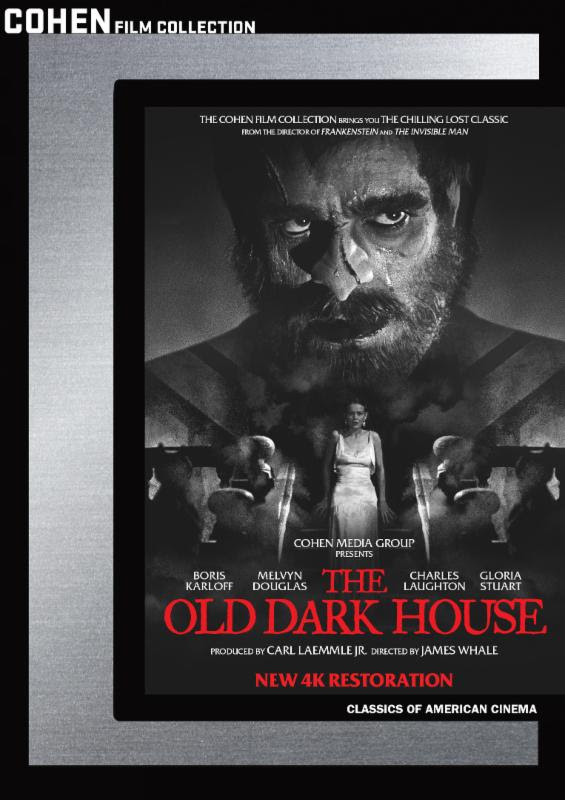
Restored and re-discovered: James Whale's black-and-white wonder THE OLD DARK HOUSE


Plenty of us avid moviegoers are familiar enough with the name James Whale. This guy, after all, directed the original Frankenstein (and The Bride of..., too) plus The Invisible Man, as well as the original filmed versions of Journey's End, Waterloo Bridge and Showboat. Many of us know him, too, from Ian McKellen's lovely portrayal of the filmmaker in Bill Condon's Gods and Monsters. What most of us don't know much about, however, is his 1932 movie THE OLD DARK HOUSE, a 72-minute, non-stop delight -- funny, scary, and full of surprises -- that was long thought to have gone the "disappeared" route of so many old and unfairly forgotten films.

Now, thanks to Cohen Media Group (as well as, or so we learn from one of the marvelous bonus features on the new Blu-ray and DVD, to the now-deceased filmmaker Curtis Harrington), a wonderful 4K restoration of the film opened in theaters earlier this month (after playing both the Venice and New York film festivals) and arrives on home video this coming Tuesday, October 24, on Blu-ray, DVD and digital format.

Director Whale (shown at right) with 23 credits on his resume, was gifted in a number of genres, but the amazement of The Old Dark House comes, as much as anything, via the masterly manner in which he mashes so many of these -- mystery, thriller, horror, comedy, romance, satire and even a look at class, economics, religion and morality of the day -- together so goddamned gracefully. It's a wonder.

The film is based on a novel by J.B. Priestley, and the cast assembled here is a wonder, as well. Where else might you possibly see Boris Karloff (below, left), Melvyn Douglas (above), Charles Laughton and Raymond Massey together in the same film? (Mr. Laughton is as likable and surprising here as you may ever have seen him.)

On the distaff side are three wonder women: Gloria Stuart (above, right, and yes, she who made that great comeback in a certain Mr. Cameron's over-rated Titanic) plays a gorgeous dish who fills out a negligee like few others; the beautiful, pert and utterly winning Lilian Bond (below, right), who bring such immediacy and delight to her been-around-the-block ingenue role that you'll not easily forget her; and Eva Moore, who manages the nutty-old-bat role as though we'd never seen such a thing before. (There's one scene between Moore and Stuart that is so jaw-dropping even now, that one wonders what audiences must have thought about it 85 years ago when the film first opened.)

The less said about the plot the better, for it is filled with such bizarre turns-of-events that you'll simply hang on for the ride. And yet, for all its sense of terror and dread, the movie is finally so surprisingly endearing that you may find yourself remembering it less as a fright film than as a sweet, sad, fractured movie about family -- both the blood kind and the sort that's created suddenly out of need and determination.

Whatever: don't let this one pass you by. Its home video release is scheduled for this coming week, and the bonus features on the Blu-ray and DVD are wonderful indeed, especially the interview with Mr. Karloff's daughter, Sara. Though the film runs just 72 minutes, the disc's extras are enough -- in quantity and quality -- to make this much more than merely an evening's entertainment.

Friday, October 20, 2017

Blu-ray/DVDebut for Olivier Assayas' genre-jumping jumble, PERSONAL SHOPPER


Yes, Kristen Stewart is always an interesting actress to watch, and after putting her through the paces -- and then some -- while helping her win a first-ever César award for an American actress via his remarkable Clouds of Sils Maria, French filmmaker Olivier Assayas (shown below) has collaborated again with Ms Stewart on a movie that, while never uninteresting, unfortunately never comes together in any genuinely meaningful way.

Instead, PERSONAL SHOPPER offers so much genre jumping -- from ghost story to murder mystery to fashion-plate parade to technology thriller to identity crisis to (no? yes!) a look at the French real estate market -- that by the time this film has come to its dead-halt finale, and the would-be ghost has answered the all-important question via a certain number of knocks, if you have not already given up in frustration or nodded off to dreamland, you're likely moan aloud, as I did, "Yeah, I figured as much. But so fucking what?!"

Now, M. Assayas has genre-jumped previously. Demonlover, in fact, is one of his most remarkable, ugly and joyous treasures. But here, as writer (of screenplay and dialog) as well as the director, he is working primarily in the English language, as he did in Clean and Boarding Gate, two of his least successful films. And he simply does not possess a gift for this. His dialog is too often ordinary and lifeless when it ought to be precise and probing.

Ms Stewart (shown above and below) is saddled with way too much of this tiresome dialog, and since she is a subtle but not particularly versatile actress, and since her character here is the most important thing in the film, that dialog ought to help her explore and deepen that character. It does not.

Rather, it allows the actress -- who relies to an awfully great extent to a single expression, or if we're lucky maybe two (to which all the stills above and below will attest) -- to simply "be herself" -- which is believable enough, all right, but not very interesting or meaningful in this case.

Her character, Maureen, has recently lost her brother to untimely death, and it would appear that his ghost may be trying to communicate with her (being a "medium" to the spirit world seem to run in their family).

So we get occasional "appearances" by this spirit world, and between shopping trips for her uber-wealthy client, someone/thing is also trying to reach her via cell phone. Because of this, we get rather lengthy texted conversations (M. Assayas proves better with texting dialog than with the speaking version).

Eventually Maureen discovers a dead body, the police are called in, and the murderer (there's really been only a single suspect here, so any "mystery" proves pretty paltry) is quickly caught. Then we're off to Africa for a bit more soul-searching. Trouble is, there just isn't much soul to search.

The movie is almost entirely comprised of Ms Stewart, and the actress is always a pleasure to watch -- even here, without much of a story to surround her. Nothing we see or hear seems all that substantial or even believable.

So I suspect that, in the case of this new film, Assayas was simply diddling or doodling away the time, trying to come up with a story, situation and character that will make his cobbled-together and rather goofy ideas cohere. He doesn't manage this, but he'll bounce back. He always does. (Summer Hours, for example, is one of the richest family/possessions films ever.)

Meanwhile Personal Shopper, from The Criterion Collection and running a too-long 105 minutes, arrives this coming Tuesday, October 24, on Blu-ray and DVD, for purchase and/or rental. 

Thursday, October 19, 2017

DALIDA: Lisa Azuelos' beautiful-to-view (and hear) biopic gets L.A. debut prior to VOD


Quite a bit better than the run-of-the-mill, musical celebrity bio-pic, DALIDA, tracking the life and career of one of, if not the most popular European singers of the 20th Century, is a gorgeous movie to both behold and listen to. With the actual Dalida singing many of her most popular songs (along with those of some other greats of that century) and, spanning as it does the 1950s through the 1980s, filled with scrumptious (if sometimes tacky: remember the 70s?) period detail, and filmed with a eye for interesting composition and ace cinematography (Antoine Sanier), the movie is a consistent joy to view.

As written and directed by French screenwriter/ filmmaker Lisa Azuelos (shown at right) and adapted from the book by Orlando (Dalida's brother) and Catherine Rihoit, the movie begins with a look at our heroine, brought to surprisingly nuanced life by Italian actress Sveva Alviti (shown above and below), who looks enough like the singer to more than pass muster, and who also lipsyncs and performs the songs with a physicality that mimics the original's own style and grace (you can compare the two by watching various videos).

TrustMovies admits that some of his great enjoyment of this film may have come because he knew next to nothing about Dalida before sitting down to view the movie. He knew her name and that she was hugely successful in France, but that's it. (His spouse, who follows the music scene more thoroughly, had never heard of her at all.) Consequently, this icon's story was new and held quite a bit of interest for him, though how die-hard fans of the singer reacted to this bio-pic, he can't say.

Ms Azuelos begins her tale in media res, with some quick, sharp moments during which Dalida leaves Paris for somewhere that it is clear her family and friends don't want her to go. It's to meet a lover, and so we spend some time between the sheets, philosophizing and making love. Suddenly, we're confronted with the singer's suicide attempt, which happened mid-career.

As Dalida slowly recovers, Ms Azuelos moves us back and forth in time, picking up bits and pieces of her family history, early career (above), love life and more. One of the cleverest methods of exposition here is done via her post-suicide psychologist's interviews with the various important people in her life, as he and they try to collectively get our girl back on track. This allows us to not only learn about Dalida, but better explore the character of those giving testimony.

Certain critics have complained about the lack of depth of character in Dalida herself, but this strikes me as simply wrong-headed. What Azuelos has given us instead is a portrait of celebrity and the woman who gladly buried herself under that alluring but unwieldy and very heavy mantle. Nearly every important decision we see her make has to do with maintaining that celebrity and career -- from how she handles her lovers to why she has the abortion that will render her sterile. (That's Brenno Placido, above, as the young student by whom she becomes pregnant, and Niels Schneider, below, as a Polish prince with whom she has earlier become involved.)

Occasionally, the woman beneath all that celebrity surfaces and her needs make themselves known. But always career comes first. Interestingly enough, there are no villains here. The movie doesn't need them, since Dalida is pretty much her own worst enemy, even if she herself seems to be a relatively kind and decent person. With an unhappy childhood to deal with, even given her wonderful voice and great physical beauty, the gain did not finally outweigh the pain.

Dalida's choice of lovers would appear a bit suspicious, too. When three of the several men with whom you're involved take their own life (not to mention Dalida's own suicide attempt and then its consummation), there's clearly a problem at hand. (Above, left, is Jean-Paul Rouve, as the man who discovers her, whom she eventually marries, and who later suicides; below left is Nicolas Duvauchelle, as one of her later and most narcissistic lovers who also takes his own life.

While the movie refuses to offer any tidy explanations for any of this, the feeling we're left with, despite the talent and beauty on hand, is one of sadness at the waste of it all. (Below is pictured Alessandro Borghi, as would-be singer Luigi Tenco, the first of Dalida's suicidal amors.)

Our heroine even has something of a movie career, too; at one point, the famous Egyptian filmmaker Youssef Chahine has her star in one of his films (below), and once the disco craze hits, she becomes a gay icon -- in France, if not here in the USA.

Along the way, in addition to the wonderful period detail, we get a raft of good music -- mostly snippets, granted, but they're certainly enjoyable ones -- and enough biographical material to complete yet another sad tale of great musical celebrity gone to disarray.

From Under the Milky Way -- in French, Italian and Arabic with English subtitles -- and running  a long but consistently interesting 127 minutes, Dalida will get a one-night-only theatrical appearance in the Los Angeles area as part of the Laemmle Culture Vulture series, this coming Monday, October 23, at 7:30 pm at four Laemmle theaters: Claremont 5, Playhouse 7Royal 3 and Town Center 5. Click here for more information and/or tickets.

In addition the film will also be the opening night, November 3, presentation at the ARPA International Film Festival at the world-famous Egyptian Theater in Hollywood.  And if you aren't located in the L.A. area, despair not: Dalida will be released on all major VOD platforms across the country on Tuesday, December 5.