Friday, February 12, 2021

Special effects win out over all else in Nicholas Ashe Bateman's THE WANTING MARE

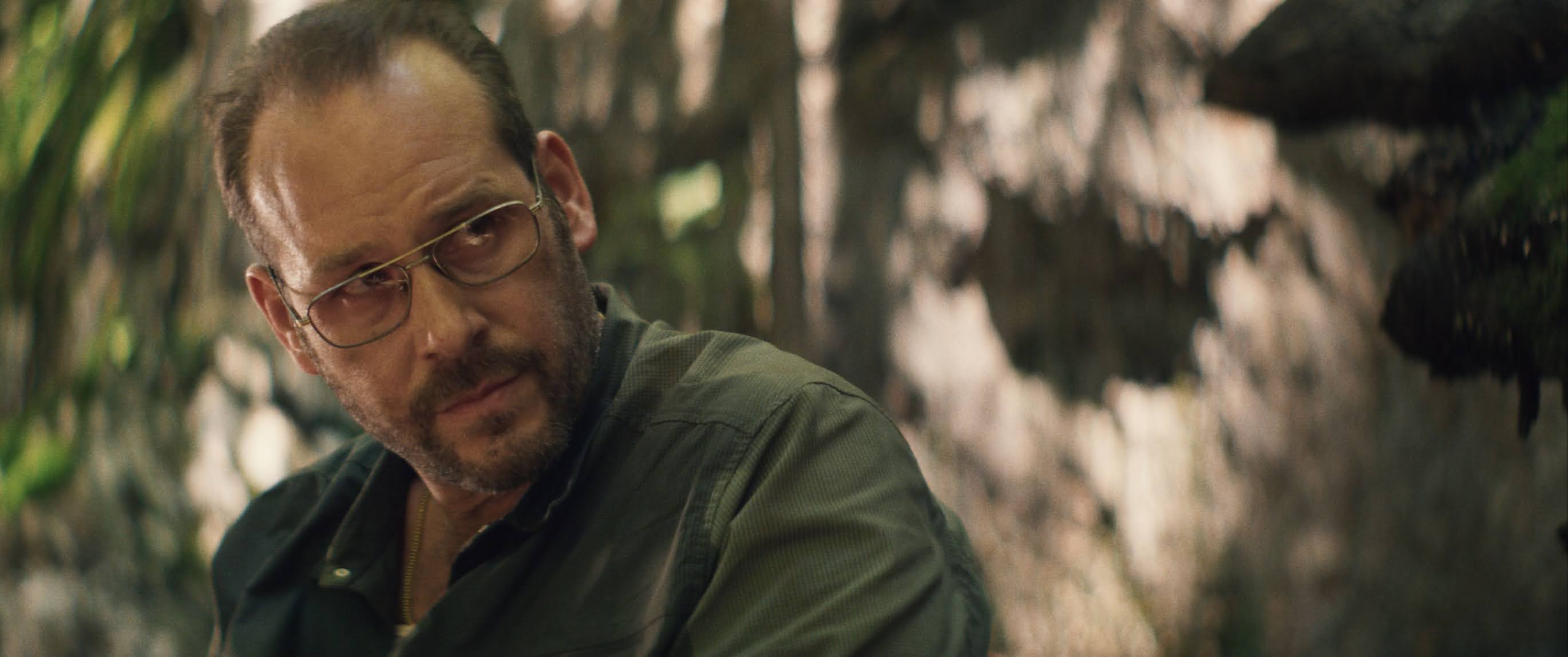
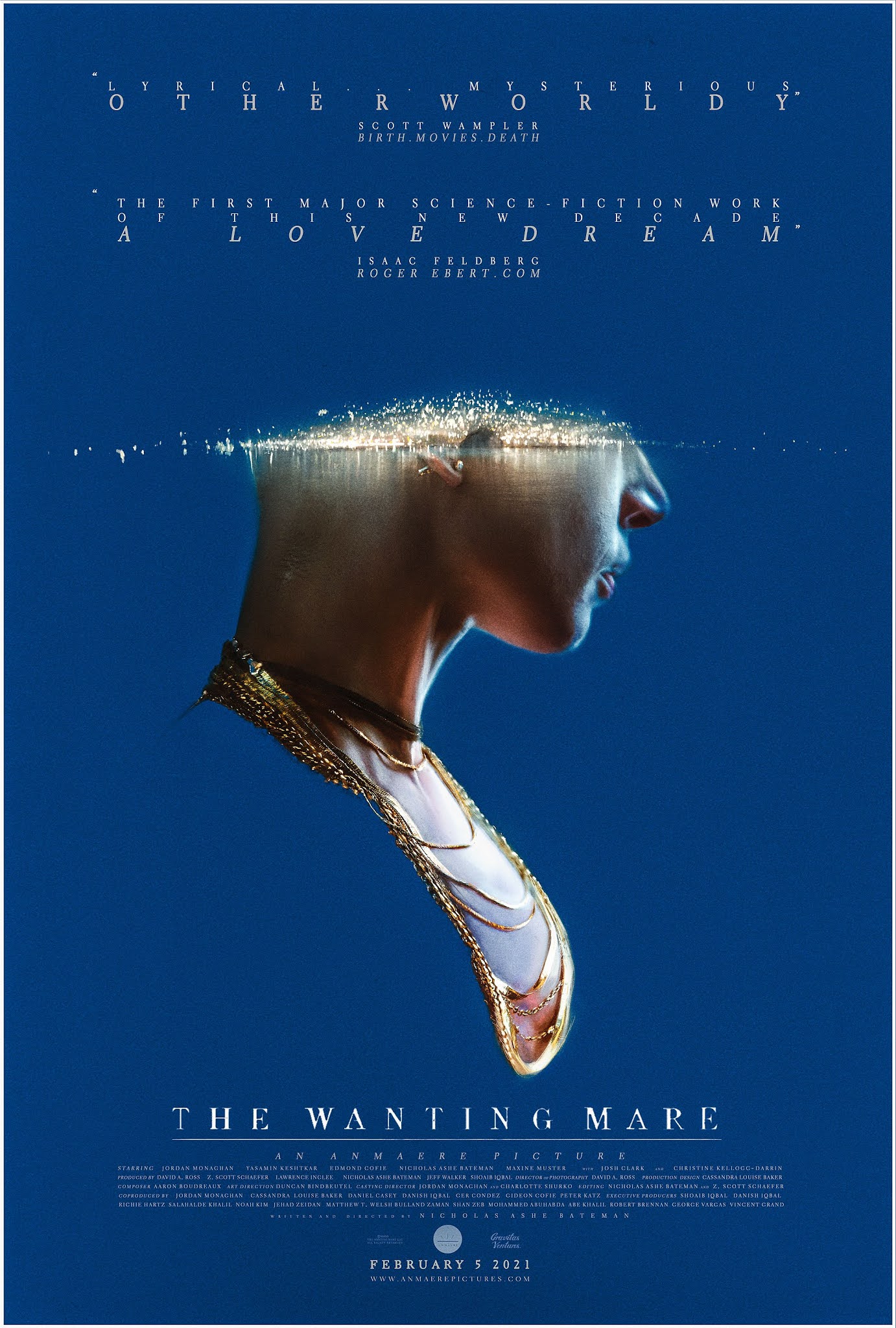
According to the press release about this new film, "an intimate, dramatic fantasy epic written and directed by renowned digital artist Nicholas Ashe Bateman" (the filmmaker is shown below), the movie is "a technical marvel of digital world-building and independent ambition, the sprawling vistas, fantastical sights, and otherworldly tableaus of THE WANTING MARE were lensed almost entirely inside a warehouse in Paterson, New Jersey."

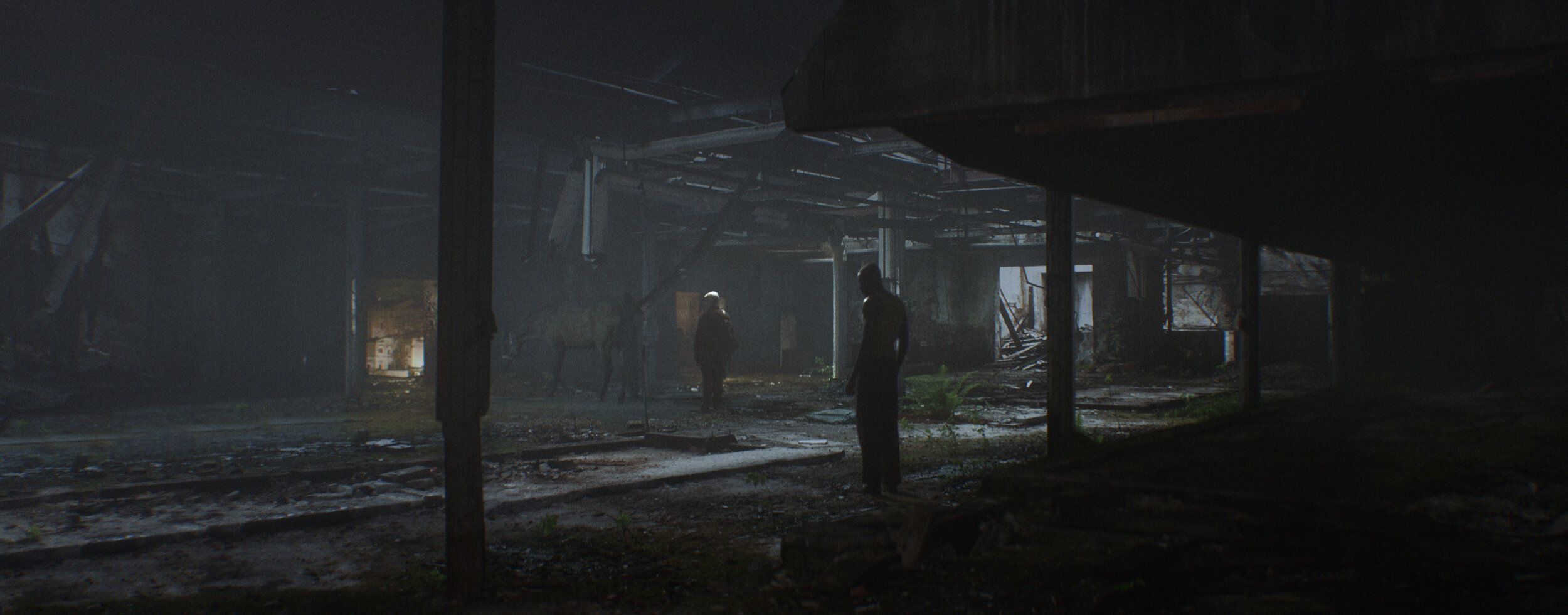
Yes, I have to admit that nothing I saw on screen at all reminded me, even in the least, of Paterson, New Jersey. Nor, unfortunately of the wonders I encountered in Jim Jarmusch's lovely film set in that city. While TrustMovies supposes that, yes, it is some kind of accomplishment to create a bunch of 

too often dark, muddy, rather ugly visuals that way too desperately try to conjure an alternate world via CGI effects plus whatever you've shot of characters moving across one of those "green screens" in a New Jersey warehouse, still, the end result needs to be measured against a film whose dialog and storyline somehow pull you in and carry you along. The Wanting Mare never even began to pull me in, and by its finale left me so annoyed and frustrated that I couldn't give a shit about anything except getting this tiresome twaddle the fuck over with.


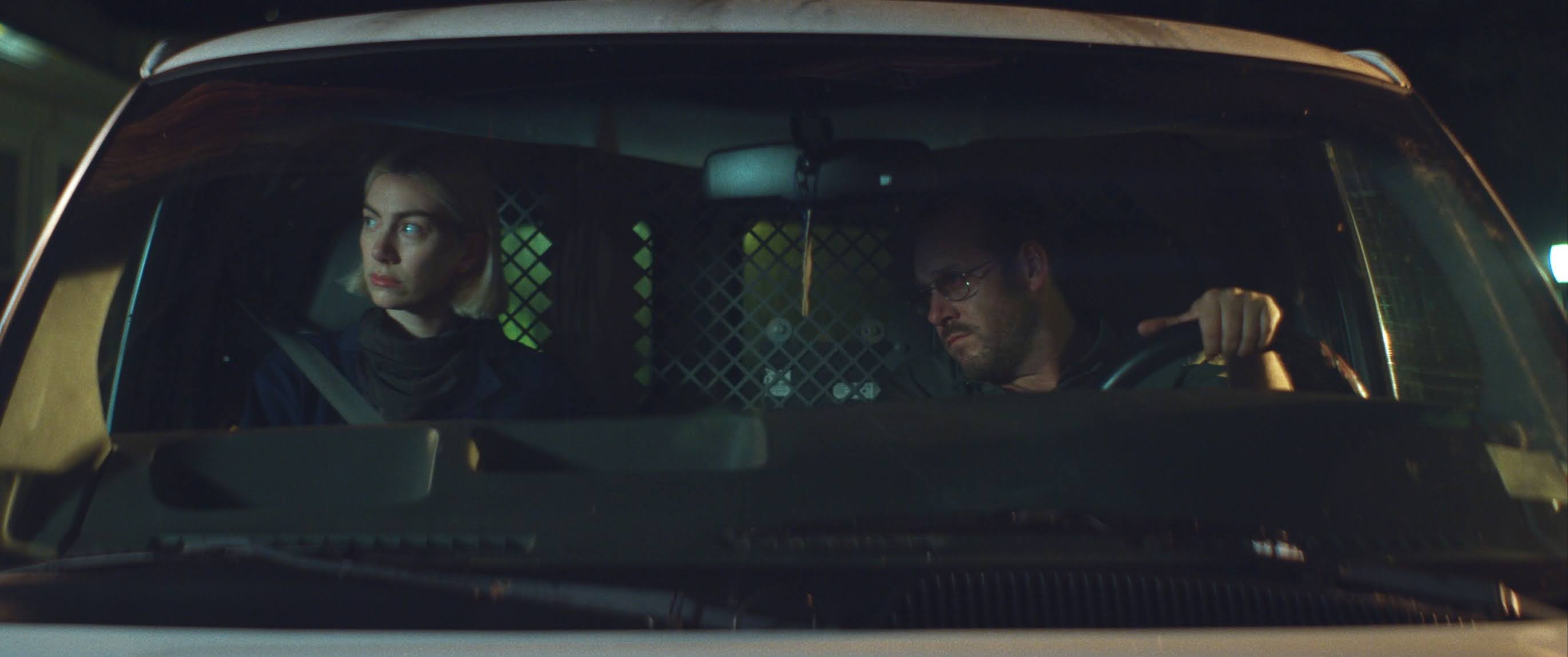
The opening information alerts us to something about horses being transported from a warm climate to a cold one (yes, we do see a horse now and again during the movie), and we get some drivel about dreams, a newborn baby, a pretty young woman and a young man on the run. Soon we're moving between past and present time, encountering older and younger versions of our characters.


After awhile it becomes apparent that the filmmaker is simply feeding us a bunch of the usual movie cliches -- from the "quest" (this time for some much-vaunted "ticket") to boy/girl love story, masked men with guns, murder, vengeance, and must I keep going? -- which are somehow supposed to be more interesting when they are plastered onto a "timeless neverland" locale. And yet everything here seems utterly generic, including that "exotic" locale.


The images are consistently dark and muddy (seems to go with the territory when one is doing all CGI effects). Worse, Bateman's insistence on having his characters near-constantly gazing soulfully into the distance lengthens his movie by -- what -- one full third? (The content level here is nowhere near the actual running time.)


Some critics have described this thing as "poetic." Really? Only for those who have little appreciation for good poetry -- which is usually distilled. This film is instead bloated. Not wanting to beat a dead mare, I'll simply say that this is not my cup of.... anything at all. Rather than belabor any longer, I'll just offer you the viewing details below.

From Gravitas Ventures and running 89 minutes, the movie opened in theaters and via VOD on February 5. Click here for more information on the choices you have to watch this movie.

Wednesday, February 10, 2021

Noah Hutton's just-barely sci-fi film, LAPSIS, makes smart, serious fun of Capitalism, Comcast, Amazon, Apple and more....


Imagine, I don't know, maybe a year or two ahead, with Covid and its permutations at least semi-controlled; a newer, nastier gig economy firmly in place; and internet technology evolved into something called "Quantum" -- which is the latest thing and necessary to have in order to not simply prosper but even exist and compete (of course it costs more, too). 

Quantum also requires a lot of workers laying a lot of cable to connect it all properly. This is the point from which the new-and-nearly sci-fi film LAPSIS -- written and directed by Noah Hutton (shown at left) -- takes off, and it's a point that seems so close to today in so many ways that I doubt most intelligent audiences will have any trouble following the plot and understanding exactly what the movie means to and for us "everyday people."

The movie's hero is an typical Joe named Ray (played with utter veracity and near-zero vanity by Dean Imperial, below), who currently works as a delivery man trying to take care of himself and a younger half-brother stricken with what sounds very much like some new variation of Chronic Fatigue Syndrome. 


When Ray gets the chance to go to work and make better money as a kind of Quantum cable guy, how can he say no? And so we're with him as he learns the ropes of this bizarre new "career," which, the more we find out about it, seems like the current shit-assed Capitalism (are we beginning to understand that there is no longer any other kind?) practiced by the likes of Comcast and its ilk, with working conditions akin to Amazon and Apple.


From the start, it's clear that everyone is cutting corners (Ray himself gets his "opportunity" via someone so clearly crooked that even his brother warns him not to go there). Soon enough our hero comes up against "unionizers" within the workforce; automated robots (below) designed to work around, if not outright against, their human "proles"; and some very large cubes (on poster, top) that might remind you of, hmmm, 2001, but that act merely as charging stations for this new Quantum process.


Those cubes are maybe the closest the movie gets to sci-fi. Everything else seems so everyday, it might be your next-door neighbor. And therein lies Lapsis' great charm and subversiveness. Even as Ray -- your typical guy who's so busy trying to make ends meet that he has given little thought to why they never can nor will -- is forced by the new co-worker/friend he meets (Madeline Wise, below) to confront what is really going on here, we, too, must look more closely at how our current economics and politics work: For the rich and corporate. Never for the rest.


As the plot's thriller elements unfold, Mr. Hutton's ability to connect all the dots comes beautifully into play. OK: He once or twice gets a little too close to preaching, but mostly his adeptness at weaving all this together into something socially, economically, culturally, politically significant is impressive indeed. And that expensive treatment center into which Ray places his brother (of course it does not accept any insurance) will give you the willies all on its own.


Alternately creepy, amusing, exciting and consistently interesting, Lapsis shows what can be accomplished when you combine intelligence, imagination, talent and concern. More, please, Mr. Hutton.


From Film Movement and running 108 minutes, the movie opens all over the USA and Canada via virtual theaters, VOD and digital venues this Friday, February 12. Click here for more information and venues, and think of this one as the perfect progressive gift for someone you love on Valentine's Day.

Tuesday, February 9, 2021

The threesome, updated, in Svetlana Cvetko's pretty-but-vapid SHOW ME WHAT YOU GOT

Some very nice black-and-white cinematography makes SHOW ME WHAT YOU GOT -- the story of two guys and a girl who fall in lust/love/life lessons without ever genuinely growing or changing -- easier to sit through than it might have been. 

TrustMovies, being bisexual, has long been a sucker for "threesome" films (one of his favorites remains Andrew Fleming's eponymously titled effort from 1994). He was hoping to find this a good new addition to the rather small batch of threesome movies, but the co-writer here (with David Scott Smith) and director (who's also a noted cinematographer) Svetlana Cvetko (shown below) has managed to leave out anything resembling genuine character from her three main characters.

Oh, these cardboard cut-outs cavort like crazy and would seem to be having the time of their life -- even if we in the audience are maybe not having our own. 

But since the entire movie and all of its events arrive via a French accented narration rather than by anything organic that come from life, growth, struggle and understanding, these three just plop down and do whatever that narration has them doing. 

Our three protagonists are managing all this -- of course and once again -- via the credit card that the wealthy one has gotten off his dad, so as ever, money sho' nuff' makes things easy. 


These three -- above, left to right: Nassim, Christine, Marcello -- are played by, respectively, Neyssan Falahi, Cristina Rambaldi and Mattia Minasi. Signore Manisi grins, smiles and laughs consistently throughout, and while I understood that this character's life has been made easy via his dad who is a famous Italian soap opera star, I still wanted to punch him in the face periodically, just to give him something to deal with, for Christ's sake! Ms Rambaldi (granddaughter of that special effects maestro Carlo) seems as pretty and vapid as the film itself, but again, the screenplay and dialog do her little service. Coming off best is Swiss-born M. Falahi, who get to brood, exercise and teach an acting class, along with all the cavorting and sex.


Speaking of, even though I am one who believes that sexuality -- straight, gay and bi -- is pretty fluid, the immediate fluidity shown by these two guys for each other does seem surprising, and while the movie, along with its characters, refuses to comment on or even question any of this, you and I certainly might. Show Me What You Got is also -- considering that title -- surprisingly chaste in its visuals: no full-frontal for the guys nor even as I recall (lower-half, anyway) for the gal. There's lots of kissing, though, which is fun for awhile.


What there is not much of, however, is real character. Did the filmmaker perhaps feel that having her French female narrator explain just about everything about everyone somehow made it unnecessary to create full-bodied people? When a very subsidiary scene -- an acting class for refugees that Nassim agrees to teach and that features a "ball of energy" created and then passed from person to person -- turns out to be the best and most specific extended moment in the entire movie, you simply shake your head in oddball wonder. 


Yes, the movie is light and frothy and playful. But despite a finale that attempts some darkness, profundity and surprise, it still registers on empty. What is described in the press release as French New Wave -- ah, yes: black-and-white cinematography, ersatz Jules & Jim cavorting -- instead comes off more like International Old Hat.


From Level Forward’s Labz Live and Screen Forward theatrical network, Show Me What You Got -- in English, Italian and French (with English subtitles as needed) and running 96 minutes -- opens virtually tomorrow, Wednesday, February 12, at various venues around the country, including Laemmle theaters in the Los Angeles area. Click here for information on how to view.

Sunday, February 7, 2021

Senior same-sex love in Hong Kong: Ray Leung's quiet study of character and culture, TWILIGHT'S KISS

Having just seen a French film detailing senior lesbian love and the damages of the closet, here comes another that covers gay seniors in Hong Kong, both grandfather-age and both quite firmly in the closet so far as their respective families are concerned. 

Unlike the heavy melodrama that drives (and plagues) Two of Us, TWILIGHT'S KISS, quiet and concerned, gives over to character and the culture that has helped mold this in our two heroes, as well as in their families, friends and society at large.

Written and directed by Ray Yeung (at right), whose charming, slightly-dark rom-rom Front Cover, I enjoyed a few years back, this new film of his -- made prior to the seemingly endless protests now roiling Hong Kong -- is surprisingly immersive, given how quiet and small-scale it consistently proves to be.

Yeung's two leading actors -- Tai-Bo (below, right) and Ben Yuen (below, left) -- are triumphs of low-key detailing. Bit by bit, they lead us into character, life and the culture of Hong Kong, as each experiences it. Because Yeung and his cast are so full of specifics, all these details quickly pull us into the narrative, which only grows more specific and fascinating, the more complex and problematic it slowly becomes.


There are no real villains here -- not even society or the State itself. While it is obvious that things could be better in terms of acceptance for the GLBT population, the movie has a welcome lack of finger-pointing or -wagging. Instead our two guys make the best of what they have, even as they try to push  the boundaries, at least slightly. (Along the way we also get to see what Hong Kong's younger generation is doing for gay rights and how the semi-necessary closet is still holding back many in the older generation.)


The two men's families are perhaps more of a hindrance than a help, yet it is clear that they are all doing the best they can, given their circumstances and beliefs. Religion -- Buddhism vs Christianity vs agnosticism -- plays into things -- yet so kindly and fair is his perspective that the filmmaker never dips to easy satire nor simplistic views. 


Some viewers will wish for more explicit drama here, but TrustMovies is more than happy with the level to which Twilight's Kiss rises. The final sequence -- which for me, at least, seemed to indicate a willingness for exploration (and/or perhaps compromise) -- proves as quiet, subtle, thoughtful and lovely as all that has come before.


From Strand Releasing and presented with support from the R.G. Rifkind Foundation Endowment for Queer Cinema, in Cantonese with English subtitles, and running just 92 minutes, the movie opens virtually at New York City's Film Forum this Wednesday, February 9, and will very soon open elsewhere around the country. Click here for more information on viewing at Film Forum, and here for info on further nationwide playdates.

Friday, February 5, 2021

THE MIMIC -- Thomas F. Mazziotti's smart little ode to identity, grief, friendship, sociopaths and more -- opens in theaters and via VOD

While it may not be quite as smart, or even as deep, as it thinks it is, THE MIMIC -- the new film written and directed by Thomas F. Mazziotti -- proves fast, funny and enjoyable enough to keep us entertained for all of its 82 minutes. 

The movie also boasts a first-rate cast, each of whom uses whatever screen time he or she has (some roles are very brief) to nail character, while keeping us alert and often pretty delighted with what we see and hear.

This is the first of Mr. Mazziotti's movies I've seen (the filmmaker is shown below) and the first he has both directed and written, and it's good enough for TrustMovies to hope for more. However, it's only his third film in 20 years, so I am not holding my breath.

As I finished watching the film and then noted the many famous cast members listed in the end credits, I immediately went back to the beginning of the film so I could pick out certain actors. But then I quickly found myself enjoying the witty dialog and performances so much that I just kept watching. Had there been more hours in my day, I'd have viewed it all a second time right on the spot.  

That cast is led by one actor I always enjoy -- Thomas Sadoski (shown below) -- and another, Jake Robinson, whose career I've only just noticed. Both are quite good in roles that mirror each other in ways that prove especially interesting because of their contribution to both the movie's themes and its entertainment quotient.


Mr. Robinson (shown below) looks at times enough like a younger version of Mr. Sadoski that the two could almost be related, and since one of the movie's themes concerns identity, mimicry and character, this certainly adds to the fun.


Further, as much as these two g uys are clearly attracted to each other, the question keeps cropping up whether one of them is a sociopath or merely a mimic, so their physical, as well as psychic connection allows for a maximum of homoerotic (though not homosexual) frisson. Both actors play into all this with considerable finesse and zest.


Sociopaths seem just about every-fucking-where in our current movies and TV, and Mazziotti makes wonderful fun of all this via so many of the movie's various characters calling humorous attention to the fact. Like serial killers (even more prevalent in our entertainment culture) that exist in fiction exponentially more than in real life, sociopaths too are maybe a tad over-rated and over-exemplified these days. (On the other hand, we've just finished four years of a U.S President who is one, so maybe this is understandable.)


Stylistically the filmmaker tries some tricks that mostly work -- moving from color to black-and-white, and using a fun clip from Gaslight. He also breaks the fourth wall and, in one scene featuring M. Emmet Walsh and Doug Plaut, he breaks a lot more. Gina Gershon (above, left) and Austin Pendleton (below, right) each get their own fun camero, too, and Matthew Maher is especially good in the role of restaurant owner/bartender.


Mostly, though, the movie belong to Sadoski and Robinson, and these two score nicely. If you're expecting some big reveal at the finale, don't. There's a little something, but fortunately, Mazziotti's doesn't make too much of it. Or of anything much else, really. This is a small little indie film that, in its own way, simply delivers its ideas and entertainment with enough wit and skill to pass muster.


From Gravitas Ventures and running, as I say, just  82 minutes, The Mimic opens in theaters in limited release and via VOD today, Friday, February 5. Take a chance, particularly if that cast intrigues you. Click here for more information.

Wednesday, February 3, 2021

Tip-top acting anchors Filippo Meneghetti's seniors-in-the-closet melodrama, TWO OF US

Here's a subject you don't see tackled all that often at the movies: The fear of coming out to your family regarding your sexual preference, once you've reached the age of an elderly grandmother. 

As difficult as it can be to deal with leaving the closet as a young man or woman, almost anything we've seen in this regard utterly pales by comparison to what happens -- the events and subsequent trauma -- to our two heroines of  TWO OF US, the French film submitted this year for "Oscar" consideration as Best International Film and which, just today, has been nominated in the Best Motion Picture--Foreign Language category for this year's Golden Globe Award.

As directed (and co-written with Malysone Bovarasmy and Florence Vignon) by Filippo Meneghetti, shown at right, the film is part cautionary tale, part black comedy, part blackmail thriller, mostly love story and absolutely all melodrama -- grounded via its two fine leading performances by popular German actress, Fassbinder favorite Barbara Sukowa (as Nina, above and below, right) and Martine Chevallier of France's famed Comédie Française (as Madeleine, at left, above and below).


Early on we get a strange and lovely impressionistic dream sequence of these two women in childhood which shows us how very close they were (or at least might have been). Otherwise, there's no real history here, yet it is clear from their proximity -- they're neighbors who spend their days and their nights together -- that these two are about as connected to one another as two people can be.


The sale of Madeleine's apartment, a move to Rome, the need to explain to family members (which of course means coming of their closet), betrayal, major health issues, followed by that aforementioned blackmail follow hot upon the heels of each previous "event" until it may be a bit difficult from some in the audience to repress a snicker, if not an outright guffaw.


And yet so grounded and utterly committed are the two leading actresses (quite typical of their entire oeuvre) that we tail along obediently, if not always that happily. Two of Us works best as love story/cautionary tale. How this particular closet can become hell on earth for both parties involved -- even if Nina would have happily come clean about the couple's sexuality long ago -- is convincingly, if heavy-handedly, presented. And thanks to the melodrama and the performances, the movie does hold your attention.


Subsidiary characters such as Madeleine's daughter (played by Léa Drucker, seated, above, and below with Chevallier), son, caregiver and even the caregiver's son are all paper-thin, existing merely to move the plot machinations ever onward. 


Eventually the behavior on view become faintly absurd and then full-out ridiculous. But, hey, this is all the result of secrets and lies, and of course that closet -- particularly when one is part of a family that appears to believe: Better dead than lesbian. 


So there's coincidence aplenty, a breathless escape, a last-minute change of heart, and those two grand performances. TrustMovies' take on Two of Us is that the film's heart is definitely in the right place, even if its mind -- as has that of one of its heroine's -- seems to have gone into stroke mode. Really? This is the movie the French cultural establishment imagined might win the Oscar?


From Magnolia Pictures, in French with English subtitles, and running an acceptable 96 minutes, the movie opens this Friday, February 5, and will be available digitally pretty much everywhere, it seems. Click here to learn where and how you can view it at home, and here, should you simply want more information.

Monday, February 1, 2021

Chad Hartigan/Mattson Tomlin's Alzheimer's-like pandemic love story, LITTLE FISH, opens

Initially the specifics of "forgetting" -- the pandemic that grounds and provides the plot of LITTLE FISH -- are so detailed and heartbreaking that the movie very quickly pulls you into its dark, sad realm. 

The Alzheimer's-like condition that appears to be affecting the entire human race is certainly different from and finally more deadly than even our current Covid strains so far seem to be, but there's enough immediate recognition to make this new little film more than resonate properly and efficiently.

The manner in which this "forgetting" is of a differing speed and intensity for various people gives the movie added heft, as does its well-chosen -- but, then, not made full use of -- cast.  The ways that animals, dogs in particular, figure into things is equally heart-rending. 

As directed by Chad Hartigan (shown at left), with a screenplay by Mattson Tomlin (from a short story by Aja Gabel), the film proves so quickly and thoroughly involving that the fact it does not eventually hold on to our involvement seems very nearly as sad as the film itself. 

Little Fish involves the fate of humanity via the lives of two couples/four friends -- the lesser important pair played well, if too briefly, by Soko and Raúl Castillo -- in which the male of the species becomes infected faster and initially more heavily than the female. 


The major couple is played by Olivia Cooke (above, right, and below) and Jack O'Connell (above, left, and two photos down), two actors I hold in very high esteem: O'Connell for Starred Up and Godless; Cooke for everything from Bates Motel and Vanity Fair to Thoroughbreds. If you have never seen this remarkable actress in The Limehouse Golem, playing everything from a teenage music hall performer to an abused wife to a... well, you've just got to view this terrific Victorian thriller.


Though Cooke and O'Connell pull you in, once the film is well underway, they're not given enough genuine specifics and interesting details to work with properly, so soon this tale of love and impending loss begins to grow more standard and sappy. 


How the "forgetting" can suddenly happen is brought to fine life (a bus driver suddenly stops the bus, gets off, and begins to walk slowly in the opposite direction, leaving his passengers befuddled and stranded. (Earlier we've seen the remains of an airplane in which this kind of behavior led to something much more horrifying.)  The details of love, caring and loss, however, are finally not given as stringent a workout.


At one point we learn that, in place of a wedding ring, the couple purchased that titular "little fish," and we see them inside the aquarium (which we return to a couple times more in flashback), but aside from that, we learn nothing more about that fish, what happened to it, or even what it actually meant -- on any level save the "Let's replace a ring with a fish!" explanation. So this simply becomes another generic, Oh-isn't-that-cute! moment in this protracted love-and-loss story. As, unfortunately, do so many of the flashbacks we continue to experience of happier times.


At the finale we at least get a (maybe) surprise regarding the time frame we're actually in, and that is appreciated. More than anything else, however, this movie reminded me of a far better future-time, pandemic-set film, Perfect Sense, directed by David Mackenzie and released almost a decade ago by the same studio, IFC Films, in which the lovers -- played by Eva Green and Ewan McGregor -- as does all of humanity, slowly lose each of the five senses. Much more specific and fascinating in its detailing of character, event and what love means in the face of all this, Perfect Sense is the film you should see -- even if Little Fish is more current and may seem timely just now.


Running 101 minutes, the movie opens in theaters virtual (and maybe some brick-and-mortar) this Friday, February 5, as well as via VOD. Click here for more information.