Showing posts with label senior citizens. Show all posts

Wednesday, February 3, 2021

Tip-top acting anchors Filippo Meneghetti's seniors-in-the-closet melodrama, TWO OF US

Here's a subject you don't see tackled all that often at the movies: The fear of coming out to your family regarding your sexual preference, once you've reached the age of an elderly grandmother. 

As difficult as it can be to deal with leaving the closet as a young man or woman, almost anything we've seen in this regard utterly pales by comparison to what happens -- the events and subsequent trauma -- to our two heroines of  TWO OF US, the French film submitted this year for "Oscar" consideration as Best International Film and which, just today, has been nominated in the Best Motion Picture--Foreign Language category for this year's Golden Globe Award.

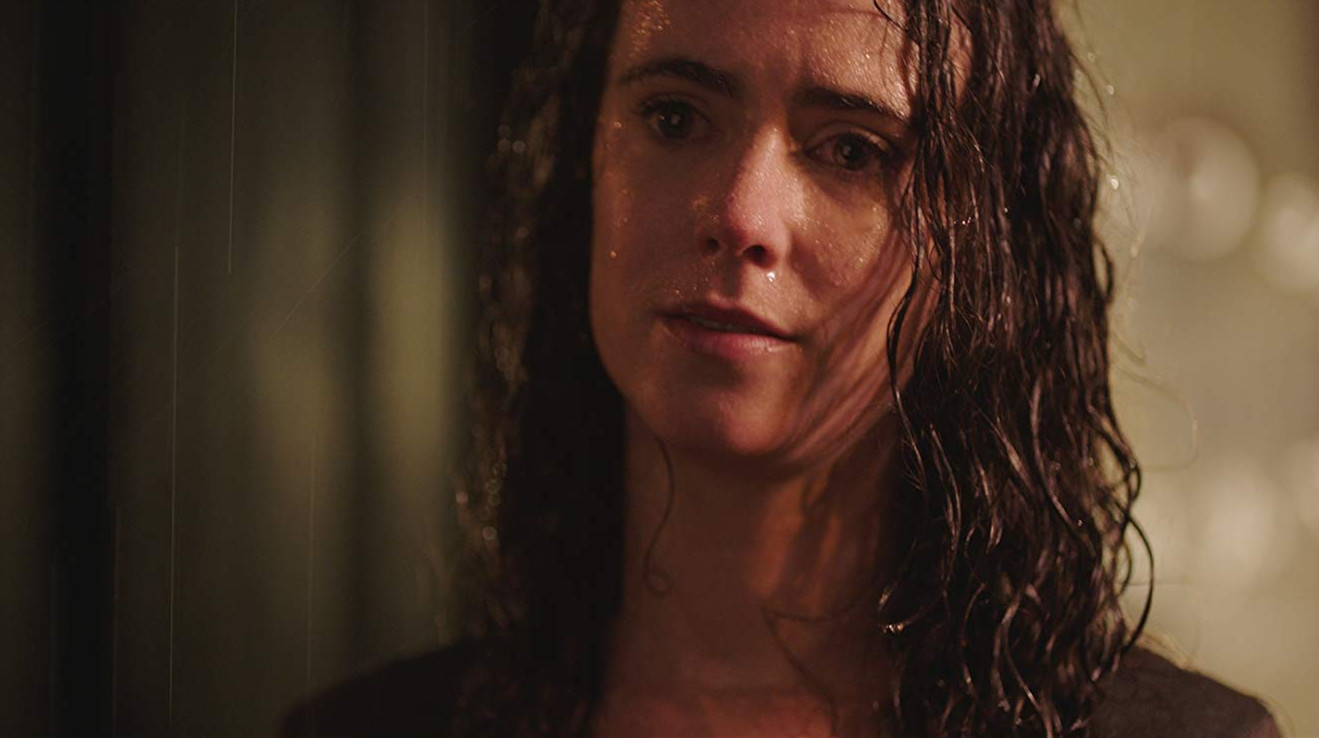
As directed (and co-written with Malysone Bovarasmy and Florence Vignon) by Filippo Meneghetti, shown at right, the film is part cautionary tale, part black comedy, part blackmail thriller, mostly love story and absolutely all melodrama -- grounded via its two fine leading performances by popular German actress, Fassbinder favorite Barbara Sukowa (as Nina, above and below, right) and Martine Chevallier of France's famed Comédie Française (as Madeleine, at left, above and below).


Early on we get a strange and lovely impressionistic dream sequence of these two women in childhood which shows us how very close they were (or at least might have been). Otherwise, there's no real history here, yet it is clear from their proximity -- they're neighbors who spend their days and their nights together -- that these two are about as connected to one another as two people can be.


The sale of Madeleine's apartment, a move to Rome, the need to explain to family members (which of course means coming of their closet), betrayal, major health issues, followed by that aforementioned blackmail follow hot upon the heels of each previous "event" until it may be a bit difficult from some in the audience to repress a snicker, if not an outright guffaw.


And yet so grounded and utterly committed are the two leading actresses (quite typical of their entire oeuvre) that we tail along obediently, if not always that happily. Two of Us works best as love story/cautionary tale. How this particular closet can become hell on earth for both parties involved -- even if Nina would have happily come clean about the couple's sexuality long ago -- is convincingly, if heavy-handedly, presented. And thanks to the melodrama and the performances, the movie does hold your attention.


Subsidiary characters such as Madeleine's daughter (played by Léa Drucker, seated, above, and below with Chevallier), son, caregiver and even the caregiver's son are all paper-thin, existing merely to move the plot machinations ever onward. 


Eventually the behavior on view become faintly absurd and then full-out ridiculous. But, hey, this is all the result of secrets and lies, and of course that closet -- particularly when one is part of a family that appears to believe: Better dead than lesbian. 


So there's coincidence aplenty, a breathless escape, a last-minute change of heart, and those two grand performances. TrustMovies' take on Two of Us is that the film's heart is definitely in the right place, even if its mind -- as has that of one of its heroine's -- seems to have gone into stroke mode. Really? This is the movie the French cultural establishment imagined might win the Oscar?


From Magnolia Pictures, in French with English subtitles, and running an acceptable 96 minutes, the movie opens this Friday, February 5, and will be available digitally pretty much everywhere, it seems. Click here to learn where and how you can view it at home, and here, should you simply want more information.

Monday, September 9, 2019

Senior trip: Sheila Hancock does a title-role star turn in Simon Hunter's sweet movie, EDIE


Thank goodness for Sheila Hancock and Kevin Guthrie, the two stars of the 2017 film EDIE (just now getting its U.S. theatrical release). Without them and their sterling work -- moment to moment, they play off each other just perfectly -- this sweet but-always-threatening-to-grow-saccharine -- movie might have become intolerable.

The writing and direction are not the culprits; instead, it's the use of the musical score -- credited to Gast Waltzing and featuring a lovely major melody -- which has been allowed to be beaten into the ground so heavily by the finale, which itself provides the heaviest moments, that you'll wish you had brought your own mute button to the theater.

Director Simon Hunter (pictured, right, who also provided the idea for the story; the screenplay is by first-timer Elizabeth O'Halloran) has worked most often in the horror genre, so this aged-senior-decides-to-do-her-own-thing tale must have proven a nice change of pace for the guy. No zombies or mutants to contend with here!

Mr. Hunter has managed a very nice build-up, along with excellent pacing, and the two fine performances he's coaxed from his leads. Actually, I doubt much coaxing was needed, as both Ms Hancock (shown above and below) and Mr. Guthrie (two photos down) have proven themselves more than capable  -- the former since the early 1960s and the latter since the beginning of this century.

Still beautiful at age 83 (when Edie was filmed), Hancock has a remarkable face, which she uses with both subtlety and force (when needed). Her Edie, thankfully, is a nicely rounded character: prickly, sweet and alternately closed and open to at least some degree of change.

In the role of Jonny, the fellow who initially knocks her off her feet (along with his ever-rushing girlfriend, played by Amy Manson, below), Guthrie, above, is Hancock's equal at winning us over without using anything but his skill, charm and good looks. That Edie and Jonny will bond is of course obvious from the get-go. But the smart, funny little pas-de-deux in which they consistently engage proves as engaging as it is believable.

The plot, such as it is, has to do with Edie's need/desire to climb a certain mountain in Scotland (seen below) -- no Everest, mind you, but a real jaunt -- and Edie, just like Hancock, is 83 years of age. Little wonder the locals do not expect this old woman to manage it.

Does she? Does it matter all that much? And why? Or is simply trying the main accomplishment here? You'll find out, as the film builds (so does that music, unfortunately) to its inspirational, feel-good finish. And thanks to these two wonderful actors, you'll happily note that -- as we've often been told -- it's the journey that matters much more than the destination.

From Music Box Films and running 102 minutes, Edie opened this past Friday, September 6, in New York City at the Angelika Film Center, and in Los Angeles at several Laemmle theaters. Here in South Florida, it opens this Friday, September 13, at the Bill Cosford Cinema, Miami, and the Living Room Theaters, Boca Raton. Click here and scroll down to click on Theatrical Engagements to view all currently scheduled playdates, cities and theaters.

Monday, November 12, 2018

From Italy, with love (and pain), Cesare Furesi's WHO WILL SAVE THE ROSES?


For a film as poetic, elliptical, elusive and often beautiful as the new Italian movie, WHO WILL SAVE THE ROSES? -- from co-writer and director Cesare Furesi -- the words that lead off this film are surprising: "Dedicated to that big piece of shit of my father." TrustMovies suspects that the English translation here may be a bit off, and that the second "of" in the dedication might better be replaced with a comma. Either way, it does seem clear that Signore Furesi (shown below) is not a huge fan of his dad.

What follows this somewhat jaw-dropping dedication, however, is such a surprising and lovely story that I suspect U.S. movie-goers who appreciate foreign films and oddball tales may take quite a liking to this sweet, sad and finally take-no-prisoners endeavor. Its finale is as uncompromising as any I've seen in a long while and goes up against such a long-held taboo -- especially in its native Italy -- that I imagine the audience reactions there were rather mixed.

The very leisurely beginning put us in touch with an elderly male couple -- the amazing and quite delightful Giulio (Carlo della Piani, below, right) and his bed-ridden partner Claudio (Lando Buzzanca, at left) -- and their unusual everyday life, in which the aged and himself infirm Giulio does everything from feeding and caring for his partner to mowing the lawn on their rather large-but-gone-to-seed estate.

Into their life returns Giulio's estranged daughter, Valeria (the beautiful Caterina Murino, below), who, though still angry at her father, proves to have remained very close to his partner, Claudio.

On the heels of her return comes that of her son (the men's grandson) Marco (Antonio Careddu, below), along with his girlfriend, with both of them soon involved in the lives of the elder set.

As for the usual back story, history and exposition that most family dramas would give us, Signore Furesi pretty much ignores all this. Oh, we get bits and pieces, but this hardly adds up to enough to deeply involve us. Instead, that involvement comes through the artful use of a kind of visual and verbal poetry that engages our mind and heart via the beauty of the well-chosen words and beautifully composed, often stunning images.

These includes sunsets (above and below) -- the film is set in Sardinia, which, as shown here looks to be a most beautiful and welcoming place -- which come into play not only for their beauty but as a "hook" for investors to help resuscitate an old family hotel (shades of the recent Mamma Mia! movie sequel). 

Gambling -- as art, vice and life -- also figures in the bizarre plot, as we learn that Giulio once allowed that very bad habit to intrude too heavily in his and his lover's life and finances. Now, here it comes again, this time as a possible savior, thanks to a wealthy old friend who owns the local casino (how good to see Philippe Leroy, shown below, left, in his senior years).

Finally, however, it is the performances of the two old men, especially that of the amazing Signore della Piane (above, right, and below), that brings the movie to life and holds it that way. Giulio's character -- forever dithering but helping, hoping against hope, using every means at his increasingly emptying disposal, love pouring out of every pore -- proves so memorable and amazing that you never doubt the unbreakable bond that exists between these two men.

There's a high-stakes poker game (below), the results of which question what is truth (in a manner than our current idiot President could never begin to appreciate or understand).  By the time we reach that finale, I suspect that anyone who has lived and loved hard enough and long enough will be able to fully savor the decision that has been reached.

I've often said that it is Italy that makes the best films about family. Here is yet another fine example. From Corallo Film, Who Will Save the Roses? arrived on VOD here in the USA this past Friday, November 9, and will have its American theatrical debut in the Los Angeles area at Laemmle's new Glendale theater this coming Friday, November 16.

The photo of the director, second from top, 
is by Camilla Morandi and comes 
courtesy of Getty Images.

Thursday, March 16, 2017

Mark Pellington's best film? THE LAST WORD might just qualify, thanks to Shirley MacLaine


If you don't already consider Shirley MacLaine to be a national treasure, entertainment-wise, you certainly will after viewing her latest film, THE LAST WORD. This creditable attempt at deepening the usual feel-good/senior-citizen movie goes places you may not expect and does so with enough intelligence and flair to make the movie a trip worth taking. In it, Ms MacLaine plays Harriet, a difficult, demanding old woman who's been forced out of the business she started and brought to huge success and is now just waiting, well, to die.

A control freak of long-standing, when she gets the idea to have her obituary written prior to her death (so she has control of that "last word," as it were), she hires the young obit writer for the local paper, Anna (played by Amanda Seyfried, below) to do the job. As directed by Mark Pellington (shown at left) and written by Stuart Ross Fink, the movie is often very funny, at times surprisingly resonant and moving, and almost always an enjoyment to view. If it doesn't reach genre greatness, it is at least willing to tackle more than what the usual feel-good film tends to offer us.

The last time TrustMovies saw Mr. Pellington's work, that was the 52-minute music video called Lone. I wasn't overly impressed, though I have enjoyed other of his films. The Last Word strikes me as perhaps the best overall work he's done in quite some time. Beautifully cast, with each performer nailing his or her role quite well, and written with enough pizzazz to keeps us interested and smiling, the movie is visually smart, as well. Note the moment that occurs during a round-up of various characters who have known Harriet, all of whom hate her guts. During the words of one particularly angry, hurtful fellow, the camera pans down just a few inches below his chin and -- suddenly and with such subtlety -- the moment becomes twice as funny.

Films like The Last Word that deal with seniors, end-of-life, and what's-it-all-about seem to need to be feel-good by their very nature. So when one comes along that's at least willing to explore a little more deeply, this is worth savoring. The movie does not turn our heroine into any kind of a saint. She stays pretty much a curmudgeon throughout, but as we learn more about her (and MacLaine, above, helps us understand how and why she's the way she is), we can appreciate Harriet and enjoy her even more.

We meet her ex-husband (a nice job by Philip Baker Hall) and eventually see her reunited with  her estranged daughter (a lovely, rich scene anchored by Anne Heche, above), and along the way, the movie raises worthwhile questions about what it takes to be a good mother, a good friend, and a real professional. And the answers aren't necessarily the easy ones. When (and how much) to control, and when to let go are explored, too. And if a couple of side plots are handled a little too easily, well, this is what blocks the movie from achieving a higher level.

Still what's there is plenty good and plenty enjoyable. In the supporting cast are a number of fine actors like Thomas Sadoski (above), Tom Everett Scott and Joel Murray. And MacLaine is a funny, nasty, total delight. There's life in the old girl -- and in the senior-citizen movie -- yet!

From Bleecker Street Media and running 108 minutes, The Last Word opens here in South Florida tomorrow, March 17, in Boca Raton at the Cinemark Palace 20, the Living Room Theaters and the Regal Shadowood 16; in Palm Beach Gardens at Cobb Theaters Downtown 16; and at the Movies of Delray.  Elsewhere? Of course. Click here and then scroll down to FIND THEATERS & TICKETS.

Sunday, August 17, 2014

Ira Sachs scores again--with the help of Lithgow and Molina--in his best yet, LOVE IS STRANGE


It's funny but appropriate, I think, that Ira Sachs, the slow-burning wunderkind of gay cinema, should have made two so fine and startlingly different recent films -- in terms of style and content -- as his earlier Keep the Lights On (which told the story of two young, gay men unable to commit) and his new one, LOVE IS STRANGE, which opens theatrically this Friday and tells of two gay seniors for whom commitment was and is a piece of cake (it's life in New York City that's so fucking difficult).

Ms Sachs, whose work grows richer, deeper, broader and more inclusive with each new film, is still working in "pieces." This is evidently a hallmark of his style: selecting those particular fraught moments that become entire scenes in order to show us how life and people work. These are not the "expected" nor typical moments and scenes, either. But under Sachs' guidance, they become hallmarks. From The Delta through 40 Shades of Blue and Married Life, he has continued to do this. But of late, he is doing it in a way that I believe is reaching many more viewers than his first two full-length films. This is because he is finding of late those moments that will ring both true and meaningful for a wider audience, no matter who his characters be -- gay, straight, old, young -- that are experiencing these moments.

Love is Strange finds a couple in its senior years -- John Lithgow (playing Ben, below) and Alfred Molina (in the role of George, above), each man achieving a best-yet performance -- finally able to legally marry after living together for literally decades. The irony here is that one of the two earns his living as a teacher in a Catholic school, at which his homosexuality has gone "unmentioned" for years. Now that he has "outted" himself by marrying, the Church says he must be fired.

Seniors (anyone, actually) living close-to-the-vest financially will understand the sudden predicament in which the couple finds itself. The two cannot afford any longer to live in their apartment -- the legal ins-and-outs of all this is pretty well handled by Sachs without making more of it than the movie's 94-minute running time will accommodate -- and so they find themselves separated and living with relatives/friends for a time.

It is one thing to attend the wedding and propose a warm and meaningful toast to the pair. But it's quite another to have one of the two men living with you, as Ben's nearest family -- husband (Darren E. Burrows, above, center, in white), wife (Marisa Tomei, below) and teenage son (Charlie Tahan, at bottom, with Molina) soon discover.

George is taken in by good friends who are also much younger (and of course, wilder), so the living situation is pretty crummy there, too. Yet Sachs and his co-writer, Mauricio Zacharias, are even-handed in their portrayals. There are no villains here, only people trying to manage their lives while trying to do what is "right" for all concerned.

Ben has lived much of his life as a painter, a good one, but perhaps not the great one he would have liked to have been. Still his work is rather lovely, and he continues to strive, while George now offers piano lessons to children whose parents can afford the fee.

We see all this in fairly quick takes, yet as the movie unfurls, these two men become major figures. We're with them totally, on a day-to-day, as well as a deeply emotional level because Sachs and Zacharias have chosen so wisely what to show us, in a manner that dodges cliche.

This is nowhere more apparent than in the film's closing scenes, so quietly and beautifully rendered that they may stick with you forever. Rather than going after the typical, tear-jerking moments, the filmmakers instead step back. Not a mile, mind you, just a few feet. But enough to show us what has happened from an unexpected viewpoint that allows us to feel and identify with someone else, while keeping in mind our two heroes. The effect is extraordinary, one of the most moving of the movie year.

Love Is Strange opens this coming Friday, August 22, in New York City at the Angelika Film Center, the Lincoln Plaza Cinema and the Chelsea Cinema 9; in Los Angeles look for it at The Landmark and the Hollywood Arclight 15. In the weeks and months to come, the film will open across the country. To see all currently scheduled playdates, with cities and theaters listed, click here and scroll down.

Saturday, May 31, 2014

With BEFORE YOU KNOW IT, PJ Raval gives us a tiresome, boring, depressing--but undoubtedly truthful--documentary about certain senior gays


Should gays seclude themselves in a cocoon that includes only their own kind, or ought they engage with the wider world? That is the question that should, but never is, addressed by the new documentary by PJ Raval that opened yesterday in New York City and will hit other cities soon. In it, we meet and spend more time than we could possibly need or want with three gay men of different attitudes, histories and, for that matter, skin color. What they have in common and what we will all have, should we live that long, is age. These men are gay seniors, and, according to some reviewers, this makes the movie meaningful and important. Hogwash. What the movie really says -- without saying it or probably even realizing that it's there -- is that way too many gay seniors have lived a life relegated to their singular gay pursuits without at all engaging with the wider world.

OK: I do realize that the wider world has not and is not always so accepting. No matter what we do, say or deliver in this world, what those of us who are homosexual or bisexual will end up being hung for is our gayness. Still, there are plenty of gay men -- "out" gay men, too -- with lots of straight friends and interests in life that are wide ranging and do not include only -- as the three men shown here live it -- cross-dressing, running a bar devoted to gay drag shows, and working for SAGE and pushing for gay marriage.

Yet for whatever reason, Mr. Raval (shown above), the director and producer of this new documentary BEFORE YOU KNOW IT (as in, "before you know it, you're gonna be a senior, too"), has given us a trio of guys who do not seem to have any interest in anything beyond these immediate topics.  Perhaps they do, and the filmmaker didn't bother to ask them a single question that might lead to discovering this. This is what, for me, made this movie so annoying and finally boring. This, plus its repetitiveness and undue length (110 minutes).

Only one of our men -- Ty Martin, above -- seems fully energized and healthy, and this may very well have to do with his occupation: outreach manager for SAGE (Services and Advocacy for GLBT Elders). We see him at work in the office and promoting his organization at a street fair. We also see him connecting romantically with a fellow, Stanton, with whom he has long been friends. The film was shot during the time that gay marriage came into law in New York State, and Ty is all for marriage. Stanton, however, seems not to be, which creates a certain dissonance that is not explored more than cursorily. While Mr. Martin is by far the most active/positive of the three, one would still like to know more about him than only what his SAGE work and push for gay marriage provides.

The movie begins in Niceville (really!), Florida, where an old man (Dennis Creamer, above) shows us his racquetball championship award, his army uniform, and his closet full of women's clothes. Yes, he's a cross-dresser, and a widower who kept his homosexuality well-closeted from his wife and from everyone else -- friends, relatives -- in his circle. The Florida community is evidently uber-religious and right-wing, and so soon Dennis has gone online to find a gay-friendly senior home in Oregon, to which he goes and where he begins to spend part of each year. Dennis is by far the saddest of our guys because he seems to have few social skills and little interest in anything but cross-dressing. I am sure this cannot be true, but filmmaker Raval does nothing to dissuade us from the notion. When Dennis takes a "gay cruise" on a ship filled with mostly young gay guys, the movie reaches its nadir of depression.

In Galveston, Texas we meet Robert Mainor, above, who has owned for a long while the gay drag bar Lafitte ("The oldest gay bar," he tells us, "in the state of Texas, and the longest running drag show ever!"). Due to ill health, Robert is slowly turning over the operation to a younger relative, whom we also meet. We hear about Robert's deceased lover, Hal, watch a number of drag shows, go to the funeral service of a certain Aunt Helen, watch more drag shows and a gay parade or two (one of these is in Portland, Oregon, with Dennis).

The three stories are interwoven so that we go back and forth, back and forth, but never learn much more than we started with. The world of these men seems hugely guarded, fenced-in to an unnecessary proportion, keeping out perhaps the "negative" but also some of the positive that might become a helpful reinforcement. The movie brought to mind the most interesting article I've read in a long while about gays and "liberation," by Richard Kim in The Nation of May 5, 2014. Read it -- and think (if not weep) at the state of affairs of mainstream gay activism. See this movie, too, but try to regard it from a bit wider perspective than the filmmaker has allowed.


Before You Know It opened yesterday in New York City at the Quad Cinema, and will hit the Los Angeles area on June 13 at Laemmle's Music Hall 3 in Beverly Hills, before moving on June 20 to the Arena Cinema in Hollywood. To view all currently schedules playdates, cities and theaters, click here.