Showing posts with label freedom. Show all posts

Saturday, January 2, 2021

A sneaky, don't-miss movie from Italy to begin the New Year: Sydney Sibilia's ROSE ISLAND

TrustMovies can't imagine those folk even vaguely interested in the theme of individual freedom vs the power of the state not immediately grabbing the opportunity to immerse themselves in the very interesting new Italian film, ROSE ISLAND. 

As co-written (with Francesca Maniere) and directed by Sydney Sibilia (shown below), the movie begins slowly and features a leading character  you will probably not much care for initially. Bear with him, and his film, please. 

This really lovely and slowly ingratiating work builds so strongly and so well that I suspect that you will, just as do its death-threatened cast of characters, by the finale be holding on for dear life.

That leading character, played by Elio Germano, an actor who seems to have cornered the Italian market on troubled, problemed, bizarre people (from My Brother Is an Only Child and The Past Is a Foreign Land onwards to Magnificent Prescence, Suburra, Tenderness and The Man Without Gravity), is a self-involved scientist/inventor who consistently places his own needs and desires above that of everyone from the State to his would-be girlfriend. He may be difficult to root for, but as his latest project surprisingly takes off -- building his own island far enough from the coast of Italy so that he can legally declare it a "nation" -- siding with this guy and hoping for the best becomes more and more difficult NOT to do.


As an actor Signore Germano (above, left, and below, center) rarely begs for sympathy; consequently, once he gets it, you feel it's well-earned. Here, as Rose Island (the character's family name) begins to prosper-and-then-some, adding a most interesting array of staff in the process (shown below), the international publicity the "island" gets (the movie is set back in the 1960s when these events actually took place) attracts the negative attention of everyone from the local police and the Italian government to, yes, The Vatican.


Filmmaker Sibilia plays all this for maximum suspense, humor and emotion; slowly and very surely, he achieves his every end. The fine supporting cast, many of them new to my eyes. proves all you could ask, and how the power of the state (thank god this is 1960s Italy rather than today's Russia, Brazil or The Philippines) seduces and induces until it finally brings this amazing, based-on-life tale to its close. 


In the process characters grow and change, at least a bit, and our own ideas of freedom and what this means and is worth may change a tad, too. Stick around for the end credits to see some photos of the real-life people involved.


Streaming now on Netflix, Rose Island -- in Italian with English subtitles and running just under two full hours -- is very close to a must-see movie. (One of the funniest moments in the film has to do with the particular movie being viewed by this Italian audience, above, and its response to that "classic" film.)

Monday, September 9, 2019

Senior trip: Sheila Hancock does a title-role star turn in Simon Hunter's sweet movie, EDIE


Thank goodness for Sheila Hancock and Kevin Guthrie, the two stars of the 2017 film EDIE (just now getting its U.S. theatrical release). Without them and their sterling work -- moment to moment, they play off each other just perfectly -- this sweet but-always-threatening-to-grow-saccharine -- movie might have become intolerable.

The writing and direction are not the culprits; instead, it's the use of the musical score -- credited to Gast Waltzing and featuring a lovely major melody -- which has been allowed to be beaten into the ground so heavily by the finale, which itself provides the heaviest moments, that you'll wish you had brought your own mute button to the theater.

Director Simon Hunter (pictured, right, who also provided the idea for the story; the screenplay is by first-timer Elizabeth O'Halloran) has worked most often in the horror genre, so this aged-senior-decides-to-do-her-own-thing tale must have proven a nice change of pace for the guy. No zombies or mutants to contend with here!

Mr. Hunter has managed a very nice build-up, along with excellent pacing, and the two fine performances he's coaxed from his leads. Actually, I doubt much coaxing was needed, as both Ms Hancock (shown above and below) and Mr. Guthrie (two photos down) have proven themselves more than capable  -- the former since the early 1960s and the latter since the beginning of this century.

Still beautiful at age 83 (when Edie was filmed), Hancock has a remarkable face, which she uses with both subtlety and force (when needed). Her Edie, thankfully, is a nicely rounded character: prickly, sweet and alternately closed and open to at least some degree of change.

In the role of Jonny, the fellow who initially knocks her off her feet (along with his ever-rushing girlfriend, played by Amy Manson, below), Guthrie, above, is Hancock's equal at winning us over without using anything but his skill, charm and good looks. That Edie and Jonny will bond is of course obvious from the get-go. But the smart, funny little pas-de-deux in which they consistently engage proves as engaging as it is believable.

The plot, such as it is, has to do with Edie's need/desire to climb a certain mountain in Scotland (seen below) -- no Everest, mind you, but a real jaunt -- and Edie, just like Hancock, is 83 years of age. Little wonder the locals do not expect this old woman to manage it.

Does she? Does it matter all that much? And why? Or is simply trying the main accomplishment here? You'll find out, as the film builds (so does that music, unfortunately) to its inspirational, feel-good finish. And thanks to these two wonderful actors, you'll happily note that -- as we've often been told -- it's the journey that matters much more than the destination.

From Music Box Films and running 102 minutes, Edie opened this past Friday, September 6, in New York City at the Angelika Film Center, and in Los Angeles at several Laemmle theaters. Here in South Florida, it opens this Friday, September 13, at the Bill Cosford Cinema, Miami, and the Living Room Theaters, Boca Raton. Click here and scroll down to click on Theatrical Engagements to view all currently scheduled playdates, cities and theaters.

Sunday, April 7, 2019

The life of a hot, young, gay French sex worker in Camille Vidal-Naquet's SAUVAGE/WILD


Here's a movie that should give you just about everything you could want and expect from a story about a young French sex worker who is hugely attractive -- and gay. From the graphic opening scene, set in a doctor's office, that turns surprising, funny and even oddly moving, the film explores the life, labor and love of this sweet, sad young man. As written and directed by Camille Vidal-Naquet (shown below), SAUVAGE/WILD certainly lives up to its title, never more so than by the finale, when we learn most fully what this means.

Embodied -- physically, emotionally, intellectually -- to near perfection by Félix Maritaud (shown below, seen most recently in Knife + Heart and earlier in BPM), the character of Léo is complicated indeed. M. Maritaud's performance is initially ingratiating and finally problematic but so compelling that I suspect you will remember this particular sex worker for a long time to come.

The filmmaker offers little exposition, and because Léo  generally prefers not to talk much about himself or his life, we must pick up clues as we move along. Thanks to a screenplay full of subtlety and well-chosen detail, together with Maritaud's rich and splendid performance, we have everything we need to finally understand our hero.

We're with Léo at work, with men both kindly and not so (the two, apparently Muslim, fellows, below, who invite him for a threesome and then abuse him mightily will have you ready for blood), and these scenes give you quite a sense of the breadth of the young man's varied work and clientele.

Léo's roommate Ahd, we soon learn, is also love of his life (played very well by Eric Bernard, below), but Ahd, being much more of a pragmatist than Léo, can't or won't return this love. And because Léo cannot properly control or maybe even understand his feelings, he slowly forges his way toward disaster.

Sauvage/Wild is no downer, however, there's far too much incident, emotion, even humor generated here for that. We're with Léo in scene after scene after scene, and eventually we understand him and his situation so well that nothing he does seems at all unbelievable.

Though this is filmmaker Vidal-Naquet's first full-length feature, he has managed to capture a character and milieu so well and near completely that it's an impressive feat indeed. Erotic, moving, dynamic, amusing and melancholic, Léo's tale should leave you with, among other things, a few nagging questions about the meaning and price of freedom.

From Strand Releasing and running a just-right 99 minutes, Sauvage/Wild has its U.S. theatrical premiere this Wednesday, April 10, in New York City for a two-week run at Film Forum. It hits L.A. (at the Landmark NuArt) on Friday, April 26, and will then reach another dozen or more cities over the weeks to come. Here in South Florida, look for it to play Miami at the Silverspot Cinema and Fort Lauderdale at the Classic Gateway, at both theaters opening on Friday, May 3.

Thursday, February 15, 2018

Catching up with Steven Spielberg's THE POST -- yet another of last year's "bests"


Why did it take TrustMovies so long to finally go see THE POST -- the Steven Spielberg-directed and Liz Hannah/Josh Singer-written movie about the release of the Pentagon Papers and the ensuing freedom-of-press fight between the then-current Nixon administration and The New York Times and The Washington Post? I'm not sure, but when I finally got around to it yesterday at a local Boca Raton theater, I was riveted from first scene to last. This is mainstream movie-making at its very best. 

Some study (if not any actual memory) of history will be a big help to younger audiences viewing the film, but what is most impressive -- outside of Mr,. Spielberg's crack direction which, thankfully, goes over the top only once (the unnecessary soaring of John Williams' music at the film's climax) -- is its incredibly adept screenplay by Ms Hannah (above, left) and Mr. Singer (above, right) that compresses events so well that we follow the entire story easily and delightedly, but also with unexpected trepidation -- due to what is going on in our country today.

Even if many of us will remember the outcome of what happened here, we certainly did not know the details -- nor could we imagine how well and how fully the screenwriters, director and magnificent cast bring these all to fine life.

Not only do Singer and Hannah get the big details right, they manage to insert some lovely small ones, too (that lemonade stand!), that bring the movie additional heft, while providing just the right touch of humor and savvy. Leaving this pair out of the Oscar nominees seems especially stupid. Ditto the absence of Mr. Spielberg in the Best Director category.

And, while we're on the subject: Tom Hanks' omission as Best Actor, too. His performance here as Ben Bradlee (above, right) is as good as he has ever given us, letting us see sides of this actor that have so far been kept under wraps. Meryl Streep's performance as Katherine Graham (above, left) is as on-the-mark as this actress always manages, and she once again garners another nomination to add to her many.

What may surprise you most among the crack cast assembled here, is how good (and how extraordinarily different from what they so often are asked to do) are actors like Bruce Greenwood (above, right, playing Robert McNamara) and Bob Odenkirk (as Ben Bagdikian).

Aside from the skill with which the movie has been made, what makes it so important just now is the chance to see and understand what freedom of the press means to America and why we are in danger of losing it to our present Republican-led executive, legislative and judicial branches of government. What The Pentagon Papers proved was how several administrations -- Democratic and Republican -- had consistently lied to the American people about the war that was currently being waged. Now we are seeing and hearing these kinds of lies again, along with those concerning almost everything else. The change that has now occurred is that too many Americans can no longer differentiate a fact from a fib. Suddenly, just about anything can be labeled "fake news."

Put The Post on your must-see list, either now or once it hits home video. From 20th Century Fox and running just under two hours, the movie, which appears to have pretty remarkable "legs," is undoubtedly still playing in a theater near you. Click here to find those closest to your particular neighborhood.

Wednesday, October 22, 2014

Erik Poppe's 1,000 TIMES GOOD NIGHT tackles art, death, sacrifice, family, career and more....


...and the best thing about this movie is that it does not cheat or trivialize any of the subjects it touches. That the film deals especially with what we might call terrorist bombings (while the bombers themselves would undoubtedly call it freedom fighting) makes 1,000 TIMES GOOD NIGHT an especially fraught experience. When it is good, which is often, it is superb, and even at the times in which the movie lessens, it is never less than worthwhile. It is also one of the most serious and moving films about sacrifice that I have ever seen.

The Norwegian filmmaker, Erik Poppe (shown at right), a few years back gave us the excellent Troubled Water, and his new film is a fine follow-up. It stars the nearly always terrific Juliette Binoche as Rebecca, a famous war photographer and a woman considered among the best in her field who loves and understands her work and what it means and why she does it about as well as she possibly can. That she is married and has two children, whom she sees too seldom, is the point upon which the movie turns. Her husband, played by the hot and talented Danish actor, Nikolaj Coster-Waldau (in the second and third photo below, and at bottom, left), has determined, after the shocking event that begins the film, that his wife must finally choose between her family and the ever-possibly-fatal career she pursues.

Mr. Poppe allows us to view Rebecca in the midst of the most dangerous parts of her work, and we see that she does it very well. She does not love it, exactly; rather, she experiences it as a necessity to help this dangerous world in which we live.

We can also understand the feelings of her family members. There are no villains here, not even -- and this is the film's most miraculous effect -- those people with bombs planted on their person, ready to make the ultimate sacrifice. (I could have done without the candle-lit balloon lift off, below, but that's a minor quibble.)

In order to bring mom and elder daughter closer together, a trip to Africa (don't worry, they are told: It's a safe location) is planned. The result of this brings the film to its climax and proper close. Nothing goes quite as planned, but neither do things dissolve. Rather, the events that happen seem appropriate and important, and the decisions made are reached via genuinely felt and understood experience.

I think Mr. Poppe is one of our better directors -- interested in what is happening in our world and why, and what is to be done about it. If possible. He gets fine performances from his entire cast (Ms Binoche is, as always, sterling), and best of all, he addresses our world honestly, effectively, and without rancor or any of the feel-good cheating that is the hallmark of so many of our movies.

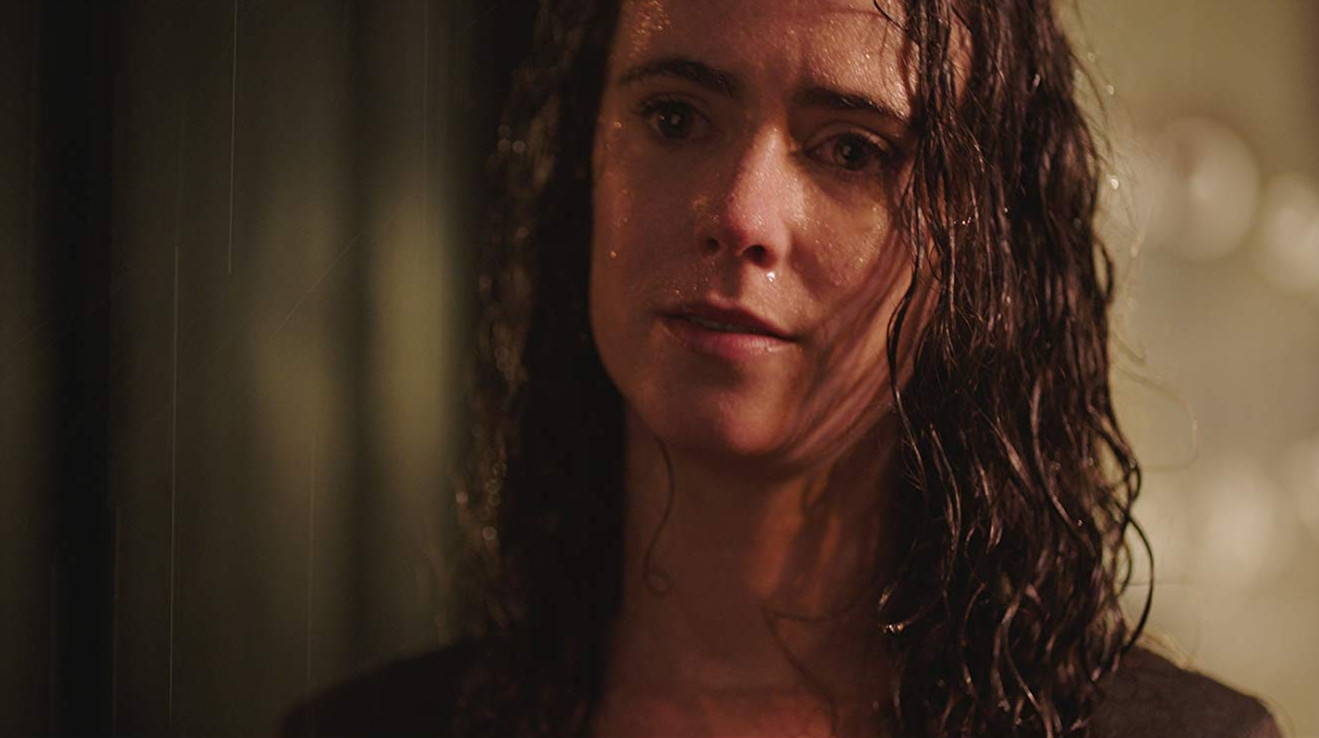
1,000 Times Good Night -- a Norway/Ireland/Sweden co-production released here by Film Movement -- opens theatrically this Friday, October 24, in New York City at the Quad Cinema and in Los Angeles at Laemmle's Royal, among other major cities now, and in the weeks to come. You can view the entire list of currently scheduled playdates, with cities and theaters, by clicking here and then scrolling down.

Note: At NYC's Quad Cinema, director Erik Poppe will be present for a Q&A following the 7:30 show on Friday 10/24. In L.A., at the Royal theater, director of photography John Christian Rosenlund will participate in a Q&A at after the 7 PM screening on Friday, October 24, while the film's director/co-screenwriter Eric Poppe will participate in a Q&A after the 7 PM screening on Wednesday, October 29.

Monday, October 20, 2014

See Edward Snowden blow that whistle in Laura Poitras' odd and alarming doc, CITIZENFOUR


A documentary that pretty much tells itself -- with some questions, of course, about what was chosen for inclusion and what was not -- CITIZENFOUR shows and tells the tale of how and why whistle-blower Edward Snowden first approached journalist/filmmaker Laura Poitras (shown below) and journalist Glen Greenwald in order to go public concerning the illegal surveillance being carried out on the American populace (and elsewhere throughout the world) by the NSA in collusion with our government.

However you define Mr. Snowden on the chart/scale from terrorist to crimi-nal to whistle-blower to hero, the movie should be of great interest simply in allowing you to see and hear him in action and repose. Well, as much repose as someone in his singular state at this time could manage. (We do see him groom-ing himself and trying to get a certain hair style down pat. Ah, vanity! On the other hand, he's human, so why the hell not?)

Poitras has inter-cut various interviews and archival footage having to do with the way we are governed now -- spied upon illegally, as our President assures us that nothing of the sort is taking place. (Just as George W. Bush was an in-office liar, so now is Barack Obama.) This information sets the scene, against which we can place what has happened because of Snowden's actions into some kind of perspective.

When he tells us and Poitras (and Greenwald, with whom he is shown, above) what he is doing and why, and especially how he feels it needs to be handled so that his actions can be perceived less in any personal way that would turn the spotlight on him rather than where it needs to be -- on what the NSA is doing illegally -- I find the young man, as I think you will, too, to be believable and not a little heroic. He also explains why he does not himself feel able to determine which of the information he is sending is actually a matter of National Security, and so must leave that to journalists who are more informed on this subject.

Along with visuals of some of the written communications between our protagonists (the above is one of the less interesting of these), we hear from other whistle-blowers like William Binney, who was an NSA employee, and watch, too, as another liar, Keith Alexander, purgers himself in his testimony. It is against all this that Mr. Snowden's revelations take on their impact. And when toward the end of this engaging and alarming documentary, Jacob Appelbaum explains to us that our current concerns over privacy are really just an extension of the liberty and freedom we have been seeking since, well, the American Revolution, the movie should ring a very loud alarm bell.

Too often asleep at the wheel of our own presumed liberty, we need to be roused into some kind of action -- which is what these whistle-blowers keep trying to do. Eventually, our own government, if its swing to the moneyed and powerful continues, will become the facility that enslaves us completely. Meanwhile we can thank Snowden and his ilk for having the courage to do their part, and journalists and filmmakers like Greenwald and Poitras for bringing the work of these whistle-blowers to our attention.

One final jolt is provided by Greenwald, who lets us know that he has a new whistle-blower waiting in the wings. Stay tuned. Meanwhile, Citizenfour (from Radius/TWC and running 114 minutes), which doubles as the name of the film and the moniker taken by Snowden, begins its theatrical run this Friday, October 24, in New York City at the IFC Center and the Lincoln Plaza Cinema. Elsewhere? No doubt. And eventually onto DVD and digital.