Showing posts with label Feminism. Show all posts

Saturday, May 15, 2021

Haifaa Al Mansour's THE PERFECT CANDIDATE explores the (very) slowly expanding opportunities for women in the UAE

Watching the many and frequent hoops that a woman -- this one a noted doctor at a small-town clinic -- in the United Arab Emirates must constantly jump through called to mind the statement attributed to Ginger Rogers about what it was like to dance with Fred Astaire: "I had to do everything he did -- but backwards and in heels." Had Rogers resided in the UAE, she might well have added, "With one hand held behind my back and one foot tied to the sofa, and completely draped in black cloth that covers everything -- even my eyes!" 

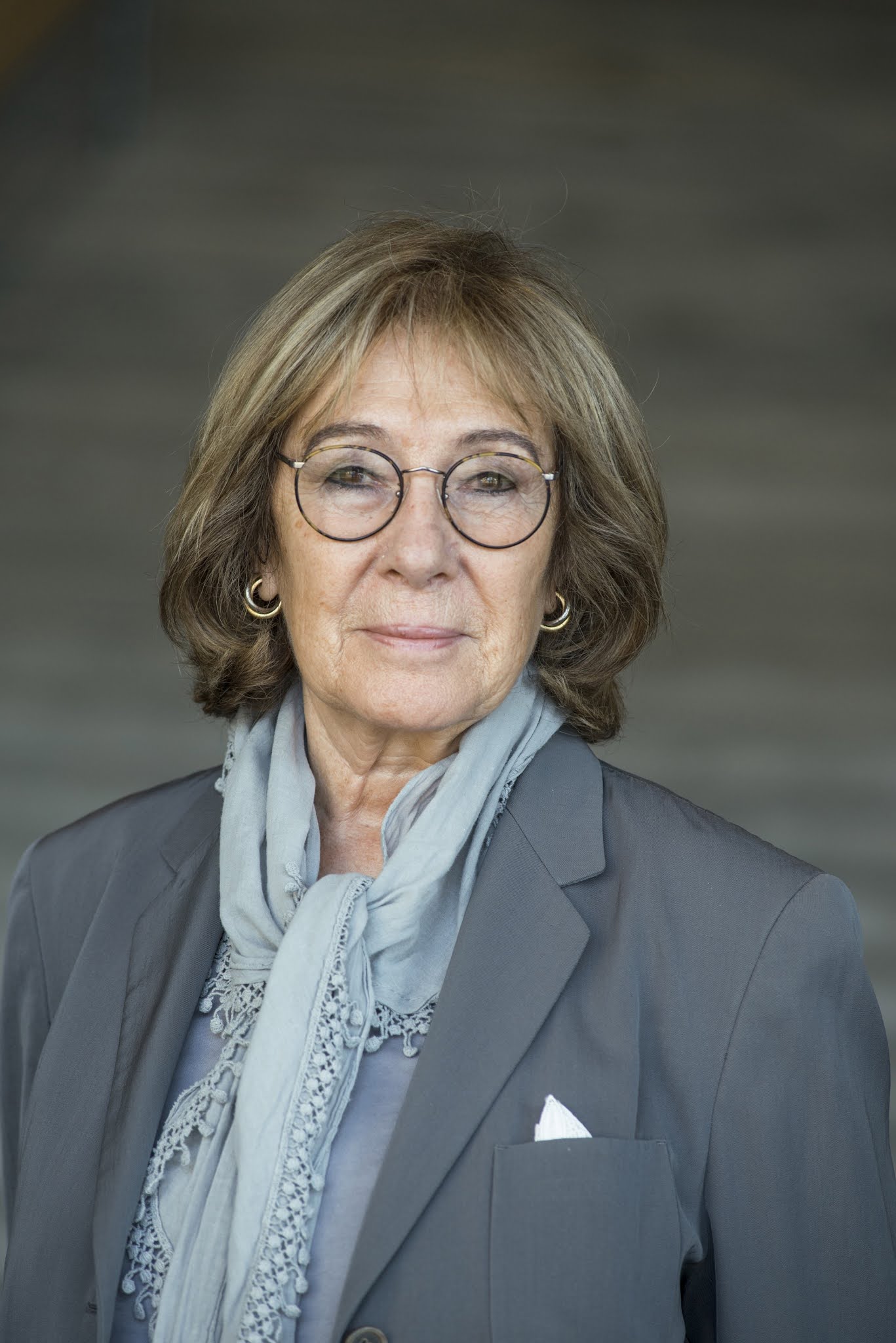
THE PERFECT CANDIDATE, the new film from the Haifaa Al Mansour (shown at left, the director of  the popular film Wadja, as well as of Mary Shelley) gives us that scene of our heroine, an almost-by-accident political candidate, having to give her big speech in front of people, with nothing but her words and the sound of her voice allowed to be seen/heard. This has got to be one of the most ironic/crazy moments ever put into a film about politics and feminism, among other subjects.


Is this regime utterly nuts? Of course it is. Long has been. Fortunately, our good doctor Maryam Alsafan (Mila Alzahrani, above), along with her two younger sisters (below) and very self-involved father (mom is deceased), understands how to negotiate many of the perils of being a woman with a will in Arab countries. But not all of them, unfortunately. Nor could we expect her to. But we do see the doctor contending with nasty patriarchal patients, along with the many obstructions to simply getting a necessary form signed by the government.


And our girl is not shown to be anything like perfect. Clearly, she bought a new car because it was "on sale," and initially she seems more concered with improving her own station in life than with helping the people and patients around her. 


But as her campaign begins to take wings, we and she begin to see a little hope. Just a bit. But this is enough to buoy up the movie and its characters, and to give us a final scene (above) in which one of those patriarchal patients has something of an enlightenment. It's not a whole lot, but it is enough to make Maryam (and us) understand that you can lose, even as you simultaneously win.


From Music Box Films, in Arabic (with English subtitles) and a little English, and running 104 minutes, the movie opened in theaters (in New York City and the Los Angeles area) yesterday, and will hit further venues around the country in the weeks to come. Click here (and then scroll down  to "Theatrical Engagements") to view all currently scheduled playdates, cities and theaters.

Saturday, December 19, 2020

Jeanine Meerapfel's MY GERMAN FRIEND: See an excellent, undiscovered film from 2012

It is possible that, despite the current pandemic's making the making of movies more difficult, the flip side of this is that a number of older films, earlier passed over for any kind of international distribution, are now getting their chance to shine -- even if tardily. On the basis of how intelligent, unusually put together, and ever-timely is the newly released movie titled MY GERMAN FRIEND, I would say that, as is often the case when bad things happen, there can be an occasional surprising and worthwhile upside.

Written and directed by Jeanine Meerapfel (shown at left), the movie tracks, beginning in the 1950s, the hugely changing relationship between childhood friends who live just across the street from each other: Friedrich Burg, the son of German Nazis relocated post-war to Argentina, and Sulamit Löwenstein, daughter of well-to-do Jews fleeing Europe for Argentina to escape the Holocaust. 

We're with Sulamit and Friedrich as young children, adolescents, older students and finally adults (Celeste Cid, below, right, and Max Riemelt, below, left). The two have loved and cared for each other all along the way, and yet their paths toward adulthood -- including career, philosophy, priorities -- could hardly have been more different. 


By refusing to take sides but instead showing us how each of her protagonists thinks and feels and thus why they behave in the ways they do, Ms Meerapfel is able to give us a wonderfully expansive and very real love story, without for a change slighting the necessary themes -- politics, protest, history, economics, education, rebellion (and its consequences), even feminism -- that should figure (but so seldom do) into any genuine love story. (Think of this one as The Way We Were, but set in Argentina and Germany, and without all the soap suds.)


The film begins on a train as Sulamit makes her way toward... something, though we don't yet know what. We only learn this as the movie is more than halfway along, as the present moves to the past, catches up again, and plows onward. 


My German Friend
is indeed a love story, but it is one that offers so much more than simple romance, a little lust and some feel-good filler. It shows us different forms of love and how help and support figure into all this. 


And if the filmmaker will win no awards for style and/or breaking new ground, she should win a few for showing us life's broader perspective that include what is going on in our world politically, economically, culturally, and freedom/repression-wise. 


By the time of Meerapfel's lovely conclusion -- in which anything simple-minded or obvious has no role -- we are made to realize that love is in ongoing thing in which small battles must be fought, won or allowed to be lost in order to keep the relationship healthy. This movie is a small-but-genuine "find."


From Corinth Films -- which has been giving us a lot of lesser-known but very-much-worth-viewing attractions -- in German and Spanish (with English subtitles) and running 104 minutes, My German Friend hit DVD and streaming earlier this week -- for purchase and/or rental. Amazon Prime members can watch it free of charge.

Sunday, March 3, 2019

Fabrizio Terranova's smart romp of a doc, DONNA HARAWAY: STORY TELLING FOR EARTHLY SURVIVAL


I'd never heard of Donna Haraway before receiving the publicity information on the new film about her from Icarus Home Video. But after sitting down and viewing this very interesting and surprisingly inventive documentary, TrustMovies was taken time and again by how much Ms Haraway reminded me of the subject of another recent doc, the late Lynn Margulis, as seen in Symbiotic Earth. Both were/are professors/teachers. Ms Margulis was much more of a scientist, while Ms Haraway now calls herself a "story teller," albeit one possessing quite a set of credentials, though the film at hand -- DONNA HARAWAY: STORY TELLING FOR EARTHLY SURVIVAL -- never pushes these.

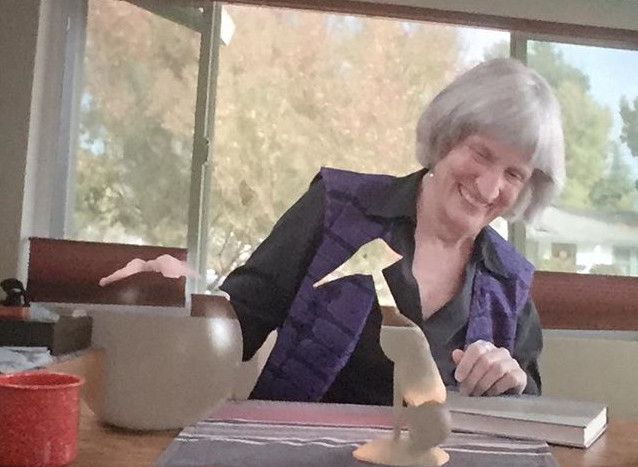
Its director, Fabrizio Terranova (gorgeous name!), shown at right, seems determined -- perhaps because the subject of his film considers herself to be foremost a storyteller -- to become a something of a fabulist himself. He is certainly not content to simply place his camera in front of Haraway and let her proclaim, though it may seem at first that this is exactly what he is doing. And Ms Haraway does proclaim very well. She proves provocative, intelligent and lots of fun. But as the film moves ahead, you may notice some odd things about the window behind Haraway, in which the view will suddenly change, not naturally but more via special effect. By the time a jellyfish is swimming in the air above and around his subject, and she herself is playing with objects that clearly seem to be out of, say, Marvel's Doctor Strange, you'll understand that you not watching your everyday documentary.

All this is in spite of -- and also because of -- the leading lady. Haraway (above and below) is an original, dedicated to everything from feminism to the environment, science fiction to progressive relationships, and history to the upending of what we might call "common sense." The woman talks about all of these and more (including orthodontia!), in the process making us think and smile and think again.

We learn about her own history: family (birth and chosen), relationships (both loving and sexual), and especially her canine companion, a beautiful Australian shepherd, now in decline, whom we also see during his earlier and impressive training feats. Slowly and very interestingly, an entire life and philosophy come together before us. As a younger woman she once heard her own mother refer to her as perhaps "not marriageable."  Gosh, somehow she has managed quite well.

Along the way, we see some funny, appropriate animation, hear from a few other folk in the equation, and by the time we arrive at the film's conclusion -- during which Haraway finally tells us one of her stories -- Terranova actually makes the screen go dark for awhile, so that we can simply listen and better process what we're hearing. Earlier in the film, she has told us that "Some of the best thinking is done as story telling," and now we see/hear an example -- one that seems to contain so much that this woman has already placed as highly important in our mind.

Haraway may not be a scientist but she certainly is smart. And so is the man who made this charming, very interesting documentary. From Icarus Home VideoDonna Haraway: Story Telling for Earthly Survival becomes available this Tuesday, March 5 -- on DVD and streaming (via Amazon, Vimeo and iTunes), for both purchase and rental.

Thursday, October 26, 2017

THE DIVINE ORDER: Switzerland's tardy response to women's rights in Petra Volpe's hugely enjoyable adult coming-of-age movie


I had forgotten just how very late in the western-civilization game that the country of Switzerland finally recognized women's right to vote: 1971. That's a jaw-dropper. (You can find the year in which each of the world's countries recognized women's suffrage here.) Swiss filmmaker Petra Volpe has made a tasty little delight centered around that landmark Swiss year and what happened in one particular small town that helped change things. Unlike 2015's much darker Suffragette, THE DIVINE ORDER proves a lighthearted but also smart and genuinely "felt" film about this fraught time -- when the rest of the western world was experiencing everything from the sexual revolution to anti-war protests but Switzerland was still back in the dark ages concerning certain subjects.

As both writer and director, Ms Volpe (shown at right) trusts her subject to make its own importance clear, and she doesn't paint her little town as any hotbed of anti-woman feelings. It's simply patriarchal and old-fashioned -- with all that goes along with those conditions. Old habits die hard, as they say, and Switzerland proves not much different from other locales -- just later in coming to terms with change.

The group of women Volpe creates is given fine life by the set of actresses chosen for the roles, beginning with the film's wonderful star, Marie Leuenberger (of Amnesia and The Circle), who won the Tribeca Film Fest's Best Actress award for her work here.

Ms Leuenberger, above, plays Nora, a mousy little Swiss hausfrau with a decent, hunky husband (Maximilian Simonischek, below, right), a couple of cute kids, and a nasty, lazy father-in-law and brother-in-law in tow. When an interesting, random and quite believable confluence of events forces a crack in Nora's sense of identity and justice, that crack keep opening slowly into, well, a whole new world of change.

Helping that change occur are a number of local women, each with her own special problem to solve, but each also open to aiding the others in solving theirs. So this is a "solidarity" movie, yes, but it's one with a large, open heart and a mind sharp enough to recognize that the "other" -- men, and even some of the town's women who refuse to understand what suffrage and justice could bring -- are not the enemy per se but rather "family" that must be made to embrace progress.

How all this comes about proves alternately funny, moving and very specific -- bringing together several generations of women (and men) into a time of change in which most do not always behave in an admirable way, yet still manage to learn from their mistakes.

Featuring a plethora of juicy scenes, the movie's best of all is the one (below) in which the sexual revolution suddenly enters these women's lives as they learn for the first time about the look, as well as the uses, of their own vagina.

Sure, The Divine Order is a feel-good movie, but it offers enough irony, human foibles and satire (of religion and hypocrisy, among other subjects) to ensure that the feeling good is fully deserved. Performances are fine down the line, with Ms Leuenberger absolutely memorable as a country mouse who becomes a "tiger" without losing a trace of her humanity or generosity.

From Zeitgeist Films -- in German and a bit of Italian with English subtitles, and running a just-about-perfect 96 minutes -- the movie is Switzerland's entry into the Best Foreign Language Film "Oscar" race. I wouldn't be at all surprised to find it placed on the shortlist. The film opens tomorrow, Friday, October 27, in New York City (at Film Forum) and Santa Barbara (the Riviera) and on November 17 in Los Angeles at Laemmle's Royal and Playhouse 7. Here in Boca Raton it will open at The Living Room Theater on December 1. To see all currently scheduled playdates, cities and theaters, click here and scroll down.

Monday, April 18, 2016

Feminism and transgender, Albanian style, in Laura Bispuri's quiet marvel, SWORN VIRGIN


That great film actress Alba Rohrwacher, whom TrustMovies has long referred to as Italy's answer to Meryl Streep, gives yet another of her versatile, bone-deep performances in the new Italian/Albanian movie SWORN VIRGIN. Adapted (from the novel by Elvira Dones) and directed by Laura Bispuri, whose first full-length film this is, the movie gives Ms Rohrwacher a particularly unusual role, that of Mark, aka Hana, a very masculine-looking young woman (or is this a very feminine-looking young man?) -- whom we first meet as s/he is being taught to herd goats atop a somewhat wild mountain range in Albania.

From the very next scene of the film, however, it is clear that something is quite wrong here. Our hero/heroine is unhappy, confused, and soon s/he is leaving this place, below, only to end up in a surprise visit to what would seem to be the home of a relative in Italy. Ms Bispuri, shown at left, alternates between scenes that take place in the present and past, so that slowly we come to understand what has happened to this young woman. This has to do with a particularly Albanian tradition of how to handle women who want the kind of freedom automatically handed to their male counterparts.

We've recently seen a fine French film -- Oscar nominee, Mustang -- that showed us something on this order involving Turkey and its fundamentalist ideas regarding women. And if you've seen certain films that take place in Albania and deal with subjects such as the Albanian idea of revenge --say, The Forgiveness of Blood -- you will quickly understand how, uh... backward these ideas can seem.

To go into much detail here would spoil the growing surprise, as well as the understanding we slowly come to experience of what is going on here -- not to mention ruining some of the fine work by Bispuri and Rohrwacher that helps us come to terms with it all. I don't think I've ever seen Ms Rohrwacher give such a self-effacing performance as here.

Mark/Hana is a character who is not allowed to see or be him/herself. So little wonder s/he cannot let any another person see inside, either. There are times that the actress is so quiet and "enclosed" that you'll want to crane your neck around the screen to try to get closer to her face in order to know her emotions and thoughts a little better.

So real and so committed to that reality is the actress that she holds us at every step along this strange journey. This involves her "sister," played beautifully by Flonja Kodheli; her helpful brother-in-law (Luan Jaha, above, left); and her niece (a lovely performance from newcomer Emily Ferratello, shown at right, three photos below).

We also meet a lifeguard (Lars Eidinger, above and below) at the pool in which Mark's niece practices her synchronized swimming -- which leads to one of the most interesting hand-jobs you're likely to have witnessed. Likewise our hero/heroine's first penetration scene: so fraught and unusual yet strangely liberating as any the movies have given us.

By the end of Sworn Virgin, most of our questions will have been answered, at least enough to understand who Mark/Hana really is and what s/he might hope to get from this strange and possibly welcoming new world that may now be called home.

The finale is as quiet, rich and full of wonder as all else in this fine first film. We're certain to hear from Ms Bispuri again soon, and of course we'll be getting lots more from Ms Rohrwacher -- who, in just 12 years has already accumulated some 52 acting credits. Few actresses work as often, as well, or as deeply as this one.

From Strand Releasing and running just 90 minutes, Sworn Virgin opens in New York City at the Village East Cinema this Friday, April 22. The following Friday, April 29, it will play Los Angeles at the new Laemmle Ahrya Fine Arts.

Sunday, March 1, 2015

Parade's End -- an acquired taste. (Scroll down for the companion review of Downton Abbey)


This post is written by our "Sunday Corner" 
corresponent, Lee Liberman

Parade's End (BBC/HBO), a psychological drama, and cream puffy Downton Abbey (PBS) treat the effects of world war and industrialization on tradition-bound Edwardians, especially on women. Parade's End, in 5 episodes based on novels by Ford Madox Ford, is a tougher go; it takes a few takes to dig itself into your heart, but the payoff is far more interesting -- you feel world war shaking the ground and savor a bit of well-earned joy as the parade ends. Despite excellent reviews here, the series, directed by Susanna White, slipped under the radar quickly but was widely celebrated and honored across the pond.

Tom Stoppard (prolific playwright, screen-writer) can't have had a simple time distilling Ford Madox Ford's four-novel series because the work unfolds in non-linear fashion, jumping around dizzily. Written close to the period, the novels were called by poet W.H. Auden and others 'great', but they aren't easy -- as though Ford meant his work to be as contrary as he made his characters. The first go at the mini-series is also off-putting. I didn't get into it until the re-watch; then became engrossed in the story of the protagonists and also their being metaphor for the bloom being off the rose of the aristocracy. It did help to know where the story was headed before focusing on how the words and actions of the characters contribute to the synergy of the whole.

The antiheroes of the drama are Christopher and Sylvia Tietgens, a miserably-married aristocratic couple whom anyone will recognize who has encountered a relationship in which the parties don't get each other, talk past each other, relentlessly disappoint, and make each other angry or depressed. Yes, toxic, but Christopher and Sylvia turn each other on -- he thinks she is "glorious" and his braininess and impeccable taste have spoiled her for other men. Sylvia wants to keep her husband but cannot help repelling him. Duty compels him to wear the hair shirt: 'I stand for monogamy and chastity and not talking about it,' he says. Benedict Cumberbatch (at far left) is so quietly, deeply expres-sive that Christopher's suffering is palpable -- his 'romantic feudalism', his nostalgia for a time of 'rights, duties, and supposed orderliness' (Julian Barnes, the Guardian, 8/2012) making him a dinosaur in his own time. (Press here for Barnes's rich analysis of Ford's characters.) 

Sylvia (the beautiful, formidable Rebecca Hall, above, right), acts out the narcissism of the aristocracy with the seductive charm of a sociopath. Her mother (Janet McTeer) calls her manipulative behavior 'pulling the strings of the shower bath'. Christopher, an intellectual savant, shoulders the guilt and unhappiness of an aristocracy that is becoming anachronistic. Although brilliant, he nevertheless courts failure through one self-deprecating act after another. He works at the Imperial Department of Statistics and perfectly predicts the outbreak of war. But when asked to manipulate data, he quits, deeply offended, and joins the army. Through the war years, Sylvia's sadistic antics and Christopher's own self-effacement conspire to ruin his reputation. He is banned from his club and sent down to a combat unit at the front.

Appearing early but not often in the story is young, brainy suffragette, Valentine, (Adelaide Clemens, below, right), middle-class daughter of a classics professor and journalist mother (Miranda Richardson at her most winsome). Christopher and Valentine meet for the first time on a golf course where she and a friend are demonstrating for the vote among 'fat golfing idiots' (whose own view is that suffragettes are whores and deserve to have their bare bottoms spanked). Christopher chivalrously foils arrest of the girls by heaving his clubs in the way of a police officer who is giving chase. In this and later brief chaste encounters, we see the exact opposite of mutual repulsion. Christopher and Valentine "get" each other, make each other think, and disagree amiably. Their fresh good will is hope for the future, but he is not ready to shed his old-fashioned honor.

Honoring the rules of the 'parade' of the social elite (aggressively flouted by Sylvia), Christopher does not take up with Valentine until the war has dragged on, his parents have died of disappointment, and Sylvia has exhausted him with histrionics. The last straw is her having the ancient tree at Groby Hall felled because it darkens the parlor. (Groby, the Tietgens family seat in Yorkshire, is 'older than Protestantism'.) In a decisive change in behavior, Christopher dismisses Sylvia with an unforgiving stare and throws a log from the old tree on the fire. Peace is declared, the troops are released, and in the final frames Christopher is at last happy as he finally joins his heart with Valentine.

More British acting elite add depth to the parade, among them are Rufus Sewell, a batty cleric; Rupert Everett, Christopher's older brother (above, left), who lives with his mistress and wants no part of Groby; and Anne-Marie Duff (below, left) as whiny Edith, a middle-class snob who has snared Macmaster, (Stephen Graham, below, right), a writer, to enhance her social climb among the literati.

Parade's End is streaming on HBO; it's worth the work.

***********************

Compared to Parade's End, the PBS series DOWNTON ABBEY is the soap opera version of the cracking Edwardian facade during and after WWI. Created by Julian Fellowes, shown below, Season 5 has ended and season 6 ordered -- could be the place to stop.

Lord Grantham (Hugh Bonneville), hapless head of the aristocratic Crawley family, broods over the inability of his land-rich, cash-poor estate to support itself. Fortunately his modern daughter Mary (Michelle Dockery) is able to walk the line between appreciating papa's decency and prodding him toward running the estate like a business. The growing assertiveness of women in the new century is punctuated by daughter Sybil (Jessica Brown Findlay) running off with the chauffeur, cousin Rose (Lily James) falling for a black jazz musician followed by snagging a Jewish banker-- at least avoiding an interracial scandal.

But an hour special that ran on PBS at the start of Season 5 spelled out the premier obsession of this series: 'The Manners of Downton Abbey' (for sale at PBS). The host, Alastair Bruce, historian and consultant, bobs about the film set adjusting posture, bits of dialogue, and scene to assure perfect replication of the ballet of manners that dictated daily life of the Edwardian elite upstairs and staff downstairs.

Bruce explains that the aristocracy were so traumatized by contageous disease and the violence of the French Revolution that habits of restrained physical contact and emotion even among family solidified into protocol. The Edwardians enveloped themselves in a complexity of nuanced formalities, insulating them from change. Dowager Countess Violet (Maggie Smith, below), Butler Carson (Jim Carter), and Lord Grantham keep the flame, resisting slippage of the status quo.

There are few if any story lines in Downton that do not revolve the Edwardian code in one way or another. One stays tuned to find out what's coming next (or what Violet will say next). Soap opera is geared to the gossip gene or the ginned-up fear response as plots charge to and fro, anticipating a favorite character's horrible dilemma. All the talk, tears, wit. joy, grief at Downton Abbey are skin deep. In season 5, the only character whose painful struggle (with his sexuality) makes us care is Thomas, the devious under-butler, played by marvelous actor Rob James-Collier (below), who is owed lead roles as soon as possible. There is something behind those eyes, and you want more.

DA's success is aided by "camp and class", said one reviewer; it surely is beautiful and fans feel elevated by its British toniness (reputedly some royals tune in). Perhaps one more season is enough, though, as plots are repeating themselves and going stale. It is quite a contrast to feature-film who-done-it, Gosford Park, also scripted by Fellowes. But Gosford had director, Robert Altman, who, like great writers, make us care about the inner life and motivations of characters. Taking place during a weekend gathering at a country estate, a murder is committed by a character whose pain we begin to understand and share as the crime is solved. At Gosford Park, as in Parade's End, we are slowly drawn into the inner lives of a number of characters. Parade's End and Gosford Park can be mined over and again; repeat visits to Downton offer thin gruel.

Downtown Abbey Season 5 will be available for a short time on line at PBS. Only the first four seasons are available on DVD in the NTSC version compatible with our DVD players, but for those who own an all-region player, the UK version of Season 5 is now for sale. (It can't be long before Season 5 is available here, too.)