Showing posts with label education. Show all posts

Saturday, December 19, 2020

Jeanine Meerapfel's MY GERMAN FRIEND: See an excellent, undiscovered film from 2012

It is possible that, despite the current pandemic's making the making of movies more difficult, the flip side of this is that a number of older films, earlier passed over for any kind of international distribution, are now getting their chance to shine -- even if tardily. On the basis of how intelligent, unusually put together, and ever-timely is the newly released movie titled MY GERMAN FRIEND, I would say that, as is often the case when bad things happen, there can be an occasional surprising and worthwhile upside.

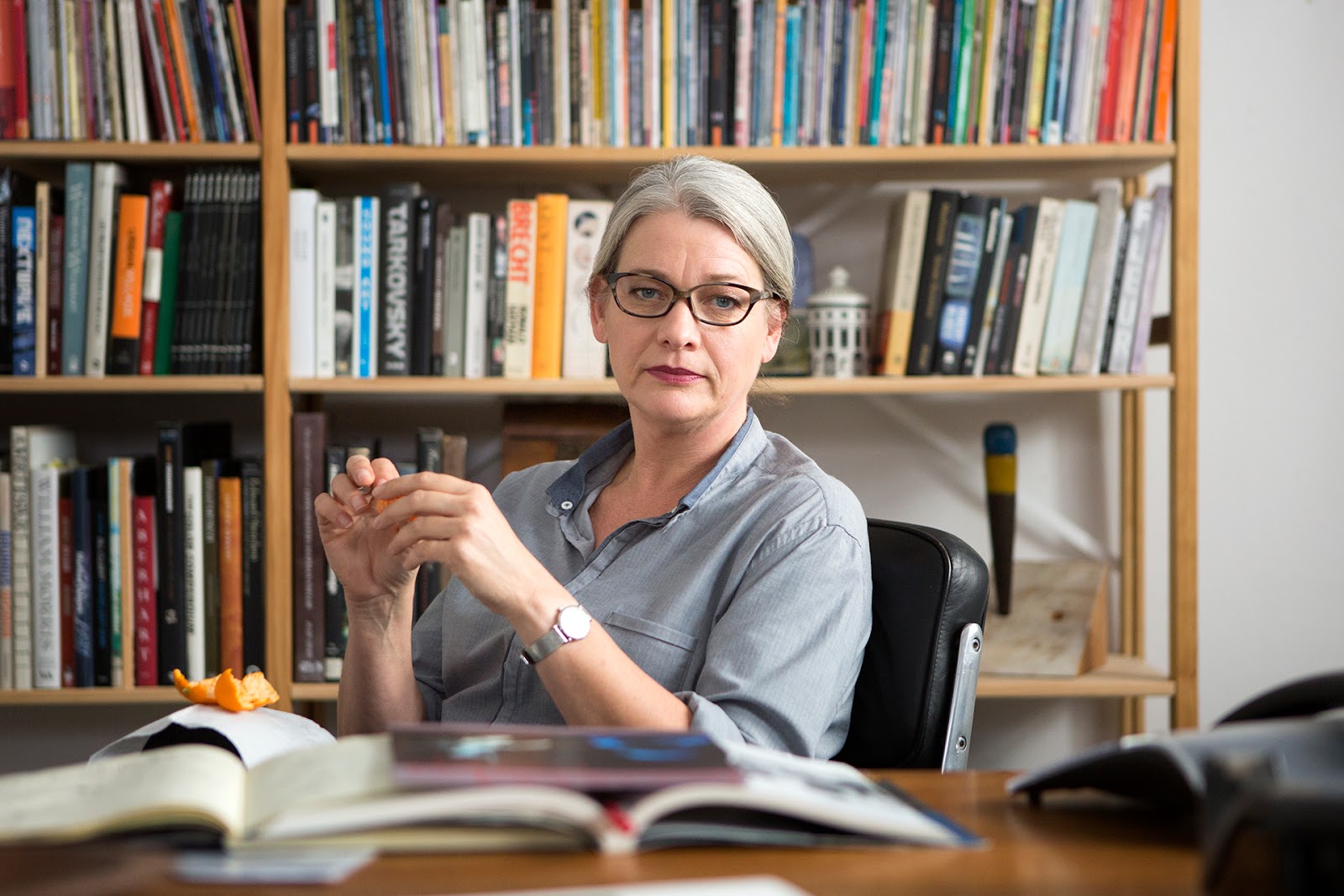
Written and directed by Jeanine Meerapfel (shown at left), the movie tracks, beginning in the 1950s, the hugely changing relationship between childhood friends who live just across the street from each other: Friedrich Burg, the son of German Nazis relocated post-war to Argentina, and Sulamit Löwenstein, daughter of well-to-do Jews fleeing Europe for Argentina to escape the Holocaust. 

We're with Sulamit and Friedrich as young children, adolescents, older students and finally adults (Celeste Cid, below, right, and Max Riemelt, below, left). The two have loved and cared for each other all along the way, and yet their paths toward adulthood -- including career, philosophy, priorities -- could hardly have been more different. 


By refusing to take sides but instead showing us how each of her protagonists thinks and feels and thus why they behave in the ways they do, Ms Meerapfel is able to give us a wonderfully expansive and very real love story, without for a change slighting the necessary themes -- politics, protest, history, economics, education, rebellion (and its consequences), even feminism -- that should figure (but so seldom do) into any genuine love story. (Think of this one as The Way We Were, but set in Argentina and Germany, and without all the soap suds.)


The film begins on a train as Sulamit makes her way toward... something, though we don't yet know what. We only learn this as the movie is more than halfway along, as the present moves to the past, catches up again, and plows onward. 


My German Friend
is indeed a love story, but it is one that offers so much more than simple romance, a little lust and some feel-good filler. It shows us different forms of love and how help and support figure into all this. 


And if the filmmaker will win no awards for style and/or breaking new ground, she should win a few for showing us life's broader perspective that include what is going on in our world politically, economically, culturally, and freedom/repression-wise. 


By the time of Meerapfel's lovely conclusion -- in which anything simple-minded or obvious has no role -- we are made to realize that love is in ongoing thing in which small battles must be fought, won or allowed to be lost in order to keep the relationship healthy. This movie is a small-but-genuine "find."


From Corinth Films -- which has been giving us a lot of lesser-known but very-much-worth-viewing attractions -- in German and Spanish (with English subtitles) and running 104 minutes, My German Friend hit DVD and streaming earlier this week -- for purchase and/or rental. Amazon Prime members can watch it free of charge.

Monday, December 31, 2018

Matan Yair's SCAFFOLDING: from Israel, a beautiful, believable, nuanced look at a troubled boy on the cusp of manhood


Yet another fine Israeli film reaches U.S. distribution, as SCAFFOLDING -- an unusual character study of a troubled-but-hugely-worth-caring-about Israeli high school student -- written and directed by Matan Yair, hits VOD and DVD via Breaking Glass films.

As a filmmaker, Mr. Yair, shown below, often begins his scenes in the middle of something and/or ends them abruptly, also in the midst of things. This works pretty well, too, as it forces us to observe and contend with a life -- that of the main character, Asher, beautifully played by newcomer Asher Lax -- that seems as fractured as does the ongoing narrative.

Slowly we ascertain that Asher is the only son of a problemed single father -- given to telling jokes, each of which seems more misogynistic than the last -- who owns a construction company specializing in scaffolding and expects his son to take over dad's business rather than pursuing the arts/academic career that apparently beckons him.

Young Mr. Lax, shown above and below, proves a natural -- an enormously attractive and charismatic performer who never needs to push, yet thanks to his talent and beauty, holds the audience securely in his alternately warm and angry grip.

In contrast to his single-minded and physically declining father, Asher's favorite teacher, Rami (played by Ami Smolartchik, shown at left, above and below) seems as physically and intellectually different as could be. We get snippets of how Rami teaches and how effective he is at reaching the difficult Asher. At one point Rami suggests to his student, "Try to be less prickly" -- a quiet and lovely manner in which to make the young man consider his words and actions.

When something totally unforeseen (but not at all difficult to accept) occurs, Asher must find ways to deal with this, as well as with his father and future. (Dad is played by Yaacov Cohen with just the right combo of incivility and caring that he never quite loses us. Nor his son.) On the feminine side are a good friend of Asher (not exactly a girlfriend, however; the young man's sexuality seems at this point maybe indeterminate), various educators, and the wife of the teacher, Rami.

Coming to terms with all this is not at all easy for Asher, but as orchestrated by Yair and Lax, the ongoing movie continues to hold us -- and afterward to haunt us -- via its marvelous combination of observation, compassion, detail and suggestion. The finale takes us just so far, making its quiet point in a moving and compelling fashion that doubles as a kind of memorial to that exceptional teacher.

Running a just-about-perfect length of 94 minutes, Scaffolding, from Breaking Glass Pictures, comes available on DVD and VOD tomorrow, Tuesday, January 1 (for purchase or rental) via iTunes, Amazon Prime Video, Google Play Vudu, FandangoNOW, iNDEMAND, Direct TV and elsewhere, too. For folk who appreciate foreign films, particularly well-done character studies, I can't think of a better way to begin the New Year.

Saturday, March 17, 2018

Blu-ray debut for Hou Hsiao-Hsien's 30-year-old semi-classic, DAUGHTER OF THE NILE


TrustMovies came fairly late to the oeuvre of Taiwanese filmmaker Hou Hsiao-Hsien. It wasn't until Café Lumière (2003) that I fully appreciated a Hou movie. Since then, I've come to like his work more and more, and now, the opportunity to see one of his earlier films -- DAUGHTER OF THE NILE, from 1987 --  seemed some-thing too good to pass up.

It is, though it is not, I think, quite up to the level of some of his later work. The movie's plot does clunk a bit (one shoot-out duly follows another and another), and Mr. Hou, shown at right, has certainly grown more subtle and graceful in his story-telling over the years. Here fact, fantasy, memory and odd objects -- from a red Walkman to a playful puppy all merge as we enter the life of a young woman and her very problemed family in the Taiwan of 30 years ago where local Chinese eateries are suddenly co-existing with a new KFC. What is most refreshing about the film is how little it seems to have dated (except for certain references to Madonna and/or the size of the early cell phones). In terms of both theme and human behavior, it remains timely.

Our heroine, Lin (above, played by Yang Lin), is constantly contending with that off-track family: a brother (two photos below) who seems only attracted to the criminal life, a lazy younger sister (below), an absentee dad (maybe he simply works too hard and too long), and a grandfather with a minor gambling problem (mom, it seems, has been dead for awhile now).

Little wonder our girl's mind often wanders into reveries about pharaohs and Egyptian princesses, hence the movie's title. Along the way, we visit Lin's classroom and watch a teacher trying so hard to communicate to his students some necessary lesson on morality and philosophy -- to little avail, of course.

Mr. Hou's gorgeous visuals are on full display here, and his gift for verbal description, followed by a single shot that encapsulates all that's been said comes to the fore, as well -- as when a young woman is said to have married for money to a man who is connected to the criminal Triads. When we see her face, from a discreet distance, everything we've heard is brought home in one quiet, breathtaking moment.

Like grand-pa/like grandson comes home to roost, as do a number of fart jokes (Mr. Hou was clearly ahead of his time in regard to the latter). Mostly, though, we get a good look at Taiwan, inside-out and from the ground up. Forget Babylon: this was already, 30 years ago, a sad, desolate, running-on-empty society.

Among the excellent Bonus Features on the new Blu-ray disc are a fine interview with Tony Rayns regarding Hou Hsiao-Hsien and Daughter of the Nile, and a commentary track by Richard Suchenski. The Blu-ray transfer here is often magnificent (there's a scene around a bonfire at the beach that's a veritable feast for the eyes).

From the Cohen Film Collection and running 93 minutes, the movie will hit the street this coming Tuesday, March 20, on Blu-ray, DVD and digital platforms -- for purchase and/or rental.

Tuesday, December 12, 2017

The Latasters' MISS KIET'S CHILDREN: kids on film in a fine and helpful Netherlands school


The earlier documentary of which the new one, MISS KIET'S CHILDREN, should most remind you is probably that fine French kids-in-school doc, To Be and To Have, which let us spend some time in a one-room, mixed-grade schoolhouse in the French countryside.

Among the differences between that doc and this new one are the country we're in (The Netherlands), the larger size of the school, and the fact that most of the kids here are recent immigrants (several from Syria) -- which addresses a subject that has grown hugely in importance throughout the European Union over the fifteen years since the release of that earlier film.

The product of filmmakers Petra Lataster-Csisch and Peter Lataster (shown above, left and right, respectively), the film offers no narration -- written or voice-over -- nor any talking-head interviews, but is simply a you-are-there, let's-watch-these-kids-and-the-interaction-with-their-teacher approach. It works. The children, for the most part, seem either unaware of the camera or so used to it that it makes little difference to them. Only one of these -- a very funny young fellow named Jorj (shown below) -- occasionally seems to be playing to the camera. And, damned if he isn't very good at it!

That titular teacher, Miss Kiet (above and below), seems a font of inspiration and warmth, yet stern enough when more control is necessary. Early on in the film she makes the point that the differences between us all is something beautiful, and this idea is quietly carried on throughout, as we watch the kids learn mathematics, movement, spelling and even how to tie a shoelace.

More than merely teaching reading, writing and arithmetic, however, what Miss Kiet excels at most, it seems, is problem-solving. She is near constantly helping these kids learn how to solve their problems without resorting to anything that approaches fighting or violence. Later she will explain to them: "For every problem, there is a solution!" And, by god, she's there to demonstrate this fact.

From near the opening moment, when a little girl arrives at school having fallen down outside into what must have been a mud puddle and now has on wet and dirty pants, to the Christmas pageant, complete with song and dance, which the kids rehearse and then put on near the film's conclusion, various problems arise and are handled by Kiet and eventually by the children with understanding and a slowly acquired skill.

The movie deals mostly with those children from Syria, though one young boy (above) hails from Macedonia. As we watch the little girl Liane (or Leeann, as it is sometimes spelled here) on the playground, and see her flinch again and again and look up into the sky when any loud noise is heard, we can't help but wonder if she is remembering the bombs and violence of her native land. Finally the teacher talks with Jorj about why he has trouble sleeping, and, sure enough, this started back in Syria. "There is no 'bang bang' here, is there?" he is asked. No, but his sleep remains troubled.

Miss Kiet's Children will appeal most, I suspect, to teachers and/or anyone who harbors the instinct for teaching, and then to those who love watching the faces of children for all the unbridled emotions these can show. The faces here are marvels indeed, and the filmmakers have captured them in all their troubled glory. Finally though, the documentary seems to TrustMovies not quite as accomplished a To Be and To Have. The fact that it sticks mostly with only four or five of these kids made me wish I had seen more of the rest of the class and how the others interacted with these five. You can't have it all, of course, not even within a two-hour framework of this film's two-hour running time.

On the same bill with the full-length documentary is a seven-minute animated short entitled WHEN I HEAR THE BIRDS SING by Trine Vallevik Håbjørg, with animation by Øyvind Tangseth and Ms Håbjørg. Using simple animation that suddenly turns gorgeous, colorful and inspired, the soundtrack offers up snippets of interviews with children of the Côte d’Ivoire in West Africa who were left homeless and/or nearly killed during the violence that followed the 2010 election. They talk of their ambitions, as well as of their travails. In its simplicity, style and beauty, the film is a small but sublime accomplishment.

From Icarus Films and in Dutch with English subtitles, Miss Kiet's Children opens tomorrow, Wednesday, December 13, at Film Forum in New York City for its U.S. theatrical premiere, and then on Friday, December 15, at Laemmle's Music Hall 3 in Los Angeles. 

Monday, August 28, 2017

Lower education unveiled in Jan Hřebejk/Petr Jarkovský's dark and delicious THE TEACHER


Another first-rate gem from the film-making team of director Jan Hřebejk and writer Petr Jarkovský, who have earlier given us Divided We Fall, Up and Down and Kawasaki's Rose, their newest venture -- THE TEACHER -- is also one of their best. Of course, we say this every time the pair makes a new movie. But, hey: It's true. I can't think of another film-making team that produces such consistently funny black comedies that are simultaneously ridden with examples of sad, weak and oh-so-real humanity. The combo is bracing, to say the least.

This Czech duo, pictured above with Mr. Jarkovský on the left, knows how to create situations so fraught with oddities and ironies that yet seem absolutely believable, and its combination of smart dialog, nimble direction and terrific performances results in movies that are both memorable and hugely entertaining.

So it is again with The Teacher, which tells the tale of a rather special teacher back in 1983, when Czechoslovakia was under the thumb of Communist Russia. One of the consistent surprises of this film-making team is how accessible, understandable and darkly funny it makes life under the Communist behemoth. I suppose that abusive power is pretty much the same all over the world; the degree to which is it used is what varies. Here in the USA we may just be seeing currently the fuller exposure of that particular iceberg.

Our teacher, played with a rich array of acting arsenal attributes by Zuzana Mauréry (above and below) has a fascinating and unfortunately all-too-easily-achieved way of working the system. TrustMovies will not go into details, for these are both original and too much fun to spoil your surprise.

Said to be based on a real situation that the writer and director make seem all the more so, The Teacher tackles the subject of fighting against injustice vs groveling to power, and the parents of the children of whom this teacher is in charge come down, as expected, on both sides of the issue and to varying degrees. What they say and how they say it in order to explain their position makes for much of the movie's exhilarating (if queasy-making) fun.

Bravery under Communism was hard to come by, and even when it reared its head, this might have been for as many wrong reasons as right. The filmmakers understand this, and they also know how to demonstrate it without finger-wagging or hammering it home. The situation, if it divides the parents (above), also brings together a set of students (below) who, under other circumstances, might have almost nothing in common. Here they bond -- in yet more irony!

Defection, education, submission and protest, the movie covers them all -- and more. By the time of its denouement, which takes Czechoslovakia to its post-Communist era, The Teacher unveils its final small-but-telling irony which is, like the film itself, a dark gem.

From Film Movement and running a just-right 103 minutes, the movie has its New York City premiere at Film Forum in New York City this coming Wednesday, August 30. Elsewhere? Well, it opens in Santa Fe at The Screen on Friday, September 8. Click here then scroll down to see futher upcoming playdates across the country.

Saturday, August 12, 2017

Léa Pool's fine nostalgic drama, THE PASSION OF AUGUSTINE, makes its U.S. VOD release


"We're going to fight -- for our convictions, for our girls, for our music, for everything we believe is right." So states the nun in charge of the Catholic Convent School that doubles as a music academy for talented girls in the hinterlands of Quebec. The time in the 1960s, when lots of change was afoot in the U.S., Canada, and pretty much all western democracies. And while the film -- THE PASSION OF AUGUSTINE -- might initially seem one of those us-against-them melodramas that pits the good guys (in this case, girls) against the bad, the subject matter here is actually much broader that merely that: the necessity for, along with the difficulties and growth that can come, via change.

Made in 2015 and winning seven Quebec Cinema Awards (formerly the Jutra Awards), the film is directed by the Swiss-born Léa Pool (shown at right, who has worked as filmmaker in French Canada for, I believe, most of her career) and written by Pool, together with Marie Vien. Ms Pool has given us a number of fine narrative and documentary films, including Lost and Delirious and Pink Ribbons, and I would count The Passion of Augustine among her best. Pool and Vien tells their story, which includes a rather large cast of characters to meet and get to know within a mere 103-minute time frame, succinctly and well, broadening the scope sufficiently so that we can understand in both the small and large picture, as well as what is really at stake here.

The lead character is the music-loving nun, Mère Augustine, in charge of the school and the girls who attend it. As played, and very well, by Céline Bonnier (shown above), this character, whom we get to view warts and all (humility, as Augustine's nemesis points out, is not her strong suit), makes a terrific heroine to take us through these changing times, as politics, religion, education, sexuality, and feminism were all jostling for position during this fraught decade.

How the filmmaker engages us with all this is quite nicely handled, never pushing too hard, while allowing us to view and understand both sides of each question that arises. We get a good sense of the school's student body (above), with special emphasis on one new student, a niece of Augustine (Lysandre Ménard, two photos below), who is also something of a piano prodigy, even as we enjoy meeting and appreciating the alternately funny and moving group of nuns, below, who work so hard to make certain this unusual school succeeds.

A higher-up member of the local archdiocese wants to close the school, so the die is soon cast in terms of antagonist/protagonist, even as that new student must face not only a major musical competition but the growing sickness and possible death of her mother. All sorts of change is on the horizon, including a "shocking" new dress code for the nuns, and Ms Pool handles all of this with humor, charm and the kind of quiet understanding that avoids melodrama.

As it reaches its most interesting, believable and in no way foregone conclusion, the movie is satisfying on a number of levels. Dialog is smart and true, the direction is appropriate but un-showy, and performances are fine, right down the line. (The musical score also includes some lovely renditions of Chopin, List and Bach.)

When, toward the film's end, someone suggests, "Have faith in the future," us older folk may quickly recall the 1960s and realize how easy it was to feel that way back then. Now? I'm not at all convinced (though I might be more so if I lived in Canada).

From Under the Milky Way and Solaris, The Passion of Augustine, in French with English subtitles, will make its VOD debut nationwide on all major platforms this coming Tuesday, August 15.

Wednesday, July 5, 2017

Alison Maclean is back -- with her oddball, enticing, problematic movie, THE REHEARSAL


It seems to TrustMovies rather shocking that Canadian filmmaker Alison Maclean has made no full-length motion picture since her little 1999 amazement Jesus' Son, which was based on the Denis Johnson novel, helped put Billy Crudup on the movie map, and added some oomph to the then-current indie scene. Ms Maclean, shown in the photo below, has since done some work in TV and cable, and yet the 2016 film THE REHEARSAL, just now getting a very limited theatrical release in the USA, would appear to be her return to narrative storytelling. (She also made the well-regarded hour-long documentary Persons of Interest in 2004.)

The Rehearsal, a New Zealand film, tracks the life of a young Maori student named Stanley (played by the quietly hunky actor, James Rolleston, shown on poster above and in the penultimate photo below), who auditions for and gets a place on the roster of new students at a prestigious drama school run by one of those scary-but-caring martinet teachers (that always interesting actress Kerry Fox, shown two photos below).

We follow Stanley during his drama studies and his interaction with his classmates (below), see the oddly distant-but-friendly relationship with his father, and watch as a budding romance begins with a younger girl (played by Ella Edward, shown three photos below).

There's wonderfully improvisational feel to the much of the dialog and the performances here, which carries the movie along quite well for some time. The classroom scenes offer a nice whiff of both menace and release, as our hero learns how to please his master/mentor and then, to an extent, himself. (The surprising and amusing scene in which Stanley portrays his own father in front of the class proves a kind of break-through for the lad.)

Yet the story -- written by Maclean and Emily Perkins -- seems anything but organic. Instead, it rather bumpily and lumpily coalesces Stanley's drama-student tale with that of his romance with the younger sister of an still under-age girl who is all over the current news, due to her affair with her older (and married) tennis coach. Soon we're being served up very large doses of betrayal and even death, as the drama group of which Stanley is a part decides to use that sister's story as fodder for its end-of-year drama presentation.

For some reason the movie is divided into ongoing months, but so what? Even without these monthly "signposts," we'd very well know where we are. As art begins to imitate life (and makes a botch of both), arbitrariness and coincidence abound and character pretty much goes missing. We don't see nearly enough of the students' presentation to know if it's any good, but we get plenty of back-and-forth wavering from Stanley regarding his ongoing betrayal of his girl and her family.

Maclean and Perkins open up a lot of topics here -- from inspiration and the art of acting to the responsibility of teachers to their students -- yet little that's incisive or original emerges from all this. And the sudden death of one of the students seems so haphazard and out-of-the-blue that it can't begin to carry the weight that it should. The movie's finale, however? Ah, now that is quite something: metaphorical, metaphysical, surprising and lots of fun. More like what you'd expect from the woman who directed the excellent Jesus' Son.

Distributed by Mongrel International and running 98 minutes, The Rehearsal (what this title actually means or refers to is interesting all on its own) opens this Friday, July 7, in New York City at the new Metrograph theater. Elsewhere? No idea. But the movie's web site would seem to indicate that it is available via Google Play and iTunes.