Showing posts with label Jewish culture and history. Show all posts

Tuesday, February 12, 2019

The "old days" of Miami featured in Dennis Scholl and Kareem Tabsch's THE LAST RESORT


A fascinating journey by a pair of filmmakers that details the work of a pair of photographers who helped document a Jewish community and a piece of the history of Miami, Florida, that has now pretty much ceased to exist, THE LAST RESORT proves a small, precise and beautifully handled little documentary about some wonderful archival photography and the two very different fellows who took it. As good as is the photography itself -- and it is very good -- the tale told here of one of the photographers proves equally  compelling.

The filmmaking team -- Dennis Scholl (below) and Kareem Tabsch (at left) -- have lovingly assembled both the photos and the stories of the photographers, Andy Sweet and Gary Monroe, their friends and family, and especially the residents of the South Beach area of Miami back in the 1970s, when so many of these folk had their "pictures taken."

In just a brief 70 minutes, we are made privy to what seems like an entire community of retired Jews -- quite a few of
them Holocaust survivors -- who made their permanent, often final home here in Florida. The documentary is a combination of history, Sweet and Monroe's photos, older archival shots, and interviews with a wide range of people -- from friends and family to residents and their younger relatives. One of the latter includes noted filmmaker Kelly Reichardt (Certain Women).

Although TrustMovies cannot find any reference to the "writers" of the film, he is guessing that may have been Scholl and Tabsch, as well -- both of whom are South Florida  residents and filmmakers. Whoever wrote the narration of The Last Resort, it is very well done, providing oodles of info in an entertaining, fast-moving fashion.

But it is the photo array that certainly seals the deal. You could hardly ask for more different styles that Sweet and Monroe offered -- the former shot colorful, off-the-cuff photos (as above) that captured the moment and people with delight and glee but zero sense of anything judgmental; the latter shot only in black-and-white (below), in a much more formal, artful manner.

Both styles work beautifully and actually manage to complement each other. Though the two photographers often ribbed each other about how each chose to work, they remained close for a long while and quite committed to their project of recording this fading community.

Although Gary Monroe is the photographer who is still with us, the movie devotes much of its narration to Andy Sweet. Little wonder, as his story is by far the most -- in movie terms, at least -- melodramatic and compelling. It is also hugely sad, but difficult to write about without giving away spoilers.

We see much more of Sweet's life, from his early years onto teen youth and adulthood, with Monroe providing narration and updates, as needed. In fact, Sweet and his story begin to take over the film  from maybe the midway point onwards.

This is not a bad thing, since his story is such a mind-boggling one, and the Miami Jewish community is mostly shown us only by the photos the two men took. Both Sweet and the community are gone now, yet their histories survive, thanks to this fine little movie and the photos -- the reclamation of which the documentary's final section is devoted --  that tell the story.

Distributed by Kino Lorber, the documentary opened in New York City this past December and will hit South Florida, its natural audience, this Friday, February 15 -- at the Coral Gables Art Cinema, Miami; O Cinema Miami Beach; the Movies of Delray and Movies of Lake Worth; and the Living Room Theaters in Boca Raton. On February 22, it will play the Lake Worth Playhouse, and on March 1 the film will open at the Miami Beach Cinematheque, and in Los Angeles at Laemmle's Town Center 5. To view all current and past playdates, cities and theaters, click here. For information about personal appearances at the O Cinema, Coral Gables Art Cinema and Movies of Delray, click the link above to each of those theaters.

Thursday, June 2, 2016

Holocaust-lite in Uwe Janson's entertaining melodrama of cabaret and disarray, TO LIFE!


Here comes yet another movie that uses the Holocaust as a backdrop for a modern-day tale -- this one spanning generations, eras, and illnesses, one psychological, the other quite physical.

TO LIFE! (Auf das Leben!) -- with an exclamation point, and not to be confused with the French film bearing a similar title (without exclamation), À la vie, which opened recently in theaters --  is the work of German filmmaker Uwe Janson (below), who directed, and the writer Thorsten Wettcke and re-writer Volker Kellner, both of whom worked from an original story by Stephen Glantz.

Their little melodrama almost immediately begins flashing back and forth between several eras: that of the Holocaust when our heroine was but a child, to post-war when she became a successful adult cabaret performer, to now when she is a senior citizen about to be moved from her long-time lodgings into newer, more modern, but unwelcome quarters.

A new home (and not a bad one, at that) should hardly drive a person to suicide, and this is the first of several melodramatic turns taken by this new movie. But never fear: Our heroine -- played as a senior quite well by the famous German actress Hannelore Elsner (above, left, of the wonderful Doris Dörrie film, Cherry Blossoms) -- is saved by the uber-handsome young man who happens to have been recently hired as a mover and manages to get our gal to the hospital just in time.

That young man is played by one of Germany's leading actors, and certainly one of its most beautiful, Max Riemelt (above and below), whom TrustMovies has seen often and always enjoyed (We Are the Night, The Wave, Free Fall, and most recently in the Netflix series Sense8). Mr. Riemelt's combo of talent and looks is usually reason enough to view anything in which he appears, and here again, the actor comes through just fine, playing a young man named Jonas, whose physical problems outweigh just about everything else, including a girlfriend he has left in the lurch, not wanting to inflict his sickness and its responsibility upon her. (Riemelt also plays a double role here, as the filmmaker who comes into the life of our heroine in her "middle period.")

Back and forth in time we go, until a good deal of the past is explained -- but generally too quickly and shallowly to give much depth, so that we "experience" things on pretty much a skin-deep level. This enables us to follow the story and appreciate the performances, but it does not offer us much genuine involvement in what we see.

The film is full of "event" -- everything from Nazi death and destruction to various cabaret performances (by the actress who plays the adult Ruth, Sharon Brauner, shown above and below), an after-the-fact stabbing of a very bad ex-doctor -- and yet by the finale, we're not much more involved than we were at the film's beginning. We've understood what's gone on without becoming moved or deepened by anything we've seen or heard.

Some of that hearing involves old songs that folk imbued in Jewish culture will probably appreciate. This may add a reason to venture out to the theatre for a look/hear. Otherwise, this perfectly entertaining, lets-help-each-other-through-life, Holocaust melodrama will look just fine as seen eventually on home video.

From Menemsha Films and running a relatively short 91 minutes, To Life! opens tomorrow here in South Florida in Broward County at The Last Picture Show in Tamarac, and in Palm Beach County at the Movies of Delray and Movies of Lake Worth. Elsewhere? We shall see. As of now, these are the only playdates that appears on the Menemsha theatrical release schedule. But the film will certainly be available at some point on either-or-both DVD and streaming. 

Sunday, April 17, 2016

History, tradition and kindness spring from Michael Levine's long-gestating documentary, STREIT'S: MATZO AND THE AMERICAN DREAM


What a windfall of archival info and photos, Jewish tradition, and that most humble of foods -- the dry, unleavened matzo bread -- is this new documentary about the first family of Matzo and its century-old business. All of the above would be enough to make any current doc perfectly acceptable fodder for today's moviegoer, but this one -- from filmmaker Michael Levine (shown below) -- turns out to have even more reason to exist. It documents, and rather well, too, a family business that seems to TrustMovies to be a model of how Capitalism can work when, as it should be, it is overseen by a Socialist hand. Or at least by overseers who actually care about their employees.

STREIT'S: MATZO AND THE AMERICAN DREAM should have plenty of appeal -- and not just for Jews but for any of us who've been invited by friends or relatives to a Passover Seder, where matzo, of course, is a "must." Turns out there's a good reason for the kind of weird and very old-fashioned look of the Streit's matzo package (shown at bottom) and for the never-changing appearance and taste of the enormous-but-go-ahead-and-break-off-a-piece slab of dried bread itself. It's all about tradition that works. (And you don't mess with a Rabbi-approved recipe made almost entirely of water and flour.)

Mr. Levine lets us meet that family via several generations, some of which are captured in those archival photos and film, and at least two of which we see via present-day representatives. We learn how they think and act, especially towards their employees, most of whom are long-time workers who care about their company and its famous product.

These include a fellow who was a professional boxer for the Soviets back in the 1960s, a former lawyer from Honduras and Jewish immigrants from Uzbekistan who used to make matzo secretly in their former home but who now have the freedom to do it with pride (and get paid for it, too).

Most important (because we see and hear from him more than from any other employee) is the fellow the company hired right off the streets of Manhattan's lower east side some thirty years ago. He's been with Streit's ever since, and he seems to worry almost constantly about where the company is headed and why.

With good reason, it turns out. What happens to the firm over the course of the several years that Levine spent filming is sad and somewhat predictable but it also underscores the reliability of change (not to mention gentrification) -- even to an industry that's seen as little change as has this one. Yes, the mighty matzo is not immune to cheap, foreign rip-offs.

Still, hope remains, and Streit's seems determined to make the most of it. The documentary reminded me of one of last year's best -- Akiva Kempner's Rosenwald -- that showed us what philanthropy and big business were like, back in the day. This one does something similar, on a smaller scale, regarding tradition and a family business.

Streit's: Matzo and the American Dream, from Menemsha Films and running just 80 minutes, gets its world theatrical premiere this Wednesday, April 20, at Film Forum in New York and in the Los Angeles area at Laemmle's Music Hall 3 and Town Center 5. Elsewhere? I certainly hope so. Particularly down here in South Florida, where a movie like this will be a shoo-in. But will we get it in time for this year's Passover?

The photo of Michael Levine, second from top, 
is by Andrew Kelly and comes courtesy 

Thursday, July 23, 2015

THE OUTRAGEOUS SOPHIE TUCKER docu brings back our "Soph"--at least part of her--to view


From Barbara Walters to Bruce Vilanch, Carol Channing to Tony Bennet -- they all loved her (she even worked for Walters' dad early in her career). Sophie Tucker, the star of the new documentary, THE OUTRAGEOUS SOPHIE TUCKER, was the proverbial "household word" back in the day. So how come more of our current young people don't know who she is/was? That's a question the makers of this new documentary intended to find out and share with viewers young and old (us oldsters do remember). To a large extent they have succeeded.

Rowdy, raucous ladies who entertain by being naughty are hardly a new phenomenon: Hello Bette Midler! But Miss Tucker, shown on the poster above and photos below, was among the earliest and most notable here in the USA. As directed, photographed and edited by William Gazecki, at right, and produced by Lloyd and Susan Ecker, the resulting movie is as much a love letter to the "Soph" as it is anything else. For those of us who enjoyed her but knew little about her, it's a revelation, all right -- but one that manages to reveal a lot about the lady's history and career highlight while keeping mum on much of her personal life. Miss Tucker was a very private woman.

She was also, it would appear from what we learn from this film, bi-sexual -- which might account for a large portion of that need for privacy. As reminiscent of Sophie Tucker are performers like Midler (whose tributes to Tucker in her various shows first turned the producers into fans), the one you may most be reminded of is Mae West -- who probably stole the look, as well as some of the costumes, from the Tucker we see at left. West took Tucker's ribald spirit to much greater excess, and though she proved a sexy and fine, if limited, performer, she certainly couldn't sing like Soph. (Midler did that -- and then some.)

Tucker also did not ever have the movie career that West managed, and the documentary take pains to explain (without ever mentioning Miss West) how this happened and why. Instead she stuck with live performances, radio and, to some smaller extent, television.

The movie also makes us privy to Sophie's very interesting beginning: her family's Kosher restaurant, where, in passing out flyers to local actors, Soph caught the performing bug. We learn of her early work as a "coon shouter" performing in blackface (yes!), her time in the Ziegfield Follies, and a little trouble she had with the "I Don't Care" girl, Eva Tanguay.

We also learn about some of Soph's men, including a hubby or two, her son, and the replace-ment pianist (above) who became pretty much her lifelong confidante and accompaniest.

We see how clothes contributed to this "red hot mama," and how Tucker even hobnobbed with Al Capone during Prohibition. Her maybe biggest break came via Willliam Morris (who was then a theater owner,
prior to his opening that certain fabled agency).

There's a wealth of information here, most of which will probably be new, even to long-time fans of the woman, including a keeper of a tale about Sophie's song, "My Yiddishe Mama" and it uses during World War II. We also view the raft of famous folk who loved to see Sophie -- and be seen with her -- everyone from Hopalong Cassidy (at left) to Eddie Cantor (below, left) to Judy Garland (at bottom).

The documentary is alternately funny and moving and always informative. If we don't really get to "know" Soph all that well, that's OK, too. She was a performer, after all -- and above all -- and, as the movie makes clear, she was a damned good one.

From Menemsha Films and running 96 minutes, The Outrageous Sophie Tucker opens tomorrow, Friday, July 24, at NYC's Cinema Village with a live show after each screening, in which the film's producers will field a Q&A and talk about the upcoming Broadway musical, Soph. The film will also play Manhattan at the Jewish Community Center on the Upper West Side, and in Los Angeles at Laemmle's Playhouse 7, Claremont 5, Royal and Town Center 5, at the Westpark 8 in Irvine, and in Massachusetts at the West Newton Cinema. Southern Florida, where TrustMovies is now based, will see a seven-week run, beginning November 7, and California's Palm Desert gets a five-week run, come February 6, 2016. To see all currently scheduled playdates and theaters, click here and scroll down.

Tuesday, July 30, 2013

Borscht Belt beginnings--Ron Frank/Mevlut Akkaya: WHEN COMEDY WENT TO SCHOOL

Here's a statistic TrustMovies didn't know: In a 1970's survey, it was found that although Jews represented approximately 3% of the total U.S. population, they accounted for 80% of professional comedians. Wow. (I suspect that if that survey were taken today, the percentage of Jewish comedians would be less -- while still remaining far out of proportion to their number in the general population.) The how and why of this statistic can be found in the relatively low-key but quite entertaining, even endearing new documentary, WHEN COMEDY WENT TO SCHOOL, directed by Ron Frank and Mevlut Akkaya, the latter of whom is shown below.

Many of us non-Jews may have known something about the Catskill Mountains (a.k.a. the Borscht Belt) -- former home to the many resorts at which these budding comics honed their skills. Even so, this new doc provides a wealth of history, humor and nostalgia as it looks into everything from the coming of Jews to America, the Catskills and the rise of their resorts, the comedians themselves, their humor, and how all of this has changed down the decades.

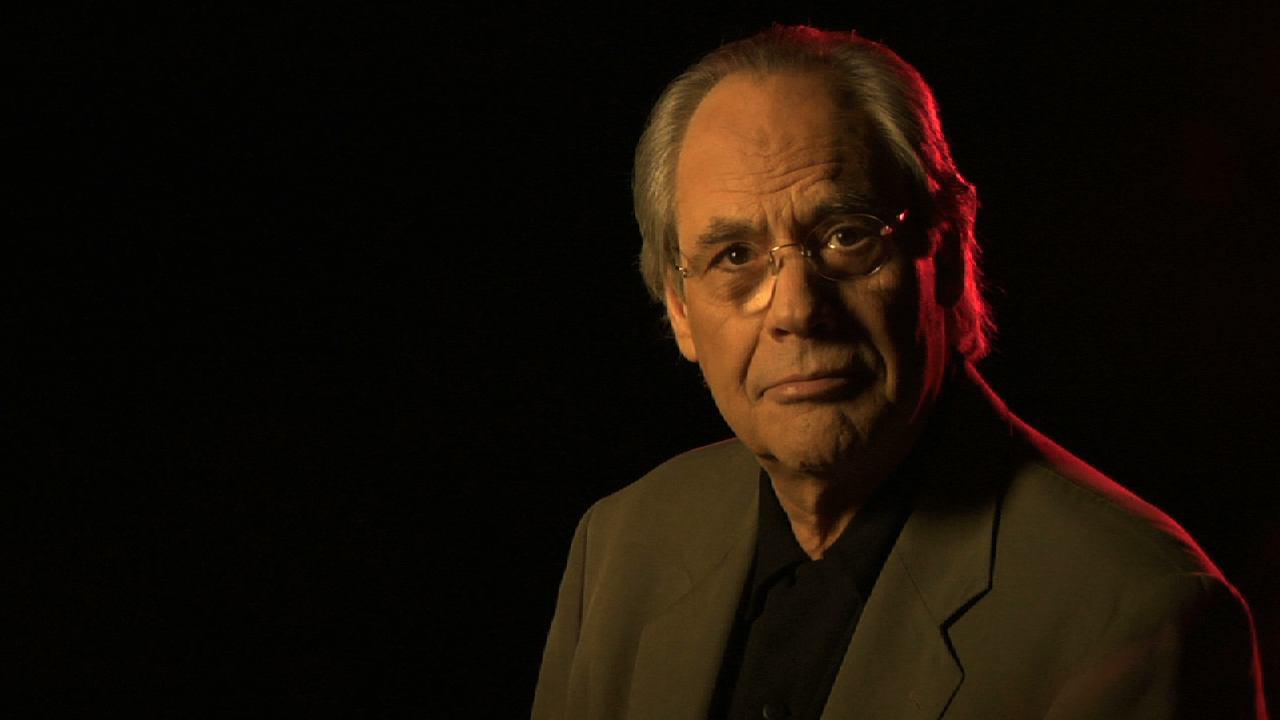
There's a raft of famous funnymen shown here (with Joan Rivers, representing the gals), both now, in their senior years, and earlier, in their prime: Sid Caesar (at right) and Jerry Lewis (two photos below) to Jerry Stiller and the late Danny Kaye (shown below, right, even prior to his spec-tacular heyday. Robert Klein (in the penultimate photo) does a fine job of narration, and we see a lot of one of my favorite comedians, Mort Sahl (shown at bottom), who clearly still possesses his dry and rapier-like wit.

There's a plethora of fine archival photos and footage, as well, taking us back to the early part of the 20th Century and those middle post-war years, when Jews would never have considered taking a vacation to the Europe from which they recently escaped. Instead they went only to the Catskills.

In a documentary about comedy and humor, we'd expect plenty of just that, and while some of it is as old as the hills, most of it still proves pretty funny. Some jokes -- "take my wife" -- really are evergreen. And misogynistic.

So why did those famous Catskill resorts mostly disappear? Times changed, as the movie demonstrates, and so did audien-ces. During the 1960s, protest was hot, and comedians like Dick Gregory, at left, reached out to a different clientele. (We get just one joke from this guy, but it's terrific.) In one of the most telling moments, we learn that, during this time, breakfast at Grossinger's changed from seven kinds of herring -- to... granola!

Perhaps the most surprising revelation is handed us by Larry King, not officially a stand-up comedian, who tells of his assignations with a married woman while he was a bus boy/waiter at a Catskills resort, and the time he spilled hot soup on her husband as he was serving them dinner.

Musically, the movie brings back some fun melodies, among them of course, "Make 'em Laugh!" and, in an unusual usage, "Send in the Clowns," Sondheim's rueful love song, here heard as a kind of mournful dirge for comedians everywhere.

When Comedy Went to School -- from International Film Circuit, running just 76 minutes, and a shoo-in for Jews, seniors, comedy lovers and nostalgia buffs -- opens tomorrow, July 31, in New York City at the IFC Center and the JCC, and in the Los Angeles area on August 16 at Laemmle's Town Center 5 and Music Hall 3.  To view all currently scheduled playdates, cities and theaters, click here.

Friday, March 1, 2013

Kitsch transformed (maybe transcended): Roberta Grossman's docu, HAVA NAGILA

Not being Jewish (although he married a Jew, and hence has a Jewish daughter and Jewish grandkids, and has now also lived with his male Jewish companion for nearly a quarter century), TrustMovies has long considered that old standard (as we used to call 'em) Hava Nagila as one of the things that utterly defines kitsch. Played at every Jewish wedding and Bar or Bat Mitzvah that he's attended over the years, the song immediately calls to mind every Jewish cliché ever seen, spoken or thought. (Fiddler on the Roof, for me, produces the same kitschy feeling. Rags, I believe, is by far the better musical.) Well, some people simply revel in cliché (and call it tradition). Yet it may not only be those people who cotton to the new documentary -- HAVA NAGILA (THE MOVIE) -- which is all about the history and provenance of this fabled song.

The director, Roberta Grossman (shown at right) and writer, Sophie Sartain, have their tongues in cheek from the start. They understand what they're dealing with (they even includes a section involving folk who hate the song, and there plenty of these -- Jews and non-Jews alike). After getting an interesting opinion from one of their talking heads that they feel a need to counter, they explains that "We'll have to ask someone else." The next interviewee is identified simply as Someone Else. (This sort of thing could get kitschy, too, but the filmmakers don't overdo it.)

Our little song, it turns out, began a couple of centuries ago in the Ukraine, and has -- as the writer & director put it -- now made the journey from Ukraine to YouTube. The music preceded the lyrics by quite some time; in fact, exactly who wrote those lyrics is in dispute. (Grossman/Sartain give us both sides of the dispute -- it's fascinating, all right -- and they seem to feel we should maybe allow room for both in our final judgment.)

In a section called Hava Meets Hora, we see how and why dance is inextricably connected to the song. We also learn how and when Hava emigrated from Eastern Europe to Palestine, as well as its important usage during the creation of the state of Israel.

When the celebs start appearing -- Leonard Nimoy, Harry Belafonte, Danny Kaye, Glen Campbell, Connie Francis, the Klezmatics, Regina Spektor -- if you weren't hooked already, you soon will be.  Listening to Belafonte (below), in particular, talk about what the song means to him (then seeing him sing it with Kaye) goes a long way toward kitsch-reduction.

This is a lightweight movie, for sure, but in its scope and reach (albeit on a much less intellectual level), it does for Hava Nagila, something on the order of what Joseph Dorman's recent and wonderful documentary did for Sholem Aleichem. It gives us history served up as genuine entertainment, as well as yet another enjoyable walk down memory lane.

I'll probably never again attend a Jewish event at which the song is played that this little movie -- and what I learned from it -- doesn't immediately pop up in my mind and put a smile on my face. Thank you, Ms Grossman and Ms Sartain.

Hava Nagila (The Movie), running just 73 minutes, opens today, Friday, March 1, in New York City at the Lincoln Plaza Cinema and on March 15, will hit the Los Angeles area at Laemmle's Royal, Noho 7, Town Center 5, Playhouse 7 -- and Orange Country, too.