As
TrustMovies recalls (he was 16 at the time), upon the 1957 theatrical release of
MAN OF A THOUSAND FACES, this movie bio of famous silent screen actor and vaudeville performer
Lon Chaney (played by
James Cagney, below, right, with co-star
Dorothy Malone) was greeted in only lukewarm fashion by the critical establishment, garnering but a single Oscar nomination that year (for screenwriting), and seemingly consigned to that very large vault of the so-so that Hollywood has long produced and continues producing, if in even more mediocre fashion.
Seeing it again, it a spiffy new Blu-ray transfer that brings all of its ace black-and-white cinematography (by the great
Russell Metty) to the fore, the film now seems a keeper for several reasons.
First of all, it seems to me to be as perfect an example as you will find of typical 1950s Hollywood moviemaking -- and that means both the good and the bad -- including the usual over-produced and -insistent musical score; fine Hollywood actors, all doing an expert job; good and careful screen-writing put to use in the service of a would-be "classy" subject; and competent, serviceable direction (by journeyman
Joseph Pevney, below).
The result, thanks to fine work by Cagney and all his co-stars, is rather like cliché raised to something akin to its highest level: It may be obvious but it is highly entertaining, sometimes even quite moving.
The tale itself -- of Chaney's work in vaudeville and, thanks to a shocking and horrible event in his personal life that immediately went public, his move into motion-picture acting -- is simply too interesting not to grab us viewers.
And because of the good screenwriting and even better performances, the story maintains that hold, right through to an ending that -- even if fictionalized, as is probably most of the rest of the tale -- still works its movie magic rather well.
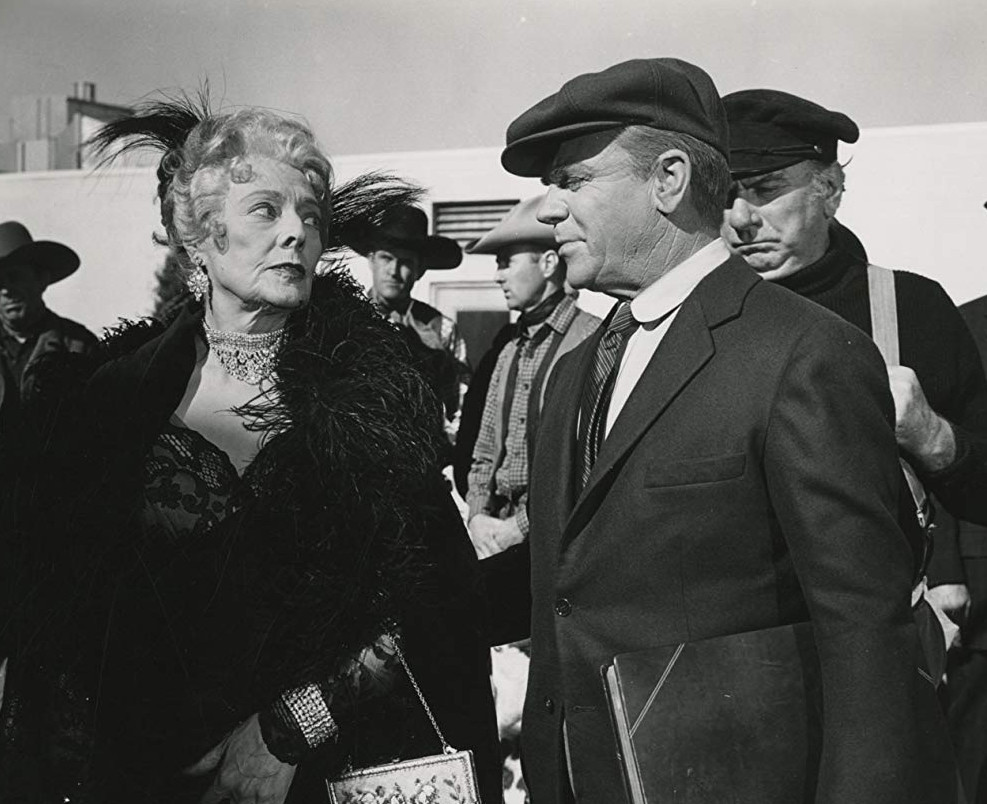
To Cagney's (and the screenwriters') credit, we certainly see all of Chaney's blind spots and weak spots. He's a hero, all right, but quite the flawed one. While the vaudeville routines are fun and fairly diverse, it's the Hollywood years, beginning with extra work leading to small then starring roles, that prove the most fun. That's
Marjorie Rambeau, at left above, playing the extra actor who shows Chaney the ropes. In other supporting roles are well-known actors like
Jim Backus,
Jack Albertson,
Robert Evans and
Roger Smith, all of whom are just fine.
One of the most striking things you may notice about the film is its absolute and unflinching dedication to the mores and life-style of the 1950s -- in which a woman's place (particularly a mother's) was in the home and nowhere else. Career? Forget about that, honey! Watching this movie today, audiences are more likely to identify and agree with the character played by Ms Malone, whose chance as a successful singer, Chaney simply destroys because, well, that's his right. All this, in addition to the merits of the movie itself, make
Man of a Thousand Faces an unusually interesting example of 1950s Hollywood. (That's
Jane Greer, above, right, playing the oh-so-good-and-kind woman who comes into Chaney's life to replace that naughty, hateful wife. Ah, the 50s!)
*********************
AN AMERICAN WEREWOLF IN LONDON, is pure early 1980s Hollywood, as the town and its films, particularly those in the horror genre, were quickly changing to fit a much more liberal, racy, show-it-all sensibility. Released in August of 1981, five months after
The Howling, the real precursor of this new horror -- it was wittier, cleverer and scarier, too -- hit theaters, this second-tier movie from writer/director
John Landis actually made a tidier profit than did
The Howling (though the latter had a slew of sequels/follow-ups to the former's single clever but box-office-unsuccessful
Paris attempt).
What
An American Werewolf in London offers, aside from its clever-ironic title and the expected human to werewolf transformation effects, is a lot of grizzly special effects used -- a big surprise back then -- to create some laugh-out-loud comedy. Most of this humor is provided by the movie's ace co-star
Griffin Dunne (below, left), whose career took off with this film and is still going strong.
If you still have not seen this movie, I shant go into detail about this gore and humor but will simply say that, having just seen the film again, after some 28 years, it's this very special humor that makes the whole enterprise most worth viewing and savoring once again.
Rick Baker's special effects are less convincing or scary than those he supervised for
The Howling -- the werewolf itself (shown at bottom) looks rather fat, gross and silly, but I imagine Baker was intent upon
not duplicating in any way the look he used for
The Howling -- but Landis' juggling of the humor, suspense and horror still works quite well.
Leading actor
David Naughton (above and two photo up at right) brings a quizzical, goofy appeal (was this the first time that full-frontal male nudity had been used in a horror film?),
Jenny Agutter (below) makes a lovely, intelligent leading lady, and the film's sudden, no-frills/no-further-explanation finale remains bracing.
If you're a newcomer to the film (as my grandkids were: They thought it was silly fun), by all means have a look, and if you're hankering to revisit, you will probably not be disappointed, though the Blu-ray transfer is not nearly as fine as that of
Man of a Thousand Faces.
From
Arrow Video, distributed here in the USA via
MVD Entertainment Group, both films hit the street on Blu-ray ("American Werewolf" is also available on DVD) this coming Tuesday, October 29 -- for purchase (and I hope) rental. Plentiful and terrifically enjoyable Bonus Materials are available on both films, as is the usual case with Arrow's offerings.