Showing posts with label Paolo Sorrentino. Show all posts

Tuesday, December 22, 2015

With European Film Awards winner, YOUTH, Paolo Sorrentino offers up another amazement


A master class in filmmaking, from a visual standpoint, certainly, YOUTH is... what? Paolo Sorrentino's best yet? Don't we say that nearly every time a new movie appears from this guy? Why not? In my estimation, he is among and perhaps the finest living filmmaker, even if his movies are, yes, all over the place. But what he lacks as a screenwriter, he more than makes up for as a director. As a writer, he seems to cajole, even fondle, his screenplays into providing the kind of imaginative, rich, one-of-a-kind visuals in which so many of us art-movie fans exult.

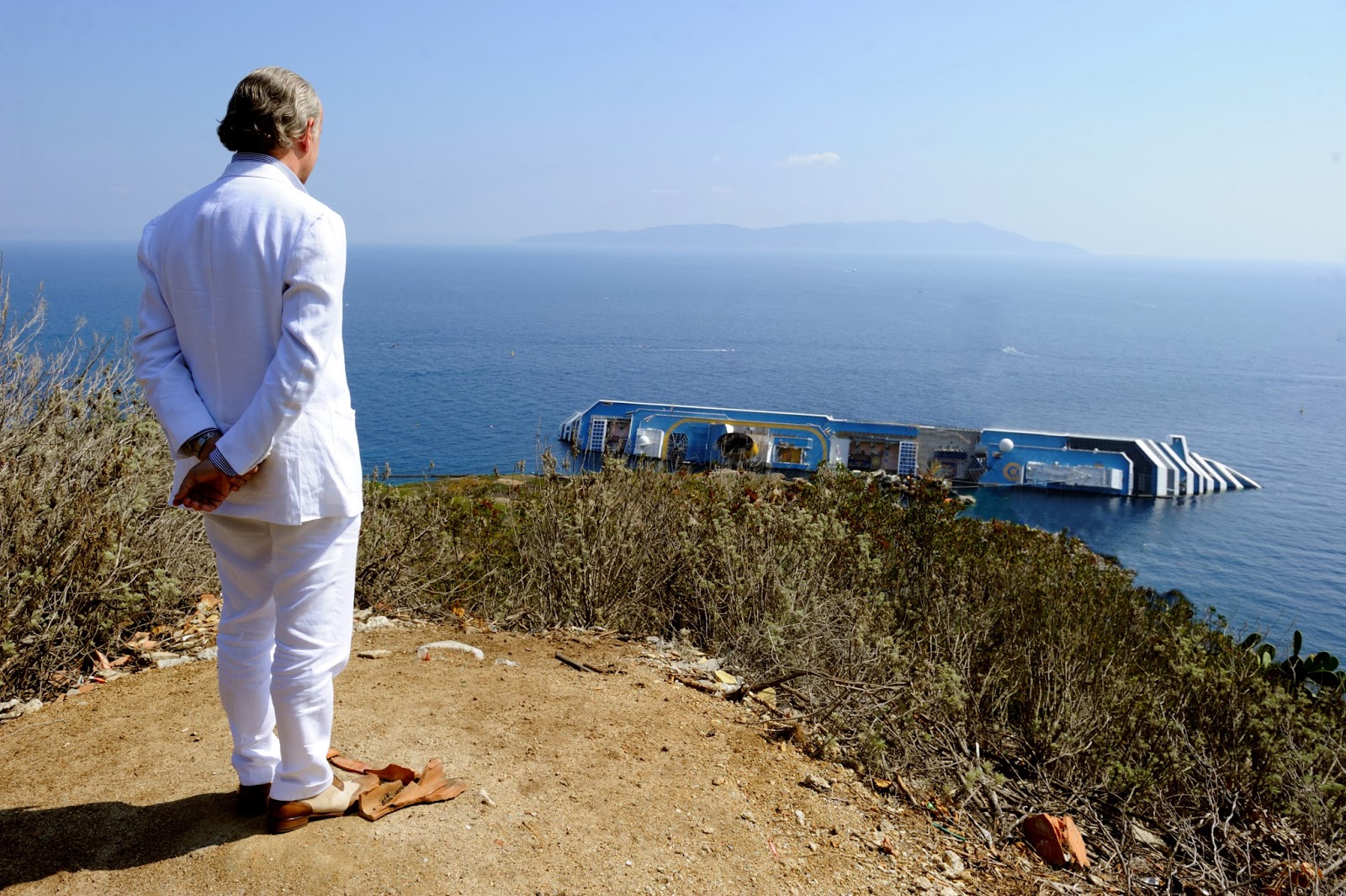
Sorrentino's stories fascinate, as well: tales told to make their themes resonate -- even if sometimes not as strongly or in as condensed a fashion as we might like. And yet, post viewing -- and I have seen most of his movies more than once -- I find myself enjoying and learning from them even more. With Youth, the filmmaker (shown on set, at left) has made a movie about -- among other things -- age, art, love, family, moviemaking, creativity and commerce -- and he's wrapped all this into a near-constant array of stunning color, composi-tion and juxtaposition.

Take the poster image, shown at top, as one instance. This is from one of the film's most ravishing scenes, in which youth and age are juxtaposed to marvelous effect in a lush, deep and dark several moments that brings to the by-now tiresome "dream sequence" something unique -- and visually beyond compare. (The cinematographer here is the great Luca Bigazzi.)

The story is one of two old friends -- a retired composer/conductor (played by Michael Caine, above) in his consistent and increasingly elegant less-is-more mode) and a filmmaker (Harvey Keitel, below) working on what may be his final opus. The two spar (often about a girl they once knew), enjoy each other and their surroundings (a first-class hotel high in the Swiss mountainside) and try to work through their various family problems (the Caine character's daughter is married to the Keitel character's son).

Further complications arise when the maestro is contacted by a very high-level personage and asked to come (briefly) out of his retirement while, simultaneously, the filmmaker finds himself having trouble finishing his screenplay worked on (in the Italian style) by a bevy of screenwriters (shown below).

Along the way, much is made of the composer/conductor's series of songs that have proven his most acclaimed and popular work. Much is also made of a certain leading actress, who is to be the star of the filmmaker's new work. We hear about both of these over and over again, from different angles and various other characters. This is quite a build-up. Many filmmakers would be content to leave it at that (or fearful not to, and then have to make good on their inflated claims). Not so Sorrentino.

When we meet at last that famous star, as played by Jane Fonda (above and below) in a role that requires not merely terrific acting but a near-complete abandonment of the usual "star" vanity, Ms Fonda more than delivers the goods.

Likewise, the movie's finale, when, at last, we approach the moment when we're about to hear that famous and much bandied-about music. We expect, of course, a cut to black, as the movie ends, letting instead our fertile imaginations provide the celestial music. Oh, no. Sorrentino, together with his composer David Lang, provide an ending so glorious, aurally and visually, that it brings this 124-minute movie to a grand close.

In the youth department of Youth are Rachel Weisz (above) as Caine's daughter, and Paul Dano (below, right) as a famous young actor researching some background material for his latest role. Both are fine, especially Mr. Dano, but they take an understandable and expected back seat to their elders here.

In set piece after set piece, Sorrentino provides great beauty (to crib from the title of his previous film), as well as fine irony and ideas to chew over at some later time -- maybe when you watch the film again. One of the things I liked best about Youth, in retrospect, is how it makes rather joyful and endearing fun at movie-making and movie-makers.

God knows that Sorrentino takes his art and craft seriously. Yet he also, I believe, understands that, hey, it's just a movie. But since it is a movie, why not make of it every glorious thing we can?

Youth, from Fox Searchlight Pictures, while continuing its run in New York and Los Angeles, opens around the country Friday, December 25 (what a Christmas present for film-goers!), Here in Southern Florida it will play in West Palm Beach, Naples, Delray Beach, Hollywood, Miami and Fort Lauderdale.  Click here then enter your location to find a nearby playdate.

Tuesday, November 12, 2013

Paolo Sorrentino's THE GREAT BEAUTY -- Italy's entry for Best Foreign Language Film -- opens


Paolo Sorrentino is back. He of Il Divo, The Family FriendThe Consequences of Love and the woefully under-seen and under-appreciated This Must Be the Place has a new movie opening this Friday in New York (next Friday in L.A.), and it's Italy's submission as Best Foreign-Language Film. THE GREAT BEAUTY (La grande bellezza) is a film of exactly that. What else would anyone who appreciates international cinema expect of Signore Sorrentino (shown at left), who, to my mind, produces frame for frame the most beautiful compositions of anyone working in the medium today and then elides them into something both mysterious and spectacular. (His cinematographer here is the great Luca Bigazzi -- Kryptonite!, click and scroll down -- while the film editing is by Cristiano Travaglioli.)

More than any of the five films I've seen of this master (he's now made six full-length narratives, though I don't think his first, One Man Up, has ever been released in the USA, theatrically or on DVD), The Great Beauty seems to me to be the film that requires the most full understanding and appreciation of Italy, and specifically, Rome.

In this movie, the images pass by with great poise and sophistication, and the visual pleasure is non-stop. The meaning of those rolling images, however, is not so easily ferreted out. For old-time film buffs, an almost immediate reminder of Fellini and his La Dolce Vita and 8-1/2, as though The Great Beauty were an updating of these a half century later. And in some ways, it is. But Sorrentino is so much subtler a director than was Fellini that any comparison goes only so far.

Sorrentno's Rome, as experienced via that fine and hugely versatile actor he so often uses -- Toni Servillo (above)-- is a place of great beauty and desolation/desiccation, of wonder and horror. Yet the images this writer/director chooses and uses, instead of reducing their subject to the cliched visuals of Hollywood horror or beauty, instead often brings you both in the self-same shot. Intellectually, the movie is constantly pulling you up short, as well as pulling the rug from under your preconceptions.

Everyone is at once grand, foolish, awful and beautiful -- rather like life and that fellow/gal in the mirror we must daily confront. As our guide, Servillo -- playing a 65-year-old journalist/novelist named Jep Gambardella -- brings to the film the sort of quiet ease of a man who has seen and done most everything and now understands the fatuousness of so much that has passed for "life."

As befits his character, Servillo has seldom seemed this secure in himself and his place in the world of the film. He imparts a remarkable grace and stature to the proceedings. Whether he is putting an egotistical career woman in her place (then later dancing with her like a pro) or advising a foolish but wealthy mother what to do about her clearly unbalanced adult son, there is about the man a kind of weary wisdom that is both consoling and upsetting, as though he understands all and knows that there is nothing to be done about anything.

We get a look at journalism and performance art in a quietly hilarious interview with a dolt of a performance artist; then, in an even more hilarious scene (above) in which a child creates "fine art" (this will call to mind My Kid Could Paint That, and even more so the recent and much fawned-over documentary about artists and relationships, Cutie and the Boxer), we see what goes into the creation of "modern art"; religion shows its silly faces in both a Mother Teresa-like character and a prominent Catholic high-mukety-muk.

Love? Ah, yes: that, too. And it's a wild and deep and forever-with-us "first love."  Except that it proves as specious as all else. Even the old friend who now runs a strip club business (in which his middle-aged daughter does the stripping) proves more interesting and enduring than anything like "love." Boy, this is a dark movie, beautiful as it is. And the more I consider it, the darker it grows -- but so quietly and un-insistently that I can hardly wait to see it again.

The only thing missing (unless I myself managed to miss it) is politics. But then, Sorrentino gave us plenty of this with Il Divo. The music, as always with Sorrentino, is a blessing over the entire film, providing the kind of religious beauty and peace that religion itself cannot.

If all of the above sounds like a rave review, I must warn you that my spouse gave up on this film after about an hour and a half (the movie runs almost two and one-half hours). And I myself felt a bit flummoxed at the finale. I'd been unable to take my eyes off the screen for fear of missing any of that "great beauty," but what did it all mean? You got me. Since then, however, I've been thinking about the film, piecing it together, and now in writing this reviews, the movie has taken on even more meaning. I will indeed watch it again.

The Great Beauty, one of those rare new releases from Janus Films, opens this Friday, November 15, at the Lincoln Plaza Cinema; on the 22, it opens in Los Angeles at Landmark's NuArt, and over the next few weeks it willl opens at another 15 - 20 cities. Click here to see all currently scheduled playdates.

Saturday, March 23, 2013

Don't-Miss DVD & Blu-ray: Italian master Paolo Sorrentino THIS MUST BE THE PLACE

A movie that came and went with amazing speed and near-silence, THIS MUST BE THE PLACE -- from that Italian master of cinema, Paolo Sorrentino, who has given us Il Divo, The Consequences of Love and The Family Friend -- is another strange, beautiful and not-so-easily categorized movie that lingers long after its credits have rolled. Giving Sean Penn what may be his best role ever (one in which he holds back quite beautifully, rather than letting loose and boring us all too soon), the movie also gets terrific performances from its entire ensemble.

Signore Sorrentino, shown at right, is a marvelous stylist. All four of his films that I've seen are extraor-dinarily beautiful to view, each in its own manner. Each also stars a fine actor playing the role of an odd, obsessed and solitary man, successful in his own world and at his own game but not so much anywhere or with anyone else. Mr. Penn. below, has a quiet field day here; he seems a to be channeling simultaneously some strange combination of the most subdued modes of both Gene Simmons and Quentin Crisp, and he is utterly remarkable at it. This is an extraordinarily brave performance on Penn's part because, once we get quickly past his bizarre appearance, he remains so quiet and subdued that we begin hanging on his every word and tiny movement. The reward: seeing an actor of great intelligence and fierce focus giving his all to a most bizarre role.

Penn, above, plays Cheyenne, an ex-rocker who has withdrawn to his estate in Ireland where he lives with his loved and loving companion (the always fine Frances McDormand, in the penultimate photo, below) and maybe a daughter (a oddly lovely Eve Hewson, below), never plays music, and seems to concentrate only on making money via the market.

When his father suddenly dies back in the USA, Cheyenne learns that the old man was a Holocaust survivor who had been a victim of a Nazi guard, whom Cheyenne then takes upon himself to find -- and kill. Along the way he hooks up with everyone from the war criminal's relatives (among these, a granddaughter played by Kerry Condon (below), to a big-time Nazi hunter (Judd Hirsch).

This sounds a bit crazy and it plays even more so. Yet it also plays perfectly into Cheyenne's character and Penn's performance -- he is both funny and endearing: two qualities I've rarely encountered in this actor since Fast Times at Ridgemont High -- as well as into all the other characters our hero meets along this odd road-trip.

Now, about the extraordinary beauty of this film: From the opening credits -- in a lovely script and dayglo chartreuse -- to the composition and gorgeous colors strewn about the filmmaker's canvas, this is an experience not to be missed. (If you can at all view this film on a Blu-ray disc, do.) Yes, that's David Byrne, below in white, playing himself and contributing some wonderful music to the movie's soundtrack.

Much has been made of Michelangelo Antonioni and his creative "color" work on Red Desert, but I must say that this film has, for me, sets the new standard of what creative use of color can bring to a motion picture.

The film has lessons to impart, I think, but it teaches with a tender, sometimes ironic hand. And the change that occurs, while it takes on quite a physical presence in Mr. Penn, has an after-life that may have you thinking about the film at odd times, once your first viewing has ended.

This Must Be the Place, from The Weinstein Company via Anchor Bay Entertainmentis now available on DVD and Blu-ray, for sale and/or rental, and other currently favored forms of viewing (VOD, streaming).  Take a chance, film buffs, and discover the wonders of Paolo Sorrentino -- if you haven't already.