Showing posts with label nostaliga. Show all posts

Friday, February 23, 2018

Martial arts/Bruce Lee fans: Don't let George Nolfi's BIRTH OF THE DRAGON get by you


While TrustMovies' daughter and grandkids were visiting, daughter -- who is a big martial arts enthusiast and practitioner (as is our son-in-law and their children) -- insisted we watch a movie entitled BIRTH OF THE DRAGON, which all of them had already seen but did not mind viewing again. We did -- and were more than just pleasantly surprised. This is one of those films that got a terrible critical response but that audiences enjoyed more than three times that of the critics. More important, it offers a view of that martial arts idol/icon, Bruce Lee, that knocks him down a peg or two while making clear what a wonder he was, even if, concerning his martial arts philosophy/spirit, this guy had some major learning still to do.

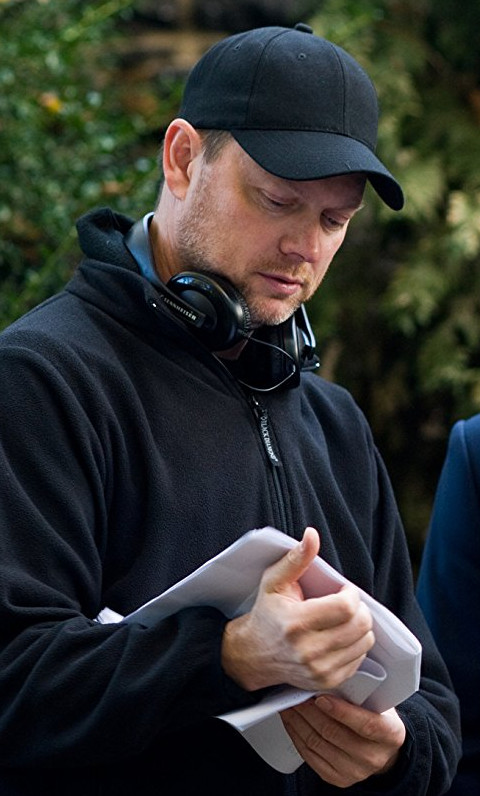
Set in San Francisco back in the 1960s, the movie -- directed by George Nolfi (shown, left) and based on an article, Bruce Lee's Toughest Fight, written by Michael Dorgan, which was then adapted by screenwriters Steven J. Rivele and Christopher Wilkinson -- proves a model of this kind of film-making: smart, fast-moving and able to beautifully juggle its several themes and plot-lines so that we easily follow them while coming to also care about its several protagonists.

I suspect that some, perhaps many, of Bruce Lee's fans were angry at the depiction of their hero shown here, for Mr. Lee in his younger days, while clearly a martial arts force to contend with, might also have been just too cocky and smart-assed for his own good. Certainly as played (and very well, too) by the fast, skilled and sexy Philip Ng (below), the character seems more than capable of being the champion he so clearly was, while needing a lot of help in the humility/attitude department.

Playing opposite Mr. Ng with equal skill and charisma is the wonderful actor Yu Xia, below, who takes the role of kung-fu master Wong Jack Man -- the fellow Mr Lee must cajole into fighting him -- and fills it so completely with his remarkable combination of strength and modesty that you're likely to become a convert before the movie ends.

Lee imagines that Wong Jack Man has come all the way across the ocean to learn what Lee is up to and perhaps dissuade him from teaching the ancient Asian art to westerners. But things are much more complicated (or, depending upon how you view it, much simpler) that that, and this grand master proves to be just about everything that Lee is not and yet somehow aspires to be.

The fight, up to which everything is leading and which provides the film with its terrific climax and even better denouement, is brought about by two other characters who prove crucial to the plot, as well as to the great charm and sweetness of the film. Lee has a student (Billy Magnussen, above) who falls in love with a newcomer from China (Qu Jingjing, below, left) and wants desperately to help the girl pay off her "debt" to the sleazebags who brought her to the USA and by whom she is now employed.

This love story, in other hands, might come off as standard and obvious, but thanks to the work of the writers and director and especially to Magnussen, who unveils things we've not seen previously in this actor, the character seems remarkably sweet, naive and caring, alternately pig-headed and kind. It's a lovely performance, and so we root for this young couple much more that we do, say, for other more obvious lovers (the pair in the recent and utterly manipulative movie, The Mountain Between Us, for instance).

The fight and its aftermath are also handled with style, grace and intelligence. Connoisseurs will appreciate the "moves" on view, but the heart of the matter is devoted to the how and why of things. Exactly who wins the fight is especially succulent. What we get here is so much better than what we're consistently fed via our mainstream/blockbuster/fantasy-world nonsense.


The Birth of the Dragon is full of kung-fu, all right, but it is also rich with competing philosophies and ideas -- about everything from martial arts to the ways in which we might choose to live our lives. It's a lovely piece of work, and it should have been a lot more popular than it was. But, no: We live in a time of mostly super-hero fantasy trash, it seems. In any case, you can (and should) check this movie out yourself. It's available on home video now -- via DVD or streaming.

Thursday, September 1, 2016

Shear & Thom's WILD IN THE STREETS: this 1960s "instant classic" has aged quite well


When WILD IN THE STREETS hit cinemas back in 1968, no less a critic than the fine Renata Adler in The New York Times deemed the film a "kind of instant classic" -- you can read her entire review here -- and went on to praise it in terms that very few (if any) movies distributed by American International Pictures had ever earned. TrustMovies saw the film back in '68 and loved it, but when he viewed it again, maybe twenty years later, he felt that it didn't hold up so sturdily, after all. Well, here we are in 2016, with a certain con-man/liar with a very "loose" hold on reality running for President, and damned if the film doesn't resonate presciently -- and so entertainingly -- all over again.

Thanks to Olive Films' new Blu-ray and DVD release, those long-ago fans, as well as newcomers, can recall or find out what all the fuss was about. Some of that fuss centered on a hot new actor named Christopher Jones, above and below, who starred in the film as the pop singer-turned-business-magnate-turned-you'll-find-out who sets young America ablaze, as he sings to, then rounds up, his "troops" for a frontal and all-out assault on "aged" Americans (that would be anyone over, say, 30 or 35). Mr. Jones looked to be a sure-thing "star" and worthy successor to James Dean, but that star failed to rise. The actor was never again as well-cast and resonant as he was here, and after a few more films, for whatever reason(s), he fell off the grid.

As written by Robert Thom (from his short story) and directed by TV & film vet Barry Shear (Across 110th Street), this 97-minute movie barrels along -- with plot and incident aplenty, and a half-dozen good pop-rock songs that also feed the plot nicely -- at a speed rarely seen back in 1968. Today, the film seems much less speedy, though certainly not slow enough to bore. Even its editing (by Fred Feitshans and Eve Newman, both of whom were Oscar nominated for their work on the film), which looked amazingly fast and furious in its day, would probably need to be sped up a bit by our current standards.

Still the film's combo of politics (every bit as venal then as now), marketing (cornering the "youth" vote by lowering the voting age), drugs, sex (of more kinds that audiences were used to back in the day) and rock-and-roll -- all conceived around a fractured "family" tale that Brady Corbett's recent Childhood of a Leader might have learned from -- adds up to a remarkably entertaining and juicy look at how the USA can be manipulated for fun, profit and finally horror. And the filmmaker's clever use of documentary footage (as above) within their thrusting narrative works nicely, too.

What's missing is any hint of the income gap, the one per cent, and the rise of the corporations. But of course: This was well prior to Ronald Reagan's Presidential ascent and the beginning of our capitulation to wealth and power. But taken as an entertainment, the movie zings and sings. Its songs are fun, rhythmic and even have the melody that much of today's music has totally lost. The screenplay is wonderfully pointed and funny, and the movie's ironies are often a delight. (Watch for the little song about "campaign dinners" that a de-frocked politician -- played with relish, and then abandon, by Ed Begley -- chants toward movie's end.)

The cast also includes Shelley Winters (in foreground, two photos up), going all out to become one of the more memorable of movie "mothers"; Hal Holbrook (above), as the politician who thinks he is using Mr. Jones and his troops; Diane Varsi as a drug-addled hanger-on; and especially Richard Pryor (below and before we even knew who this guy was!) as a smart member of Jones' band.

The film is probably ripe for a remake, which, if it happens, should only provide as much timely fun and frolic as did this original -- available now from Olive Films, on both Blu-ray and DVD, for purchase and, I would hope, rental. (Netflix really ought to order this one -- now!)

Friday, November 30, 2012

Liz Garbus' LOVE, MARILYN tries to create an iconic star of interest to the younger set

Let's see: How do we go about doing something different with perhaps the most iconic star Hollywood has yet given us? Marilyn Monroe (shown above and further below, for you youngsters who many not immediately recognize her) has been done to death so many times now that one wonders what more could possibly be said about her life, her movies, her men, her anything and everything?  Liz Garbus, shown just below, the director of the latest in a long line of attempts to explore this icon, has turned to Marilyn's "journals, papers, and poems recently discovered among the personal effects left by Lee Strasberg, legendary Director of the Actor’s Studio and the actress’s mentor and confidant," as the press release explains it.

Surprise: these musings are quite interesting, showing a Marilyn of some complexity and thoughtfulness, while providing a different kind of entryway into her life. Unfortunatley, Garbus (or someone) has had the truly terrible idea to spread these musings amongst a rather too-large group of actresses/actors who take turns reading all this and consistently highjack our attention away from the words themselves.  Oh, look -- there's Elizabeth Banks (below, who makes a pretty good stand-in for the younger Marilyn)!

Now it's Uma Thurman (below, who does a lovely job with her readings)! Oh, my -- here's Glenn Close: Is that meant to show us what MM might have become had she lived longer? About the time you see and hear Viola Davis, you'll have realized that maybe Ms Garbus is pushing for Monroe to represent "everywoman" (or at least "everyactress"). Except that she also offers us Ben Foster (two photos below), who handles the verbiage with aplomb, and does, at one point, the best vocal impression of Monroe of anyone on view.

And so it goes, with our attention repeatedly pulled up short, leaving us wondering, "Wow-- who's next?" One narrator, maybe two -- a man and a woman -- would have sufficed. But then the movie wouldn't not have been so "starry," I suppose. Much of the film is attention-holding, because Monroe's words are genuine and smart, and the organization of the documentary is relatively firm and coherent.

If the men in Monroe's life do not come across as overly sympathetic (Joe DiMaggio is too old-fashioned, jealous of her time and her fans; Arthur Miller is depicted -- even described at one point -- as pretty much of a creep; and Kennedy (the Kennedys?) are barely there.

There is some wonderful archival footage here (above and below), and some interviews worth seeing and hearing. The difficulties of working with Monroe are skirted over, however, for the purpose here is clearly to continue the late star's run as "forever icon." By the time we get to George Cukor's complaints about her non-work on that final film (quite valid, it would seem), we're already mourning her death, having watched yet another attempt at something like sainthood.

Overall, the movie -- worth seeing for those who can't get enough Monroe, or newcomers who simply want to find out stuff -- seems an odd mixture of some genuinely good material used to produce yet another glossy Hollywood con job.

Love, Marilyn, a co-production of HBO Documentaries, Canal+ and others groups, opens theatrically today -- Friday, November 30 -- at Film Forum in New York City for a two-week run, will eventually be shown, I am sure on HBO. Filmmaker Garbus will appear in person tonight, 11/30/12, at 7:50pm.

Monday, April 5, 2010

WHO DO YOU LOVE opens: Cadillac Records revisited -- and pretty well, too

Did we need two movies about the legendary Leonard Chess and his Chess Records -- not to mention the even-
more-legendary stars -- Bo Diddley, Chuck Berry, Etta James, Muddy Waters and Willie Dixon -- who became part of his stable?  No matter: We got 'em.  Oddly enough, both films were made around the same time -- two years ago, though Darnell Martin's Cadillac Records appeared in theaters at the end of 2008, while this week's debut WHO DO YOU LOVE (where's the question mark?) waited another 16 months to berth in theaters.

The first of the films to be released did not set the box-office on fire and drew mixed reviews, and it is even more likely that the second will see the same fate.  Directed by semi-legend (in legit theater, at least) Jerry Zaks (shown at right), whose first foray into film was Marvins's Room (since then he's been behind the camera only for TV), Who Do You Love proves to be both very similar to Cadillac Records yet different enough to be enjoyable on its own, while offering consistently interesting comparisons between the two movies. (The writing credits here go to Peter Wortmann and  Bob Conte.)

In addition, this second telling of the Chess tale appears to have had the blessing of Leonard's brother Phil Chess (played in the film by a fine Jon Abrahams), who began the business with him, as well as that of his son Marshall. So, while we might be expected to feel that many of the details are better recalled for veracity, we also understand that the movie might just be skewed toward the Chess version, rather than that of his musical stable. (There is some question about Chess' taking advantage of his performers.)  Even so, none of this seems to mater much.  The movies/stories are similar enough that they bleed into each other in the viewer's mind so that truth, whatever that might be, seems so fuzzy, unpredictable and perhaps even changeable that we sit there, nodding in agreement: Maybe. But maybe not.

That Leonard Chess had a great love for and understanding of the music he promoted seems beyond question, and Who Do tells his story with affection and pace, if no particular style. (Ms Martin offered more "style" in her version, but occasionally it seemed a tad intrusive.) But we're probably here more for the music and performances than anything else, so this works well. This cast is noticeably less starry than that of its predecessor, but so what?  Everyone in this version is just fine, thank you.

Alessandro Nivola (above) brings good gravity and smaller scale to the role of Leonard. (Cadillac's Adrien Brody, from his nose onward, is a large presence and always great fun to watch. He brought an out-sized, sexual vigor to his rendition.  Nivola is equally sexual but subtle, too: pared down in every way, as befits the "family man" that the Chess family clearly wants to plug.  Likewise, Megalyn Echikunwoke (below) as Ivy Mills (the Etta James character played in Cadillac by Beyoncé Knowles) is less flashy with less time devoted to her character, yet she registers every bit as strongly.

Ditto Marika Dominczyk (below left, with Nivola) as Chess' wife Revetta (played by the infinitely better-known Emmanuelle Chriqui in Cadillac). Dominczyk, perhaps because she seems as close to a villainess as the movie offers (she just doesn't "get" jazz, or, for that matter, music in general), is an even stronger presence in this film.  And the musicians -- from Robert Randolph as Bo Diddley (shown performing, three photos up) to David Oyelowo as Muddy Waters, and especially Chi McBride as the heart and soul of the band and the movie, Willie Dixon -- are all first-rate.

Nostalgia for an era long-gone, with its music, cars, clothes and attitudes is so present in Who Do You Love that this alone should make the movie resonate for many viewers (even if that era long predates your birth).  For everyone else, the film can stand on its own as good, thoughtful entertainment.   It opens Friday, April 9, in NYC, April 16 in L. A. and April 30 in Chicago.  Click here and then click on the word Theaters for specifics. 

All photo are from the film, save that of Jerry Zaks, second from top -- 
which is by John Shearer, courtesy of Wire Image.