The sure-fire equation for the Best Foreign Language Film award
: Quality + Holocaust = BFLF. Add some originality and you've got an even more likely bet.
László Nemes' new film,
SON OF SAUL, certainly touches all three of those bases. As much as I expected to find the film wanting in major regards, I, like so many of our critics (audiences, too, I suspect), found myself quickly under its spell. It was only last year that another of these Holocaust honeys --
Ida -- walked away with the award, and now, here's another that everyone seems to be counting on to win.
Why is
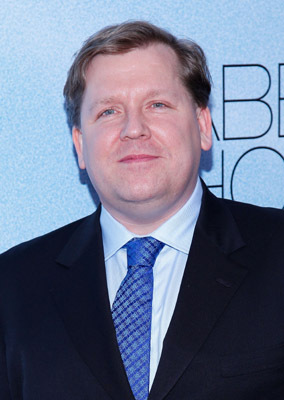
Son of Saul so special? Because of the perspective -- quite literally, the visual point-of-view -- taken by the filmmaker (Mr. Nemes is shown at left). From the beginning and for almost all of this 107-minute movie, the camera stays close to the face and figure of its protagonist, Saul -- a member of the Sonderkommando at the Auschwitz-Birkenau Concentration Camp, that group of Jewish prisoners isolated from the camp and forced to assist the Nazis in their machinery of large-scale extermination during World War II. What makes this perspective so strange yet pointed is that for maybe the first time on film, we see a concentration camp and its workings only marginally, off to the side and not, as it were, the main attraction. Of course, it
is, and this is what gives Nemes' film such a strong combination of gravity, irony, and originality.
We see what's going on, all right, and we know exactly what it all means, and it is as horrible as ever, yet perhaps somewhat easier to view when taken, as does our "hero," Saul (an indelible performance from almost-newcomer
Géza Röhrig, shown above and below), along with all of us who are watching, as something foregone and impossible to change. We don't focus on the atrocities, but we know very well that they are a constant life-ending, death-embracing presence.
Saul simply does his job without comment or feeling. Until one day everything changes. What happens and why is part of the plot and best left to your own discovery. At the same time that Saul is suddenly busy with his new "project" -- which, by the way, can be taken realistically or symbolically: It works well on both levels -- the Sonderkommando members are plotting something of their own. They know that their lives, though marginally better than the other Jews in the camp, will soon end in death, after which they will be replaced by more of the same.

These two plot strands weave in an out of each other as the movie reaches its climax, which, as does much of the rest of the film, works both realistically and symbolically, offering in its strange way, hope from despair. Or not. It is also possible to dismiss all this, as a few critics have done, as sentimental and utterly unearned. I disagree: The hope here is always in sync with the reality of the situation, making for a kind of balance that remains fraught and fierce, in which the best that can be hoped for is terrible indeed.

Caveats? Maybe. The unusual perspective provided by the filmmaker works in a kind of "smartly confusing" manner. Because we're privy to so little and only know parts of the two puzzles at hand, we can't really know specifically how all this might or could work out. This means that we have to accept what we know and go with the flow. We do, yet a few too many coincidences begin to rankle. Certain things seem too easily accomplished and not so believable. Yet because of our limited perspective, we can't be sure, and so we accept it. This is, in its highly circumscribed way, very smart, corner-cutting movie-making.
For all its barely-glimpsed horror and the despicable history we now know all too well,
Son of Saul left this viewer in a quiet, thoughtful state: won-dering at and appreciating -- against insurmountable odds -- life and hope. In the end, the movie is about something bigger than our own tiny lives.
From
Sony Pictures Classics,
Son of Saul opens here in South Florida this Friday, January 29, at the
Tower Theater, Miami;
Cinema Paradiso, Ft. Lauderdale;
Living Room Theaters, and
Regal Shadowood 16, Boca Raton;
Carmike Muvico Parisian, West Palm Beach;
Movies of Delray and
Movies of Lake Worth. You can click
here to see all currently scheduled playdates, with cities and theaters, nationwide.