Sunday, August 18, 2019

DVD/VOD debut for Pamela B. Green's BE NATURAL: The Untold Story of Alice Guy-Blaché


Among the best documentaries of the current year, and certainly among the best ever about the art and history of cinema, BE NATURAL: The Untold Story of Alice Guy-Blaché grabs you by the mind and heart from its first few frames and simply never lets you go for its following 103 minutes.

The obvious source of this huge pull would be the documentary's subject, cinema's early French woman writer/director/ producer/manager/and-much-else-too, Alice Guy-Blaché. Yet equal (or very near) credit must also go to the filmmaker of this doc, director, co-writer (with Joan Simon) and editor of the movie, Pamela B. Green, shown at right. And as fine as Ms Green proves as writer and director, it is as editor that she shines brightest. I don't know that I have ever seen a documentary packed with this much information -- visual and verbal -- that consistently moves like a house afire, during which you can't look away or take an extra-lengthy breath for fear of missing something wonderful.

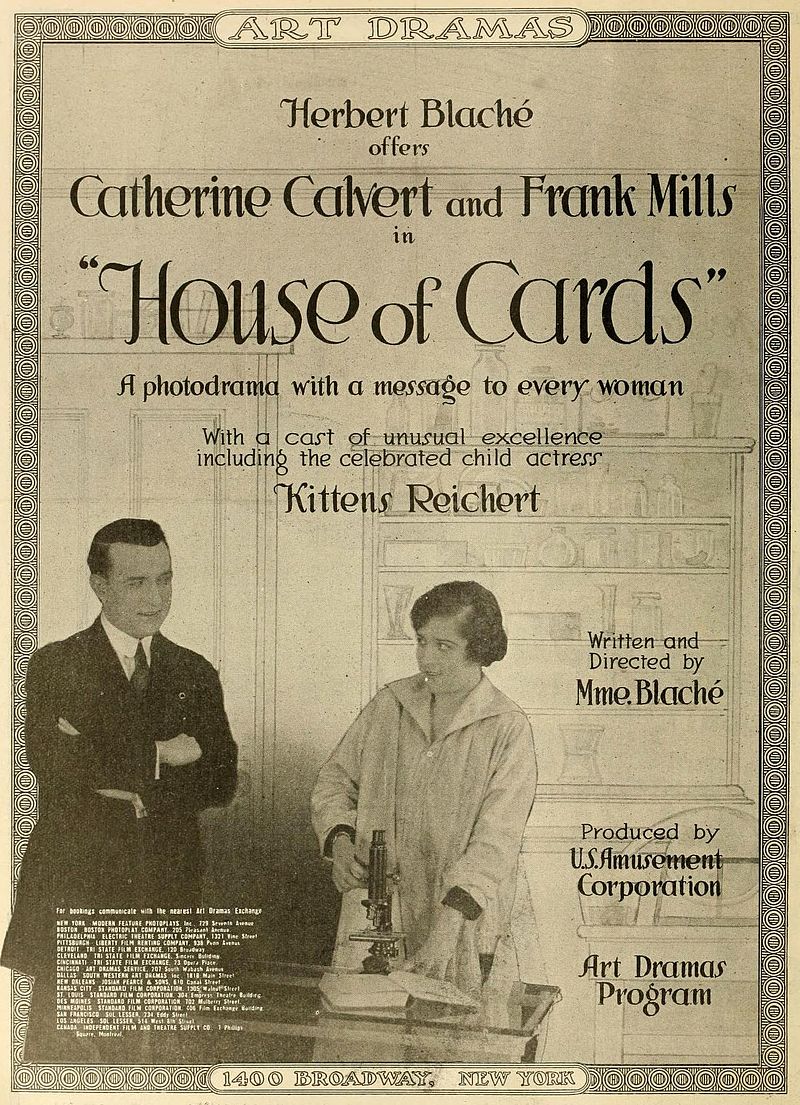
From this film's first moments, as we see and hear the near-90-year-old Ms Guy-Blaché (that's Alice, shown at left, earlier in her career) speaking so beautifully and looking so alert and lovely -- and then suddenly we cut to a gorgeously animated version of the Hollywood sign and the storied city itself, along with the many movie studios, hit films and memorable characters given us down the decades -- this is rapturous, amazing filmmaking. And damned if it doesn't continue, pretty much intact and just as compelling and fascinating, for the remainder of this doc's duration.

Sure, there are a few repetitive moments and toward the end a little too much hagiographic obeisance. But by then, so enamored are you likely to be of both Alice and her oeuvre (scenes from which are shown above and below), you won't give a good god-damn.

Along the way we meet more filmmakers and industry greats -- from Gillian Armstrong and Julie Taymor to Oscar-winning film editor Walter Murch and historian/documentarian/filmmaker Kevin Brownlow -- than you can shake a stick at (I counted 84 but could be off a bit), yet all this goes by in such a flash, with just enough time alloted to each that we take in what has been said and move quickly on the next moment. This is brilliant editing, and TrustMovies should think that documentary filmmakers may take a lesson from Ms Green and maybe speed things up from now on.
Audiences and critics clearly can handle this zesty, speedboat style, so why not? (On Rotten Tomatoes, the film has a critical rating of 95 per cent -- and an audience score of 98!)

Interspersed with all these talking heads are snippets of the many (more than 1,000!) films directed by Guy-Blaché, and they look quite worth seeking out and viewing. This woman's story -- of youth, early career, family, and filmmaking-against-the-odds -- is a fascinating one, and though it is staunchly feminist, the filmmaker does not beat this idea into the ground.

The feminism is there, all right (the doc is narrated by Jodie Foster), and Guy-Blaché's gender certainly accounts for why, until fairly recently, she was not nearly as well-known as she ought to have been.

Yet filmmaker Green puts the woman and her work first, above everything else, and the result is a major and marvelous documentary that should stick with you for years to come -- and perhaps send you in search of that work itself.

The movie, by necessity, is also something of a detective story via the manner in which Green must find, investigate, then put together the various puzzle pieces she needs in order to assemble the Guy-Blaché saga. This, too, she makes fast, frisky, fascinating -- and eminently followable.

From Kino-Lorber and released theatrically by Zeitgeist Films,
BE NATURAL: The Untold Story of Alice Guy-Blaché, is available now on VOD and will hit the street this coming Tuesday, August 20 on DVD -- for purchase and/or rental. One way or another, do view it!

"Be Natural," by the way, was Guy-Blaché's directive to her actors -- and was posted on a huge sign that hung atop the movie studio, Solax, that she started in Fort Lee, New Jersey, and which became the largest pre-Hollywood studio in the entire USA.

Thursday, August 15, 2019

Love/sex/identity/time mix in Lucio Castro's alluring, beguiling END OF THE CENTURY


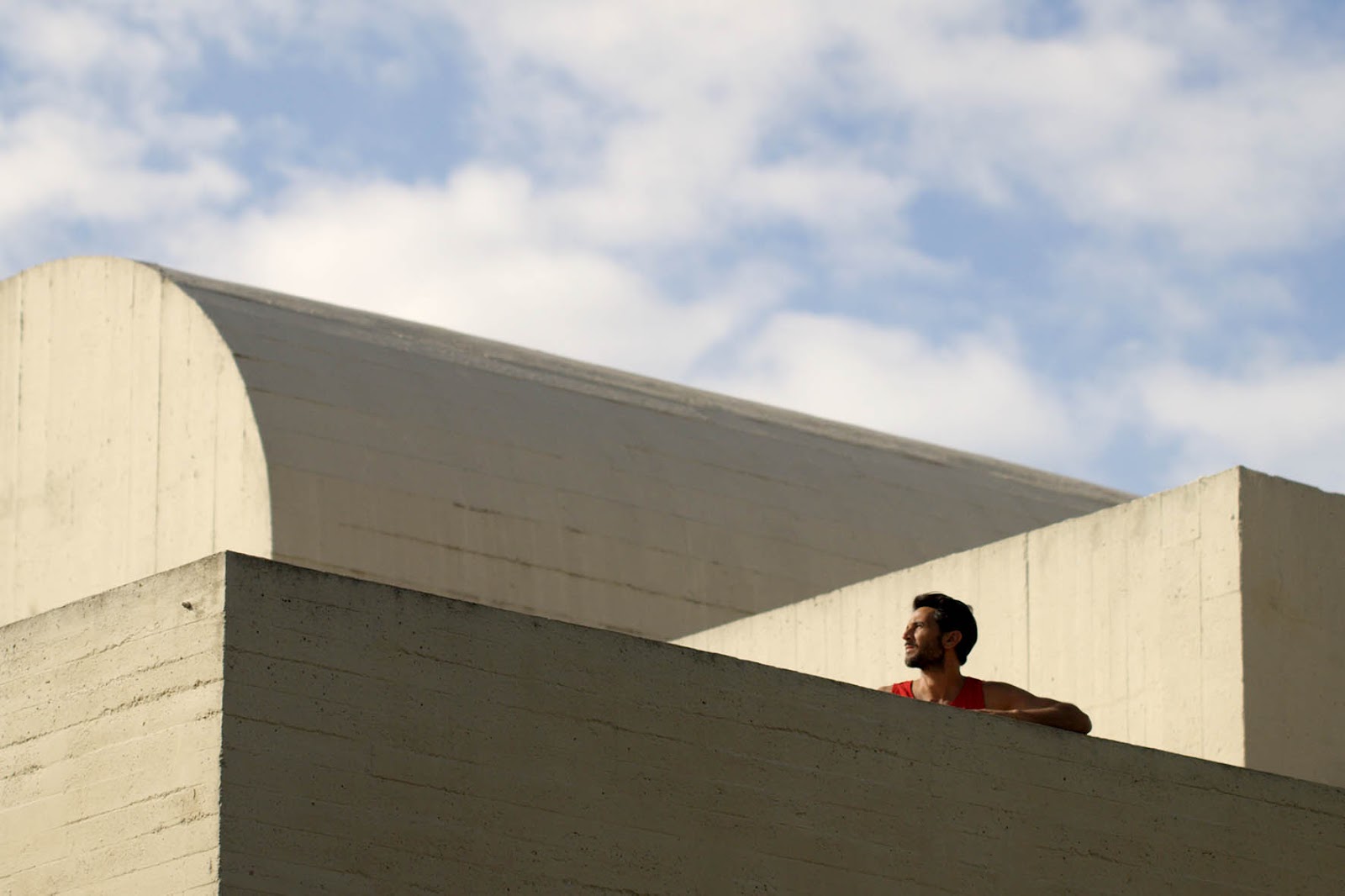
If nothing else -- and believe me, this movie does a lot else -- END OF THE CENTURY, the first full-length film from Argentina's Lucio Castro, should increase the tourist trade in Barcelona, Spain (particularly the gay variety), by leaps and bounds.

So gorgeous are the parks, plazas, streets, museums, architecture -- even the single beach scene we see here -- that it is difficult to imagine any viewer not getting up from such a lovely little movie firmly persuaded to visit this remarkable city ASAP.

Señor Castro, pictured at right, and his fine cinematographer, Bernat Mestres, show us all this with so little fuss and bother that it almost seems as though around every single street corner in Barcelona, something beautiful and special awaits. Speaking of beautiful and special, those words equally well describe the film's two leading men and its single leading lady -- the last of whom -- Mia Maestro, shown below -- will be familiar to film fans from movies such as Timecode, Frida, The Motorcycle Diaries and Poseidon (as well as the TV series The Strain).

As for those two leading men -- Juan Barberini (below, left) and Ramon Pujol (below, right) -- TrustMovies should think that after being seen in this film, they'll be more in demand internationally, too. These guys are not simply handsome and sexy, they look surprisingly real, too: no washboard abs, perfect teeth (nor perfect anything, really), yet the way it all works together makes for a very nice package in both cases.

They're excellent actors, as well. Moment to moment, they play off each other like they were some new same-sex pairing of Lunt and Fontanne, Olivier and Leigh, or Cronyn and Tandy. Any time Barberini and Pujol are together on screen, things sparkle and crackle. Alone, for the marvelous scene in which the two dance together after a day spent sightseeing and then drinking, the movie's worth seeing.

What the filmmaker has concocted here is a tale of cruising, meeting, remembering, and falling in lust and love -- maybe not in that order, exactly, but then the film's uniqueness comes from the manner in which our two protagonists come to realize not simply what they want but who they are. Or more likely, who they actually want to be. Or maybe can be. No, already are. Well, you'll see....

GLBT love stories have, over the years, come in a number of varieties -- from the tragic (Brokeback Mountain) to the poetic/pornographic (Paris 05:59: Théo & Hugo) to the comic (The Birdcage) to the simply mainstream feel-good (Love, Simon). Few if any have proven as philosophically oddball, interesting and even moving as End of the Century (the film's closing title moment is a special delight).

I don't want to say too much more for fear of spoiling or overpraising things. The movie certainly has its audience built-in. But I hope that its ambitions and reach might pull in an ever larger, cross-over crowd. Released via Cinema Guild and running just 84 minutes, End of the Century opens tomorrow, Friday, August 16, in New York City at the IFC Center, on September 6 here in Miami at the Tower Theater, on September 20 in Los Angeles at the Landmark NuArt, and then over the weeks to come in another ten cities. Click here and then scroll down to see all currently scheduled playdates, cities and theaters.

Wednesday, August 14, 2019

LOS REYES: Bettina Perut & Iván Osnovikoff's new canine documentary is doggone good


The below is a re-post of an earlier review, when this film played the Miami Film Festival

I should think that dyed-in-the-wool dog lovers will cream their jeans over LOS  REYES, the new film from Bettina Perut (below, left) and Iván Osnovikoff (below, right). Los reyes translates to the kings and is the name of the oldest skate park in Santiago, Chile. Viewers of this new documentary, however, may rightfully imagine that the name applies to the two stars of the film: Fútbol (above, left) and Chola (above, right), the two stray dogs who have made their permanent home in the park.

The canines seems to have worked out a kind of peace with the many skateboarders who zip and zag around them in the park, and the two animals are the major subjects of this rather amazing movie. The filmmaking team shows the dogs but tells us nothing about them, and this refusal to anthropomorphize the pair in any way is welcome and smart.

Other than ambient sounds, the only dialog we hear is that of the young people who frequent the park and chat to each other about their lives. We barely see these humans but we do hear their oddball and sometimes sad stories of families in disarray, discord and drugs -- into which everything from class, economics and personal responsibility come into play.

All the while the cameras focus on the dogs -- at rest and play, barking, jumping, chasing, panting, even occasionally humping (we see a few other dogs throughout the film, but the focus is almost constantly on Chola and the increasingly aging Fútbol).

And -- oh, boy -- do our filmmakers love unusual close-ups and camera angles. I suspect you will not have seen the doggie sights anywhere else that you will see here (an insect resting on our canine's canine). We view their faces, yes, but also their paws, eyes and snouts. These are "mug shots" like no other.

The juxtapositioning of visuals and dialog makes a very strange combination, one that differentiates the animal world from the human in ways you won't previously have experienced. And this separation seems somehow necessary -- and salutary.

The park itself is at one point repainted and made ready for some kind of event. Along the way we get the sense that the young park goers we hear are somehow growing up a bit. And that the older dog, Fútbol, is declining. The shots we see of insect symbiosis with the older dog is near-shocking but very strange and even oddly moving. Nature in the raw.

Without, I hope, doing too much anthropomorphizing here, it seems to me that the filmmakers allow us to experience loss and grief via the remaining Chola. And this short scene may be enough to break the heart of even the toughest of dog lovers.  Los Reyes is something to see and experience.

Distributed via Grasshopper Film, the documentary, a co-production of Chile and Germany running just 77 minutes, opens today at Film Forum in New York City and will hit another seven cities soon. Click here then scroll down to click on Where to Watch for a view of all currently scheduled playdates/cities/theaters.

Tuesday, August 13, 2019

Jacqueline Audry's 69-year-old film, OLIVIA, gets a restored, welcome theatrical re-release


Yes, it's set in an all-girls school in the late 1800s and, yes, it's replete with lesbian undertones, overtones, and other tones, but if you're at all imagining that the newly restored and about-to-be re-released to theaters French film, OLIVIA, is at all similar to Germany's entry into the lesbian-girls-school sweepstakes, Mädchen in Uniform, guess again. These two movies are as different as, well, France and Germany.

As directed by the not-at-all-well-known on these shores filmmaker, Jacqueline Audry, shown below, with a screenplay by the director's sister, Colette Audry, and Pierre Laroche (from the novel by Dorothy Bussy), the movie manages to be both subtle and over-the-top.

As you might expect, this is a bizarre combination, but it's is also what keeps the film somehow on track. The subtlety can be found in both the performances and in the refusal to turn the feelings of love -- from adults/teachers toward students and vice versa -- into anything evil or wrong.

Granted the movie must adhere to the mores of the times -- both the decade of the film's setting, as well as the time the movie was actually made (those uptight 1950s) -- but it is still impressive how alternately buoyant and sad Olivia is.

In fact, the film sneaks up on you, as you discover that you care about almost all these characters a good deal more than you might have imagined as you began watching this rather outré tale and its decidedly "hothouse" environment.

The movie begins as a horse-drawn carriage wends its way toward the girl's school, its passengers the new student, Olivia (Marie-Claire Olivia, above), and the school's talkative and amusing cook (the wonderful Yvonne de Bray, below).

Once at the school, we (and Olivia) quickly meet the movie's protagonist and antagonist -- or maybe they're both, in their way, protagonists. The filmmaker sisters don't draw their lines of demarcation all that definitively, so that we can understand and even somewhat sympathize with both characters.

One woman, the more-or-less headmistress, embodied with regal hauteur and enormous, barely buried warmth by the beauteous Edwige Feuillère (below), has bought this academy/finishing school in which she now teaches for the other woman, an

also beautiful but vain and self-centered nitwit, played by Simone Simon (below, right, and star of Jacques Tourneur's 1942 genre classic, Cat People), who seems clearly to have been/maybe still is the head mistress' lover. For their part, the students seem to almost immediately fall in love with one or the other of these two women. The character played by Ms Simon encourages -- nay, demands -- this, while the one essayed by Ms Feuillère clearly has too much class for that, though she certainly does not discourage the girls' attraction.

The young students are brought to life quite well by the actresses involved, and though Olivia may be be the title character here, she is certainly not the most interesting. As attractive and starry as are the two leading actresses, that most important character would have to be the school's cook, Victoire, played so well by Ms de Bray.

Victoire is the moral center of the movie and also provides much of its charm and intelligence. We hang on nearly every word she utters because this woman is so smart, down-to-earth, and appealing. The students (their teachers, too) may live for love and all its discontents, but it is Victoire who knows what's what.

As a filmmaker, Ms Audry turns this little hothouse school into quite the entrancing place, with a camera that immediately pulls us in and turns everything, even the amazing frou-frou throughout, into something elegant, detailed and just short of wonderland. (The school's Christmas pageant is probably the film's highlight in terms of set, costumes, music, migraines, dance, romance -- the works!)

In all, Olivia proves a rather remarkable discovery (or rediscovery) of a film about a love that may be forbidden but is here so constant and, well, commonplace that it indeed makes the world -- and certainly this movie -- go 'round. Re-released by Icarus Films and Distrib Films US, in French with English subtitles and running 96 minutes, the movie opens this Friday, August 16, in New York City at the Quad Cinema and in Los Angeles on August 30 at Laemmle's Royal. If you inhabit neither coast, the film will undoubtedly be released to DVD and VOD in the weeks or months to come.

Sunday, August 11, 2019

Our August Sunday Corner with Lee Liberman: David Leveaux's THE EXCEPTION


Q: Can an officer have a loyalty greater 
to anything other than his country?

A: First he must ask the questions...
What is my country? 
And does it even still exist?

The 2016 film, THE EXCEPTION, streaming now on Netflix, is a World War II drawing-room melodrama with dashes of thriller thrown in that offers another small story told at a distance from the war theater and its central tragedy.

The film gives voice to the consternation, in fact grief, of some Germans as they glimpsed their upright, organized culture devolving into a torture machine (and timed with our own fears about democracy).

This is a first film-outing for David Leveaux, admired and loved for his theater direction in England and on Broadway, here using a screenplay by Simon Burke based on Alan Judd’s 2003 novel, The Kaiser’s Last Kiss.

Kaiser Wilhelm II (Christopher Plummer) and his second wife, Hermine (Janet McTeer), above, are exiles living on a Dutch estate near Utrecht early in the war mid-1940. There he rails at those who cried for war all those years ago, ignoring his orders, bringing on World War I. Now he spends his days taking daily briefings from his loyal aide, Col. Ilsemann (Ben Daniels), chopping wood (an obsession), and feeding the ducks, who do not blame him for losing the first world war or his throne. 

Brandt, a German captain with a stomach full of shrapnel, has been recalled from the battlefield in Poland under suspicious circumstances (he should have been court-martialed if not shot). He gets off easy with new orders to Utrecht to head the Kaiser’s personal bodyguard (below).

Brandt is hunky Australian Jai Courtney (Divergent, Suicide Squad), very convincing, showing us through his eyes and his nightmares that he follows orders but takes exception to murderous excess. Here he meets Dutch maid, Mieke (Lily James of Downton Abbey), providing the ingredients for a sexy, dangerous coupling.

If the pair are the heart of this story, the elders are its soul. Wilhelm and Hermine are so well-written and played, they hold their own against the furtive lovers. (Plummer is now nearly ninety and grand; McTeer, always working, much awarded yet shunning celebrity, is priceless and perfect in her constant conniving over Wilhelm’s well-being and late career.)

Brandt (the moving force here) and the local Utrecht gestapo are tasked with uncovering an English spy in the area. (Wilhelm is sly: “We must alert the ducks”.) After a visit to Mieke’s room, Brandt finds gun oil on a cigarette pack he had dropped on her table (nearly everybody in WWII chain smokes). Presently the household is in a tizzy preparing for the visit of Heinrich Himmler; the estate must be searched top to bottom. Brandt stakes out Mieke’s room but finds nothing there to do with gun oil.

At dinner, Himmler (Eddie Marsan, below), who has come to ask Wilhelm to return to Berlin as figure head, chats about ongoing research in Potsdam to industrialize murder —the present killing of 10 persons per minute by injecting carbolic acid is inefficient. Some at table turn pale at this talk.

There are twists and turns with the spy thing, two offers to the Kaiser (one delivered by Himmler, the second messaged from Winston Churchill), a bumbling chase with Nazis yelling and 1940-era cars barreling to and fro, and hopeful prospects for the lovers who must part. But despite theatrics that are more silly than thrilling, the drawing room and backstairs doings elevate the reward to Downton Abbey-level satisfaction (which is to say very entertaining but not Wolf Hall or Gosford Park).

The romance offers a rare, perfectly erotic few moments and a screaming fight (he: you used me; she: I used myself), making you want this pair to end up together; and Wilhelm and Hermine conjure magic of their own. Lily James, in The Guernsey Literary and Potato Peel Pie Society and Cinderella, could not put a princessly foot wrong but although appealing here, she’s too much the ingenue for the steely business at hand.

But no matter, the film has its charms and one imagines that director Leveaux will make the thrills in his next film as good as the interpersonals (that is, make the former either more thrilling or more satiric). As it is, the domestic affairs that play out in this bit of imagined drama are well worth the flaws.

The real Kaiser, below, (grandson of England’s Queen Victoria) never went anywhere — he died in June 1941 at his Dutch estate (one imagines as a complication of smoking).


The above post is written by our 
monthly correspondent, Lee Liberman

Saturday, August 10, 2019

Blu-ray debut for Philip Ridley's 1990 cult classic, THE REFLECTING SKIN


Early in the excellent "making-of" bonus feature on the new Blu-ray of THE REFLECTING SKIN, writer/ director Philip Ridley (shown below) posits that some movies pull you in immediately and hold you because you are simply drawn to them, while with others, you need to actively reach out; inclusion won't be automatic. His film, Ridley maintains, is of the latter variety, and TrustMovies would definitely agree. I've seen the movie twice now, and while I can appreciate many things about it, I must admit that I am not a huge fan. For me, Ridley's 2010 film, Heartless, is much more memorable: original, hypnotic, mystifying and unforgettable.

The main reason for rejoicing at this new Blu-ray release is the transfer itself. Finally, The Reflecting Skin can be seen in all its gorgeous cinematic glory. The photography, by two-time Oscar nominee Dick Pope, is extraordinary. The opening scene alone -- a golden field of wheat  -- should produce a gasp and a need for sunglasses, so blindingly beautiful is it to view.

The writer/director also has a great eye for casting; in the three of Ridley's films I've seen, each character, along with the actor who plays him/her, seem indelible, memorable, and near-perfectly cast.

The three leads in The Reflecting Skin are played by Jeremy Cooper (above), as the central character, a mischievous young boy with a vivid imagination and too much time on his hands; Viggo Mortensen (below), as his older brother, just now returning from active duty in the armed forces during the time of the atom bomb testings in the Pacific;

and Lindsay Duncan (below, center) as the British widow who lives more or less next door, in this tiny, two-horse town on the prairie. The themes tossed around in the film -- the atom bomb, angels, the afterlife, love, sexuality, family, responsibility, serial killers in a black Cadillac and, yes, vampires -- are rather clunkily assembled so that, while we "get it," some of us are still not apt to care all that much. (Heartless weaves a much more bizarre, mysterious and entrancing tale with as many oddball themes but with much more artfulness, it seems to me.)

Still, the sheer beauty of the film, together with its fine cast, and the imagination and skill that Ridley brings to each of his projects (he also wrote the fine screenplay for The Krays) combine to make the movie a worthwhile watch -- even if you don't go away raving about its brilliance.

From Film Movement Classics, the Blu-ray and DVD -- complete with commentary and Bonus Features -- hit the street this coming Tuesday, August 13, for purchase and/or rental.