Monday, May 3, 2021

Home video debut for Philippe Garrel's leisurely, laughable THE SALT OF TEARS

The relationship that a callow, manipulative young man named Luc develops with three different young women provides most of the content for THE SALT OF TEARS, the latest film from Philippe Garrel (shown below), a French filmmaker whose sensibility seems forever stuck back in the 1960s even when, as here, he's desperately trying to come to terms with life and love in the 21st Century. 

Motherless for most of his life, Luc does have a bond with his father (he's followed Dad's line of work), but seems to gravitate toward clingy, uncertain young women.

A fairly prolific filmmaker, M. Garrel already has 37 directorial credits and 32 for writing. For my taste, his movies have always remained in the (at best) "iffy" category. This one doesn't begin to achieve even that level.

Here, he relies on narration to fill in too many of the blanks --  from history and character to what his hero, Luc, is thinking and feeling. 

Garrel tells instead of shows -- except when he does both, in far too tiresome a fashion. Further, that narration too often comes through as both pretentious and empty.


Luc is played by the handsome newcomer Logann Antuofermo (above, left), whom we'll probably see again under better circumstances, while two of the three women are portrayed by Louise Chevillotte (above, right), whose needy, clingy character seems clearly responsible for Luc's learning how to "finger" so very well, and


Oulaya Amamra
(above, right), who plays the young woman Luc accosts at a bus stop, finagling his way into her affection (and perhaps into her womb: Our boy proves very fertile). These two characters seem like hold-overs from another age, and even the faintest feminist is likely to cringe while watching them. ("You're the one who matters, Luc!" implores one of these, when it is already too clear that he neither does nor should.)


The third woman, Betsy, however, is quite another matter: self-supporting and self-sufficient, too. At least until we discover she needs to be fucking two men -- one by day, the other by night -- in order to be really satisfied. As played by Souheila Yacoub (above, right), Betsy helps brings the movie to some life during its final third.


Far too leisurely paced and predictable, The Salt of Tears is probably most embarrassing when it asks us to feel so sorry for poor Luc because he can't afford to eat lunch out with his classmates. And that narration grows ever more self-serving, pompous and finally very nearly as stupid as seems our asinine hero -- whose thought and action (via that narration, of course) regarding his father at film's end may very likely draw your biggest guffaw. (That's André Wilms, above, as Luc's dad.) 


There is an excellent dance scene at a club, due to its being shot at enough distance to allow us to see and enjoy the choreography, while the focus is on the faces as well as the bodies of the participants. The cinematography (by Renato Berta, of Fairytale) is also very fine. Otherwise, The Salt of Tears is mostly flatfooted nonsense.
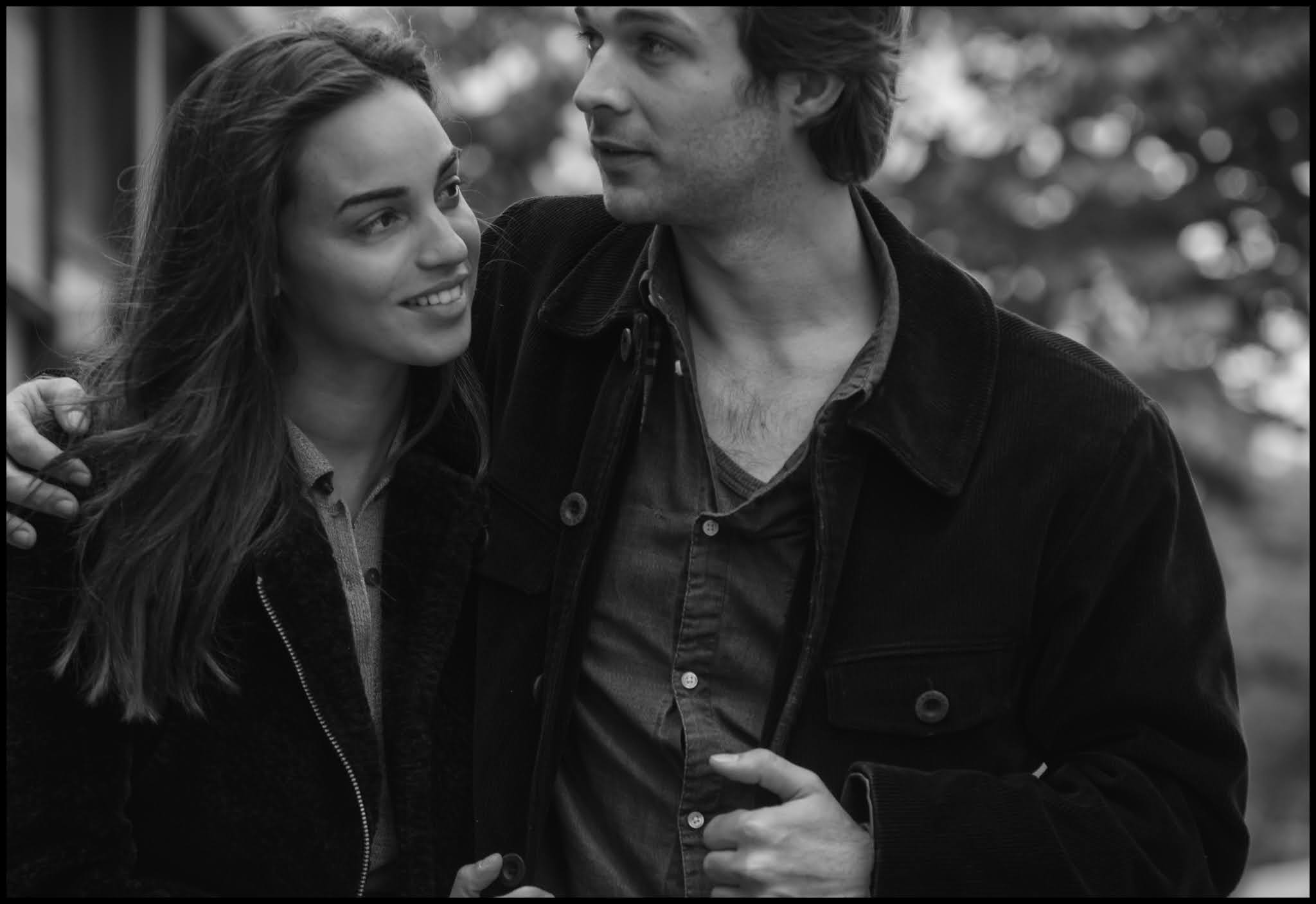

From Distrib Films US (distributed here in the U.S. via Icarus Home Video) and running 101 minutes, the movie hit home video on DVD at the end of last month and is available now. Click here and/or here for more information.

Sunday, May 2, 2021

Peccadillo Pictures' latest compilation of gay shorts, BOYS ON FILM 21: BEAUTIFUL SECRET

After giving quite a batch of review time to NQV Media and its selections of short gay-themed movies, it seemed only fair that TrustMovies looked elsewhere into the GLBT distribution field. Sure enough, up popped a company called Peccadillo Pictures and its most recent grouping of international gay short films entitled BOYS ON FILM 21: BEAUTIFUL SECRET. This lengthy moniker suggests that there may have been even earlier renditions of Boys on Film, and yes: 20 of these actually pre-date the current release, beginning back in 2009.


The current films arrive from a half dozen countries, though the majority come via Great Britain (English language subtitles are provided as needed) and run the gamut -- not just of countries but of themes, genres and emotions -- and while the quality may vary a bit, it never dips below the acceptable level and is in general very good.


Beautiful Secret
leads off with the utterly winning MEMOIRS OF A GEEZA (UK), in which director Theo James Krekis, in just four minutes flat (including credits) gives us the verbal and visual history of a young gay man at a fabulous, furious speed. "Perception's a funny thing, ain't it?" will take on wonderful new meaning by the end of this little delight.


WE ARE DANCERS
(UK, 30 mins) is set in the Berlin of 1933, as Hitler youth, along with Hitler elders, threaten a gay cabaret and its aging songstress owner in a kind of "last dance" before the shit hits the fan. Directed by Joe Morris, the film may seem somewhat been there/done that for those of us in the older generation. Still, it's nicely filmed written and acted by a game cast. 
 

From Canada comes, MY DAD WORKS THE NIGHT SHIFT, a 14-minutes movie directed by  Zachary Ayotte.  A coming-out tale complete with swimming pool, locker room and a not-quite pick-up, this one features the rather memorable line, "Hey, Dad -- how long is seven inches?" It also offers a nicely surprising finish. 


I suspect Jean Genet would have creamed his shorts, had he been able to view L'HOMME JETÉE (Switzerland, 21 mins), directed by Loïc Hobi. Here we have sailors, sex, gay guys, abusive fighting and lots of longing, as Theo, our hero, gloms onto Giuseppe and hopes to follow him out to sea. Easier said than done -- but full of  the requisite angst and taboo. 


Angst is also front and center in MY SWEET PRINCE (UK, 12 mins), as director Jason Bradbury has his hot-looking young hero fret no end about his would-be love (who may have no idea that he's the object of such lust). Set on the Isle of Wight near the turn of this new century, video comes up against fiction in ways not always that deciperhable for this viewer, at least. 


In DUNGAREES (UK, 5 mins), director Abel Rubinstein gves us a very short film that deals with two boys, a dildo, and acceptance of gay identity. 


The lightest and closest to maybe conventional comedy comes with director Sam Peter Jackson's charming coming-out-abroad-themed CLOTHES & BLOW (a US/UK co-production, 23 mins), in which a young American man making his living doing voice-overs in London gets a surprise visit from both his mom and his sister. Among the many wittty gems here, perhaps the funniest involves the particular DVDs our hero's sex partner must play to help mask the sound of his very loud lovemaking. 


Romania proves the surprising source of one of the best of this lot, A NORMAL GUY (14 mins), in which director George Dogaru tells the tale of a cute gay guy who lives with his straight brother and bro's girlfriend, and the night he gets particularly lucky bringing home a very hot number from a local club. This one also boasts the most original full-frontal nude scene you'll have seen. Fun -- and then some.


PRETTY BOY
(Australia, 9 mins) concludes the compilation, as directors Pierce Hadjincola & Sinclar Suhood give us a closeted teen whose mother is not as welcoming as he or we might like. Overall, there's enough variety and talent here to make this anthology worth a viewing (or, in the case of some of these shorts, maybe two).

From Peccadillo Pictures and, in its entirety, running two hours and 14 minutes, Boys on Film 21: Beautiful Secret is available now here in the USA via digital streaming on Amazon. Click here for further information.

Friday, April 30, 2021

Black and white disparity--again and forever it seems--in Chris Haley and Brad J. Bennett's short doc, UNMARKED

Here's a subject linked to systemic racism, like so many others coming to the fore of late, that my readers may not even have considered -- unless you happen to be Black, especially from the South but also, unfortunately, from the supposedly woke-earlier-North of these United States. That subject would be burial, and the treatment of that burial as something worth honoring and remembering. 

As the new documentary UNMARKED shows us, there are hundreds of slave cemeteries -- until now allowed  to disappear or slip into total disrepair -- seemingly unknown yet almost in plain view that dot our southern states, particularly in the area of Virginia, where this documentary takes place.

As directed by Chris Haley (shown at right) and Brad J. Bennett (below), the documentary is actually a short film which started out, according to its IMDB page, as only 27 minutes in length, now grown to 40 minutes. And yet, the subject itself calls for full-length treatment.

Perhaps because the venue is confined (probably by both the budget the location of the filmmakers to the state of Virginia), the ability to reach out nationwide was limited. And so we remain in and around that state, as these new/old graveyards are rediscovered and 

reinvigorated from the confines of the natural world that has grown around them and covered them.

Catch as catch can, we meet some of the folk who are helping unearth and then maintain these graveyards, and we watch them work and see how they manage all this. 

It's interesting, important, and -- when at one point we view the pristine and beautifully-tended Confederate cemetery in the area of Richmond, VA -- fucking enraging to compare this to the separate-but-unequal "disappeared" cemetery of the slaves.


Most of the documentary will not and is not meant to be enraging because it is clear that the folk working to regain these burial grounds and turn them into something that honors, records and remembers the dead want to do this as peaceably as possible.


This means using the help of mostly volunteers but also politicians and local institutions -- educational and otherwise -- in ways that might finally bring us together, at least somewhat.


So we watch as these volunteers, using only their bare hands against the under- and over-growth, discover more tombstones in more locations. One woman speaks movingly of finally traveling the road from shame to pride regarding the history of slavery, while another remarks on how important it is to possess "authentic history," rather than merely history (or the kind of revisionist history that would have us believe that so many of the slaves were such happy people, really.). 


If the doc jumps around into subjects barely covered, and even includes an apocryphal-sounding tale of a sad "Cinderella" love story, its heart is clearly in the right place. Let's hope that a full-length documentary may someday arrive covering more of the totality and history of these unmarked graves. Meanwhile, this short film will fill you in as a decent introduction.


From First Run Features and lasting but 40 minutes, Unmarked arrived on DVD and digital streaming this past Tuesday, April 27 -- for purchase and/or rental. Click here for further information.

Wednesday, April 28, 2021

Roy Andersson is back -- and treading water -- with ABOUT ENDLESSNESS

They're all here, once again, those special pleasures of viewing a film by Swedish master Roy Andersson: the stationary camera, perfect compositions, elegance, ugliness, humor (dry, dark), and above all quietude -- even amidst what would normally be considered a terribly trying time (a modern-day Christ being persecuted as he carries his cross uphill in one of those uber-sanitary Scandinavian towns). 

Beginning with a Chagall-like image (above) of a man and woman floating in the sky, Andersson's newest, ABOUT ENDLESSNESS, is only his fourth full-length film in 20 years. None of these are what you'd call lengthy (maybe 95 or 100 minutes), and his new one lasts but 78. 

Yet for TrustMovies, this one seems the longest, thanks to a certain repetition and sameness that have clearly set in to the filmmaker's work (Mr. Andersson is shown at right). Not that his situations are the same (though they are often pretty similar), but his themes -- from religion, war, commerce, communication (or the lack of it), and a populace that is at best utterly brainwashed -- remain front and center, with little new to be said about any of these. 

What the filmmaker has done, I think, is to pare down each of his segments more and more to what is currently coming very close to the bone. (Andersson has always been a minimalist; he's simply more so now.)


He's right, of course, in that society is certainly not changing (except for the worse), but then neither is his own vision. And since there are usually a few years inserted between his last and the debut of his latest, we're more primed for yet another chapter of Andersson-ville.


And so as About Endlessness was unspooling, I found myself, as ever, engaged with the simultaneous beauty/ugliness of it all. At the same time, my mind wandered back to his first (and still best) full-length film, Songs From the Second Floor, and how much more deeply, movingly, often shockingly, these same themes were rendered.


Well, society certainly ain't changing ('cept for the worse), so can you blame a filmmaker for staying his course? (Even treading water, Roy Andersson puts most other movie-makers to shame in so many ways.) And if we perceive an awful lot of state-sanctioned, by-rote behavior here, I can also tell you that the likes of Adolf Hitler makes an appearance, as well.


The refrain, "I saw a man..." (or sometimes a woman) occurs often here, as do forms of love and even thermodynamics. And if I can detect any really special loathing of Andersson's, it just might be toward psychotherapy and its practitioners (maybe even toward the entire medical profession). 


I might suggest that it's time for Andersson to move on, but as the world appears to be arriving at its  end, in its own not-so-good time, perhaps it is this filmmaker who is the best choice to help us properly embrace it all.


From Magnolia Pictures, in Swedish with English subtitles (damn few, actually; fast, snappy dialog is not Mr. Andersson's thing) and running 78 minutes, About Endlessness opens theatrically this Friday, April 30 in limited release. (It will not be challenging Godzilla and King Kong for the box-office crown.) Click here for more information on the film and its theatrical and/or digital-viewing venues.

Tuesday, April 27, 2021

Heat waves -- and whom they affect -- in Judith Helfand's history/documentary, COOKED: SURVIVAL BY ZIP CODE


The film begins with a "natural" disaster -- the summer-of-1995 heat wave that hit Chicago and killed hundreds of people -- and then quickly moves to make us understand how the particular choice (and, yes, it was a long-gestating choice) of exactly which people would die was anything but "natural." 

Adapted from the book, Heat Wave: A Social Autopsy of Disaster in Chicago by sociologist and urban studies author Eric Klinenberg (shown at left).  COOKED: SURVIVAL BY ZIP CODE tackles not just heat waves, hurricanes, and other natural disasters but why these always seem to first kill folk from low-income, non-white neighborhoods, along with why "disaster preparedness" seminars and demonstrations prepare mostly wealthy white enclaves for survival. 

As directed by Peabody award-winner Judith Helfand (shown at right), Cooked brings to screen life Klinenberg's hugely important book. with interviews with both the citizens who suffered through these traumatic events and some of the policy-makers and folk in charge of the  supposed survival mechanisms in place to protect us all. It is not a pretty picture.

One of the great strengths of ths film is how Klinenberg and Helfand use history and statistics (from as far back as the early 1940s) to show us how injustices such as redlining prevented non-white citizens from obtaining bank loans and thus owning real estate, as did their white brethren.


Cooked
was filmed prior to our current pandemic and prior to the death of George Floyd (and so many others) that seem now to have at least somewhat broadened the understanding and changed the attitude of a larger portion of America's white population. Still, to see and hear Helfand asking direct questions of these in-charge men and women, and to see how her interviewees pause, look away, and either make excuses or practically outright say,"Well, yes, but good luck with trying to change any of this," is alternately shocking and deadening. 


Perhaps now, with all that has happened in and to our country over the past year, we might be able to look forward to actual change finally arriving. Meanwhile, we have all the evidence we need of its urgency and importance. Early on in the film, I think it was Klinenberg who points out how so much of how we live and what we are allowed to see and understand has kept the entitled portion of our population "protected and blissfully ignorant."


By the finale of this very important documentary, I suspect you will completely agree with Ms Helfand when she notes "how deeply flawed and immoral our national priorities are."  Cooked, however, is not simply a litany of the horrors. 


Toward the finale, we're on  a food truck bringing fresh produce into a neighborhood  without any proper venues for healthy food shopping. An older teenage boy comes aboard the bus and is cajoled into eating -- for the first time in his life, he tells us -- a raw apple. He finally does, and... gosh, it's pretty tasty! This scene is so unusual, so moving, and actually almost shocking that you may ask yourself, When did you eat your first apple? Can you imagine not having even the opportunity to actually eat one until you were very nearly a young adult? Probably not. But now you'll consider what this might feel like. And if you have any further doubts, as does Lindsey Graham, about the systemic racism plaguing our country, maybe it's time to simply resign from the Senate -- or the human race. 


From Bullfrog Films, distributed by Icarus Films and available on DVD in two different versions: an 82-minute version with SDH English captions and a 54-minute PBS version with SDH English captions (I watched the 82-minute version, which I would thoroughly recommend), Cooked can be purchased (and I hope, rented, too) now. Click here for more information.

Sunday, April 25, 2021

Our April Sunday Corner With Lee Liberman: Tony Jordan's DICKENSIAN


This post is written 
by our monthly 
correspondent, 
Lee Liberman


Picture this (find it on Prime Video) — Dickens' most iconic personages, portrayed by best Brit actors and written by formidable scribe Tony Jordan (East Enders, Life on Mars, Hustle), doing business with each other cheek by jowl in Dickens’ London hot spots like the The Three Cripples Pub and The Old Curiosity Shop. 


Fagin’s (Anton Lesser, far right, above) den where he recruits boys to become pick pockets is nearby. Same for the home of the Barbary sisters, Frances and Honoria, and Satis House, the Havisham residence. It happens here that Amelia Havisham and Honoria Barbary are best friends as young women, both having great expectations, only to join the long-suffering. We know from the novel that Miss Havisham was betrayed and spent her mature years holding court at her grimy wedding table dressed in her decayed wedding dress. But our gothic Dickensian is the made-up prequel to all that; here she is a young beauty (Tuppence Middleton, of Downton Abbey, Mank) who shines with demure confidence as she helms her father’s company, tho we are sorry to watch her half-brother Arthur Havisham, (Joseph Quinn, Howard’s End) decompensate in self-hate and are filled with dread at her adoration of the duplicitous Meriwether Compeyson (Tom Weston-Jones of World Without End, Copper), below, knowing what is to follow. 


Three main plots weave through the 10 episodes of Dickensian. One is the inventive backstory of Miss Havisham who has been fixed in our memory as the man-hating, jilted bride. Second is the tale of Bleak House’s heart-warming Honoria Barbary, in love with young Captain Hawdon (below), but here on a soul-killing journey to wed dreary Sir Leicester Deadlock at the connivance of her jealous sister. (Honoria, Sophie Rundle of Peaky Blinders and Gentleman Jack, is not lauded enough; she is as good a tough mob moll as she is a tragic heroine). 


The third story is the mystery of who killed Jacob Marley (Peter Firth) of ‘A Christmas Carol’ (‘Marley was dead to begin with’) that is adjudicated by lawyer Jaggers (fine character actor, John Heffernan) and investigated throughout by terribly decent Inspector Bucket of Bleak House, until all possible suspects have been ruled out except the least likely one. The dutiful-inspector task falls to the impeccable Stephen Rea (below, of The Crying Game, Interview with a Vampire, The Company of Wolves) whose mobile face and precise articulation is perfect as a good Dickensian, just perfect, in a nod to the start of dedicated police investigation. 


Subplots involve miserly Mr. Scrooge, Ned Dennehy (Peaky Blinders, Outlander), who is deliciously bad and all too far from redemption here, and the impoverished, put-upon Cratchit family, including the now renown Phoebe Dynevor (below, of Bridgerton, now filming season 2) as pretty young Martha Cratchit (below). 


Comic relief is supplied by the Bumbles, Madam Scold and her toadie Mister who run the children’s workhouse without an ounce of kindness or common sense (below) 


and by Pauline Collins (below) who has had a long career as a character actress beginning with the vamp who seduced the rich young master in the original Upstairs, Downstairs (1971-73). Collins, now past 80, plays the tippling Mrs. Gamp here, in a satiric take on the terrible state of nursing pre-Florence Nightingale. 


These (and more) groundlings are clever but tiresome on repeat; Tony Jordan’s wallow in Dickensian caricature adds length without depth. (An adorer of the theater, Dickens was an actor and mimic, from which came his enduring comic characters.) At the other extreme, screen-writer Jordan (below) was much more successful in harnessing our emotions to the pain of betrayal and loss suffered by the two heroines, Honoria and Miss Havisham, in contrast to Dickens, himself, whose female characters could be tiresomely mad or bad. Some prudent cuts might have helped save Dickensian from the chopping block. One has to wait too long for the good parts — the more emotional parts. After its run in 2015-16, the series was not picked up for renewal, sadly for the loss of many delights within. (That's Mr. Jordan, below.)


Charles Dickens himself (1812-1870), buried in Poet’s Corner, Westminster Abbey, was one of England’s most successful novelists during his lifetime and posthumously — much has been written that describes his life and motivations. He was more of a social and political critic (in tune with today’s democratic left) than a conveyor of deep sensibility or psychological depth. His characters are more cartoon-like than real but invented to castigate the aristocracy, the rising merchant class, and the exploitation of the working poor. He popularized serial storytelling in newspapers — streaming TV leaps right off the pages of the Dickens playbook. He mined his own life experience such as his father’s stay in debtors’ prison that became the work-house setting in ‘Little Dorrit’ and his own 10-hour days as a child in a boot-blacking factory leading to indignation that working class children endured such. He is quoted in a New York speech: “Virtue shows quite well in rags and patches as she does in purple and fine linen.” 


The unfeeling treatment of Dickens by his mother is thought to be the cause of some grimly unpleasant women in the Dickens lexicon. He himself was flighty in love (though not particularly so by today’s standards). He tired of his wife or they of each other, separating households after 10 children, divorce being unthinkable then, falling in love with a young actress kept hidden from the public. He supported them all — wife, mistress, children, servants— not to mention being widely known otherwise for his kindness and philanthropy. Dickens was prodigious in his short lifetime (58 years) but we don’t revisit him for interiority; instead he is beloved for verbal genius, memorable characters, and observations about social ills that repeat back on us today like indigestion. To purists who would have no meddling with the work of an original, I say never mind, just enjoy this evanescent Dickens for the nostalgia and the pleasure of re-imaginings.