Showing posts with label Capitalism. Show all posts

Wednesday, February 10, 2021

Noah Hutton's just-barely sci-fi film, LAPSIS, makes smart, serious fun of Capitalism, Comcast, Amazon, Apple and more....


Imagine, I don't know, maybe a year or two ahead, with Covid and its permutations at least semi-controlled; a newer, nastier gig economy firmly in place; and internet technology evolved into something called "Quantum" -- which is the latest thing and necessary to have in order to not simply prosper but even exist and compete (of course it costs more, too). 

Quantum also requires a lot of workers laying a lot of cable to connect it all properly. This is the point from which the new-and-nearly sci-fi film LAPSIS -- written and directed by Noah Hutton (shown at left) -- takes off, and it's a point that seems so close to today in so many ways that I doubt most intelligent audiences will have any trouble following the plot and understanding exactly what the movie means to and for us "everyday people."

The movie's hero is an typical Joe named Ray (played with utter veracity and near-zero vanity by Dean Imperial, below), who currently works as a delivery man trying to take care of himself and a younger half-brother stricken with what sounds very much like some new variation of Chronic Fatigue Syndrome. 
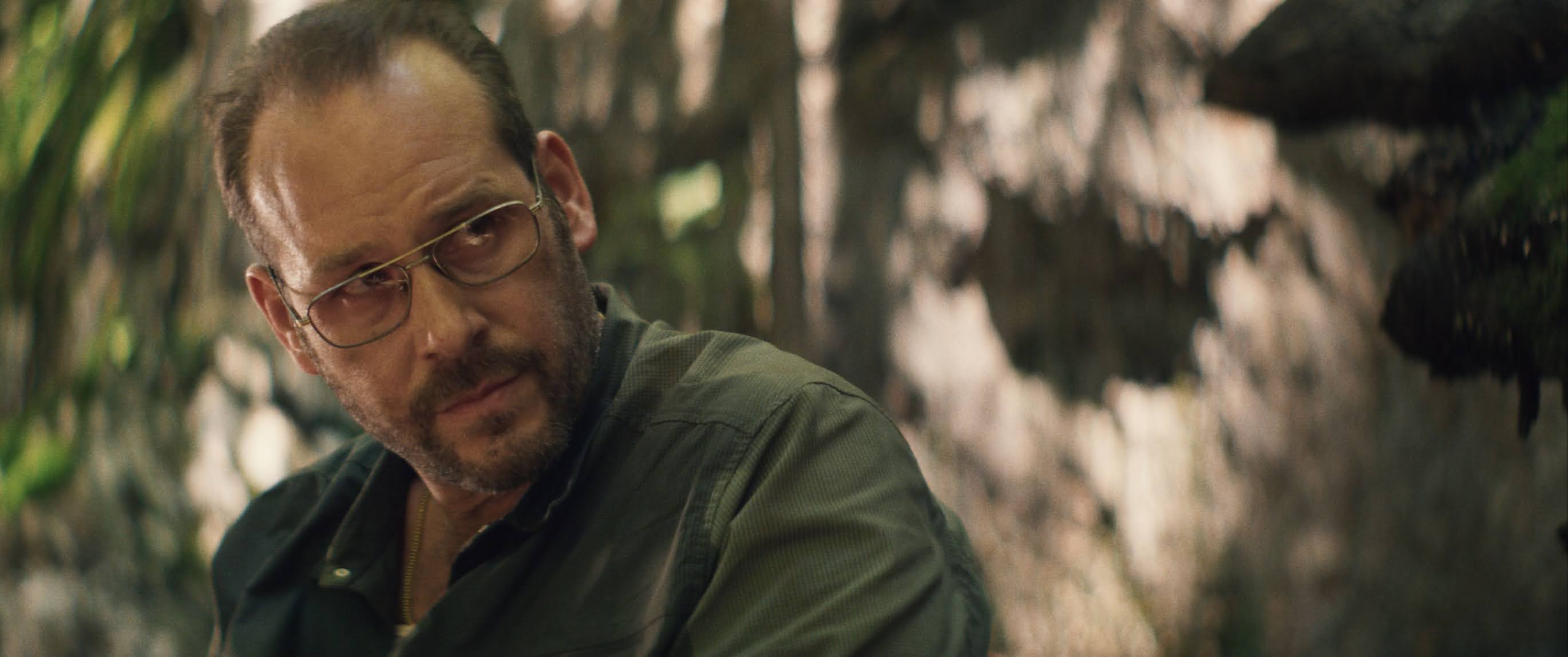

When Ray gets the chance to go to work and make better money as a kind of Quantum cable guy, how can he say no? And so we're with him as he learns the ropes of this bizarre new "career," which, the more we find out about it, seems like the current shit-assed Capitalism (are we beginning to understand that there is no longer any other kind?) practiced by the likes of Comcast and its ilk, with working conditions akin to Amazon and Apple.


From the start, it's clear that everyone is cutting corners (Ray himself gets his "opportunity" via someone so clearly crooked that even his brother warns him not to go there). Soon enough our hero comes up against "unionizers" within the workforce; automated robots (below) designed to work around, if not outright against, their human "proles"; and some very large cubes (on poster, top) that might remind you of, hmmm, 2001, but that act merely as charging stations for this new Quantum process.


Those cubes are maybe the closest the movie gets to sci-fi. Everything else seems so everyday, it might be your next-door neighbor. And therein lies Lapsis' great charm and subversiveness. Even as Ray -- your typical guy who's so busy trying to make ends meet that he has given little thought to why they never can nor will -- is forced by the new co-worker/friend he meets (Madeline Wise, below) to confront what is really going on here, we, too, must look more closely at how our current economics and politics work: For the rich and corporate. Never for the rest.


As the plot's thriller elements unfold, Mr. Hutton's ability to connect all the dots comes beautifully into play. OK: He once or twice gets a little too close to preaching, but mostly his adeptness at weaving all this together into something socially, economically, culturally, politically significant is impressive indeed. And that expensive treatment center into which Ray places his brother (of course it does not accept any insurance) will give you the willies all on its own.
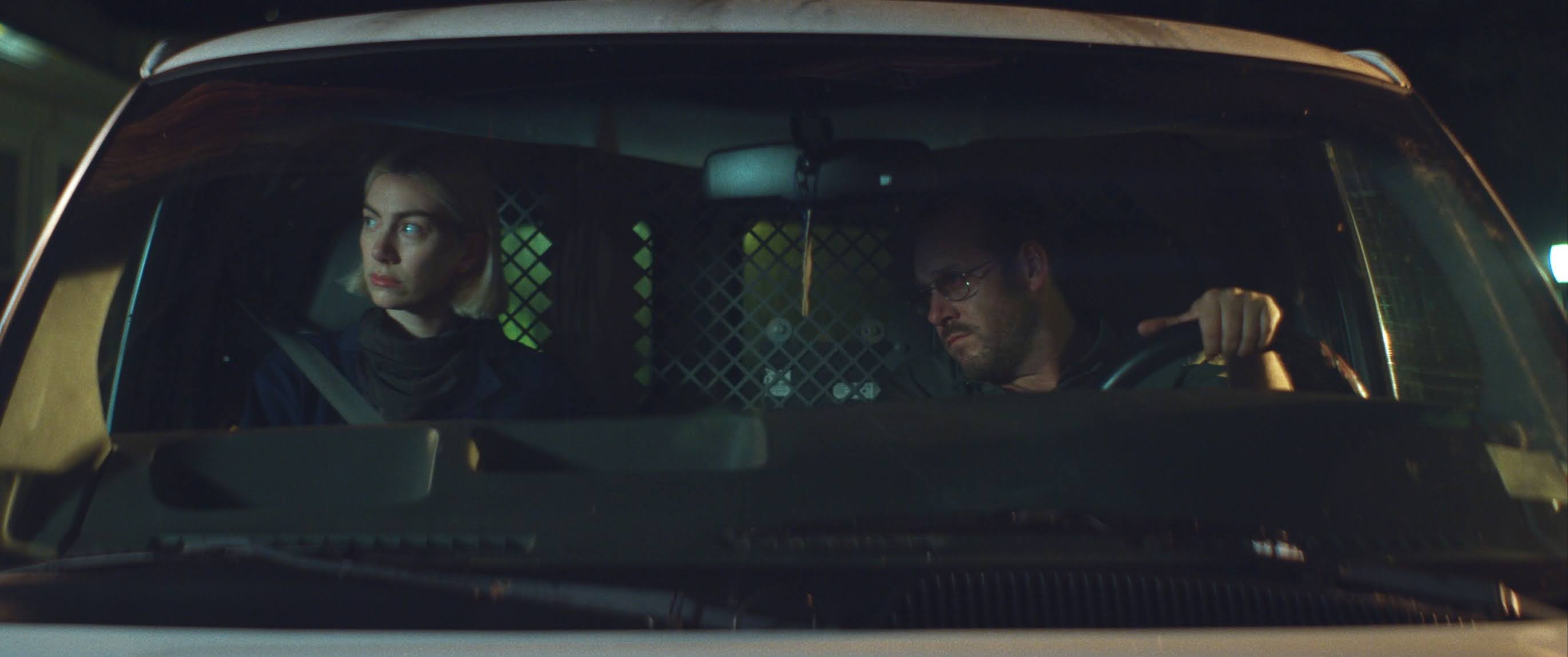

Alternately creepy, amusing, exciting and consistently interesting, Lapsis shows what can be accomplished when you combine intelligence, imagination, talent and concern. More, please, Mr. Hutton.


From Film Movement and running 108 minutes, the movie opens all over the USA and Canada via virtual theaters, VOD and digital venues this Friday, February 12. Click here for more information and venues, and think of this one as the perfect progressive gift for someone you love on Valentine's Day.

Monday, December 7, 2020

Oscar-winner Juan José Campanella returns with a new must-see, THE WEASELS' TALE


Delightful, dirty, old-fashion fun is given a few up-to-date twists in a movie that has -- particularly in these Covid-riven times -- just about everything necessary to pack in audiences. (Even if they are packed only into their own living room, viewing -- we hope -- via a nice, big wide-screen TV.) THE WEASELS' TALE (El Cuento de las Comadrejas) arrives via Juan José Campanella, the Argentine writer/director who gave us the 2010 deserved winner for Best Foreign Language Film, The Secret in Their Eyes (the original, not that crappy American remake from 2015).


Senor Campanella (shown at right) and his co-writer Darren Kloomok have created a smart and relatively fast-moving (given the film's 128-minute running time) romp involving just about everything: comedy, wit, mystery, thrills, surprises, movies-about moviemaking, the evils of Capitalism run amok, and especially the setting up of the older generation against the younger -- which of course will bring in seniors by the thousands. 

That Campanella does decent justice by and to all of these genres and themes makes it easy to simply sit back and relish the fun. The Weasels' Tale may not be a great film, but it certainly is grand entertainment.


The filmmakers put us immediately into the home of some elderly, retired folk from the Argentine movie industry: one of those rare Oscar-winning Best Actresses in a foreign-language film (Graciela Borges, above and below); her has-been, barely-was actor husband (Luis Brandoni, below, right), along with the film director (Oscar Martínez, below, second from left) and screenwriter (Marcos Mundstock, center, right) both of whom were responsible for many of the actress' hit movies back in the day.


From the first lengthy scene we learn that this quartet has been living in a kind of love/hate relationship in which the three men bond against the grand dame, and everyone is relatively miserable-yet-content. "Look at how happy we are,"gloats the self-satisfied film director, and the other men agree. "There are no villains in this piece." Just then, of course, a car pulls into the driveway of their home and out step an attractive young man (Nicolás Francella, above, second from right, and below, left) and woman (Clara Lago, above, left) who've seemingly gotten lost in the countryside but immediately recognize the old actress and prove to be among her most ardent fans. Yes, we're off to the races.


How Campanella wittily and charmingly compares movies to life and Argentina's greedy present to her dictatorial past, together with how these six fine actors brings their very interesting, even complex characters to life, makes The Weasels' Tale a consistent delight. Events grow darker, betrayals abound, and were it not for the terrifically stable tone of humor the filmmakers sustain throughout, things might tumble off track.


They never do. The movie proves consistently amusing, even pertinent. (TrustMovies would not be surprised if this became the highest-grossing foreign-language film for the coming year.) And our heroine -- the real one -- even gets that death scene that's so far eluded her over a long career. 


From Outsider Pictures, the film begins its theatrical and virtual cinema premiere this coming Friday, December 11 at over two dozen theaters across the USA and Canada. Click here for more information and to view the theaters at which, or virtually, the movie will screen.

Wednesday, October 14, 2020

South Korean mystery FORGOTTEN proves a twisty, fascinating and moving "must-see"


Got to hand it to Netflix, which keeps coming up with terrific movies (along with plenty of duds), some of which you will have never heard. A good friend of mine recommended FORGOTTEN, a what-the fuck-is-going-on-here? thriller from 2017 that packs, at last, an almost unbearable sadness regarding family and loss, along with the socio-economic relevance of Parasite. It's from South Korea, of course, slipping into view almost completely under the critical radar.


Written and directed by Hang-jun Jang (aka Hang-jun Zhang), the movie is a veritable model of smart plotting and pacing, featuring a "mystery" that, as it unravels, keeps us absolutely hooked. Best of all, the explanation, rather than disappoint as so many mystery/thrillers do (the problem is always so much more interesting and fun than the solution), simply explodes here into something that hooks the heart as much as the mind, and results in as damning an indictment of dog-eat-dog Capitalism as you'll have seen.


It helps to know something of South Korean history and its financial crisis that left so much of the population in a horrible state. Forgotten never underscores anything too heavily and so glides easily along on its genre credentials alone. All the rest is gravy -- incredibly tasty and nourishing gravy, at that.


A young man (lovely actor Ha-Neul Kang, shown on poster, top, and above) and his family move into a house that, to him, looks oddly familiar. Strange things begin happening and we question for a bit if these are real, hallucinations or supernatural. Quickly, all this changes into something quite other, then changes again and again, as we race along with the thriller conventions to keep up as, all the while, Forgotten grows ever stranger and darker.


Performances are as expert as usual in South Korean cinema, while the technical aspects of the film are also first-rate. Dark as it is -- literally and metaphorically -- Forgotten is always a pleasure to view. And the final scene, which arrives just after the end credit title is shown, is maybe as glowingly beautiful as anything I've seen in a long while. This finale posits the question, What is it that defines our character? The film does not provide the answer, but the manner in which it does the asking is exemplary. 
This one's a keeper.


Streaming now via Netflix, the film runs 108 minutes, relatively short by South Korean standards, every one of which pleases (those minutes and those standards).

Friday, May 22, 2020

Florian Opitz's SYSTEM ERROR: Another major and majorly important documentary hits DVD


To hear one of the barons of Brazilian agribusiness droning on about "progress" and the glories of BASF is to feel your very brain slipping away. And then this privileged asshole (shown below, TrustMovies believes) adds insult to injury by asking for "More profit boost, please!"

Ah, Capitalism! And growth. And the impossibility of continuous, sustained economic growth. Which is what SYSTEM ERROR, the latest documentary from German filmmaker Florian Opitz, is all about.

Herr Opitz, shown at left, has a lovely, gracious, never-intrusive way of making certain the camera (cinematography by Andy Lehmann, editing by Frank J. Müller) remains on the interviewee for a few seconds longer than might seem required, particularly when that interviewee is answering questions about, oh, say, the result to the environment or the economy and is clearly either outright fibbing or simply lying-by-omission.

Consequently, we have time to observe the face of said fibber in a quiet but clearly uncomfortable position. This happens a number of times, and each of these proves quite telling and, in its odd fashion, nastily entertaining. It's as though the prevaricator, so far as our learning the truth is concerned, has stuck his head in the noose and jumped off the chair.

It is by now clear to quite a number of the world's citizens that Capitalism has run its course and shown its true colors. "Financial markets are able to heal themselves," is one of my favorite quotes here, but the end of that statement, which might go something like, Sure -- when given a trillion-dollar-bailout by the government is nowhere to be found in the mouth of this particular money maven.

On the side of reality against conformity and propaganda is our ofttimes host, British economist Tim Jackson, of the University of Surrey. He keeps popping the balloons of one after another It's-as-clear-as-the-nose-on-your-face Capitalist propagandizers (consistent sleazebag and former Trump associate, Anthony Scaramucci is among these), who spout the prepared-and-typical only to be undercut by the ideas and statistics offered by the quiet Mr. Jackson (above).

Smart and highly appropriate quotes from a certain Karl Marx dot the documentary and are as pertinent as they are often surprising (unless, unlike me, you've read a ton of Mr. Marx). I rather wish that Opitz has not led off his film with so much info on the state of Brazil because, over the past three years since the film was made, much has changed there (for the worse), and the world is quite aware of all this. Yet even that section is interesting for the way in which Opitz conducts his interviews.

We hear about deregulation, the Flash Crash and other financial sector happenings along the way. By the time an ex-investment/trading guy, very high-level, tells us, "The idea that markets are somehow going to support a very large base of the population and somehow produce returns for that population -- when, in our space, all we try to do is eliminate those returns: I mean, that was our job. It's a very different world than is advertised to the general public," I suspect you will be ready to laugh in the face of those "investment" ads you see all the time on TV.

System Error is an absolutely terrific documentary: smart and measured and full of necessary information. Do stay through the end credits to hear Jackson quote the famous Italian Communist Antonio Gramsci about the particular combination of pessimism and optimism needed to perhaps survive our current time.

From Icarus Home Video, in English, German and Portuguese, with English subtitles as needed, and running 96 minutes, the movie hit home video on DVD at the end of last month and is available now for purchase (and rental via streaming, too). If you were unlucky enough to read the very foolish and dismissive NY Times review of System Error publised a few weeks ago, ignore that and take a chance on this very important film.

Wednesday, May 13, 2020

THE SEQUEL covers the work of British writer/ historian/economist/ecologist David Fleming


The impossibility of consistent, increasing economic growth -- that growth is one of the tenets of Capitalism, now coming home to roost in globalism's henhouse of horror -- was, not coincidentally, one of the tenets of a forward-thinking fellow named David Fleming (on poster, right), who died in 2010 and is now receiving some of the credit due him for his progressive ideas.

The hour-long presentation, THE SEQUEL, just out on DVD and co-written and directed by Peter Armstrong tries with some success to give us the basic ideas of Fleming, while simultaneously demonstrating how they can be applied to what's happening worldwide today.

The approach of Mr. Armstrong (I think that is he, shown at left) and that of Shaun Chamberlin (shown below) -- the latter served as co-writer and executive producer of the film and for whom Fleming was a teacher and mentor -- is a bit scattershot.

There's a little history, a little biography, and a lot of contemporary application of Fleming's ideas -- after which and eventually some of this coalesces into both a philosophy and a kind of primer on what's coming to this world we inhabit, and how we might best deal with that future.

Mr. Chamberlin, who managed to bring Fleming's long-gestating oeuvre to posthumous publication as Lean Logic: A Dictionary for the Future and How  to Survive It, clearly had a very loving relationship with his mentor, and that love can be felt throughout this short film.

During the course of the documentary we see a number of ways in which human beings can learn to rely on what Fleming called the "informal economy" rather than on the market economy; feeding our selves locally, rather than using supermarkets (which are here referred to as scams); making use of local shops (as below) devoted to fixing broken things rather than discarding them and buying new ones; and overall letting go of our current culture, civilization and all the rest of it.

Of course this takes some heavy-duty discipline, or as in the case of the country of Greece, below -- shown here as a kind of hallmark of the new world, thanks to its utterly failed market economy -- which was instead forced into having to learn new ways of adapting, particularly where health care is concerned. There are lots of talking heads throughout the film, and what most of them have to say makes a certain amount of sense.

You may, as did I, bridle at the section devoted to "encounter" (in this case with a muntjac deer, below), in which we are meant to empathize so strongly with an animal that we can somehow fully understand and "feel" it. As much as some of us might love, appreciate and want to protect animals and their environment, at this point in the film, you may start rolling your eyes and muttering, "Don't fuck things up with this nonsense!"

Otherwise, however, The Sequel has a lot to offer. If, in its positive-thinking manner, it chooses to mostly ignore mankind's history and proclivity toward power, greed and slavery (which certainly fuel Capitalism and the market economy as much as does anything else), it at least offers a partial roadmap for traveling the continuing downturn of that economy.

From Bullfrog Films (distributed by Icarus Home Video) and running just 61 minutes, the film hit DVD last month and is available now for purchase (and, I hope somewhere soon, for rental, too). At the very least this short film should have viewers eager and willing to go back to its source.

Wednesday, March 4, 2020

Steve Coogan excels in Michael Winterbottom's funny, angry, compelling broadside, GREED


OK: It wears its heart on its sleeve, as message movies from Brit director and sometimes writer, Michael Winterbottom often do. But since that message is an important and timely one, only the very wealthy, along with some of us more persnickety critics, will probably mind much. If GREED is neither as funny nor as incisive as it might have been, what's there is certainly smart and entertaining enough to pass muster as a worthwhile trip to the movies. Plus there's its star, Steve Coogan (at right), giving yet another of his knockout performances as Sir Richard McCreadie (rhymes with greedy), a supposedly uber-successful British retailer who seems to combine the nasty savvy of a Murdoch with the utter incompetence of Donald Trump.

Mr. Winterbottom, shown at left, gives us a little history of Sir Richard (even as a child, this guy was a major ass-wipe) then shows us how, as an adult, the man has taken over various companies, only to destroy them, while making himself and his family even wealthier. Most important are the sections set on the sub-continent where poorly-paid labor in the factories that supply McCreadie with his products are worked literally to death to make this man even richer. We also see Mr. Greedy making quite a show when called before a government inquiry into his dealings (below), during which Coogan brings forth his exquisite combo of smarminess and "hurt hauteur," as he defends himself and we learn even more of his misdeeds.

Throughout all this, comedy mixes with ugliness in roughly 50-50 fashion, and while we laugh at the antics, all of it comes at the price of our near-constant realization that this is Capitalism writ large and lousy: the ongoing destruction of current western civilization -- not to mention most of the rest of the world.

What saves the movie as entertainment is its central "event," a 60th in-costume birthday party for McCreadie that we watch being organized on a picturesque Greek island then brought to very creepy fruition, as family and fake-friends gather to celebrate this supposedly successful entrepreneur.

We meet his ex-wife (Isla Fisher, above, right), his mother (Shirley Henderson, below, left: an enabler par excellence), and especially his on-the-cusp-of-adulthood son (Asa Butterfield, below, right), who discovers a delightful and appropriate -- if ghastly -- way to work out his Oedipal issues.

As usual with Winterbottom, the camera is constantly on the move, with humor, insult, ugliness and message flying in from all directions. Thanks to the generally up-to-snuff dialog, and to the skill of Coogan and the rest of the cast, Greed never loses its momentum.

Look for a number of other famous performers (like Stephen Fry, above, left) to make appearances here, too. If the film doesn't offer state-of-the-art humor, satire and finger-pointing consistently, it hits its marks often enough to keep you alternately angry and entertained.

From Sony Pictures Classics and running 104 minutes, the film opened last week on the coasts and will hit theaters nationwide this Friday, March 6. Here in South Florida, you can find it at the following theaters: in the Miami area at the AMC Aventura Mall,  CMX Brickell City Center,  Silverspot Miami, Regal South Beach, and AMC Sunset Place; in Broward county at the Cinemark Paradise in Davie and Regal Magnolia Place in Coral Springs; in the Palm Beach county at the Movies Delray and Movies of Lake Worth, AMC Indian River,  Majestic 11, Regency Cinema 8 in Stuart, Regal Royal Palm, Cobb's Downtown at The Gardens in Palm Beach Gardens, and in Boca Raton at the Regal Shadowood and Cinemark Palace. Elsewhere? Click here to find a theater near you.

Sunday, November 24, 2019

All hail Paul Verhoeven, as the 1987 sensation, ROBOCOP, makes its grand Blu-ray debut


Only the other day I was complaining about an unusually poor Blu-ray transfer from the almost-always excellent distributor, Arrow Video. The firm more than makes up for that faux pas with the release it has coming out next week: a sleek new Blu-ray of the groundbreaking sci-fi/action/satire ROBOCOP.

Though beaten to release by James Cameron's The Terminator three years earlier, that film (still the best by far of all the Terminator movies) did not have Robocop's sterling social satire and anti-Capitalist stance, via screenwriters Edward Neumeier and Michael Miner and its internationally acclaimed director Paul Verhoeven.

Mr. Verhoeven (shown at right) doesn't pile it on here as much as did in his later Starship Troopers, but the satire still sparkles and penetrates. From the first scene of a television newscast (these just don't change much over the decades, do they?) through our trip to corporate America and its plan to eviscerate society by pretending to help us, the movie is often simultaneously violent and hilarious, as was/is often Verhoeven's wont.

And don't worry if the image during that and other newscasts seems low-def. So will the scenes involving computer screens and imaging (as below). But once we leave TV and technology screens behind, the rest of the movie's narrative -- seen in utter hi-def sharpness and juicy chrome-bred colors -- proves amazing and a joy to view.

The tale here is one of a would-be corporate take-over and privatization of Detroit's police force. The movie was released during the British "reign" of Margaret Thatcher, during which privatization became a kind of holy watchword, with the fall of British unions the sad byproduct. (Or maybe privatization was actually the byproduct of union demise.)

The introduction of a new policing machine (above) at film's beginning is both funny and horrific, and Verhoeven's and his writers' wit and humor are further seen when this same machine, later in the film, must negotiate a flight of stairs.

The cast is aces, too. In the leading roles, Peter Weller (above), as the rookie cop who soon becomes robo and Nancy Allen as his policing partner could hardly be bettered. Weller spends much of his screen time behind his robocop attire (below), but there' no mistaking those luscious lips.

Ms Allen (above, left, and below), far too infrequently seen after her role in Dressed to Kill -- movies just didn't seem to know what to do with her or how to best use her -- brings enormous humanity to the film (and to robocop himself), and she's a treasure to watch in action. (There a very nice close-to-present-day interview with the actress among the enormous Bonus Features on one of the discs in this two-disc set.)

Verhoeven knows when to give us down-and-dirty action and violence. But he also understands less is more, just as he does the occasional need for more is more. His pacing is on the mark, and his excellent use of lost memory (and how to give this to us on screen) remains about as good as we have yet seen, even after the many times we've by now endured this Oh, gosh, I'm starting to remember! routine.

Dan O'Herlihy, Kurtwood Smith, Miguel Ferrer (horizontal, above, in the third photo from top) and Robert DoQui lead the fine supporting cast, but the film's ace-in-the-hole is probably Ronny Cox (above), who plays the smartly tailored, extremely nasty villain with just the right combination of relish and disdain.

As with almost all the Blu-ray of Arrow Video, the Bonus Features are plentiful, but Arrow has  really outdone itself here: TrustMovies counted a total of 32 (you can peruse them all by clicking here and scrolling down).

Distributed in the USA via MVD Entertainment Group/MVD Visual, Robocop hits the street this coming Tuesday, November 26, in both a Blu-ray limited edition and a Blu-ray Steelbook edition -- for purchase (and I hope, somewhere, for rental, too).