Showing posts with label greed. Show all posts

Friday, December 11, 2020

"Parasite"-lite from South Korea: Kim Yong-Hoon's BEASTS CLAWING AT STRAWS

Most of the characters in the new South Korean movie BEASTS CLAWING AT STRAWS are not just greedy-as-hell but dumb-as-they-come. The couple of lone smart ones are also nasty and vicious enough that you won't at all mind their appropriate comeuppance, while the also lone pair of decent folk, by virtue of that rare decency (this is South Korea, after all), rise above mere descriptions such as dumb or smart.

To call this film "Parasite"-lite, as does my headline, is not meant as a negative. (Few filmmakers reach the Bong Joon-Ho level.) Its director and adaptor (from Japanese writer Keisuke Sone's novel), Kim Yong-Hoon (below), offers us an ensemble thriller about the effects of 

greed on a populace made up of mostly have-nots who've been preyed upon by the sort of low-end haves who are nowhere near the corporate or political level. They're simply better than the have-nots at being evil. 

As usual with South Korean films these days, the ensemble roles are uniformly well-planned and -played. with each actor nailing his/her key characteristic, while remaining believable and human (if not humane).

TrustMovies is proving to be increasingly poor at recalling character names and then matching them to actors' faces (particularly in ensemble-cast Asian movies), so forgiveness is asked for the actors in the photos below not being properly identified. 


Mr. Bong begins his film with the sight (see poster image at top) of what looks like something awfully close to that famous designer travel bag (surely the ugliest symbol of the "elite" ever created; little wonder it was immediately snapped up and knocked off by the equally taste-free lower classes), which one character (above, center) stores in a locker at the local bathhouse/sauna. 


When a bathhouse worker (above) later discovers the bag, along with its contents (which you can easily imagine), and then steals it (slowly, in degrees, which adds to the irony, suspense and humor of the film), we are quickly introduced to a bevy of characters, one more greedy, needy and nasty than the next.  


Soon we've met a brothel madam (above), along with one of her sex workers (below, right) and one of her clients (below, left),


plus a small-time criminal kingpin and his love-to-murder underling (shown on either side of the original depositor of that bagful of loot, four photos above), the worked-to-death wife (below) and increasingly demented mother (two photos below) of the bathhouse worker who steals the bag, along with other sundry and assorted lesser "lights."


Who these people are and how they're connected to each and that mystery bag are eventually revealed as this sometimes obvious, other times surprising, and often grisly, dark and funny film unfurls. Beasts Clawing at Straws will recall countless other movies, better and worse, yet it manages to hold its own (and your interest) amid all the sometimes derivative twists and turns.


Coincidence and convenience abound, as they often do in tales of this genre. Yet time and again we come back for more. Do we love so love to see ourselves, along with the worst aspects of us, up there on the big screen (or, these days, big TV)? Maybe so, and if so, this one's for you, dear reader.
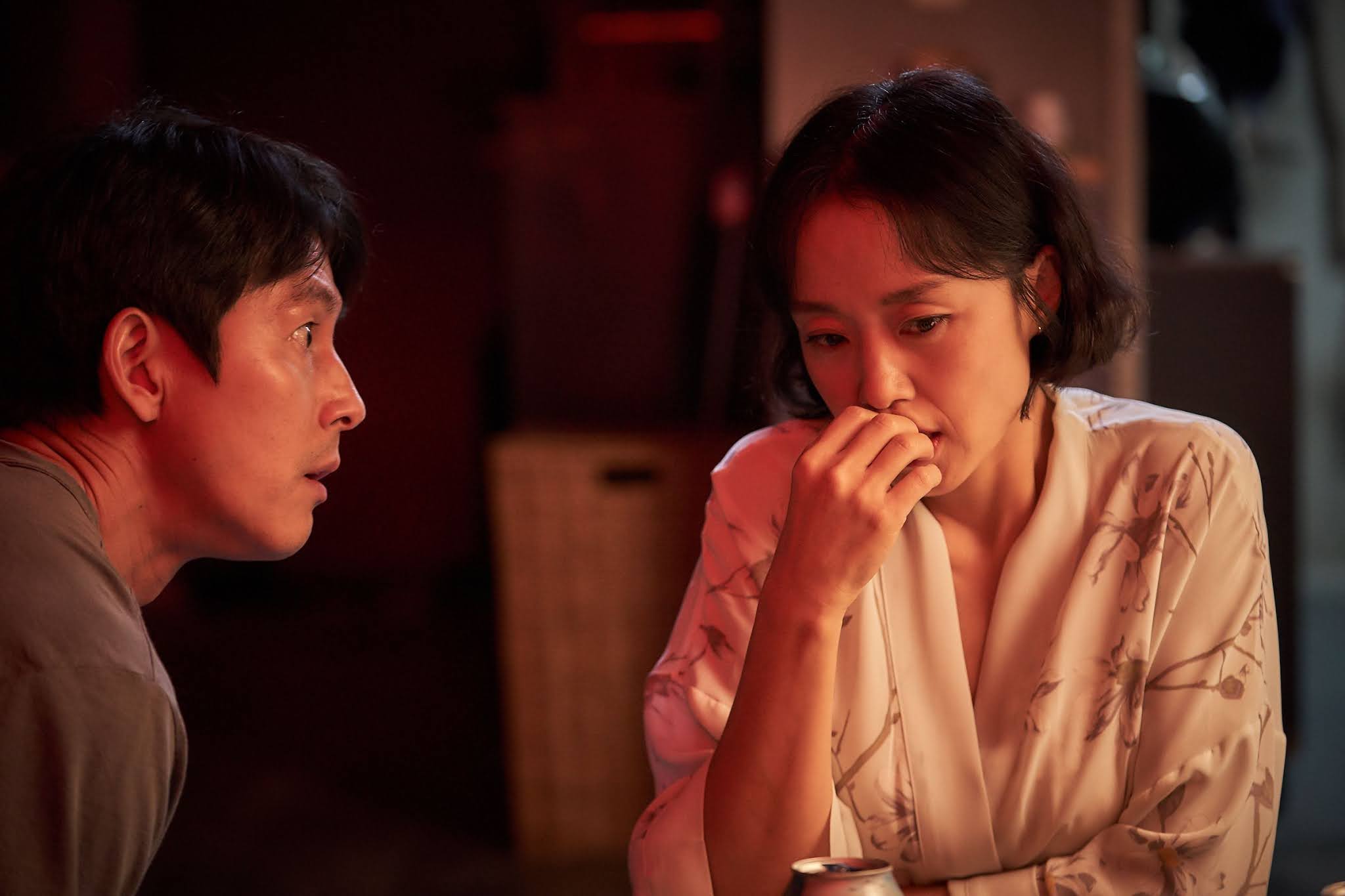

From Artsploitation Films, in Korean with English subtitles and running 108 minutes, Beasts Clawing at Straws hits streaming venues this coming Tuesday, December 15 -- for purchase or rental. Click here for more information.

Wednesday, March 4, 2020

Steve Coogan excels in Michael Winterbottom's funny, angry, compelling broadside, GREED


OK: It wears its heart on its sleeve, as message movies from Brit director and sometimes writer, Michael Winterbottom often do. But since that message is an important and timely one, only the very wealthy, along with some of us more persnickety critics, will probably mind much. If GREED is neither as funny nor as incisive as it might have been, what's there is certainly smart and entertaining enough to pass muster as a worthwhile trip to the movies. Plus there's its star, Steve Coogan (at right), giving yet another of his knockout performances as Sir Richard McCreadie (rhymes with greedy), a supposedly uber-successful British retailer who seems to combine the nasty savvy of a Murdoch with the utter incompetence of Donald Trump.

Mr. Winterbottom, shown at left, gives us a little history of Sir Richard (even as a child, this guy was a major ass-wipe) then shows us how, as an adult, the man has taken over various companies, only to destroy them, while making himself and his family even wealthier. Most important are the sections set on the sub-continent where poorly-paid labor in the factories that supply McCreadie with his products are worked literally to death to make this man even richer. We also see Mr. Greedy making quite a show when called before a government inquiry into his dealings (below), during which Coogan brings forth his exquisite combo of smarminess and "hurt hauteur," as he defends himself and we learn even more of his misdeeds.

Throughout all this, comedy mixes with ugliness in roughly 50-50 fashion, and while we laugh at the antics, all of it comes at the price of our near-constant realization that this is Capitalism writ large and lousy: the ongoing destruction of current western civilization -- not to mention most of the rest of the world.

What saves the movie as entertainment is its central "event," a 60th in-costume birthday party for McCreadie that we watch being organized on a picturesque Greek island then brought to very creepy fruition, as family and fake-friends gather to celebrate this supposedly successful entrepreneur.

We meet his ex-wife (Isla Fisher, above, right), his mother (Shirley Henderson, below, left: an enabler par excellence), and especially his on-the-cusp-of-adulthood son (Asa Butterfield, below, right), who discovers a delightful and appropriate -- if ghastly -- way to work out his Oedipal issues.

As usual with Winterbottom, the camera is constantly on the move, with humor, insult, ugliness and message flying in from all directions. Thanks to the generally up-to-snuff dialog, and to the skill of Coogan and the rest of the cast, Greed never loses its momentum.

Look for a number of other famous performers (like Stephen Fry, above, left) to make appearances here, too. If the film doesn't offer state-of-the-art humor, satire and finger-pointing consistently, it hits its marks often enough to keep you alternately angry and entertained.

From Sony Pictures Classics and running 104 minutes, the film opened last week on the coasts and will hit theaters nationwide this Friday, March 6. Here in South Florida, you can find it at the following theaters: in the Miami area at the AMC Aventura Mall,  CMX Brickell City Center,  Silverspot Miami, Regal South Beach, and AMC Sunset Place; in Broward county at the Cinemark Paradise in Davie and Regal Magnolia Place in Coral Springs; in the Palm Beach county at the Movies Delray and Movies of Lake Worth, AMC Indian River,  Majestic 11, Regency Cinema 8 in Stuart, Regal Royal Palm, Cobb's Downtown at The Gardens in Palm Beach Gardens, and in Boca Raton at the Regal Shadowood and Cinemark Palace. Elsewhere? Click here to find a theater near you.

Friday, October 19, 2018

Roger Paradiso's THE LOST VILLAGE indicts NYU/Capitalism for the decline of the Village


In 2012, Roger Paradiso explains to us in his new documentary, THE LOST VILLAGE, the New York City Council approved what was referred to as New York University's "Sexton Plan," named after the then-NYU President, John Sexton. During the course of this film, we hear the words/promises of Mr. Sexton pitted against the words and needs of various NYU students and faculty members.

TrustMovies well recalls the outcry heard around New York City and especially in Greenwich Village (the geographical home of the university) against this plan. But corporate power, as ever, trumped equality and reason, while tuition costs shot significantly upward, resulting in a huge rise in student prostitution (to pay that tuition), enormous student debt (NYU's is far above the national average) and student suicide.

I absolutely agree with Mr. Paradiso (who is shown at right) and many of his interviewees who bemoan the untoward growth of NYU as some sort of real estate baron while using that increased tuition to feed its President and corporate board instead of putting the money to use in better classroom facilities. I am also, as it would seem is the filmmaker himself, philosophically and in practice against Capitalism and its increasingly rotten results for us 99 per cent. That said, The Lost Village is an unconvincing, poorly reasoned, repetitive mess which grows worse and ever more tiresome as it lumbers along.

It focus is wobbly at best, and it tries to incorporate way too much into its 88-minute running time. The subject of student prostitution alone (NYU would seem to have more than its fair share) could easily provide fodder to a full-length documentary. On that subject Paradiso gives us everything from a strong speech by a masked student activist (shown below) bemoaning her stint as a prostitute (to which she must return from time to time to pay the bills) to a kind of recruitment video in which a pretty young woman explains the wonders of the sugar daddy/sugar baby relationship and why you might want to consider embarking on one of these. Really: Some honest-to-god investigative reporting on all of this could fill a whole film.

Instead, Paradiso treats us to a entirely other matter: how small businesses are increasingly being forced out of the Village so that what made the place special is being lost. But this is true all over New York City and its boroughs. Further, the two or three examples of the threatened small businessman we are shown do not have that much original to say and grow repetitive after a visit or two (the filmmaker give us several too many). We also hear from a dedicated economist and a real estate broker with enough skin in the game to seem more like an apologist for the unrestricted Capitalism that is destroying New York City.

By the time Paradiso has begun indicting national politics, he is telling most of us stuff we've long known -- and doing it in a less than compelling manner. This is a shame because, clearly, the filmmaker's heart and mind are in the right place. You may not disagree with what's shown here. But you will probably wish it were better focused and had been conceived and executed in a much stronger and disciplined fashion.

From First Run Features, the documentary opens today, Friday, October 19, in New York City at the Cinema Village (certainly an appropriate venue). I don't find any other cities or playdates available, but as the film is from FRF, it will probably see a DVD or streaming release eventually. During its one-week Cinema Village run, there will be various personal appearances and specific subjects discussed during the Q&A's following the film's screening. You can find these listed by clicking here and scrolling down.

Saturday, August 25, 2018

On Netflix streaming, Camille Bordes-Resnais and Alexis Lecaye's very dark, then-and-now revenge series, THE CHALET


When I first read the description of the French Netflix series, THE CHALET (which, fortunately, the streaming service has since rewritten), it sounded like a fairly typical, Agatha Christie-level, And Then There Were None rip-off. Instead, it is a much darker, deeper exploration of the kind of appalling greed and us-versus-them mentality that can rob people of any trace of humanity.

This is an extremely well-executed example of a story -- puzzling, mysterious, suspenseful and exciting -- of the what's-going-on and why? variety that involves two generations and spans time periods that range over twenty years.

The build is slow, but steadily fascinating, as a family from the big city comes to a tiny village set in a gorgeous mountain location. The father (Manuel Blanc, above) is a writer working on his second novel, with his wife, young son and even younger daughter (below) accompanying him.

The village is insular to a fault, and the villagers, some of whom are seen below, do not appreciate these intruders, who hope to relocate here. Tourists are one thing -- they help pay the bills -- but something permanent? That is quite another matter.

That's the past, taking place in 1997. The present, 2017, sees a kind of "reunion" happening, as the children of the past (below and further below), now grown into young adulthood, decide to spend a long weekend together.

As we soon learn, revenge is on someone's mind. But for what, exactly? All your questions are eventually answered, and very well, and the answers unveil some of the darkest, ugliest impulses and actions of which we humans seems capable.

In the large ensemble cast, there are at least a dozen major players, with each actor cast extremely well cast and delivering a first-rate performance. One of the great strengths of this series is how much we come to like and understand so many of these characters. Consequently, when we lose them, this loss genuinely registers. (This is nothing like the usual, pick-off-the teenagers-one-by-one slasher movie.)

The single character we feel the least for -- and for good reason -- is the grown-up (sort of) Sebastian, played with undiminished ferocity and cluelessness by the excellent Nicolas Gob, above.

Most of the actors here seemed new to me, save Thierry Godard (above), who has starred in the popular French series Spiral and A French Village. But I hope to see all of them again, as well as view whatever new work Camille Bordes-Resnais, the director/co-writer (with Alexis Lecaye), comes up with.

Meanwhile, The Chalet -- lasting six episodes, each one around 52 minutes -- should prove a must for fans of sad, unsettling mystery/revenge tales. It streams now via Netflix.

Thursday, May 31, 2018

OPEN ROADS 2018: Crime, the Church and the Mafia in the D'Innocenzo brothers' BOYS CRY and Vincenzo Marra's EQUILIBRIUM


One subject the FSLC annual series, OPEN ROADS, usually includes in its round-up of new Italian films is -- hello -- the Mafia in one ugly iteration or another. This year includes at least two such films (of those I've been able to view). Both are interesting and relatively well-executed, but the more-so of the two proves to be the one that takes the quieter, less-traveled and less-overtly-violent-while-being-even-more awful-to-contemplate route.


In EQUILIBRIUM (L'equilibrio), written and directed by Vincenzo Marra, the first thing we see is the famous Warner Brothers logo (the studio clearly had something to do with funding and/or distribution), which leads you to wonder why Warners never makes American movies that are this timely or important. The film shows us -- slowly, simply, shockingly via life in an Italian suburb -- the intersection of crime, environmental contamination, government failure and The Catholic Church.

This quartet of horrors, in which the Church proves the most horrible, has reduced the populace to near-literal slavery and many, many deaths. When a handsome, middle-aged priest (newcomer Mimmo Borrelli, above), trying to avoid a would-be romantic entanglement, requests a transfer from Rome back to his home-town parrish, he is suddenly confronted by all of this -- which understandably takes him some time to comprehend. (Why is the church school's playground closed off to the children so that a pet goat can stay there?)

Our hero, for that is certainly what he is, begins trying to change things. But how does one man, even if he is a priest, go up against this combination of powers? ("That collar," notes one of the crime gang, "is the only only thing keeping you alive, Father.") Filmmaker Marra does a quietly powerful job of making all this seem as believable as it is disgusting, and our priest's (as well as the viewer's) increasing shock at the deep involvement of the Church in abetting and covering up the crime lords' environmental pollution, drug sales, and sex abuse, makes it ever more difficult for him to do the job he believes he must do.

It won't take much pushing to see Equilibrium as a look at where the USA itself is heading under the current control of Republicans and the Trump administration. The only thing missing here is the criminal/Mafia element. But with this administration, Congress and our devolving court system, the criminal element is already built in. And so far as the Catholic Church is concerned, simply replace this priest with a member of a Christian fundamentalist church who just wants that church to get back to the real teachings of Jesus instead of preaching bigotry and hatred, and you'd have a nifty American version.

Meanwhile, Equilibrium, in Italian with English subtitles and running just 90 minutes, will play Open Roads this Sunday, June 3, at 1pm (there will be a Q&A with Vincenzo Marra, shown above, right, following the screening) and Wednesday, June 6, at 4:30pm. Click here for more information and/or tickets.


A new, young Italian filmmaking team of brothers, Damiano D'Innocenzo and Fabio D'Innocenzo, are at the helm, as writers and directors, of BOYS CRY (La terra dell'abbastanza), another gangland-driven drama included in Open Roads. Although flashier, cinematically darker, and considerably more violent and bloody than Equilibrium, TrustMovies found the brothers' movie a little too been there/done that to qualify as anything exactly "new." Still, in terms of pitch dark movies about family, friendship, betrayal, stupidity and greed, this one has got to rank pretty high.

The D'Innocenzo brothers (shown above) have contrived a tale of two "best friends"-- Mirko (newcomer Matteo Olivetti, below, right) and Manolo (Andrea Carpenzano, below, left) who, in terms of honesty, decency and anything approaching actual friendship, have a lot to learn. Instead, thanks to Manolo's dumb dad, the pair becomes involved with the local gang and is soon acting as its go-to hit men.

Everything about the movie seems a tad too "manufactured" in order to demonstrate its themes of betrayal and greed. From the opening car accident to the identity of its victim to the gangland connection right on through to the final, full-circle irony -- which is far too pat to be taken seriously -- everything clicks so nicely into place that the rub-your-face-in-the-dirt reality the brothers so seem to want comes at the expense of some believability.

The look of the film is spectacularly cruddy, intentionally so, I've no doubt. With gangland films set in Sicily, we can usually look forward to some beautiful location cinematography. What you get here is ugly-and-then-some. Performances are as fine all around as they're allowed to be, with barely a chance given to any character except maybe Mirko's mom (Milena Mancini, above) to behave in any way other than badly.

Still, the charisma of the two leads, coupled to their characters' unrelieved stupidity, may rope in the younger set, while providing more mature audiences with yet another chance to ponder raw youth at its least appetizing.

In Italian with English subtitles and running 95 minutes, Boys Cry screens at Open Roads on Sunday, June 3, at 3:30 pm (after which there will be a Q&A with the D'Innocenzo brothers) and Tuesday June 5 at 2:30 pm. Click here to view the entire Open Roads series, and here and here to see my earlier posts on this year's films.

Thursday, February 11, 2016

Matthew Heineman's multi-award-winning and Oscar-nominated documentary, CARTEL LAND


TrustMovies is not certain why, but there does seem to be a hex on making an acceptable film about what some people call the "drug wars" and the country of Mexico -- whether that film be a narrative (like Oliver Stone's crass, slick and sleazy violence-porn Savages, Ridley Scott's ludicrously pretentious The Counselor, or the Denis Villeneuve's more recent starts-out-well-then-turns-ridiculous Sicario) or documentaries from Bernardo Ruiz's limited-in-scope and somewhat shallow Kingdom of Shadows to the film under consideration here: CARTEL LAND. Is this because the subject is simply too awful, crazy, ugly, impossibly huge and hydra-headed to even begin to pin down? Or perhaps it is due more to the fact that so much dishonesty, venality and betrayal is embedded here that any film tackling the subject runs the risk of embroiling itself in the very culture it depicts.

Whatever, this latest drug cartel documentary via director Matthew Heineman (shown at left), which has found its way into the five films nominated for Best Documentary "Oscar," though one of the better examples TrustMovies has encountered in all of these docs and narratives, still ends up making one question what has been left out of the movie as much as what is actually in it. The film blends two narrative strands, one of which involves an American-set group of para-military vigilantes who say they are trying to stop this violent Mexican drug war culture from entering our country (hello: It has been here for decades now) and is much less interesting and important than the second strand.

That would be the tale of a "noble," small-town Mexican doctor, José Mireles (shown above), who appears to have determined to rid the area surrounding his town of Michoacán of these drug lords and their crews. Why this is so necessary is explained early on, as townfolk tell of the slaughter of a particular family of fruit-pickers. We do not see this but only hear of it, but the telling is particularly horrible. (It was enough to prevent a good friend of mine from even continuing with the film.)

To achieve this riddance Mireles organizes a group of vigilantes who become surprisingly successful in their task. The police and elected officials, corrupt as ever, not only offer no help but actively try to dissuade these "Autodefensas" from bearing down on the particular drug cartel involved in the Michoacán area. So far so good. But when an accident involving a plane crash derails Mireles, and the good doctor turns over the running of the Autodefensas to a cute little gnome-like fellow known as Papa Smurf, things begin to fall apart.

How and why we see glimpses of,  and this is enough to make us question the reliability of just about everyone involved -- including the filmmaker. Director Heineman managed to get enormous access to Mireles and his Autodefensas, so much so that we finally discover things about this good doctor and loving family man that begin to call into question quite a lot. As usual, it appears that power corrupts, and the more powerful a man or group becomes, likewise the more corruptible.

Given what Heineman has chosen to show and tell us, we can't help but wonder what more damning tidbits he may have left out. Clearly, Mireles had control over what he allowed the director to see, hear, and maybe report on, so we wonder why we're discovering certain things but not some others. Ah, it's a conundrum, and the question of who is betraying who consistently crops up.

As for the American set of vigilantes, early on its leader explains that the Southern Poverty Law Center has labeled his group "extremists" -- and than proceeds to unintentionally explain why this is true. While it is clear that the filmmaker wanted to show us vigilantes on both sides of the borders, it seemed to me that those on the American side were much less interesting or productive (but perhaps more trustworthy?) that those to the south.

As usual with these drug movies, any kind of understandable truth proves so elusive that the viewer's patience eventually wears thin. That's the point, I guess. Of course, "truth" is always problematic. But where Mexico, America and the drug cartels are concerned, it is so multi-layered and out of reach as to seem non-existent. And that, dear reader/viewer, is fucking depressing.

Cartel Land, distributed theatrically by The Orchard and running 100 minutes, is available for streaming now via Netflix and elsewhere.