Showing posts with label Democracy. Show all posts

Friday, March 23, 2018

Rape and its aftermath in the Arab world's said-to-be most democratic country: Kaouther Ben Hania's BEAUTY AND THE DOGS


The first thing TrustMovies did after viewing BEAUTY AND THE DOGS -- the Tunisian-set narrative film (based on a real incident) from filmmaker Kaouther Ben Hania -- was to find out more about the tiny North African country of Tunisia, which is said by Wikipedia to be considered the only full democracy in the Arab world. How that "democracy" is seen by Ms Ben Hania (shown below), however, indicates that her country has a long way to go regarding the rights of women and the persistence of abuse by the police.

Beauty and the Dogs is also said to have been filmed in discrete sections, each of which was done in a single "take." While this is unusual, still, entire movies have actually been filmed in one take: Russian Ark and Valzer, to name two. This  decision and its execution does lend the film both immediacy and a kind of improvisational quality that adds to its veracity.

Regarding that veracity, however, some understanding of the history, culture and character of Tunisia might also help matters.

My spouse opined, during the course of the film, that this young woman, as well as the male friend who helps her, would have been long dead by now at the hands of the police (some of whom are shown above). That thought did crop up in my mind, too, but Tunisia is not Egypt nor Saudi Arabia. Democratic standards are at least higher there, and while the police can get away with a lot -- quite a lot, as you will come to observe --  there apparently is a limit.

The tale told here is one of a quite beautiful and bountiful 21-year-old student, Mariam (played by the impressive and talented newcomer, Mariam Al Ferjani (above and below), who has organized a dance party with the help of her friends, and hopes to have a good time and maybe meet a young man she sees hanging out around the dance floor (Ghanem Zrelli, below). She does meet this fellow, Youssef, but suddenly we're in scene number two, and the pair appear to be running for their lives. What has happened?

The answer to that sets the tone and provides remainder of this very dark and pretty ugly story, the various pieces of which fall into place, as we watch Mariam and Youssef try to negotiate the ordeal of post-rape procedure in Tunisia. This involves private vs public hospitals, the willingness (or not) of medical professionals to do their job, and most of all -- of course -- it involves the police who are, in this case, more than a little involved by being both the assailants and the supposed instruments for justice.

These guardians of society threaten, cajole, blackmail, lie, play the good-cop/bad-cop game, and oh, so much more  (my favorite is their don't-you-love-your-country scam), as they attempt to get our girl to drop the charges. Mariam's perseverance proves at times almost too much, and yet Ms All Ferjani's performance is so good -- so full of fear, anger, shock, energy and strength that she sometimes single-handedly carries you along. Tunisia is clearly still bound by its traditional Muslim past (Mariam's connection to her father runs strongly and consistently through the film), and the writer/director makes clear how much tradition matters and how her country is in a transitional phase.

I rather wish, however, that the filmmaker has not left out some really key scenes (the rape is one of these; another concerns what happened at a pivotal moment when Mariam needs to escape. Instead of learning how she managed to do this, we simply movie to the next discrete chapter, in which the threat has evidently evaporated.

Overall, though, Beatuy and the Dogs is a pretty riveting, stimulating movie. It should have you wishing Tunisia well in its continuing climb toward democracy -- even as so many western nations, including our own, seem to be moving in the opposite direction.

From Oscilloscope Films, in Arabic with English subtitles and running 100 minutes, the movie opens today, Friday, March 23, in Los Angeles (at the Landmark NuArt) and New York City (the Landmark 57th), and will then hit cities across the country over the weeks to come. Here in South Florida it will play the Bill Cosford Cinema in Miami, beginning April 13. To view all upcoming playdates, cities and theaters, click here and then scroll down. 

Saturday, September 23, 2017

On video -- at last -- Richard Brouillette's brilliant, necessary economic-theory twosome: ENCIRCLEMENT and ONCLE BERNARD


Twelve years in the making -- and worth every last minute of those years -- ENCIRCLEMENT is the documentary product of French-Canadian filmmaker Richard Brouillete in which, via economists, philosophers and (in the words of the film's press material, with which I would agree) "some of the world's most transformational thinkers," he confronts the west's ideological conformism and brainwashing regarding the neo-liberal philosophy that still controls so many of today's so-called western "democracies."

One of those "thinkers" is Bernard Maris, aka Oncle (Uncle) Bernard, whom we see bits of in Entitlement. In ONCLE BERNARD, the 80-minute interview devoted entirely to the noted economists's views, we get the full dose of the late M. Maris, and it is a revelation. I have never heard any economist speak more intelligently, cogently, forcefully or entertainingly about the situation in which the western world has placed itself, thanks to the idiocy and horror of neo-liberalism -- the primary tool of the wealthy, corporate and powerful.

What M. Brouillette, shown at right, has done here is simply give us the major explanation for why the world and its people, particularly in the west, but also in most-if-not-all developing countries, is growing poorer, while the rich, as ever, grow richer and "business" and the banks keep reaping larger profits at the expense of the populace. Yes, this is "left-wing" stuff, but so expertly and honestly do these talking heads, in particular Oncle Bernard, lay out their case that anyone with a genuinely inquiring mind will have trouble negating what s/he has learned here.

TrustMovies watched Oncle Bernard first, since this doc lasts only 80 minutes, while Entitlement goes on for two hours and 23 minutes. (I needn't have worried about length, however. Once into the latter film, I was soon and permanently hooked.) Bernard Maris (shown above and below) is simply an amazement: Listening to and learning from him proves an unalloyed treat. Whether he's talking about economic theory as a kind of religious faith or the pointless and perverse pretense of confidence and transparency, the "neutral" unemployment rate, and inflation and lending, Maris is an alert, funny and exemplary teacher.

This black-and-white film, during which, every ten minutes or so, the reel must be changed, has a delightful, old-fashioned (the interview was filmed in March of 2000), off-the-cuff charm that is contagious. By the time our "Uncle" arrives at derivatives and pension funds (remember: this interview took place well prior to the upcoming financial crisis), as well as how the banks (even back then) were reporting only half of their transactions and so were consequently under no real government control, it will hit you just how special this economist was and what a loss it is to have had him murdered at the hands of the terrorists who attacked Charlie Hebdo in 2015.

In fact, watching and listening to Maris and how he takes apart France and its governments, you may find yourself wondering if, after all, that Charlie Hebdo massacre wasn't an inside job. Really: How could a man this set on telling truth to power -- and then spreading that truth all around -- be allowed to live?

The subtitle of Encirclement is NEO-LIBERALISM ENSNARES DEMOCRACY, and once you've experienced this combination of history, economic theory, and very, very smart talking heads, you wont just understand this ensnarement and how it has happened, but you'll probably be quite able to explain it all to your children and parents, too. The documentary is that clear, concise, and rigorous. My biggest quibble is that I wish that M. Brouillette had identified all his speakers as each first appeared, rather than waiting until the end to show us their names. Consequently, although I can remember what was said, I can't recall in many cases who said it.

Still, what an array of speakers we have here, and after all, it's what they say that proves most important. One early fellow explains how both left and right adhere to this same neo-liberal theory,  (I did not know that Socialist Prime Minister Lionel Jospin's government transformed public companies into private at the same rate as did right-wing governments.) We get plenty of theory here, as well as some interesting info on the men who gave it to us. I did not realize that Hayek -- Friedrich not Salma -- held Utopian views that benefited society's strongest, rather than its under-privileged. (One of the many speakers here is the stalwart Noam Chomsky, below.)

Rather than simply giving us the Collectivist/Socialist talking heads, Brouillette allows neo-liberal thinkers to pontificate, too. And he offers them plenty of time -- and rope -- with which to hang themselves. They do. After one fellow's lengthy, ridiculous speech, my spouse (who does not follow economics at all closely) called out from the bathroom, "What a bunch of bullshit that was!"  Another Libertarian tries to explain how privatizing water would help solve both our environmental and economic problems, and the result is pure, sad hilarity.

Toward the end of this truly monumental undertaking, Susan George (the political scientist, rather than the actress) and others tackle the WMF, World Bank and WTO and show us, point by point in wonderful detail, how these organizations have toppled democracy and especially how they are decimating developing countries. The doc was made prior to the 2008-and-beyond financial collapse, but what these organizations have done since the turn of the century -- hello Greece! -- is equally disgusting. Another quibble, however: I do wish the filmmaker had not used such heavy-handed piano music on his soundtrack. The information we get here is troubling and important enough not to need unnecessary goosing from the musical score.

Otherwise, Encirclement is a masterwork of its kind. I can't imagine any intelligent, pro-active viewer who cares about the direction of western society not immediately giving it a view. Or two. From IndiePix Films, both Encirclement and Oncle Bernard will be available as of this coming Tuesday, September 26, on DVD, digital HD and via IndiePix Unlimited's new streaming service -- for purchase and/or rental.

Monday, June 6, 2016

Eye-opening & thought-provoking: Janina Quint & Tal Recanati's GERMANS & JEWS


The new documentary from Janina Quint and Tal Recanati (their first film, so far as TrustMovies can ascertain) is said to have begun from a private and informal conversation between Ms Recanti (an American Jew) and Ms Quint (a non-Jewish German). The result of this conversation, however, is a surprisingly rigorous and enormously edifying new movie, GERMANS & JEWS, that should open a number of doors in the dialog between those titular objects, while managing to be thought-provoking, humane, sometimes funny, and always rich in ideas.

Ms Quint, shown at right, and Ms Recanati (below, left) have opened up their initial conversation to include a number of other talking heads (often with gesticulating limbs) who take us into areas we might not expect to go but will end up quite pleased to have visited. They've filmed eight, ten, maybe twelve people around a dinner table who go at it cordially and interestingly, as they discuss what it means to be Jewish in Germany today, what it means to be German in Germany (and the world), what kind of a country Germany was back in the day -- and, yes, I do mean the day of the Nazis and the Holocaust -- as well as what kind of
a country Germany has currently become. We learn some of the unintended results of immigration there today -- Germany is one of the most welcoming countries of the new Europe, even now with the many problems that come from this, such as a concurrent rise in anti-Semitism due to so many of the new immigrants arriving from places where this attitude is prevalent. We also discover how knowledge of and attitudes toward the Holocaust have changed down the ensuing decades, including those of post-war children toward their Nazi parents/grandparents.

Though that dinner party and its guests look interesting enough to have taken up the entire movie, I suspect the filmmakers were wise to only show us some of the conversation -- which they intersperse with chat and ideas from the guests during separate interviews and also from other folk who were not present but have some good thoughts and ideas on offer.

These include the likes of historian/professor/author Thorsten Wagner, below, who has reams of smart stuff to tell us, and the amused and amusing historian Fritz Stern, shown above, who died only last month, aged 90. These and others are interlaced into the dinner conversation, and the overall effect is one of off-the-cuff but highly intelligent talk -- about subjects that are hugely important today, as they have been ever since the time of Hitler and well before then.

Learning about the state of Germany today is both surprising and fascinating, especially for someone of my advanced age who grew up with the tales of World War II fresh in my mind. This is a history told first-hand by Germans who experienced it, and we learn everything from the enormous effect of the American television show Holocaust on the German populace when it was first shown to the way in which German teens of the 1960s could level the accusation "You were a Nazi!" against their parents. (At times the new Germany, which may now be the single most democratic country in the world, is depicted with such fervor and relish, especially from the Jews who now live there, that the doc threatens to becomes a kind of commercial for Deutschland über alles.)

The movie is occasionally quite funny -- as when a dinner guest brings up her experience that Jews are always interrupting -- and sometimes hugely moving. A scene in which a German woman explains the importance of keeping the brass memorial plaques to dead Jews polished and bright, and how she felt when relatives of the dead thanked her for her efforts is especially impressive. As is the tale another tells of the effect of hearing the cheering at a football game -- "Deutschland! Deutschland!" -- at which her Jewish son is playing for the German team.

There's an extemporaneous feel to the documentary that almost belies its great importance. It's also quite short -- just 76 minutes -- but its cumulative effect is extraordinary. From First Run Features, Germans & Jews opens this Friday, June 10, in New York City at the Cinema Village and will also play this Thursday, June 9, and Sunday, June 12, at the Greenwich International Film Festival in Connecticut. Elsewhere? I certainly hope so. Click here to keep up with currently scheduled playdates, cities and theaters.

Friday, October 10, 2014

Streaming: CITIZEN KOCH delves into damage the Koch brothers have inflicted on the USA...


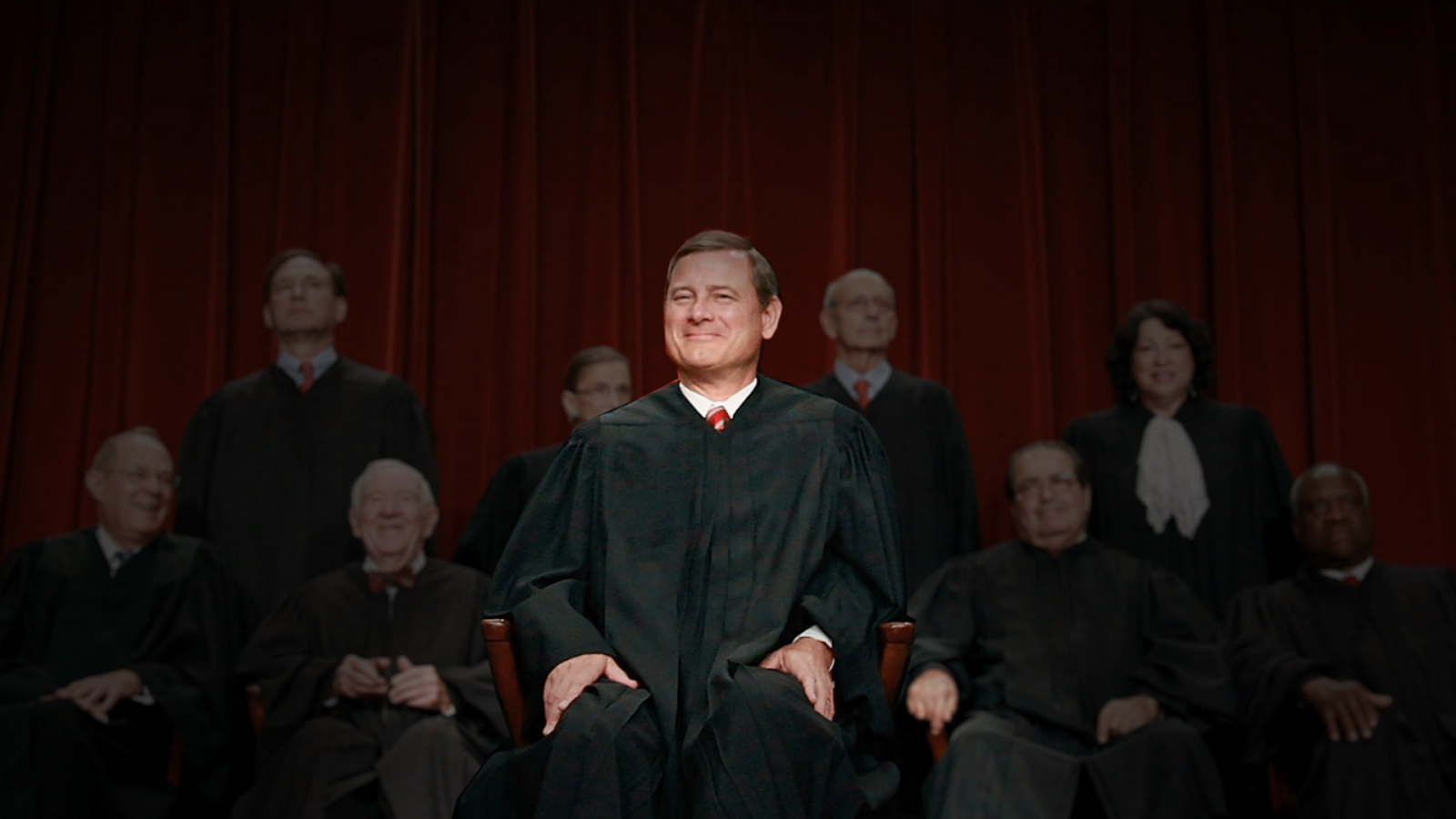
For those of you who don't completely keep up with all the ways in which our government (Democracts and Republicans), big money, lobbyists, corporations and our Supreme Court are destroying what little "democracy" we have left -- and who can blame you: it's fucking depressing! -- then what you'll learn from the documentary CITIZEN KOCH from filmmakers Tia Lessin and Carl Deal (pictured below, left to right) may be news and will surprise you. Much of what I saw here struck me as fairly old news, though I found the film worth seeing.

I think I expected more about the actual brothers themselves, rather than with the ways in which what they support and represent is helping to weaken the country and hand it over to the moneyed class. This, of course, is very important, and would include everything from ALEC to the Koch-sponsored annual "getaways," during which the rich and powerful meet and discuss their plans for America. Still, the movie seemed to me a little unfocused and not as strong as it might have been via other hands.

We hear a lot, too, about what's been going on in Wisconsin and how the Kochs figured into this (I believe the election results are still coming on on this one--whoops, wrong: I 'm mixing the election up with the final debate between the candidates).  I would like to think that these evil (and I do not use that word lightly ) brothers are losing some of their power by having their deeds shown up for what they are and what they do to us 99 per centers. But who knows? Money continues to talk, walk, and chalk up a lot of victories. And the Kochs have plenty of the green stuff.

We shall see. Meanwhile, you can stream this documentary about their "work" now and decide for yourself. The film is available via Netflix, Amazon Instant Video and probably elsewhere, too.

Saturday, September 6, 2014

"It's always one person"--John Ennis' smart, heartfelt, all-over-the-place doc, PAY 2 PLAY


All over the place it may be -- jumping from the famous game of Monopoly to gerrymandering, street artists, ALEC, the work of those sleazy tools of the one per cent that make up the majority of our Supreme Court, the Koch brothers, a scandal named Coingate and a couple of riveting political campaigns you won't have heard of unless you're from Ohio -- but the new documentary PAY 2 PLAY, from filmmaker John Wellington Ennis, is also full of energy and intelligence and a heartfelt and necessary message that tells us to wake up and take control of our government. As we're told upfront and then again toward the finale, "It's not about left and right but instead about insiders and outsiders," the former of which are hellbent on never letting the latter in.

The birth of Mr. Ennis' daughter (the filmmaker is shown at right) seems to have galvanized him into action, the result of which is this documentary, in which he admits that his little girl is almost sure not to have the good life that so many of us have shared up until now. He talks to some of the usual suspects, progressive variety, from Noam Chomsky (below) to Van Jones, while covering territory other docs have trod previously.

Yet, as he bounces from one topic to the next, showing us the veritable orgy of greed and the plotting of the wealthy and corporate interests to increase their holdings against the work of a single person here and there and finally the coming together of the anti-Koch and Occupy movements and how this frightened the establishment into using anti-terrorist tactics to disperse peaceful protest, his theme of what a single person can accomplish begins to take on more meaning and resonance than is usual.

His concentration on the game of Monopoly (and its newer counterpart Anti-Monopoly), along with how he substitutes the usual things we see on the Monopoly board with newer views, more appropriate to our current times, makes for some additional ironic fun.

In a little aside, we also learn about the origin of the game (above). And it is not what you've probably been told via Parker Brothers.

The film's finest sections are devoted to political campaigns in which some "unknowns" -- Paul Hackett , Subodh Chandra and Surya Yalamanchili (above) -- gets into the political fray, work hard and, by virtue of their courage and dedication, manage to go much farther than anyone expected. Not far enough, as it usually turns out, but still....

From its outset and throughout, the theme of paying for influence is front and center, as the single thing most corrupt about our current political system, one that has only been made more encompassingly corrupt via recent Supreme Court decisions. (This movie is the most up-to-date so far, with references to both the recent McCutcheon and Hobby Lobby decisions.) Yet rather than taking a cynical, what's-the-use? attitude, Ennis insists that we and our work really matter. As former would-be politician Mr. Yalamanchili tells us, "It's always one person."

By the time we see Ennis and his daughter beginning to play the Monopoly game, then switching to Anti-Monopoly, as he tries to explain his political rationale to the three-year old, we can only laugh -- and hope. Pay 2 Play is actually a very heartening movie.

It opened yesterday, with almost no critical reviews to be seen. I wonder why? In any case, try to see this one, then think about what you, as one person, can do -- whether you're Tea Party or Progressive (and you two may be closer than you imagine).

Pay 2 Play can be viewed now in New York City at the AMC Loews Village VII, and will open next Friday, September 12, in Los Angeles (at Laemmle's Noho 7) and in Washington DC (at the Angelika Pop-Up). Surely DVD, VOD and streaming cannot be far behind.

Friday, March 28, 2014

Streaming tip: Jacob Kornbluth and Robert Reich's important doc, INEQUALITY FOR ALL


Former U.S. Secretary of Labor (for the Clinton administration) Robert Reich is a man on a mission: to raise the consciousness of the American people as to the ever-widening and grossly unhealthy economic gap between the uber-rich and everyone else. Anyone who follows the news these days can hardly be unaware of all the talk about this gap. Yet what is actually consists of, how it happened and why it is so damned important seems to elude far too many of our populace, including many voters, who might -- if they understood things properly -- "throw the bums out."

With the help of filmmaker Jacob Kornbluth (shown at left), Mr. Reich, whose generally fine and important writing and ideas appear regularly as part of the Reader Supported News service, has now given us a very good documentary, INEQUALITY FOR ALL, which first appeared last year at various film festivals and also had a limited theatrical release via TWC/Radius last fall. Because the film is now available via Netflix streaming, there's no reason to miss it -- even if you think you already know everything the movie is going to say.
You may indeed know much of what you'll hear, but I think you'll find the presentation bracing enough to keep you interested, angry and eager to do something about this increasing and unhealthy inequality.

Mr Reich -- a short little man (see his photo with his director, at right) who is happy to explain what his small stature is called in medical circles -- is also a teacher and has been for years. From what we see and hear here, he's a very good one and a popular one, too.

The movie is made up of some of his in-class teaching, interviews with various Americans, charts (below), animation, statistics and archival materials (further below) -- all wrapped around the idea of what the increasing inequality is doing to the middle class and the poor.

America was not always like this, and Reich takes us back to the relatively golden, post WWII years up into the 1970s, when Ronald Reagan and the Republicans put a stop to middle class gains, unions and other things that helped make America a working democracy. Stagnant wages for the employed are every bit as important as obscene earnings, and Reich shows how all this came about, too.

The movie is important and although it's now two years old, it's unfortunately all too current, still. So, take a look, get on board and see what you can do about bringing things back to some kind of fairness, when owners made -- sure -- ten, even twenty, times what their employees earned. But not one hundred times -- or more.

Inequality for All, running 89 minutes, is available now via Netflix streaming, Amazon Instant Video, or on DVD.