Showing posts with label Turkish film. Show all posts

Sunday, January 27, 2019

THE WILD PEAR TREE: Nuri Bilge Ceylan's latest, lengthy, loving dissection of family, country, religion -- but not quite politics


Nothing overtly political ever crops up in the latest endeavor from Turkish filmmaker, Nuri Bilge Ceylan. Not even a tiny aside such as the bit of "Erdo-gone" graffiti you might have noticed oh-so-briefly in that popular Turkish cat documentary from 2016, Kedi. Yet I defy any viewer who lasts out the 188-minute running time (this should not be difficult, given the quality of filmmaking here) of Ceylan's newest, THE WILD PEAR TREE, not to feel grateful that he or she lives almost anywhere else.

Mr. Ceylan, shown at left, never stints on showing us how beautiful are the Turkish landscapes, full of the kind of flora, fauna and gorgeous scenery you'd want to embrace. It is the people here, thoroughly fucked-up as they seem (which is standard in this filmmaker's work), who will give you pause.

Major family dysfunction is the rule, and while Ceylan is more than adept at spreading responsibility -- no single person, nor even an entire generation, comes off as villain here -- still, the buck must stop somewhere. And so it does. Just off-screen. The restraints that hobble anything close to a democratic society -- while inflicting helplessness and depression on that society, as it forever scrambles and strains to make ends meet by hook (or mostly crook) -- are inescapably shown.

Yet so long as Ceylan points no obvious fingers, he is allowed, thankfully for intelligent film lovers, to keep working and even to have his movies chosen as Turkey's Best Foreign Language Film submissions, as was this one. Mr. Ceylan has so far had five of his films submitted by Turkey in the BFLF category, but none have been actually nominated. TrustMovies suspects they are simply too demanding and lengthy for Academy members to appreciate fully.

The Wild Pear Tree has at its center a young man named Sinan (played by Aydin Doğu Demirkol, above) at last out of college who has written his first book -- that eponymously titled fruit tree --  and has come back to his family and home town to try to find financing for publication. How he does this involves everything from bureaucratic snivelling to family (depending upon how you perceive it) betrayal.

All this allows us to get quite an inclusive and all-angles view of his father (a fine Murat Cemcir, above), an addictive gambler; his angry yet steadfast mother (Bennu Yuldirimlar, below); and Sinan's grandparents;

as well as a look at some of his friends, a would-be lover, and a local politician, a business owner and even a successful author (Serkan Keskin, below) to whom he turns, somewhat angrily, for help.

As in his other lengthy and extremely rich movie, Winter Sleep, The Wild Pear Tree is distinguished by not only by its very strong character studies but also via some equally vital and almost shockingly lengthy conversations/philosophical discussions about writing/accommodating and religion, during which we eagerly hang on to each new turn of phrase and idea expressed. (The gorgeous, beautifully framed cinematography -- by Gökhan Tiryaki -- helps, too.)

We also find ourselves, in a tale told via occasional fantasy and dream, moving from anger and dismay to a sad and quiet understanding of the various characters and their needs and actions. The final father/son scene is as surprising and full-bodied as you could wish, ending the film on a note that is simultaneously hopeful yet might also be a mere continuation of all that has come before, now passed down to a new generation. However you choose to view it, The Wild Pear Tree takes an immediate place as one of this year's best.

A Cinema Guild release, the film opens in its U.S. theatrical premiere this Wednesday, January 30, in New York CIty at Film Forum and on February 8 in Los Angeles at Laemmle's Royal, followed by openings in another dozen cities over the weeks to come. Click here and scroll down to see all currently scheduled playdates, cities and theaters.

Tuesday, February 7, 2017

Ceyda Torun's delightful doc, KEDI -- Cat lovers: the movie of your life has arrived!


And not only cat lovers: Movie lovers in general might just might want to stick this new documentary on their must-see list. No film I've viewed so far has made me want to visit the country of Turkey (along with its city of Istanbul) more than this one. The reasons are three-fold: those titular cats, of course (I'm told that Kedi means cat in Turkish); the people we meet who care for those cats (thoughtful, humane, and with plenty of smart stuff to tell us); and finally this: Though little is overtly made of religion in the film -- save one sweet anecdote about the Muslim faith, Christianity and burials with crosses -- you come away from Kedi with the notion that Muslim-must-equal-terrorism pushed about as far back in your brain as possible. These days in particular, that is no small achievement.

The film's director, Ceyda Torun (shown at left), grew up in Istanbul till she reached eleven years, with the city's cats her constant companions. TrustMovies did not know this about Istanbul: Hundreds of thousands of cats roam the city freely, just as the species has done for thousands of years, wandering in and out of people's home and lives, and making (or so the movie posits) those lives infinitely richer.

KEDI lets us into the world of some of those cats (quite a diverse bunch, both visually and personality-wise), along with the people who are their semi-caretakers, and whom the cats seems to have adopted -- rather than the other way around. As charming and delightful as these cats are, it is those people -- their thoughts, feelings and ideas -- that make this movie as rich as it is.

One of these folk reminds us that, while dogs may see humans as god, cats understand that we are merely the middlemen in the equation.

Another fellow, who appears to work in a bakery (maybe it's a bakery/restaurant) notes that all the tips taked in here are used to care for the cats. We watch in wonder as yet another man carries around his plastic bag full of food that he offers the felines, while explaining why and how the cats have saved his life.

As "modernity" encroaches and high-rises replace whole neighborhoods, the cats' habitat diminishes. Torun and her cast/cats and crew gives us some wonderful aerial views of the city (the cinematography is by Alp Korfali and Charlie Wupperman), as well as an up-close-and-personal look into homes and offices and various cat quarters around the town.

No mention is made of "animal control." Perhaps there simply is none. We hear reference only once to an animal being "fixed," If the cat population continues to grow, even as its habitat diminishes, something will surely have to be done. Meanwhile, we get quite a dose of a culture very different from our own -- different from all of Europe and even that of other Muslim countries.

Turkey has long endeavored to be a secular, rather than a religious, state, though this may be changing. Fundamentalism appears to be on the rise everywhere. The single "political" statement made in the film is a bit of stenciled graffiti shown in the background that says Erdo-gone. Yes, Turkish President Erdoğan, like Saddam Hussein in Iraq, has pushed for a secular over a religions state. But he has also, like all power-hungry dictators, left a trail of blood in his wake.

To be sure, this documentary is nothing like the whole story of Turkey, nor even of Istanbul. Yet one comes away from it most impressed with the kindness of these caretakers and the myriad ways that these cats have enriched and changed their lives.

Kedi -- from Oscilloscope Films, in Turkish with English subtitles and running a just-right 79 minutes -- opens this Friday in New York City at the new Metrograph. The following Friday, February 17, it hits the Los Angels area at Laemmle's Royal, Playhouse 7 and Town Center 5. The following weeks will see the film open all across the country. Here in South Florida it will debut on March 3 and will play the Bill Cosford Cinema and the O Cinema Wnnwood in Miami, the Living Room Theaters in Boca Raton, the Classic Gateway Theatre in Fort Lauderdale, and at the Movies of Delray and Lake Worth. To view all currently scheduled playdates, cities and  theaters, click here and then click on SCREENINGS on the task bar at top.

Thursday, March 24, 2016

BASKIN: Can Evrenol's Turkish horror film (in more ways than one) makes theatrical debut


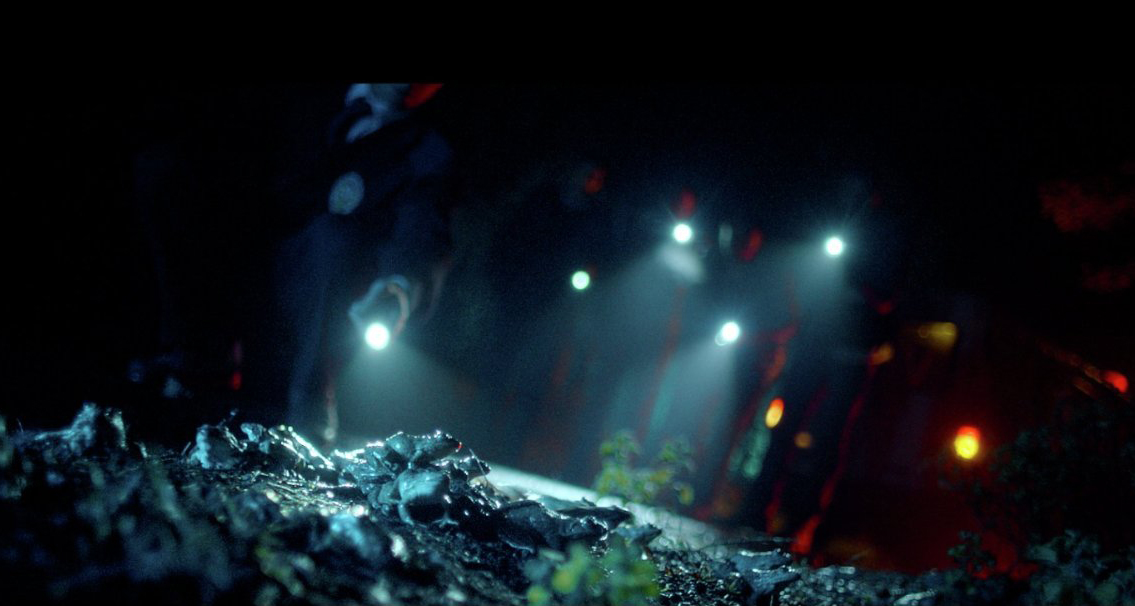
Your first question -- once you calm down your vomit response and slide back into normalcy as this very ghastly, ghoulish horror/slasher/fantasy frolic ends -- might be, "So who is BASKIN, the person, place, thing or idea for which this new Turkish movie was presumably christened? Tell you one thing: It sure as hell ain't Baskin Robbins. Directed (and co-written along with three other screenwriters) by Can Evrenol, who is shown below, the film begins with that evergreen scene in which a young child, in this case a pretty little boy, hears his parents going at it in the bedroom and of course can't help but wonder what is taking place. Before he can find out, the scene turns into something out of a horror movie.

Cut to a coffee-house/restaurant in which a bunch of Turkish cops are bantering and making with the faggot jokes and generally behaving so very badly that you quickly realize you're not going to care what awful stuff happens to these creeps. It does end up as pretty awful, and yes, you don't care much -- even though one of those cops turns out to be the adult version of that pretty little boy. The first sign that something is amiss takes place in the restroom, as one cop, below, sees a frog and goes a little "off."

Frogs turn out to be a continuing motif here, so of course we think biblical plagues and such. Later other worse things also point a bit toward the Bible or maybe the Quran, or simply something mythic and not very nice. However, if your are someone who wants explanation with his horror, give it up now. You're mostly going to get circularity, hand-held camerawork that makes you think you've seen something scary, little actual "plot," and finally a whole bunch of torture, gore and glop.

Our cop buddies go out on a call, or maybe it's a mission, or anyway something that takes them into the "old dark house." Along the way they meet some odd gypsy types (frog hunters!), a few "service" people, and our pretty boy cop and his older mentor have some flashbacks that explain little but serve to connect the movie enough so that we don't throw up our hands and say "fuck you."

Along the way there is a lot of atmosphere, a little up-chucking now and again and some very interesting special effects, the best of which seems original and has to do with a little man drowning and being rescued by a huge pair of hands. There is also much sleight-of-hand visual stuff that lets our imagination do the work.

What's it all about? Well, sex and death and sex and violence. (Will we ever again see some sex and fun?) Beyond that there is some mumbo-jumbo from a fellow identified in the credits as "Baba/The Father (played by one, Mehmet Cerrahoglu, making a memorable debut). I found myself wondering if maybe the movie might stand for the state of the Turkish nation today? Or could it be some nasty karmic payback for the Armenian genocide? Or could this be the Turkish idea of hell? ("You carry hell with you at all times," that Baba guy intones at one point.)

Your guess, should you see this movie, will be as good as mine. Maybe it's all just a dream. Oh, wait: It's actually real. Or, as one cop tell another, "Not everything has a clear answer."  Baskin does have a certain creepy, all-stops-out craziness. And also a lot of slo-mo that extends the movie well past its sell-by point. Finally it seems as much an endurance test as anything else. The end credits, however, are artful and beautifully rendered.

From IFC Midnight and running a too-long 97 minutes, Baskin opens theatrically tomorrow, Friday, March 25, in New York City at the IFC Center (for midnight showings only). In Los Angeles, look for it at the Arena Cinema come Friday, April 1. For those of you not living on either coast, the movie is also simultaneously being made available via VOD.

Wednesday, November 18, 2015

France's submission for the Oscar is... Turkish! Deniz Gamze Ergüven's exhilarating MUSTANG


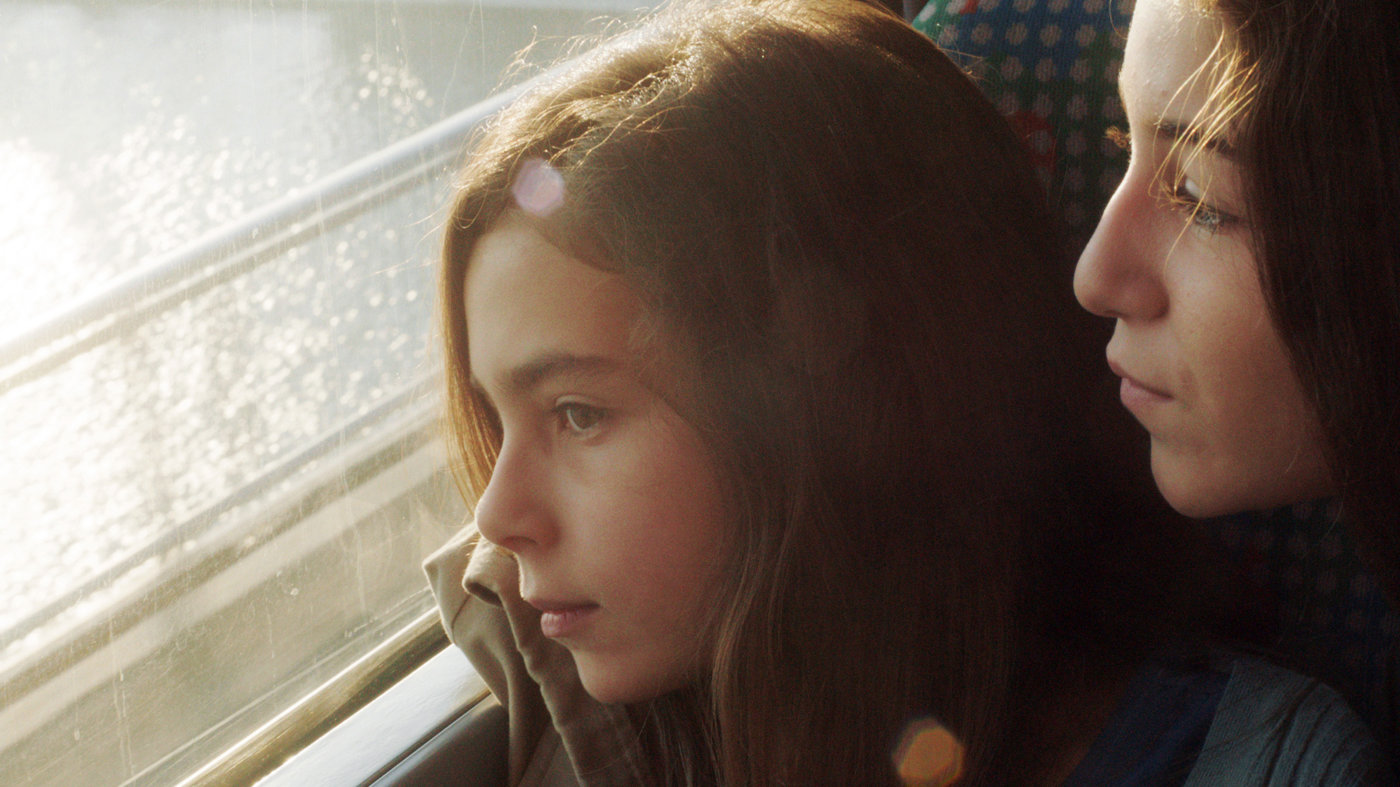
What are the ways out of (or around) the forced marriage by her fundamentalist family of a young Muslim girl to a man she has no interest in or connection to? We learn a few of these in the new movie MUSTANG, and they are, for the most part, utterly crap alternatives -- one worse than the next. And considering that the film has, as its collective heroine, five sisters, all of marriageable age, Mustang proves a treasure trove of anti-fundamentalist messaging. It is also, despite its sometimes sorrowful events, an absolutely thrilling, exhilarating and often joyful experience.

Written and directed by Deniz Gamze Ergüven (shown at left) -- a cosmopolitan young filmmaker born in Turkey and educated in France, South Africa and the USA -- the movie offers yet again a Turkish tale of the evils of fundamentalism and patriarchy, particularly where the female of the species is concerned. We've seen a number of these movies with Turkish settings, from Bliss and The Edge of Heaven to the BFLF Oscar entry, When We Leave and especially last year's surprise The WatchTower. None, however, has had quite the bracing effect of bringing its theme to life as does Ms  Ergüven's effort.

I suspect this is because the filmmaker concentrates as much on the vitality of her heroines as she does on their plight. Consequently, we are immediately charmed and continue to react to the girls' bravery and spunk, despite some of the awful things that will happen to them.

This becomes a fine balancing act, and Ergüven pulls it off rather spectacularly. She has terrific help from the young actress, Günes Sensoy, who in her film debut, proves remarkably gifted at creating a character named Lale (above), who turns out to be part "Annie" and part "Nancy Drew" but mostly just a decent and believable kid -- raised, as were her sisters, by her grandmother -- who suddenly sees her life turned upside down by an angry fundamentalist uncle with designs, I would guess, on the dowries these five attractive sisters will fetch.

The movie begins with a high-spirited scene at the beach as school lets out and the girls bid goodbye to a beloved teacher, after which the sisters and a few of the young boys go for a frolic in the sea. From there it's all down-hill, as the fundamentalism of the male elder and, yes, the enabling women of the family and town, crush our girls. Yet the spiral is leavened with near-constant push-back from the younger set. The form this takes ranges from talk-back humor to out-and-out disobedience.

There is a price to pay, of course, and it comes as one after another of the sisters is married off. To whom and how makes for fascinating viewing, as do the various ways in which the sisters do or don't avoid the worst. What actually is the worst becomes the movie's unsettling shock and surprise.

Toward the finale, Mustang (whose title is never spelled out, but you'll readily understand to what it refers) turns into a kind of thrilling life-and-death struggle: a thriller, a mystery, a chase-and-action movie -- all without lessening or slighting its theme and message.

The film is France's submission for Best Foreign Language Film this year, and despite its seeming much more Turkish than French, it is indeed a co-production of France, Turkey, Qatar and Germany. Under any label, it's a damned good film.

Mustang -- from the Cohen Media Group, in Turkish with English subtitles and running 97 minutes -- opens this Friday, November 20, in New York City at the IFC Center and the Lincoln Plaza Cinema, and in Los Angels at Laemmle's Royal. Over the weeks to come it will appear in another dozen cities (including, on January 15, the Living Room Theater and the Regal Shadowood here in Boca Raton and the Tower Theater and Miami Beach Cinematheque in Miami; the Cosford Cinema in Coral Gables; at the Regal Hollywood in Naples; the Regal Bell Tower in Ft. Myers; and the Regal Winter Park in Orlando. Click here and scroll down to see all currently scheduled playdates, cities and theaters around the country.

Monday, December 15, 2014

Full-bodied characters, brilliant/beautiful cinema from Turkey: Nuri Bilge Ceylan's WINTER SLEEP


I usually don't read reviews of films I'm about to cover, but in the case of WINTER SLEEP -- the new Palme d'Or-winning film from Turkey's Nuri Bilge Ceylan -- once I finished reading Stuart Klawans' review in The Nation of The Imitation Game (a film I had already covered), I found myself continuing to read his thoughts on Ceylan's film. Why didn't I stop and put it aside to finish later? Well, Klawans is a very good writer, and once I'd begun, I didn't want to stop. So rapturous was his notice (you can read it here: click and keep scrolling down) that I immediately gave it to my spouse and asked if the film interested him. It did, despite its rather unusual length (three hours and 16 minutes: and spouse is not a fan of lengthy movies).

Although Mr. Klawans recommends seeing Winter Sleep in a theater, we were sent a DVD screener to watch. As shown on our large, widescreen TV, the quality was, in a word, sensational. Visually, this is one of the most beautiful movies I have ever seen. While Ceylan's work (the filmmaker is shown at left) is often quite lovely to view, his latest outdoes any of his earlier films. From the incredible vistas that open the movie -- huge rocks sprouting from the mountain soil and homes that seem to emerge literally from the hills -- to the many interior shots, with lighting and color unlike anything I've seen, the movie is visual splendor. Still, visuals can only go so far. Incredibly, Mr. Ceylan also offers us a situation and characters as precise and special as those visuals, and then tops it all with some of the finest dialog -- also precise (in a manner that is able to gracefully unfurl character) and deep, sometimes profound -- that you're likely to hear in any film this year.

The movie is a wonder, a marvel. And while those three-plus hours don't exactly speed by, the material here -- characters and situation -- grabs us so strongly that we're not for a moment disengaged from this film. The situation blooms out of character, chiefly that of Aydin (Haluk Bilginer, below), our "hero," a wealthy man who owns the hotel that lies at the center of the film.

Around this cold sun circle the rest of the characters, including his young wife, Nihal (Melisa Sözen, shown below), and his sister, Necla (Demet Akbag, above, right). There is a scene midway in the movie between sister and brother that is one of the strongest (and longest) sections of dialog I think I've ever heard in a movie, unveiling character, philosophy, desire and fear, batting back and forth like a great tennis match of intellect and hubris that will have you on tenterhooks, trying to take it all in.

A subplot involving tenants of our wealthy fellow, a family quite down on its luck, further unveils the character of Aydin, as well as of the tenant family members themselves. A scene involving money changing hands toward the finale is one of the most quietly explosive and frustrating ever committed to film.

Ceylan's movie probes everything from class and religion to feminism, the male prerogative (in a culture such as Turkey's), and much more. There's even a reference to Hitler and the Jewish Holocaust that might tilt Turkish heads in the direction of their country's own Holocaust against Armenians, the responsibility for which -- unlike the Germans for their own, dreadful piece of history -- Turks have yet to accept. (I would like to think that Ceylan intends this "thought process," though being any more direct about it could probably end his career, at least in his home country.)

If I have given you any sense at all of how rich this movie is -- in so many ways -- then I'll consider this post a success. Winter Sleep has been selected by Turkey as its submission for Best Foreign Language Film. As crowded with quality as this year's selections surely are -- Force Majeure, The Circle, Ida, Rocks in My Pockets and Two Days, One Night (I'll cover that last one next week and haven't yet seen Beloved Sisters, Leviathan or Human Capital) to name but a few -- it strikes me at this point that Ceylan's film outshines all of what I have viewed.

Winter Sleep -- from Adopt Films and running 196 minutes -- opens this Friday, December 19, in New York City exclusively at the Lincoln Plaza Cinema, and in Los Angeles on January 23 at Laemmle's Royal, Playhouse 7 and Town Center 5. To see all currently scheduled playdates, click here, and then scroll down and click on View Theaters and Showtimes.

Monday, February 17, 2014

DVDebut (and streaming soon, we hope): Pelin Esmer's WATCHTOWER from Film Movement


Watching present-day films from the country of Turkey is tricky. They seem to represent modern living to some extent, as experienced by those of us who live in the west, but then we get these whiffs (sometimes much more than that) of cultural craziness that makes the movies seem as though they are coming at us from a different century. (Or two. Or three.) Think for a moment about movies such as Bliss, The Edge of Heaven or When We Leave (a German film, yes, but more about Turkey than Germany), and you'll have an idea of what I mean: violence, honor killings and women as chattel, to name a few fairly typical themes.

Interestingly enough, Turkey's most successful "international arthouse" filmmaker, Nuri Bilge Ceylan, has smartly managed to sidestep this by concentrating more on the male than the female, while offering themes that would seem to make Turkey more western than eastern. Hence, I suspect, his full acceptance by our cultural gatekeepers.

WATCHTOWER, from the female writer/director Pelin Esmer, shown at left, is one of the better and more interesting examples of new Turkish cinema because it faces head-on the question of woman's place in Turkish society and finds it greatly wanting. Yet, due to the story Esmer tells and the manner in which she tells it, we see the situation a step removed from the full-frontal, in-your-face, honor-killing set-up of Bliss. Here, a young woman takes charge of her life in a way that would never be necessary in most of the western world but that seems perfectly understandable in Turkey.

The location of the film, too -- a mostly un-populated, mountainous region of the country and the tiny bus stop with a shop or two nearby that services the area -- works beautifully to clue us in on how any kind of behavior that does not fit into fundamentalist thinking must finally be relegated to outsider status. Only if people do not know about it can deviation from the norm be tolerated.

The two main characters here (they pretty much make up the entire movie) are both running from their former lives, while dealing with a ton of guilt. Nihat (Olgun Simsek, above) has come to the area to work at the titular watchtower at the top of the mountain as a guard against forest fires. Seher (Nilay Erdonmrez, below) has left university suddenly with no explanation and is now working on the bus line that arrives and departs from the tiny station.

Part of the movie's pull is that we have little idea from what these two are trying to escape. Slowly this is revealed to us, and not, fortunately by any lumpy exposition. We learn in degrees, and in a way that seems believable to the situation. Dialog is kept to a realistic minimum, and both performers do an excellent job.

Initially there is almost no connection between these two people. When real connection comes, after a few months, it is fast and shocking and eventually leads to a guarded rapproachement. Among the movie's highlights are a fraught scene between the girl and her mother, and another scene of a natural act often witnessed in films but never, I think, seen in a condition as shockingly "solo" as here.

From Film Movement and running 100 minutes, the Watchtower DVD hits the streets this Tuesday, February 18, and as with most Film Movement titles, will probably be available on Netflix streaming very soon.
Watch for it.