Showing posts with label incest themes. Show all posts

Thursday, March 8, 2018

Blu-ray debut for John Grissmer's 1977 southern-gothic oddity, SCALPEL


Leave it to Arrow Video to unearth (and then so beautifully reproduce/remaster) some really oddball entries into the movie canon. One such is the recently-released on Blu-ray, 1977 psychological thriller/southern-gothic melodrama, SCALPEL, that features, among other delectations, a very heavy dose of would-be father-daughter incest. Golly, the south! Not enough that it was the cradle of American slavery, it seems, as ever, to get up to the most transgressive stuff.

This little zircon-in-the-rough, directed and adapted (from a story by Joseph Weintraub) by John Grissmer, shown at right, tells of a semi-famous and quite popular plastic surgeon whose daughter suddenly disappears following the suspicious death of her current boyfriend. Dad is so bereft that, when a young stripper gets her face beaten to that proverbial pulp, he takes the poor child under his wing and, yes, gives her the face of that missing daughter. As you might imagine, complications ensue.

Are you already put in mind of that classic of all plastic surgery movies, Eyes Without a Face? Worry not. Grissmer's little spin on the Franju film offers enough fun and games, smart and reasonably witty dialog, ambience and characters that fairly drip of our besotted south, and even a few surprises to keep you pleasantly engrossed.

The surgeon is played by that yeoman professional Robert Lansing (at left, above and below), who does a bang-up job of first impressing us (as well as his students) with how smart and resourceful he seems, before allowing us to see what an absolute turd this guy really is.

As the subject of his little experiment, The Young and the Restless actress Judith Chapman (above)-- who barely looks much older today than she did back in '77: she's a shining example of the art of plastic surgery -- also does nifty turns playing the dual roles required here.

Fine support is given by a game cast, including an especially good, Arlen Dean Snyder, as one of this seedy family's seedier members. If you've seen more than a dozen-or-so mysteries you will probably figure out much of the plot machinations prior to their taking place. Still, Grissmer does a nice job with enough of his twists and turns that you'll probably stick with Scalpel to its amusing and quite "just" finale.

About the Blu-ray transfer: It is up to Arrow's usual excellent standards. Especially worth noting is that the movie appears in two formats on the disc. One is evidently what the original release pretty much looked like in theaters. The other, however, has been given a kind of semi-golden overlay more fitting of the southern gothic look that both Grissmer and his cameraman, the now highly noted Edward Lachman, originally wanted. I watched a bit of the former but would recommend the latter, which not only looks wonderful but seems more correct for both the time period and location (Scalpel was filmed in the state of Georgia).

Bonus extras on the disc include very good present-day interviews with the director, the cinematographer, and the lead actress -- plus a new audio commentary by film historian Richard Harland Smith.

From Arrow Video, running 95 minutes and distributed here in the USA via MVD Visual, the movie hit the street last month and is available now for purchase -- and I would hope somewhere for rental, as well.

Sunday, July 10, 2016

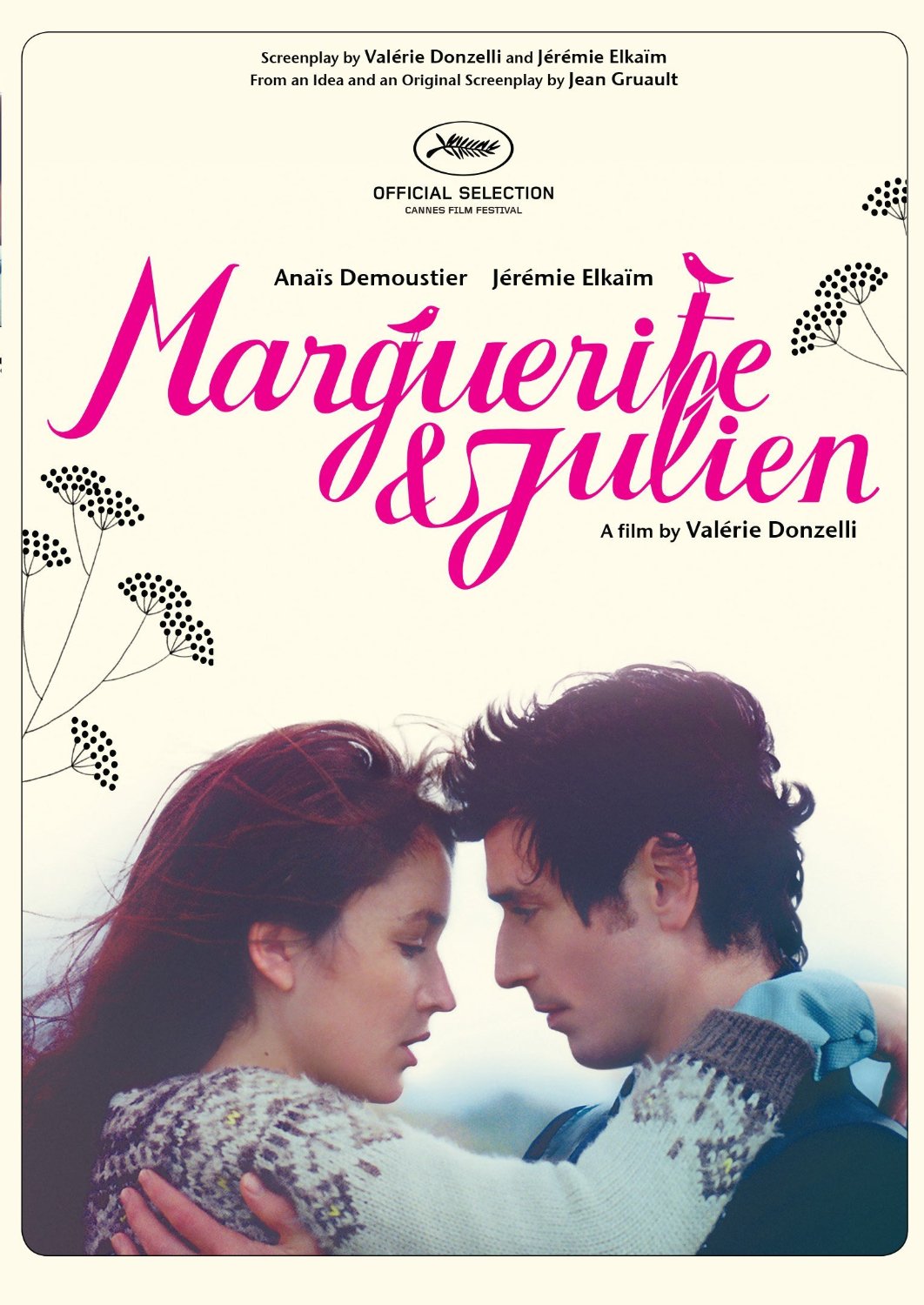
Taboo time: Valérie Donzelli's compelling look at brother/sister love, MARGUERITE & JULIEN


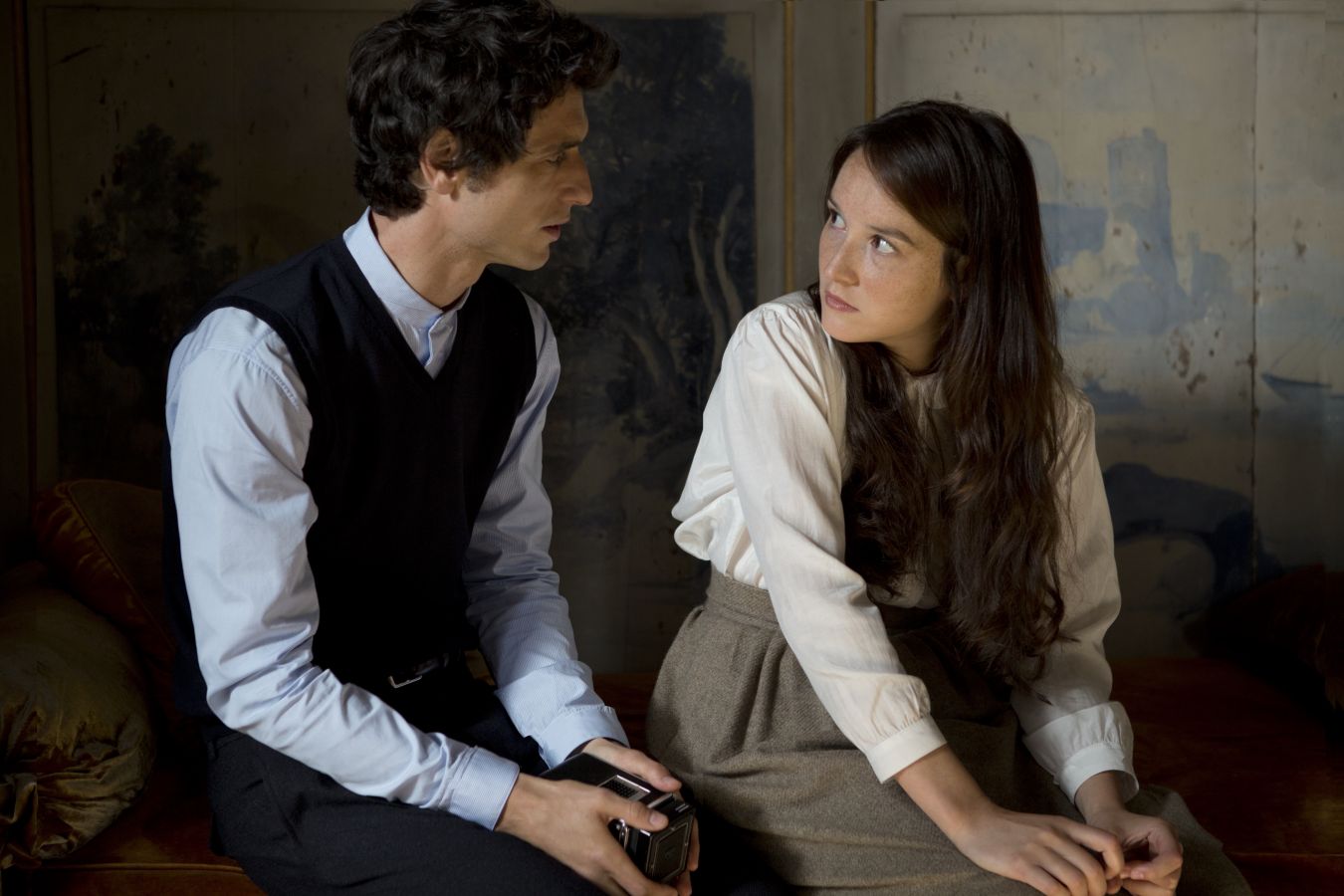
What an interesting career has had French filmmaker Valérie Donzelli. I first caught her work at the FSLC's Rendez-vous With French Cinema some years back, when her charming and psychologically very-smart rom-com, The Queen of Hearts made its New York debut. The next thing I saw from her was the even more compelling (but, for my money, not quite as successful Declaration of War). Now comes her most dangerous (and maybe her most interesting) movie, MARGUERITE & JULIEN, which tackles, in a riot of seemingly differing time frames, the still taboo topic of a brother-sister love that goes, yes, all the way.

Love has been central to all of Ms Donzelli's work (the filmmaker is shown at right). In her first, a young woman keeps falling for man after man, each of whom is played in charming disguise by the same actor, Donzelli's seemingly constant collaborator, Jérémie Elkaïm (below). In Declaration of War, that love is directed at the couple's child, who comes down with a brain tumor, and the pair does everything in its power to save the kid. Now, in her latest work, that love has gone big-time rogue. As opposed to her "War" film, in which you can do just about anything for love of your young child and audiences will cheer your every move, here her lovers go up against the entire society -- church, state, family and the bourgeoisie -- yet are determined to have what they want and need despite the costs.

We've seen incest themes previously, of course, but one thing that makes Donzelli's version different is her use of time period. As the end titles roll, we learn that the film is based on an actual pair of lovers from the 1600s. And indeed, the movie, costume- and set-wise, appears to begins in perhaps the 1800s. But then, as it moves along, we find ourselves watching automobiles andclothes from the 1930 and 1950s, and finally modern-day helicopters chase our pair of lovers across the terrain.

All this is done so fleetingly and off-handedly, however, that it doesn't knock us in the teeth. And, yes, it adds to the film a subtle but timeless quality while simultan-eously making us understand how little has changed regarding this subject over the centuries. And I don't believe that Donzelli is waving her own kind of pro-incest rainbow flag. She makes certain we see and understand the bill to be paid for trespassing.

What does keep us and the movie centered are the two lead performances from M. Elkaïm and Anaïs Demoustier (above, and most recently of Bird People and The New Girlfriend), who plays his sister/lover. The two are strong performers under most circumstances; here, their strength is especially necessary. Elkaïm broods with the best of the French actors, while Demoustier uses her quiet demeanor and plainspoken strength as a force to finally be reckoned with.

Has brother/sister sexual desire have more to do with our DNA than we've so far been told? Is it somehow a product of lax parenting? A psychological defect? Or maybe something that someday society may be better able to comprehend and deal with? I don't know, and neither, it seems, does Donzelli. But she has given us a movie that, about as amour fou as it gets, simply shows us that it continues to exist -- strangely and powerfully. From IFC Films, after a very limited theatrical release, the movie makes its DVDebut this Tuesday, July 12 -- for purchase and/or rental.

Wednesday, October 23, 2013

Chico Colvard's moving shocker FAMILY AFFAIR is exactly that -- and in so many surprising ways


Since viewing, via Netflix streaming, FAMILY AFFAIR, the all-about-my-dysfunctional-family documentary by Chico Colvard, TrustMovies has been thinking about the film ever since, wondering why -- among many other topics for discussion -- this 2010 movie has not received wider acclaim and much more popularity. It is a remarkably brave endeavor, for both the filmmaker and his many family members, who contributed to the documentary with their honest and straight-forward interviews about a subject that is not all that often discussed, and certainly not with the truthfulness and attempt at genuine understanding that is found here. The film is about family violence and incest, where these comes from and how they move from one generation to the next (we see four generations here).

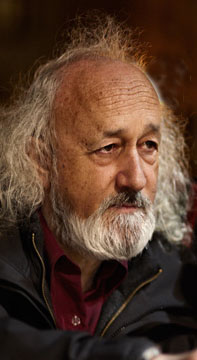
The reason, I suspect, that Family Affair is not better known, is that it's simply too strange, surprising and complex in what it shows and tells us about a subject that is usually handled in the most broad, obvious, single-note and knee-jerk manner. The tale the film tells, while it may seems stagger-ingly "original," is probably not unlike many others out there. The difference can be found in the details, of course, but also in the deci-sion of Mr. Colvard (shown at left) and his siblings, father and other relatives to not only "spill the beans" but then to try to figure out what those beans add up to and why they turned out the way they did.

Now, Chico Colvard, it should be said straight out, is no psychologist. Nor is he any brilliant filmmaker. He is simply a man who has tried the best he can to bring to light the story of his family. His "best" turns out to be plenty good enough, for this movie will stay with you and, if you watch it with others, provide reams of discussion. When Chico was ten years old -- with thanks, he feels to the old Chuck Connors TV show Rifleman that he loved watching -- the boy took a gun belonging to his father and shot one of his sisters several times in the leg. This was not any kind of "anger release," it seems, but more an accident in which the boy misunderstood the reality of a gun (and just one more reason, though the movie does not state this, for better gun control).

The incident, which drew the police to the home, also brought to light the father's violence and sexual abuse of the three sisters (Chico himself was not abused physically nor sexually). What happened after, and why -- to the children's mother (a white German woman the black father had married while in the military service abroad), to the children, and to the father himself -- is riveting and rich in history, social and otherwise.  What has happened to the extended family, meanwhile, is every bit as odd and amazing. Or maybe not, when you stop to think about what family means and how much so many of us want it in our lives, come hell or high water.

How the people we see here have accommodated "family" -- through abuse, guilt, payback and self-hurt, among other reactions -- makes for one hell of a story, fractured as it is. Colvard himself can't make complete sense of it, understand or even empathize totally with the many different viewpoints we see and hear. Who -- save an all-seeing, all-knowing deity -- could? But he gives all this to us, raw and undigested, and simply asks that we try to understand. The great amazement and strength of this 80-minute movie is that somehow we do.

Family Affair -- a don't-miss documentary -- is available now via Netflix streaming. Miss it, and you will miss one of the more unusual family stories of our times.

Thursday, February 28, 2013

THE UNSPEAKABLE ACT: Dan Sallitt's remarkable movie about the "I" word opens in NYC at Anthology Film Archives

This week two excellent films open in New York that feature crackerjack performances by their leading ladies, both a little older than the characters they play, but both able to nail these characters amazingly well. Yesterday we covered Perla Haney-Jardine in Future Weather; today it's Tallie Medel, performing in her first full-length feature, THE UNSPEAKABLE ACT. And, yes, we're talking about incest here, though it's a word barely spoken (I think the brother and sister use the initial only, if that, during their conversations).

The man who made this terrifically engaging, intelligent and unusual motion picture is a fellow named Dan Sallitt. This is the first of his films I've seen, but if the others are anywhere near this level, I'm an instant convert. The first thing thing that impresses about this movie is how insistent writer/director Sallitt is in making character trump event or action. I believe in literally all movies I've seen that deal with incest (most recently Daniel & Ana Delta and No Tengas Miedo) the event turns out the be-all and end-all of the situation and film. This is understandable, as incest is such a taboo subject -- which makes it, of course, all the more transgressively alluring for some filmmakers and audiences to confront. But then it becomes all the more difficult to avoid exploitation.

Sallitt manages this avoidance extremely well. He absolutely hits his subject head on, but because he and Ms Medel (shown above) have placed us so firmly inside the mind and heart of his heroine (and to a much lesser extent, her older brother -- played by newcomer Sky Hirschkron, below), we actually come to care more about the people here than the event itself. And if your reaction is, at this point, "Well, of course we would!" then stop yourself. Achieving this reaction simply cannot be as easy as we may imagine, for human beings generally want the excitement and thrill that goes along with anything "naughty."

Sallitt offers us the family first, and if this particular family (below) seems a little odd, well, whose isn't? There's a loss of a father figure, early on, which seems to have had its effect on mom (Aundrea Fares, center, left, below) as has the departure of her eldest son, now at university. The remaining two daughters and the younger brother have adjusted pretty well -- except for this extreme closeness between the one sibling pair, which, as daughter Jackie makes clear, the other family members either choose to ignore or haven't fully noticed.

The family's house (below) is quite lovely, too; these folk live in a gorgeous, verdant community, where Jackie is doing well enough in school. When brother Matthew leaves for college, however, and the two must be apart, the girl takes a tumble.

Mom manages to get her daughter to a therapist, and, lordy lord, it's a good one. The sessions scenes are among the best I've seen on film: smart, real, and most surprising of all, these show us, without undue exposition and about as well as has yet been put on film or video, how therapy slowly works.

There's more, and all of it is about as well thought-out and presented as you could want. Sallitt takes his cues, I think, mostly from documentary film (and has been pointed out elsewhere, from the late Eric Rohmer). While this helps the reality quotient, some of the performances (never that of Ms Medel) can at times seem a bit stilted. And yet, with this particular group of people, stilted is just about what you would expect.

By the finale, you'll be amazed and heartened. The filmmaker has addressed his subject directly, and taken us and his heroine on quite a journey. The Unspeakable Act is one of the most deeply, deeply satisfying movies I have seen in a long while. It begins performances today, Thursday, February 28, at Anthology Film Archives, where it plays, in tandem with a short repertoire of Sallitt's other three films, through March 7 (his other films plays through March 8). Click here for tickets and here for directions.

Tuesday, December 6, 2011

Incest at SCN: Montxo Armedáriz's DON'T BE AFRAID explores a painful subject well


During last year's SCN an unusual and upsetting film, Elisa K, explored child abuse clinically but with great feeling for the abused. This year's "abuse" movie goes it one better, dealing as it does with father-daughter incest. While not handled as exceptionally as did the Elisa K filmmakers in presenting their work (this is simply a more conventional movie), DON'T BE AFRAID nonethe-less tackles its sub-ject head-on and with enough context to make it live and breathe.

Writer/director Montxo Armedáriz (Silencio Roto, Obaba), shown at left, doesn't make a lot of movies (nine full-length films over 27 years), but his output is varied and interesting, and this new film fills the bill as well as any of them have done. Armedáriz's movie presents the problem with enough detail and from several viewpoints to allow us to form it into a whole. The filmmaker shows how this kind of thing happens; how, even when the other parent gets wind of it, it can be ignored; and how the situation engenders the kind of soul-crushing weight that make its recipient struggle many times harder than do the rest of us toward autonomy.

By the by, it also gives three of Spain's very fine actors -- two of the older generation and one from the new -- the chance to spread their wings and fly in unusual directions. The wonderful Lluís Homar (skating, above right, and seen last year as the gay father figure in Paper Birds and as the long suffering husband to the title character in Julia's Eyes), once again does a sterling job -- this time as the sad and awful abuser.

As the even worse-on-some-level mother, who refuses to believe or help her daughter, Belén Rueda (above, right, from The Orphanage and Julia in Julia's Eyes) scores again. To watch her not "get it," over and over again, is to take an acting class from a pro. In the role(s) of Silvia, the abused girl, Iranzu Erro (skating, center, two photos above), in her debut as the younger Sylvia, is excellent in demonstrating just enough confusion and fear to trouble us, if not her mom. As the older Silvia, Michelle Jenner (above, left & below, who is so very good as the delightfully confused adulteress in this year's Extraterrestrial) offers an alternately sad and jolting portrait of abuse taken in and then spat out in bizarre ways. This young actress, unrecognizable from this role to the other, is one to watch!

In a movie such as this, the audience desperately want some succor for the heroine. As it goes along, Armedáriz's movie is very good about making it clear that this help is not easily obtained. When it comes, haltingly in dribs and drabs, it seems very real and not necessarily certain. However, at the conclusion, the director opts for a little too much, too soon and too easy. Up to that final point, however, Don't Be Afraid is a stirring, harrowing piece of filmmaking.

Don't Be Afraid, part of the Spanish Cinema Now series, will screen twice only at the Walter Reade Theater on Friday, Dec. 9, at 9:15pm and Tues., Dec. 13, at 8:10pm.