Showing posts with label out of the past. Show all posts

Sunday, September 22, 2019

Friendship, interrupted & rekindled, beautifully explored in Simone Catania's DRIVE ME HOME


Essentially a full-length road-trip movie buoyed by two marvelous male performances, DRIVE ME HOME -- a lovely, meaningful-yet-never-spoken title -- is one of those special films from Italy that give us an exploration of "family" in a manner no other country seem to manage quite as well. Bonus treat: This one is often visually stunning, too.

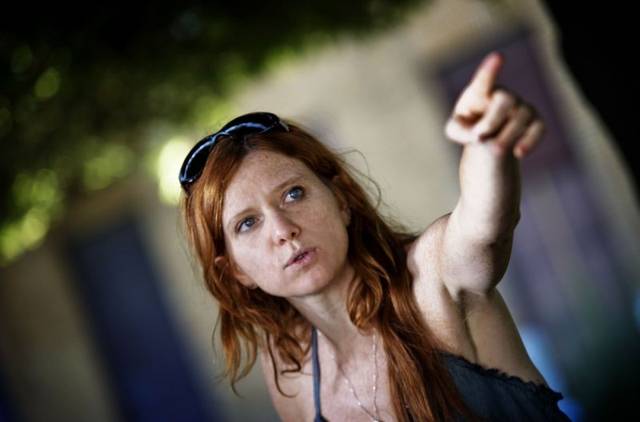
Simone Catania (shown at right), the film's director and co-writer (with Fabio Natale), has created a little movie with big themes -- the testing of friendship, the meaning of goals unachieved, the relationship of past to present -- all of which are explored honestly, even deeply, without a lick of pushing or overdoing anything. This is quite an accomplishment, but it is one so gracefully, subtly managed that, in our current era of overlong overkill, it is likely to be near-completely overlooked.

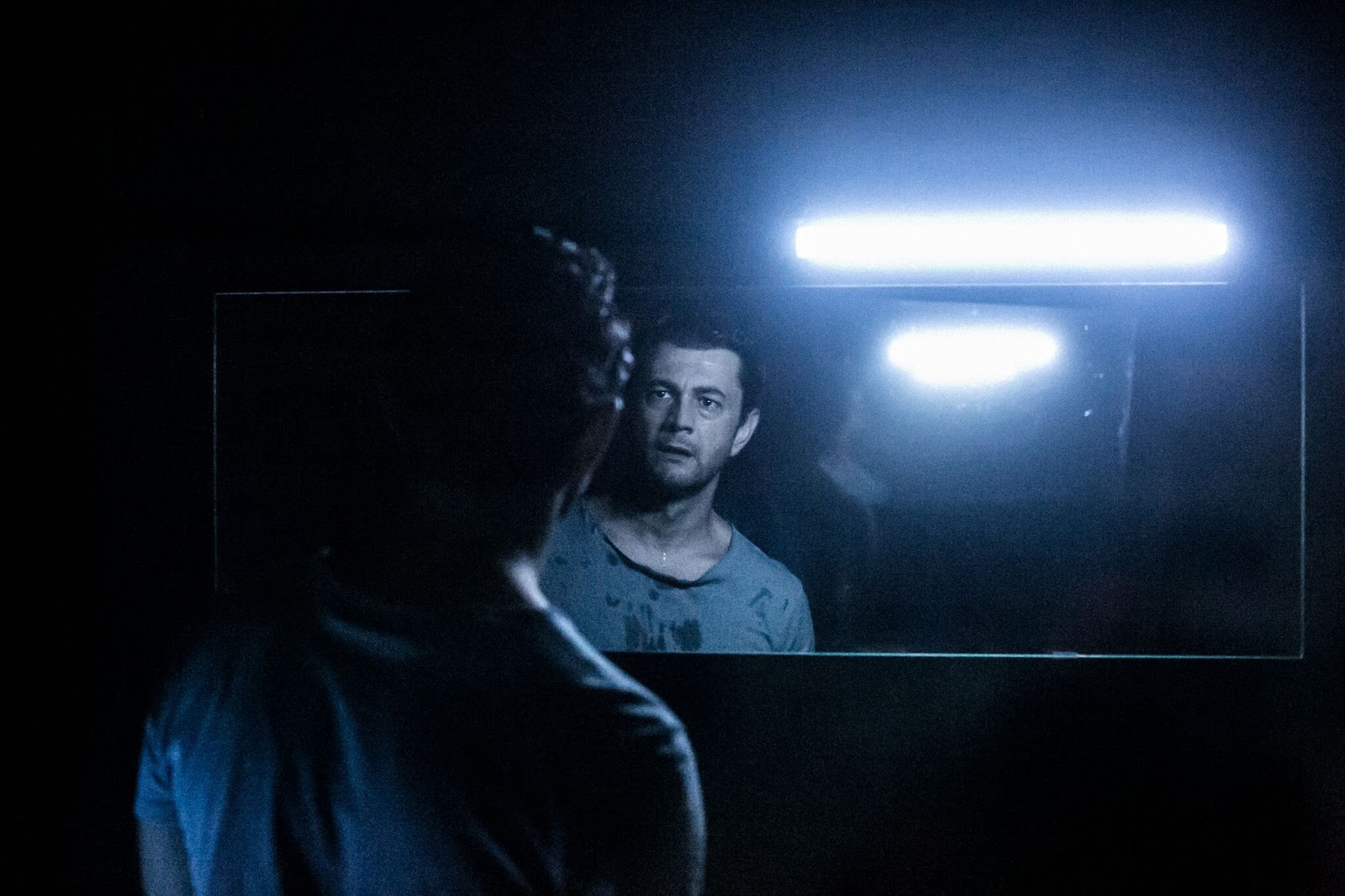
The two leading roles could not have been cast better nor, I think, could the resulting performances been improved. Both Marco D'Amore (above, left), best know for his role in the Italian television series Gomorra (available here via Netflix), and his co-star Vinicio Marchioni (shown below, and last seen by me in the also lovely and poetic Italian crime film, Tainted Souls, now available via Amazon Prime Video) inhabit their very different roles completely. The result is a movie that resonates and builds to a conclusion that -- in any other film might seem like foolish feel-good. Here, thanks to the complete credibility of the actors, instead it seems as though these two men, along with us viewers, have indeed reached some version of "home."

With boyhood scenes from the two men's past in Sicily intercut with their present-day road trip through Belgium, The Netherlands, Germany and finally back to Italy, we slowly learn both who they were and who they are. They are learning this, too -- which is one of the things that makes the film so quietly moving.

Along the way, due to an accident and the need for truck repair, they encounter the kind of commune that could make socialists of us all, as well as a visit to a no-holds-barred sex club where anything goes and some important information is revealed. How this information is processed by one of the men is handled by the actor and filmmaker in exemplary fashion.

There are some sweet and spiky supporting characters --  especially those played by the lovely Jennifer Ulrich and the fine-and-still-kicking Lou Castel in that very special commune -- but the film belongs to D'Amore and Marchioni. And to that amazing truck that the character played by D'Amore drives. It (shown above and below) -- along with these two guys and the movie they inhabit -- is an absolute keeper.

From Breaking Glass Pictures and running just 99 minutes, the movie makes its American debut on home video tomorrow, Tuesday, September 24 -- for purchase and/or rental.

Monday, July 3, 2017

POP AYE: Kristen Tan's original, delightful road-trip-cum-elephant opens in NYC and L.A.


If you have any interest in discovering what a male mid-life crisis looks like, Thai-style, or any intertest in elephants as traveling companions, or really just an interest in unusual, surprising, enriching new movies, then I would heartily recommend POP AYE -- which turns out to be all these things and more. Its writer/director, Krisiten Tan (whose first full-length film this is), has fashioned a parable about coming to terms with one's past, as well as with aging, guilt, life, work and love that takes the form of a road trip by a late-middle-aged man, accompanied by the elephant he knew and cared for as a child. Yes, this is a tale, the likes of which you will probably not have seen previously.

Ms Tan, shown at right, does a lovely job of plunging us into the midst of things via the immediate life of her hero, a fellow named Thana (played by Thaneth Warakulnukroh, shown above and below, with an elephant named Bong, who essays the title role here) and then slowly lets us learn the specifics of his life, his work and his desires so that, by the finale -- as rich and unexpected as much of it is -- everything we now know about him makes sense on several levels: realistic, symbolic, psychological. This is quite an accomplishment for any film, let alone a fledgling effort such as Pop Aye.

Among the things that we learn about Thana is that he is being phased out of his role as one of the top dogs at his architectural firm, as well as by his wife, who seems to want little to do with him, particularly in the sex department. One evening, as he drives around Bangkok feeling depressed, he sees an elephant that reminds him of -- and might in fact be -- the one he took care of as a child, and with whom he grew to young adulthood. (This sort of "elephant" thing can happen more often in Thailand than, say, here in the USA.). Thana stops the car, goes back for a look, and sure enough....

So begins a bizarre but surprisingly believable road trip in which Thana and Pop Aye wend their way toward the village where they spent their younger days. Along the way they get a lift from a truck driver, meet a poor but oddly contented man who pines a bit for his lost wife, become involved with some local police who try to escort the pair to an animal refuge, drink and sing Karaoke with a transgender lady of the night (below), and finally bond with some friends-of-new-friends and a relative who provide both surprising emotion and an oddball kick to this strange tale.

As writer and director, Ms Tan negotiates her storytelling with great visual beauty, humor, irony, unexpected yet heartfelt emotion, and finally the kind of surprise that, in retrospect, makes perfect sense. (The movie's funniest line sprouts from the mouth of a Buddhist monk regarding payment for cremation, while its most refreshing and lively visual comes as Thana attempts to climb atop his traveling companion.)

The journey turns out, of course, to be one of self-discovery, but this is neither telegraphed nor hammered home too strongly. It is also a film about learning what is and is not important in life. In its final section the film grows ever more mysterious and simultaneously all the more rich and resonant, as past and present merge, guilt is revealed and growth -- not a lot but enough -- is achieved. For a first film, Pop Aye is remarkably sophisticated.

From Kino Lorber, the movie opened this past week in New York City at Film Forum, and will hit Los Angeles, this coming Friday, July 7, at Landmark's NuArt and from there, over the weeks to come in another dozen or more cities. To view all currently scheduled playdates,, with cities and theaters listed, click here and then scroll down and click on PLAYDATES.

Tuesday, June 13, 2017

Responsibility--and the refusal to accept it--hangs over Kôji Fukada's HARMONIUM


Another day, another movie -- the moral of which is the great lesson that Donald Trump (among so many of us but the most damaging/damning example) seems unable and/or unwilling to learn: Accept responsibility for your actions. (The popular Netflix series 13 Reasons Why is chock-a-block with this: It hovers over nearly every character and every event.)

HARMONIUM, the new film from Japanese writer/director Kôji Fukada forces us to view and then ponder the results of the decision not to accept that responsibility -- in a manner that grows ever more awful and encompassing as the film moves inexorably toward full-out darkness. That the movie is beautifully composed and shot, written and acted with subtlety and grace, makes the end result all that much more unnerving.

Mr. Fukada, pictured at left, sets us up with, I am guessing, a rather typical Japanese family -- mom, dad and cute little daughter, in their home, which doubles as dad's workplace. We get a good sense of their life, with mom and daughter relatively happy and dad rather distant and preoccupied. Probably just that typical male-at-work thing, right? Not quite. Then one day, a man from dad's past appears, an old "friend" who has recently been released from prison and needs a little help. From what we learn at this point, guilt as much as kindness, account for dad's allowing his old friend, Yasaka, to work with him and move into a spare room in the family's quarters.
That friend is played by the consummate Japanese actor Tadanobu Asano (above and on poster, top, from Bright Future, Ichi the Killer, Café Lumière) and he comes to control this movie just as he finally does both the family and the further events that transpire.

Our anti-hero seems to be both philosophical and caring, two things that have clearly eluded the world of the father, but as we will learn, Yasaka has his own agenda to follow. He is also much more charismatic and attractive than Dad, which both Mom and daughter note with pleasure.

Yasaka even helps the little girl with her harmonium lessons. Practicing for an upcoming recital, she changes her recital piece to a song Yasaka plays for her and that begins to figure ever more hauntingly as the movie continues.

How the plot develops -- it is cut in two by the film's major event -- spans nearly a decade and introduces a new character whom we also come to appreciate and understand. And while the tale darkens and deepens considerably, it never loses any of the odd ambiguity that has been there all along.

Finally, it is difficult not to identify with all these protagonists, including Yasaka, at the same time as we recoil at what happens to them. And all because of that failure to accept one's responsibility.

Performances are on the mark, with rather amazing change, in particular in the characterization of the mother, played so well and so differently from first half to second, by Mariko Tsutsui (above).

As Dad, Kanji Furutachi (above) is the very picture of a stunted man, corralled by his choices and so unable to grow. The rest of the small cast is fine, too, especially the two actresses who play the daughter, as well as the young man who essays the role of son in the second half.

From Film Movement, in Japanese with English subtitles and running exactly two hours, Harmonium opens this Friday, June 16, in New York City, at the Film Society of Lincoln Center.  In the Los Angeles area, look for it on Friday, July 7, at Laemmle's Monica Film Center. Click here (then scroll down) to see all currently scheduled playdates, with cities and theaters listed.

Sunday, February 5, 2017

Piotr J. Lewandowski's JONATHAN proves a not-so-hot "family secrets" melodrama


If you enjoy melodramatic movies in which long buried family secrets come to the fore, then JONATHAN -- the new (and first-full-length) German film from Polish-born director Piotr J. Lewandowski -- may be just your cup of tsuris. Most adult filmgoers who've been around the block once or twice will be far ahead of both the title character and the film he occupies in terms of figuring out exactly what's going on here. Heavy-handed does not begin to describe the movie's style.

Cancer, chemo-therapy, and "I can't go on!" are all present and accounted for, as is a budding "first love," and Lewandowski, shown at left, packs them all in with a vengeance. Unfortunately, the title character is something of a major twat, although the actor who plays him (Jannis Niewöhner, shown above and below) is hunky enough to keep us watching and would probably seem a perfectly good actor when seen in less turgid material.

Jonathan behaves so poorly throughout that his redemption at the finale seems both stupid and unearned. Granted, the filmmaker enjoys piling it on, and if you happen to be a sucker for that sort of thing, Jonathan is definitely made for you.

Early there's a shot of a spider and fly, and we see spiders again off and on throughout, along with moths attracted to (if not the flame) the bright light. Lest you imagine some symbolism here, as did I, after a time it seems that the filmmaker is instead merely giving us a closer look at "the natural world." The movie, set in the lush countryside of a farming community where Jonathan, his father and aunt all labor, is certainly easy on the eyes, foliage-wise.

Dad (André Hennicke, above, left) has terminal cancer, however, and though his son takes care of him, communication does not seem to have been one of their more valued endeavors. "Tell me about mama," Jon queries his dad at one point, following this with, "I don't know anything about her." Hello: You're asking this now?

The less said about the film's utterly schlocky finale -- with light pouring from the heavens yet! --  the better. Enough to know that every scene goes on perhaps twice as long as it needs to make its point. Still, Thomas Sarbacher, below, makes a very impressive old friend of dad, while Julia Koschitz, above, proves a pretty, sprightly caretaker-cum-lady love. The rest of the cast is as fine as the material allows.

Running a seemingly forever 99 minutes, the movie -- in German with English subtitles -- will be released this Tuesday, February 7th, in the U.S. and Canada on DVD and VOD via Wolfe Video -- for purchase/rental.  

Monday, November 2, 2015

Blu-ray/Digital/DVDebut: Joel Edgerton's classy-but-overplotted thriller, THE GIFT


There's hardly a classier or more versatile actress around these days than Rebecca Hall, who, in the just-out-on-home-video thriller THE GIFT, plays a young wife recuperating from a failed pregnancy and movng into a new home in a new town near which her husband went to high school back in the day. When, in the film's second scene, a high-school classmate of her husband makes a surprise appearance as the couple are shopping, the plot of this better-than-average, slow-burning mystery takes off.

As written and directed by Australian triple-threat Joel Edgerton (shown at left), who essays the role of the high school "friend" and also starring the ever-reliable Jason Bateman, The Gift proves highly watchable and full of low-key tension that builds nicely. The questions Who is this guy and what does he really want? crop up immediately and are handled with some finesse, as the more kindly wife (Hall, below) pleads for a little understanding of the poor guy, while her gruffer hubby wants nothing to do with this interloper who keeps bringing the couple unwanted housewarming gifts.

Early on the Edgerton character notes that even a bad gift can have rewarding consequences, and so we wait, expectantly, for those shoes to atart dropping. They do, and in ways somewhat different from most of the movies on view these days. The secrets here rest more on "character" than on actual event, and while we may expect the usual woman-in-distress business, what we get is "sort of" that -- but a lot more. And the final "gift," by the way, is an absolute lulu.

Which brings us to the movie's major problem. It's over-plotted to the point at which it begins to lose some credibility This means that the film's big, final surprise makes it appear that the story was constructed backward, beginning with that surprise, and then having its author try to figure out how to get his characters to that fateful point in time and event. It works on one level, while leaving us less than impressed on another.

Convenience and coincidence abound, never more so than at a late-in-the-film dinner party in which an ill-used person suddenly appears and via a little exposition turns everything topsy-turvy. This is handy, all right, but it is also too much, too easily. Ditto a parking lot beat-down in which there is, as usual, conveniently no one around to notice or stop it.

These are relatively minor offenses (as most mainstream thrillers go), but they add up and deflate to some extent the good chill and good will that the movie has been building. Still, for those viewers looking for more cerebral thrills and less car chases and explosions, The Gift should serve nicely.  

The movie, from Universal Pictures Home Entertainment and running 109 minutes, hits the street on Blu-ray, DVD and Digital formats tomorrow, Tuesday, November 3, for purchase or rental.


Sunday, January 11, 2015

Stephen Belber's MATCH gives Patrick Stewart, Carla Gugino and Matthew Lillard plum roles


Identity proves the pivot point in MATCH, the new film from Stephen Belber, who, back in 2009, gave us a very interesting, funny and charming rom-com entitled Management and also wrote the screenplay for Richard Linklater's Tape. One man's identity and why someone else might care about this are the questions that arise in the course of the film, written and directed by Belber and starring a very fine threesome: Patrick Stewart, Carla Gugino and Matthew Lillard, all working at close to the height of their not inconsiderable powers.

Mr. Belber, shown at right, is a writer who's very clever with dialog, as a look at his resume will demonstrate. Here his screenplay, extremely dialog-heavy, is also adapted from his original play and is full of exposition done smartly and for a very good reason. The film's beginning is all about a graduate student (Ms Gugino) and her interview with a famous dancer, choreographer and teacher (Mr. Stewart), abetted by the student's not particularly helpful husband (Mr. Lillard). A lot of history is covered quickly and smartly, with Stewart playing the ever-so-slightly preening celebrity, enjoying a new moment or two in the sun, as he regales his listeners with stories of his life and career.

It is not long before we realize that the agenda here is something other than the stated one, and from there onwards the movie -- highly enjoyable from its outset -- becomes even more so, as well as exciting and surprising.  This is a role different from anything Stewart, shown above and below, has previously tackled (in my memory, at least), and it requires him to run the kind of gamut of emotions we're not used to seeing from this actor. He nails every nook and cranny.

Ms Gugino, below, comes through beautifully, too. Always a gifted actress, as well as a beauty, she brings a special vulnerability to her role that becomes more endearing and moving as the movie rolls along.

Mr. Lillard (below, left) is probably the biggest surprise here. Too often relegated to bozo roles earlier in his career, he comes into his own quite beautifully as the hubby with issues too heavy for him to handle. He's angry, closed off, and frightened of his own strength, which he's beginning to use in ways not at all wise.

Match is a kind of chamber piece; we see a few other performers along the way but it's these three who count for everything, and they play off each other beautifully. I would think this movie must have been a joy to film; it certainly is one to view.

The movie -- from IFC Films and running 92 minutes -- opens this Wednesday here in New York City at, I suspect, the IFC Center; in Los Angeles look for it at Laemmle's Playhouse 7 and Music Hall 3. If you're located elsewhere than on either coast, fear not, for the film makes it VOD debut simultaneously with its theatrical opening. 

Monday, June 3, 2013

Open Roads 2013: Terrorism 'n Time Travel Susanna Nicchiarelli's DISCOVERY @ DAWN


Having just come from a film -- Piazza Fontana: The Italian Conspiracy -- that dealt with terrorism from decades past, here we have another that tackles a terrorist event (fictionalized) a mere dozen years later (1981) in which, in a terrifically filmed early scene -- fast, shocking, irreversible -- a murder takes place. And then the movie melds into a tale of, well, a kind of counter-terrorism via time-travel fantasy using a telephone. No. Yes! This should not work, not on much of any level, and yet it (sort of) does.

Buoyed by some very fine performances, from one of Italy's most appealing and emotionally savvy actresses, Margherita Buy (shown below, who seems always to appear, sometimes often, at Open Roads), and from the film's director and co-writer Susannah Nicchiarelli, (shown above), as sisters Caterina (Ms Buy) and Barbara, whose dad disappears soon after that murder, THE DISCOVERY AT DAWN is an odd duck indeed. Dealing with a fragmented family twenty years later, in which the mother is now dead and the older sister seems somehow out of place in her job and in her love relationship, while her younger sibling (Ms Nicchiarelli) remains an "outsider" even more at sixes and sevens with the world.

A visit to close down and sell the family's old beach house, which has not been used by family members for years now, sets in motion the events that make up the movie and take us back and forth in time to past and present, while offering a set of rather interesting and diverse characters along the way.

Among these are other professors at the university where Caterina teaches, one of whom (above) is a bit more than Cat's friend; her husband of many years (a lovely performance from Sergio Rubini, below); the band that Barbara manages and among whose members one fellow seem to stand out; and a woman from the past who does not want that past brought up again.

And then there's that telephone (below) in the old beach house, unplugged but oddly still working that manages to connect Caterina with....  Well, you'll see -- if you manage to get to this film during its Open Roads run. It seems to me that there are characters and plot aplenty here, so I wonder why Ms Nicchiarelli felt the need to go for this fantasy/time travel theme, as well? Unless, of course, we are to take this as somehow imaginary, or as a psychological unfolding of something that Caterina actually knew, even then, on some repressed level, as a child.

In any case, the film is interesting enough, and certainly quite well acted, filmed with some style and written with a keen handling of characterization. I have to recommend it, if only to see what some others of you feel about it and how well (or not) you think it works. (If you bought this kind of linking-past-and-present in the Gregory Hoblit/Toby Emmerich male weepie Frequencyfrom 2000, then you may very well buy it here -- from a female perspective and with less sudsy emotion on display.)

The Discovery at Dawn plays Opens Roads (at the Elinor Bunin Munroe Film Center) on Saturday, June 8, at 1:30pm and again Monday, June 10, at 4pm. Click here to see the entire series' program and showtimes.