Showing posts with label the war on drugs. Show all posts

Friday, November 20, 2015

Mexico and drugs--again--in Bernardo Ruiz's rather stock doc, KINGDOM OF SHADOWS


Anyone who has followed the seemingly eternal tale of this country's "war on drugs," and the connections provided by our own government (remember Iran-Contra?), drug runners, and dirty politicians and dirty police on both sides of the border will, I suspect, find little new or particularly riveting about the documentary that opened today, KINGDOM OF SHADOWS, written and directed by Bernardo Ruiz. This year, especially, there have a number of documen-taries and narrative films on the subject, with plenty more having reached us in past years.

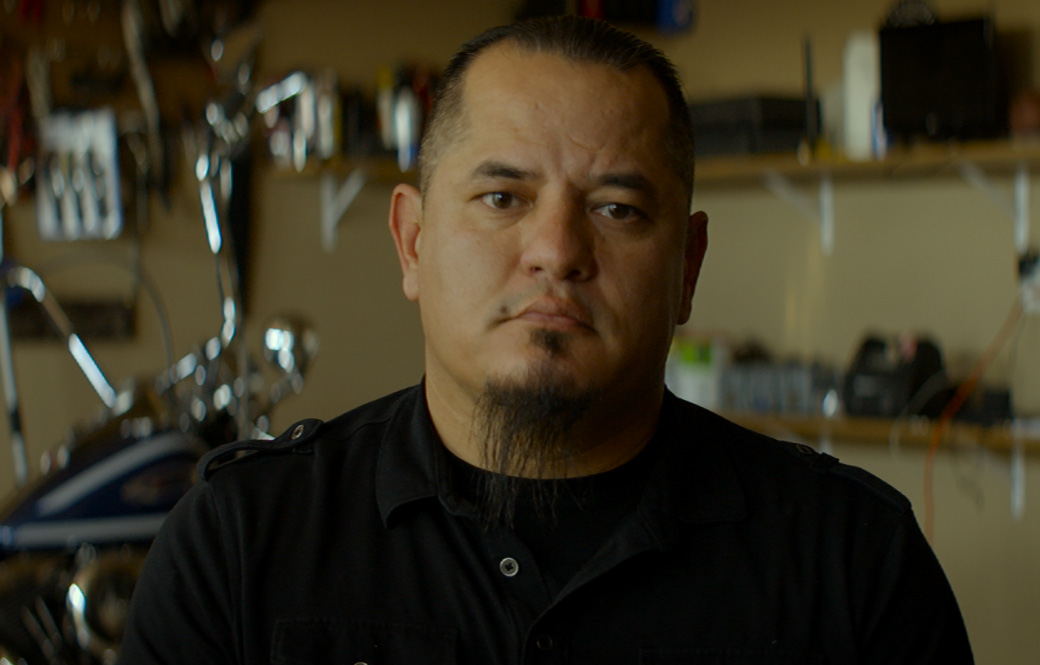
Having seen many of these recent movies myself, I wasn't certain what to expect from Kingdom of Shadows, save for some new ideas, new information, and maybe other ways to look at the entire situation, in which our neighbor to the south, the forever drug-and-violence-addled Mexico, is front and center once again. Instead what I got was mostly more of the same, without any of it adding to the information I either already knew or could easily figure out. Filmmaker Ruiz, shown at left, has cobbled together stories from three participants: an old-time drug dealer (now, it seems, retired), a younger ex-dealer who becomes an undercover drug enforcement agent for the USA, and a woman whose job it is to find links to the "disappeared," folk of all ages and both sexes who have been lost and most likely murdered due to their involvement in the drug trade or simply to their being in the wrong place at the wrong time.

Don Henry Ford, Jr. (above), tells us what it was like in times past ("Back in the day, nobody carried a gun"), while Oscar Hagelsieb (below) tells his story, which includes how the violence so epidemic today began to spread from the narco-involved to those who were not. We hear about corrupt police (surprise!) and maybe the most interesting tidbit: How the Mexican community longs for the days when there was just one strong drug cartel in charge of it all. We also learn how the new(er) police force, the Fuerza Civil, is seen as a more trustworthy alternative. Really? OK.

The third wheel is Sister Consuelo Morales, below, who appears to have given up her life to tend to the needs of the families of those "disappeared." Her story (and the little we learn of those she tries to help) proves the saddest. But because none of these three stories connect in any way other than being obviously drug-related, there is little "build" to the movie. We got more involved in those "disappeared" in that very good Mexican soap opera of a few years back, Casi Divas.

Also interviewed is a member of Human Rights Watch, and we see, particularly at the finale, face after face of the grieving family members of those who've gone missing. Mexico seems to me even more troubled and deeper in despair than at anytime I can recall. Or maybe it's just that the Internet has brought down so many barriers that used to disguise how countries routinely lie about everything.

A perfectly acceptable, entry-level look at the "drug war" and its consequences, Kingdom of Shadows -- from Participant Media and running just 74 minutes -- opened in theaters today, as well as being available via VOD.

Wednesday, April 15, 2015

Daniel Monzón's EL NIÑO tackles drug trafficking in Gibraltar -- major & minor from various angles


Writer/director Daniel Monzón (shown below) is the man who, back in 2009 gave us one of the best prison movies ever made, Cell 211, a film alert to every-thing from prison life (and death) to Spanish politics, economics and sociology. If his newest endeavor, EL NIÑO, does not come up to that level, it should be no surprise. The film is plenty good in its own right and should please genre aficionados who appreciate complex thrillers offering an extra dose of humanity and depth of characterization.

That depth is particularly evident in the title character, called El Niño (the child) due to his childlike glee behind the wheel of both car and boat. Though he drives like a kid at an amusement park, he does it with speed and assurance. As played by Jesús Castro, making his movie debut, Niño is shown from the first to be carefree -- why not?!-- but also a tad more thoughtful than some of his peers. This thoughtfulness grows into a kind of maturity as the movie plays out, making Niño a character we come to care and root for, if only slowly. And Señor Castro (shown below) appears to possess the kind of talent, sex appeal and charisma that just might make him a star.

Since his debut here, in fact, the actor has made another film and had a continuing role in a TV series. (Something similar happened to the star of Cell 211, Alberto Ammann, after his performance under the direction of Señor Monzón.)

Another plus for Monzón's movie is its exotic location: the island of Gibraltar, complete with scenic beauty and even its own special wild monkeys. A British Overseas Territory located between Spain and Morocco at the entrance of the Mediterranean Sea, Gibraltar, with its economy fueled by gambling, tourism and the shipping industry, would seems a fine place for all kinds of drug smuggling. And so, according to this movie, it is.

Said to be based on real events, El Niño begins as the police (above) trail a dockyard worker, a fellow they're quite sure is part of a smuggling ring. Then we switch to the young folk, Niño and his pal, Compi (Jesús Carroza, below, left) who are looking for some way out of the crap Spanish economy and into a little wealth for a change.

Back and forth we go between police and youth until the stories of the two are completely entwined, and we're somehow rooting for both parties. This is one of Monzón's strengths -- showing us the whole picture that enables us to understand and care about opposing sides. "Can't they be rich without being crooks?" one character asks another, who answers, "I don't know. But I don't think so." Yeah, right. This movie is as much about the lives and needs of the underlings, as it is about the smuggling operation.

We also get to see and meet the upper echelons of crime and law enforcement, as portrayed by Moussa Maaskri and Ian McShane (representing the former) and Sergi López (three photos up, at left, representing the latter). The guy and gal who do the police grunt work are played by the always terrific Luis Tosar (he of the mammoth eyebrows, above) and Bárbara Lennie (below).

The only other important woman in the cast is Niño's girlfriend, played by the beautiful Mariam Bachir., who plays the sister of boy's third partner, Halil (newcomer Saed Chatiby, below, center). This is definitely a movie about the boys, but as such it is mostly very well done. Also in the cast in that fine Spanish actor Eduard Fernández as another member of the police force on the case.

As confined and confining as was Cell 211El Niño is spacious and expanding. This presents a bit of a problem, however, as the film comes in at 136 minutes -- a little long, perhaps, and yet those minutes are never boring. Expect car and boat chases (below, pursued at sea by helicopter!), suspense, betrayals (on both sides of the fence) and more. As in Cell 211, the accumulation of detail that comprises events and characters makes for a nourishing movie meal that offers a resounding, if believably depressing, dessert.

El Niño -- from Distrib Films US -- opens this Friday, April 17, at Laemmle's Music Hall 3, and then has its digital platform debut on Tuesday, May 5, via iTunes, Vudu  and Google Play.  

Friday, September 13, 2013

On Netflix streaming, catch up with last year's most important documentary: Eugene Jarecki's THE HOUSE I LIVE IN (and its bonus material)


The injustice of our justice system's punishment of drug-related crimes is front and center in THE HOUSE I LIVE IN, the title of which, by the time the film ends, will have taken on several meanings. If the phrase "the war on drugs" sounds familiar to you, then you 're probably primed for this richly unfolding story of a nation that has gone too far. Filmmaker Eugene Jarecki, who earlier gave us the fine documentaries Why We Fight and The Trials of Henry Kissinger, has, I think, topped even his own work with this film, showing us that the victims of this "drug war," as it is called, are our own citizens, most of the 99 per cent, whether in prison for unconscionably long terms, the families of those prisoners, or the rest of us who are paying for their often needless incarceration.

Mr. Jarecki's film (the man is shown at right) is all over the place, so it does take some time for his film to build. Yet along the way are to be found so many fascinating facts and ideas (along with the characters who give them to us) that anyone who cares about the future of our country will not be bored. From the differences in sentencing of convictions for powder and crack cocaine alone, the movie is eye-opening. But this is just a start. Jarecki is surprisingly evenhanded regarding prominent figures such as Richard Nixon, who began the war on drugs, noting that Nixon insisted on treatment as well as punishment for drug offenders. By the time we meet Kevin (I believe that is he, below) -- a man who's been given a mandatory life-without-parole for possession of three ounces of methamphetamine -- we can no longer look away from the screen nor close our ears to what everyone here is telling us -- from cops and judges to prisoners and their family members.

By the time one person notes that this drug war "is a holocaust in slow motion," you'll find it difficult to disagree because Jarecki has come at the situation from so many angles and via so many different people and professions that the big picture has no trouble emerging. We also see that this is not simply a race war, though this certainly does figure in, but primarily a class war -- as is more and more of what is going on today in these United States. As another person makes clear, "There will never emerge a shred of leadership that will change the situation, so caught up in the next election and raising money for campaigns are all our politicians."

As good as this film is, however, in demonstrating that we have a problem and what that problem is, it's the bonus material -- just over one hour of time and also available via Netflix streaming -- that actually offers an abundance of hope via some noticeably effective means of combating drugs without declaring this "war" on them and their users/sellers. The bonus material includes more time spent with the New Mexico Marshal (above) whom we meet in the film itself; a look at drugs in St. Albans, Vermont; how Providence, Rhode Island, shut down the drug markets by bringing the entire community into the picture; a video made on Anthony Johnson explaining the life of this young man prior to his sentencing; the story of Fontay, the drug dealer, and his neighborhood; an interview with Senator Jim Webb of Virginia regarding our broken criminal justice system; and the girl named Shanequa, whom we've seen only bits and pieces of in the film itself.

Taken together, the film and its bonus materials add up to 2 hours and 51 minutes of the most important documentary footage you'll be seeing anytime soon. The House I Live In, refers, among other things, to America itself -- as the final song sung by Paul Robson makes clear.