Tuesday, February 7, 2017

Ceyda Torun's delightful doc, KEDI -- Cat lovers: the movie of your life has arrived!


And not only cat lovers: Movie lovers in general might just might want to stick this new documentary on their must-see list. No film I've viewed so far has made me want to visit the country of Turkey (along with its city of Istanbul) more than this one. The reasons are three-fold: those titular cats, of course (I'm told that Kedi means cat in Turkish); the people we meet who care for those cats (thoughtful, humane, and with plenty of smart stuff to tell us); and finally this: Though little is overtly made of religion in the film -- save one sweet anecdote about the Muslim faith, Christianity and burials with crosses -- you come away from Kedi with the notion that Muslim-must-equal-terrorism pushed about as far back in your brain as possible. These days in particular, that is no small achievement.

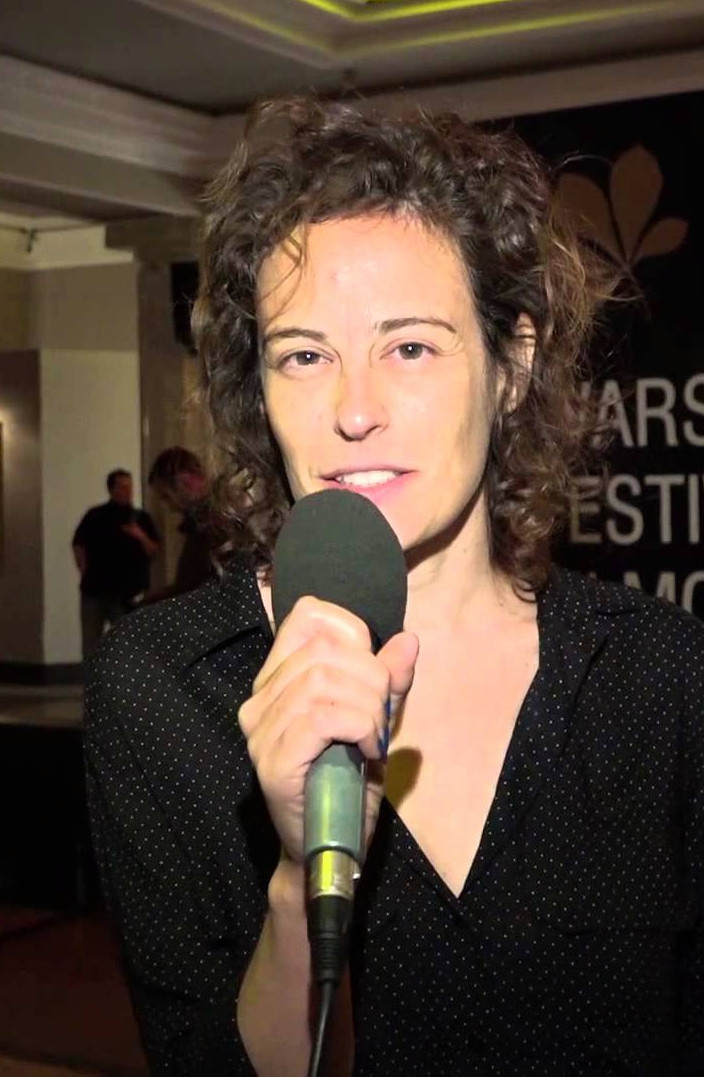
The film's director, Ceyda Torun (shown at left), grew up in Istanbul till she reached eleven years, with the city's cats her constant companions. TrustMovies did not know this about Istanbul: Hundreds of thousands of cats roam the city freely, just as the species has done for thousands of years, wandering in and out of people's home and lives, and making (or so the movie posits) those lives infinitely richer.

KEDI lets us into the world of some of those cats (quite a diverse bunch, both visually and personality-wise), along with the people who are their semi-caretakers, and whom the cats seems to have adopted -- rather than the other way around. As charming and delightful as these cats are, it is those people -- their thoughts, feelings and ideas -- that make this movie as rich as it is.

One of these folk reminds us that, while dogs may see humans as god, cats understand that we are merely the middlemen in the equation.

Another fellow, who appears to work in a bakery (maybe it's a bakery/restaurant) notes that all the tips taked in here are used to care for the cats. We watch in wonder as yet another man carries around his plastic bag full of food that he offers the felines, while explaining why and how the cats have saved his life.

As "modernity" encroaches and high-rises replace whole neighborhoods, the cats' habitat diminishes. Torun and her cast/cats and crew gives us some wonderful aerial views of the city (the cinematography is by Alp Korfali and Charlie Wupperman), as well as an up-close-and-personal look into homes and offices and various cat quarters around the town.

No mention is made of "animal control." Perhaps there simply is none. We hear reference only once to an animal being "fixed," If the cat population continues to grow, even as its habitat diminishes, something will surely have to be done. Meanwhile, we get quite a dose of a culture very different from our own -- different from all of Europe and even that of other Muslim countries.

Turkey has long endeavored to be a secular, rather than a religious, state, though this may be changing. Fundamentalism appears to be on the rise everywhere. The single "political" statement made in the film is a bit of stenciled graffiti shown in the background that says Erdo-gone. Yes, Turkish President Erdoğan, like Saddam Hussein in Iraq, has pushed for a secular over a religions state. But he has also, like all power-hungry dictators, left a trail of blood in his wake.

To be sure, this documentary is nothing like the whole story of Turkey, nor even of Istanbul. Yet one comes away from it most impressed with the kindness of these caretakers and the myriad ways that these cats have enriched and changed their lives.

Kedi -- from Oscilloscope Films, in Turkish with English subtitles and running a just-right 79 minutes -- opens this Friday in New York City at the new Metrograph. The following Friday, February 17, it hits the Los Angels area at Laemmle's Royal, Playhouse 7 and Town Center 5. The following weeks will see the film open all across the country. Here in South Florida it will debut on March 3 and will play the Bill Cosford Cinema and the O Cinema Wnnwood in Miami, the Living Room Theaters in Boca Raton, the Classic Gateway Theatre in Fort Lauderdale, and at the Movies of Delray and Lake Worth. To view all currently scheduled playdates, cities and  theaters, click here and then click on SCREENINGS on the task bar at top.

Monday, February 6, 2017

Best Foreign Language Film front runner, TONI ERDMANN, opens on Florida screens -- plus a word about this category's other nominees


So much has already been written -- much of it quite compelling -- about Maren Ade's latest, most ambitious and successful work, TONI ERDMANN, that TrustMovies will keep his coverage relatively succinct. For those of us who were blown quietly away by Ms Ade's first full-length film, The Forest for the Trees, and then found ourselves even more impressed by her second one, Everyone Else, her new achievement will not be seen as all that surprising.

We would have given this unique filmmaker placement in Variety's annual 10 Directors to Watch with the advent of her first film back in 2003, rather than only this year, with the success of her newest film. But then, that famous show-biz bible is not particularly known for its predictive abilities. (Better to wait until a director has garnered immense praise and won a bunch of awards before taking a chance on her.)

Ms Ade, shown at right with what will probably be the most talked about "costume" of the new millennium, has made a movie that many people are calling a comedy. Indeed, there are some wonderful, even amazing, laughs to be had during this long but increasingly meaningful and attention-grabbing film. Yet it takes perhaps a full hour before the comedy aspect of Toni Erdmann thoroughly sets in.

Even then, the immense drama that has built up between a father and daughter in their struggle to come to terms with each other, with their relationship and with their respective understandings of what it means to "do the right thing" -- this is what keeps the movie growing and churning with life and surprise.

The comedy, hilarious as it is, seems almost incidental. This has been true of all three of Ade's films. In The Forest for the Trees, we initially chuckle at the main character's attempt to "fit in" to the world; by the finale we're knocked for a loop by what all this leads to. Everyone Else has us alternately laughing and wincing at the hypocrisy of its characters, yet we never once lose contact with their humanity, strengths and weaknesses.

Toni Erdmann hands us the increasingly oft-told tale of a society in which appearance is all, soulless corporations rule, and the fight of one man against the many can make real change. And yet, as old-hat and obvious as this may sound, Ade's great skills at both writing and directing turns her tale into a rich and wondrous concoction, the likes of which you will not have previously seen.

She breathes new life into everything from the requisite sex scene (a humdinger, and for all sorts of reasons you won't expect: Petit-Fours, anyone?) to the lets-all-get-nude scene (an utter delight) to the moment in which our heroine is suddenly coaxed into singing a song and turns the scene into something special in, again, ways you just won't expect.

The two lead performances are award-worthy all on their own: Sandra Hüller (above) as that corporate-striving daughter and Peter Simonischek (below, left) as her crazy-like-a-fox dad, whose bizarre methods have their own wonderful logic and lead finally to making this film one of the most joyous and surprising adventures in growth and change that you will have seen for... well, a very long while.

After opening in December in New York and Los Angeles, Toni Erdmann -- from Sony Pictures Classics, in German with English subtitles and running two hours and 42 minutes -- will soon be seen around the entire country. Here in South Florida it opened last weekend at the Tower Theater, Miami, and will open this Friday, February 10, in Boca Raton at both the Living Room Theaters and the Regal Shadowood. To find the city and theater nearest you, simply click here and scroll down.

****************

Even though Toni Erdmann has become the darling of the critical set (myself included, unlike my mixed feelings about that other critical darling La La Land), I must admit to being a tad surprised that the film made it, not just to the Oscar shortlist, but to becoming an actual nominee for BFLF. I'd vote for it, for sure, but it seems to me to demand -- via its considerable length and unusual "indirection" (its genre-jumping tendencies) -- too much of the usual Academy voter, who might prefer a movie such as The Salesman, which I also loved and which is far easier to follow along with and understand.

That a film such as A Man Called Ove has been included among the nominees points to the Academy's ever-continuing love of the feel-good and obvious. If Ove should win, it will set back the BFLF category by a good decade or more. I have not yet seen either Land of Mine or Tanna, so cannot comment on their worthiness -- except to say that, of late, the Academy seems to include a war-themed film (last year's A War) and an "indigenous/primitive people" movie (last year's Embrace of the Serpent), so, yes, they're doing it again this time.

Sunday, February 5, 2017

VOD/DVDebut: Michal Vinik's Israeli, lesbian, coming-of-age movie, BLUSH, is here


Garnering some note -- and some awards -- on the festival circuit, the 2015 film about a 17-year-old Israeli student and her increasing crush on the "new girl in school" -- BLUSH -- is at last available here in the USA via Film Movement. This first full-length film written and directed by Michal Vinik, shown below, has a number of good things going for it, though the casting of its two lead actresses is problematic. Trust-Movies understands that high-school kids today can look older than those of the decade when he went to school. But when the girls in question look like they're approaching 30, suspension of disbelief grows a tad more difficult.

I also realize that hi-def video can add years to appearance -- every wrinkle and shadow gets magnified -- but asking us to buy into "17" proves a little much. Otherwise, the two performers (Sivan Noam Simon, above and below, left, and Jade Sakori, above and below, right) are perfectly acceptable actresses, each possessing her own kind of charisma: Ms Simon's quietly low-burning and Ms Sakori's more high-powered and obvious. Our low-key girl comes from a family of five: a dumb-ass dad, the more astute mom, and two siblings, one of whom is an older sister who's in the army but now seems to have disappeared.

There's not a lot of incident in the movie, and what there is seems fairly standard for this genre. The girls meet, and the more naive one, whom is presumably straight (we see her go off for sex with one young man), is soon head-over heels for her new blond bombshell.

Once the two get together their sex scene proves both hot and sweet, but soon enough, our little blond's past catches up with her -- in the form of an older woman known as Dracula. (Not to worry: it's just a moniker, and there's no neck biting here -- at least not for blood.)

Eventually first love turn into lost love and our girl grows up a bit. But that's coming-of-age, right? It's good that Ms Vinik included her sub-plot about that missing older sister, for this helps the movie reach its full length without losing us entirely to cliché.

One earlier reviewer has noted that this movie "bleeds cool." It may indeed, but "cool" goes only so far. Depth is nice, too. And while there is some of that here, a bit more -- along with more interesting specificity (we learn damned little about the character played by Ms Sakori, except of course that she bleeds cool) -- would have been better.

Blush, in Hebrew with English subtitles and running 85 minutes, will hit the street on DVD this coming Tuesday, February 7. It has also been available via VOD since last month. As of February 7, Film Movement members and non-members alike will be able to stream it at a nominal charge.
Click here for more info.

Piotr J. Lewandowski's JONATHAN proves a not-so-hot "family secrets" melodrama


If you enjoy melodramatic movies in which long buried family secrets come to the fore, then JONATHAN -- the new (and first-full-length) German film from Polish-born director Piotr J. Lewandowski -- may be just your cup of tsuris. Most adult filmgoers who've been around the block once or twice will be far ahead of both the title character and the film he occupies in terms of figuring out exactly what's going on here. Heavy-handed does not begin to describe the movie's style.

Cancer, chemo-therapy, and "I can't go on!" are all present and accounted for, as is a budding "first love," and Lewandowski, shown at left, packs them all in with a vengeance. Unfortunately, the title character is something of a major twat, although the actor who plays him (Jannis Niewöhner, shown above and below) is hunky enough to keep us watching and would probably seem a perfectly good actor when seen in less turgid material.

Jonathan behaves so poorly throughout that his redemption at the finale seems both stupid and unearned. Granted, the filmmaker enjoys piling it on, and if you happen to be a sucker for that sort of thing, Jonathan is definitely made for you.

Early there's a shot of a spider and fly, and we see spiders again off and on throughout, along with moths attracted to (if not the flame) the bright light. Lest you imagine some symbolism here, as did I, after a time it seems that the filmmaker is instead merely giving us a closer look at "the natural world." The movie, set in the lush countryside of a farming community where Jonathan, his father and aunt all labor, is certainly easy on the eyes, foliage-wise.

Dad (André Hennicke, above, left) has terminal cancer, however, and though his son takes care of him, communication does not seem to have been one of their more valued endeavors. "Tell me about mama," Jon queries his dad at one point, following this with, "I don't know anything about her." Hello: You're asking this now?

The less said about the film's utterly schlocky finale -- with light pouring from the heavens yet! --  the better. Enough to know that every scene goes on perhaps twice as long as it needs to make its point. Still, Thomas Sarbacher, below, makes a very impressive old friend of dad, while Julia Koschitz, above, proves a pretty, sprightly caretaker-cum-lady love. The rest of the cast is as fine as the material allows.

Running a seemingly forever 99 minutes, the movie -- in German with English subtitles -- will be released this Tuesday, February 7th, in the U.S. and Canada on DVD and VOD via Wolfe Video -- for purchase/rental.  

Saturday, February 4, 2017

Jeff Nichols' overlooked-but-deserving LOVING arrives on digital HD, Blu-ray and DVD


LOVING has garnered but a single Oscar nomination, though it is certainly as deserving of 14 of these as is the over-rated but its-about-Hollywood-so-of-course-the-industry just loves-it! La La Land. The latter may very well sweep the awards this year (remember the Best Picture Oscar for The Artist, surely one of the lesser films to ever win that award), but you would be foolish to miss the fine work that writer/director Jeff Nichols (shown below), his cast and crew have put in on the former film.

TrustMovies must apologize to Loving's distributor Focus Features/Universal Pictures, because he attended a press screening of the movie this past fall, loved it, and then forgot to schedule it on his computer calendar and so neglected to cover the film upon its theatrical release.  He hopes to remedy that now, as the movie is about to make its Blu-ray and DVD debut. (Look for it this coming Tuesday, February 7; it hit digital HD on January 24). This film is indeed a keeper.

All this strikes me as even more unusual because there have already been two earlier films about the same subject: the inter-racial couple Mildred and Richard Loving, who broke the miscegenation barrier in the state of Virginia back in 1958 but had to wait almost a decade until the Supreme Court struck down that barrier permanently, paving the way to greater marriage equality.

The first of these films was the 1996 made-for-cable movie Mr. and Mrs. Loving starring Timothy Hutton and Lela Rochon; the second was the even better documentary from 2011, The Loving Story, by Nancy Buirski (my review of that one can be found here). Both are good films (Buirski's is brilliant), so my immediate thought, when I first heard about this new version, was Why? Nichols puts that question thoroughly to rest.

The filmmaker combines a quiet, firm documentary style with a narrative that is first-rate: extremely well-paced, with dialog that rings constantly true. Nichols avoid melodrama particularly well, and the performances he draws from his able cast are as good as you could want. The film's single Oscar nomination went to leading lady Ruth Negga (above), and she is extraordinary -- able to offer up a world of feeling with the the barest minimum of "acting." Her performance is beautifully "contained."

Equally good is her co-star, Joel Edgerton (above), who gives one of the most self-effacing performances I have ever seen. From all accounts (and from the earlier documentary) Richard Loving was a shy man who prefered to keep completely out of the limelight. Edgerton gives us this, while making us also understand and believe the man's complete dedication to his wife and family.

The supporting cast is fine, too -- with Marton Csokas particularly good as a racist sheriff, and Nichols' regular Michael Shannon doing an unusual and lovely turn as the Life magazine photographer, Grey Villet. So quietly encompassing is this film, that it puts you near completely into the life and situation of this landmark couple, giving new meaning to the title of that popular old TV show, You Are There.

Technical aspects, from cinematography to production design -- sets, costumes, cars, wallpaper and the like -- are also first-rate, never calling undue attention to themselves but always absolutely on-target.

The film's subject matter, without ever making overt reference to this, cannot help but bring to mind the more recent and equally ground-breaking inroads to marriage equality that gays and lesbians have now experienced. This movie's a clarion call in so many ways.

Friday, February 3, 2017

In FIAF's continuing comedy series, Jean Dujardin stars in his international breakout hit, OSS 117: CAIRO, NEST OF SPIES


For nearly a decade now, French actor and international star, Jean Dujardin, has proven his adaptability and versatility in a raft of movies ranging from the satiric/comedic (the OSS films and The Players) to the more serious (the Oscar-winning The ArtistLittle White Lies and The Connection). So it is interesting to go back more than ten years and again view his international breakout hit, OSS 117: CAIRO, NEST OF SPIES, in which the actor struts his stuff in the area of satirical characterization as a utterly pompous idiot trying to replicate a James Bond type of sophisticated action hero.

The movie itself may be repetitive and awfully obvious, but Dujardin (above) is terrific at both physical comedy and sleek, clever satirical characterization. He's a joy to view, as he puts his sexy face and body to work making us forget all about those qualities -- and instead laugh our heads off. The plot, such as it is, has to do with catching naughty Arabs back in the 1950s, and so we get our fill -- thanks to terrific sets, costumes, clothes, cars and the like -- of this time period, done to an absolute fare-thee-well.

As the leading lady, we also get the lovely and spirited Bérénice Bejo (above), plus some crack French supporting actors in the smaller roles. So successful was this film, that it spawned another one -- the less good OSS 117: Lost in Rio -- and that, I think, capped off what many expected to be a franchise à la the continuing Bond films.

As another example of the various kinds of French comedy, this film certainly has its place as satire in the form of a slightly-above-mainstream-level comedy.  And if you have never seen Dujardin in action, this is a prime opportunity to watch, learn, and laugh.

OSS 117: Cairo, Nest of Spies will screen this coming Tuesday, February 7, at 4pm and 7:30 at the Florence Gould Hall of FIAF on Manhattan's East 59th Street. For further information and/or tickets, simply click here.

Thursday, February 2, 2017

Jamal Joseph/Daniel Beaty's CHAPTER & VERSE: a film James Baldwin might have loved


Perhaps it's because TrustMovies only a few days ago watched Raoul Peck's new documentary about James Baldwin, I Am Not Your Negro, that Baldwin and his beliefs kept coming to mind during my viewing of another new film that takes in Harlem and the Black experience: CHAPTER & VERSE. All about a parolee living in a halfway house as he tries to come to terms with being a semi-free man once again, the movie places us squarely in the shoes of this decent and struggling fellow.

As played by an actor new to me, Daniel Beaty (seen above and center on the poster at top), who also co-wrote the film), both this character, S. Lance Ingram -- his father named him Sir Lancelot, so he has shortened that -- and the performance by Mr. Beaty stand out by being different from many other black characters we see on film. Lance is neither super-heroic nor super-violent, and Mr. Beaty himself looks much more "real" than many of his contemporaries. He's not toned nor buff, and his face, while attractive enough, is nothing special. Yet his quietly persuasive performance will lock you into this tale of connection and sacrifice.

Directed and co-written by Jamal Joseph, shown at right, the movie generally forsakes anything approaching florid melodrama to concentrate on enough believable and interesting specifics of our hero's daily life to offset the occasional coincidences that crop up (characters running into each other or computers breaking down a bit too conveniently).

The society that Lance is struggling to become fully a part of is not all that welcoming: The fellow in charge of his halfway house (Gary Perez) is casually racist but no ogre, and his female boss (Orange Is the New Black's Selenis Leyva, above) at the welfare kitchen where he labors daily is all too happy to coerce him into a sexual relationship. Yet these characters, too, are not shown as villains; they're simply doing their job and making things as easy/pleasurable for themselves as possible.

When one of the clients (the wonderful Loretta Devine, above, who never seems to age!) to whom Lance delivers food becomes a good friend, and he sees that her grandson (Khadim Diop, below) is moving toward street-gang life, the movie builds toward its difficult conclusion. Among the film's strengths is the fact that Joseph and Beaty do not push too hard in any direction; their film seems simply to unfold.

Nor do the filmmakers feel they must tie up all loose ends. Lance has an ex-girlfriend who left him for another while he was in prison. He sometimes watches this woman from afar, but nothing comes of this. The finale, too, while downbeat, does not overdo it. Our man has done what had to be done and now will pay for it. And the audience comes closer to and better understands a word that, for the most part, seems to have disappeared from our society: sacrifice.

Even this is leavened with hope: The phrase "I got you" has seldom resonated as it does here. (That's Omari Hardwick, left, playing Lance's friend from prison who has done well for himself on the outside.) This is small film, and I make no grand claims to anything approaching greatness. But it is real, moving and often even funny. I suspect that James Baldwin would have appreciated this movie.

Chapter & Verse, from HFC and Paladin and running 99 minutes, opens tomorrow, Friday, February 3, in New York City at the New York MIST Harlem and the following Friday, February 10, at the AMC Empire 25, and in Los Angeles at the Cinemark 18, Promenade at Howard Hughes Center; in Chicago at the AMC River East 21; and in Atlanta at the AMC 24 South Lake.