Showing posts with label British television. Show all posts

Sunday, October 15, 2017

Sunday Corner with Lee Liberman -- RIPPER STREET: British late-Victorian police procedural


Whitechapel is life in all its wild and rotten splendor; 
beside it, the rest of the world seems a tomb. 

The streaming series RIPPER STREET might have escaped me were it not for an accidental meet up with an enthusiastic review, followed by a binge-watch and absorption from the first moment. Set near the time that the ghoulish Jack the Ripper serial-murdered his prostitute victims, the 5–season police drama is particularly energetic, suspenseful, and literate, thanks to prolific writer-creator, Richard Warlow (below).

Real life persons (events, and the Dublin shooting locale) lend historicity, for example Edmund Reid and Fred Abberline, the former played by series lead, Matthew MacFadyen (Pride and Prejudice, Anna Karenina), and the latter by Clive Russell (Game of Thrones, Outlander); Abberline was Reid’s superior (below).

Reid headed criminal investigation at H Division in Whitechapel where Ripper did his crimes. Although you’d expect so, the series does not directly address the murders. They add dolorous atmosphere, a guilty prod to the police for work unfinished, in that Ripper was never caught. (Episode 1.1, a copy-cat murder, is as close as Div H police get.) In the main, Ripper Street is a deep dive into the late 19th century world of London’s East End and the battles by its protagonists to solve crimes, keep the peace, and have some semblance of private life and love. 

Reid’s particular sidekick is his forensic pathologist, an American with a shady past, Homer Jackson, played by Adam Rothenberg (above, second l). Jackson is a “two-penny sawbones, a snake-oil-pushing clap doctor” whose outside-the-box genius for uncovering crimes in the bones and tissues of victims is invaluable to Reid. Homer has a wife from whom he is estranged, Long Susan (far l) a criminally inclined, heart-of-gold brothel madam played by MyAnna Buring (Twilight Saga, Downton Abbey).

Fellow officer(ctr. r) is Inspector Bennet Drake, the craggy Jerome Flynn (GoT's Bronn) and one more main player, Rose, the prostitute who seeks to better herself, is played by Charlene McKenna (far r). Drake’s gnarly charisma is a helpful offset to MacFadyen’s buttoned-up Inspector Reid — the center spoke around which action turns, “attached to Whitechapel as if by lead weights on a river bed”.

The Dickensian world of Whitechapel comes to life with assorted guest players such as the winsome (Ms) Charlie Murphy (above, l, of Rebellion, The Last Kingdom), and the very appealing Damien Molony (above, r) in an episode that stews together romance, Irish politics, and a battle for adoption of either alternating or direct-current electricity.

Joseph Mawle (shown above, of The Hallow and Clapham Junction) has a recurring role as the evil-doer Inspector Shine, revealing his unshowy acting chops (above). Iain Glen (GoT, Downton Abbey); Jonas Armstrong (Robin Hood); the talented David Dawson (Alfred the Great in The Last Kingdom) as newspaper hound and dandy Fred Best (below); Lydia Wilson, John Heffernan, Josh O’Connor, Amanda Hale, and more familiar faces appear from BBC, PBS and other networks' series.

Whitechapel itself is an affecting character. St Mary’s, a small local chapel dating from the 1300’s, lent its name to the area which became a slum in Victorian times as Irish, Jewish, Indian, and other foreigners crowded in to this and other East End neighborhoods. ‘Elephant man’ Joseph Merrick (below) lived and died in Whitechapel, often on exhibit as a curiosity (one story is his).

By the 1880’s there were reportedly 60 brothels and 1200 prostitutes. Noxious businesses located there, the sounds and smells of tanners, brewers, and metal shops comfortably distant from the affluence of central London. The Whitechapel Bell Foundry headquarters (below), dating from the era of Elizabeth I, cast Westminster Abbey bells, Big Ben, and the Liberty Bell of Philadelphia.

The East End has been in our sights over and again. In the 1590s Shoreditch, East End, Shakespeare plied his trade at the Curtain Theater (Shakespeare in Love).The late 1990’s series Bramwell featured a woman doctor operating on this turf and telling stories of East End poor; Call the Midwife (1950’s-60’s)is a more recent take, and Tom Hardy’s recent Taboo features East End locations. However, Warlow’s Ripper Street is likely the most consistent, visceral, and frenetic portrait of this small piece of real estate. Division H policed a bit over a mile and 67,000 poor, including factories, tenements, brothels, and pubs. Their stories addressed labor conflict like the Match Girls strike and discrimination against Jewish, Chinese, and Indian minorities.

The ever-present thread of women seeking to control their own lives and bodies is revealed in Long Susan’s career, for which she pays and pays more. New technology arrives — the telephone and micro-reader, blood typing, finger printing, and the invention of film become lynchpins for murder.

Rose, the prostitute, is manipulated into being photographed by a pornographer who strangles his subjects in front of the camera; we are introduced to the amazing invention of moving images, sure to become cash cows for future pornographers. A gang of child criminals is led by an adult man who directs the boys to capture girls for sale to groups of men; Reid traces the source of the Plague to a “Molly House” (gay/transgender brothel); a train robbery results in the deaths of 55 people; Long Susan finances a hospital and is convinced to treat victims of back-alley abortions when an affiliated male doctor is discovered using poor women for experimentation and sterilization; the stockholders of a shipping company are dismayed to find that a woman is the inventor of a new engine that could save the company; a work house administrator is found to have murdered sickly children in his care.

Four seasons serve up a steady diet of these social-justice-themed police procedurals, each complex and tightly wound, but season five resolves the relationships of the main characters while bringing to justice a poor fellow who having seen his mother eaten by wolves, bites his victims to death: “homo homini lupus est — man is wolf to man” (that's Jonas Armstong, above, as Nathaniel).

Curiosity if not hope, is satisfied because these tales of Whitechapel do not end with a warm glow like episodes of Call the Midwife. Rather, life and loss go on: “We are doomed to the ragged purgatory of these streets...Lady Justice holds us...to her righteous tit.” (Inspector Shine). And, as creator Warlow writes, there are diamonds to be mined from pain.

Ripper Street streams now via Netflix.

The above post was written by our 
monthly correspondent, Lee Liberman

Sunday, May 17, 2015

Streaming tip: Don't miss the BBC's David Blair/ Jimmy McGovern, BAFTA-nominated COMMON


One of those "little" films (made for British television) that could easily escape your notice, COMMON, happens to star two great-but-lesser-known-than-Helen-Mirren British actresses -- Jodhi May and Susan Lynch -- who are always worth watching. Further, the film also tackles an important social/ political/class issue, that of prosecuting possible criminals under the British legal process known as Joint Enterprise, which, while useful in some situations (one of which the film makes quite clear), can also be used to punish the innocent in ways terrible and hugely unjust.

The writer, noted British scribe Jimmy McGovern (shown at left, of Cracker, Priest, and Go Now), and director David Blair have created a swift, smart, extremely moving tale of a family trapped in a Joint Enterprise situation -- how this comes about and what happens as a result. Fortunately for us viewers, McGovern and Blair are as interested in the characters and their situations as they are in righting a social/legal wrong, and so the movie works on a number of levels.

The situation, into which we are immediately thrust, is this: a young man is behind the wheel of a car waiting for his pals to emerge from a pizza shop. When they do -- rushing and screaming for him to drive away -- it soon becomes clear that they were not there for any pizza.

What has happened was completely unexpected so far as our innocent lad Johnjo (Nico Mirallegro, above) is concerned. The unfairness of what happens to him -- especially set against what happens to some of the other young men involved -- in the course of this riveting and exceedingly well-written, -acted and -directed film will set your teeth on edge. Which of course is the point. Mr. McGovern is noted for edgy teeth-setting, which drives certain segments of British society a bit mad (here are two opposing views of the film from sources right and left).

TrustMovies found the film to be much less preachy about its "theme" and much more about what loss and despair can do to entire families. The two actresses -- May (above, second from left) and Lynch (shown below)-- portray respectively, the mother of the innocent driver and the mother of the victim of the crime, a young man who was not involved in any way except as bystander menaced by the most thuggish and crazy of the bunch (a very scary and believable Andrew Ellis).

Ms Lynch, always an unfussy, direct actress, no matter how "showy" the role might be, provides her scenes of grief with such immediacy and sorrow that they will move you almost beyond belief. And Ms May, slowly coming to realize what has happened and why, proves as genuine and specific as any actress you can name. These women are the moral center of the movie; they understand what to do and why it must be done better and sooner than any of the men.

As the missing father of the family, Daniel Mays, above, brings a fine mix of guilt, shame and honesty to the proceedings, and his character becomes more and more important as the movie moves along.

Concerning "joint enterprise," and as befits so many judicial processes, the film seems less about the thing itself than how that process is applied toward justice. The movie's most telling moment comes in a scene in which it is shown that our boy Johnjo was simply too honest and direct with his confession. Had he gotten a lawyer and bargained, as does another character in the film, things might have turned out quite differently. What a lesson is here proclaimed.

There must be a way in which the concept of joint enterprise can be used to the benefit of real justice, rather than in the all-or-nothing manner we're shown here. It's up to the Brits to figure out how. In the supporting cast, everyone proves top-notch, with a surprise appearance by Michael Gambon (above) as the sitting judge in the case.

Meanwhile, catch this must-see movie -- from BBC LA Productions -- while it's available to stream via Netflix, Amazon, and maybe elsewhere.

Sunday, April 5, 2015

Sunday Corner with Lee Liberman: Steven Knight's PEAKY BLINDERS -- Our bad men


Today's post is written by our sometimes correspondent, Lee Liberman

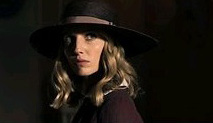
PEAKY BLINDERS is the story of a 1920's English gang named for their peaked caps into which razor blades were stuck for cutting enemies. (The real Peaky Blinders are shown below.) It's a better Boardwalk Empire situated in grungy sulfuric Small Heath, Birmingham, between World Wars. I struggled to get into it (not being a gang warfare fan) just to see the charismatic and unusual Irishman Cillian Murphy (above) in the lead with best Brits Tom Hardy, Charlotte Riley, Helen McCrory and Ireland-born/New Zealand-raised Sam Neill in major roles.

Sometimes you run across a gem and this is one -- slow to draw you in but increasing in addictiveness. It reminds one of The Godfather but is not operatic, rather with a grunge punk vibe -- it whines and bangs like the machines of industrial Birmingham, made immediate with its score of plaintive blues and metallic hard and boogie rock. Prolific screen-writer/novelist/director Steven Knight (below, of Dirty Pretty Things, Locke and many more) describes the Birmingham of the period as the workshop of the world, filled with weapons, cars, metal parts, liquor, and other goods for export -- a melting pot of hard men that drew workers from all over the UK. It was Knight's birthplace and the story of his parents' world.

A mix of fact and fiction, Peaky Blinders is novel genre to the Brits who feast on their aristocracy and great literature but not on their gangster past. Like Michael Corleone in The Godfather, Tommy Shelby plans to convert the family's illegal betting (below), protec-tion, and black market rackets into legal busi-nesses. The dirty work proceeds as alliances shift among Gypsy, Jewish, and Italian gangs (Bolshe-viks and IRA too). The returnees from World War I have come back trained killers, suffering from PTSD, marinating in opium, cocaine, whisky -- ready to explode.

Even with the violence, one can get lost in the fathomless blue eyes of Tommy Shelby, whose angel face and self-knowing melts the heart of woman (if not man). The trenches stalk his sleep but his grip is firm on business. If necessary he'll pound a man to death, but he does try hard to avoid violence; this female viewer was sucked right in to Tommy's combine of soft-spoken iron rule and tenderness (almost willing to look the other way at his ruthlessness ).

Aunt Polly ran the gang's gambling business while Tommy and brothers Arthur and John (Paul Anderson, below, and Joe Cole) were at war; she is the family glue -- acted by marvelous Helen McGrory (above, from Harry Potter, Skyfall). Aunt Polly mothers rebellious niece Ada (Sophie Rundle) and the brothers; she's part matriarch, part floozy, part business woman, a deadly shot, disgusted at the violence of her nephews but quick to defend her bad men. (How's this for a power couple: McGrory and real-life spouse Damian Lewis.)

Tommy's nemesis, the vitriolic Major Campbell (Sam Neill, below) is a Belfast secret service officer imported by Winston Churchill, then secretary of state, to recover a shipment of stolen guns in Tommy's accidental possession before they get into the wrong hands (the IRA, for instance).

Campbell's distaste for the Peaky Blinders ratchets up as his sweetly beautiful spy Grace (Annabelle Wallace, below) betrays him by falling in love with Tommy. Campbell seethes: Tommy Shelby is a "murdering, cut-throat, mongrel gangster...a worm who crawls in through your ear..." No wonder. Tommy relentlessly goads Campbell over who dodged the war, who was the war hero, and whom Grace loves. 

Almost cartoonish, their combat has a touch of Warren Beatty's 1990 Dick Tracy vs arch-enemy 'Big Boy' Caprice (Al Pacino). The treacherous Campbell and other characters are over-blown just enough to cut the violence with the comic edge of something approaching camp. But they are still emotionally real -- Knight understands how people talk to each other. "People often say the opposite of what they mean, they repeat themselves constantly," he said in an interview. Knight's ear for real conversation makes his characters stick in your head.

The second series introduces some London based crime figures including Alfie Solomons, a real life Jewish crime boss played by Tom Hardy, magnetic no matter what he does. (His crazy- edged Alfie offers up a seder to die for, above). Hardy's wife, Charlotte Riley, (they met co- starring in PBS's 2009 "Wuthering Heights") plays aristocratic horse trainer, May, who takes on Tommy's horse for race-training and aims to saddle Tommy, too. Tommy leaves us dangling; he loves Grace but she betrayed him and May's world means door-openers for Shelby business.

The series received 6 BAFTA nominations (British Academy of Film and Television Art) and won 2013's Royal Television Society Award for best new series; yes -- it's just plain good. Steven Knight is a master of all parts. Snoop Dog is reported saying that gangs are copying the clothes, and I see Peaky Blinders haircuts on the street. Series 1 and 2 (6 episodes each) are streaming on Netflix now; Series 3 will debut fall, 2015.


Sunday, March 1, 2015

Parade's End -- an acquired taste. (Scroll down for the companion review of Downton Abbey)


This post is written by our "Sunday Corner" 
corresponent, Lee Liberman

Parade's End (BBC/HBO), a psychological drama, and cream puffy Downton Abbey (PBS) treat the effects of world war and industrialization on tradition-bound Edwardians, especially on women. Parade's End, in 5 episodes based on novels by Ford Madox Ford, is a tougher go; it takes a few takes to dig itself into your heart, but the payoff is far more interesting -- you feel world war shaking the ground and savor a bit of well-earned joy as the parade ends. Despite excellent reviews here, the series, directed by Susanna White, slipped under the radar quickly but was widely celebrated and honored across the pond.

Tom Stoppard (prolific playwright, screen-writer) can't have had a simple time distilling Ford Madox Ford's four-novel series because the work unfolds in non-linear fashion, jumping around dizzily. Written close to the period, the novels were called by poet W.H. Auden and others 'great', but they aren't easy -- as though Ford meant his work to be as contrary as he made his characters. The first go at the mini-series is also off-putting. I didn't get into it until the re-watch; then became engrossed in the story of the protagonists and also their being metaphor for the bloom being off the rose of the aristocracy. It did help to know where the story was headed before focusing on how the words and actions of the characters contribute to the synergy of the whole.

The antiheroes of the drama are Christopher and Sylvia Tietgens, a miserably-married aristocratic couple whom anyone will recognize who has encountered a relationship in which the parties don't get each other, talk past each other, relentlessly disappoint, and make each other angry or depressed. Yes, toxic, but Christopher and Sylvia turn each other on -- he thinks she is "glorious" and his braininess and impeccable taste have spoiled her for other men. Sylvia wants to keep her husband but cannot help repelling him. Duty compels him to wear the hair shirt: 'I stand for monogamy and chastity and not talking about it,' he says. Benedict Cumberbatch (at far left) is so quietly, deeply expres-sive that Christopher's suffering is palpable -- his 'romantic feudalism', his nostalgia for a time of 'rights, duties, and supposed orderliness' (Julian Barnes, the Guardian, 8/2012) making him a dinosaur in his own time. (Press here for Barnes's rich analysis of Ford's characters.) 

Sylvia (the beautiful, formidable Rebecca Hall, above, right), acts out the narcissism of the aristocracy with the seductive charm of a sociopath. Her mother (Janet McTeer) calls her manipulative behavior 'pulling the strings of the shower bath'. Christopher, an intellectual savant, shoulders the guilt and unhappiness of an aristocracy that is becoming anachronistic. Although brilliant, he nevertheless courts failure through one self-deprecating act after another. He works at the Imperial Department of Statistics and perfectly predicts the outbreak of war. But when asked to manipulate data, he quits, deeply offended, and joins the army. Through the war years, Sylvia's sadistic antics and Christopher's own self-effacement conspire to ruin his reputation. He is banned from his club and sent down to a combat unit at the front.

Appearing early but not often in the story is young, brainy suffragette, Valentine, (Adelaide Clemens, below, right), middle-class daughter of a classics professor and journalist mother (Miranda Richardson at her most winsome). Christopher and Valentine meet for the first time on a golf course where she and a friend are demonstrating for the vote among 'fat golfing idiots' (whose own view is that suffragettes are whores and deserve to have their bare bottoms spanked). Christopher chivalrously foils arrest of the girls by heaving his clubs in the way of a police officer who is giving chase. In this and later brief chaste encounters, we see the exact opposite of mutual repulsion. Christopher and Valentine "get" each other, make each other think, and disagree amiably. Their fresh good will is hope for the future, but he is not ready to shed his old-fashioned honor.

Honoring the rules of the 'parade' of the social elite (aggressively flouted by Sylvia), Christopher does not take up with Valentine until the war has dragged on, his parents have died of disappointment, and Sylvia has exhausted him with histrionics. The last straw is her having the ancient tree at Groby Hall felled because it darkens the parlor. (Groby, the Tietgens family seat in Yorkshire, is 'older than Protestantism'.) In a decisive change in behavior, Christopher dismisses Sylvia with an unforgiving stare and throws a log from the old tree on the fire. Peace is declared, the troops are released, and in the final frames Christopher is at last happy as he finally joins his heart with Valentine.

More British acting elite add depth to the parade, among them are Rufus Sewell, a batty cleric; Rupert Everett, Christopher's older brother (above, left), who lives with his mistress and wants no part of Groby; and Anne-Marie Duff (below, left) as whiny Edith, a middle-class snob who has snared Macmaster, (Stephen Graham, below, right), a writer, to enhance her social climb among the literati.

Parade's End is streaming on HBO; it's worth the work.

***********************

Compared to Parade's End, the PBS series DOWNTON ABBEY is the soap opera version of the cracking Edwardian facade during and after WWI. Created by Julian Fellowes, shown below, Season 5 has ended and season 6 ordered -- could be the place to stop.

Lord Grantham (Hugh Bonneville), hapless head of the aristocratic Crawley family, broods over the inability of his land-rich, cash-poor estate to support itself. Fortunately his modern daughter Mary (Michelle Dockery) is able to walk the line between appreciating papa's decency and prodding him toward running the estate like a business. The growing assertiveness of women in the new century is punctuated by daughter Sybil (Jessica Brown Findlay) running off with the chauffeur, cousin Rose (Lily James) falling for a black jazz musician followed by snagging a Jewish banker-- at least avoiding an interracial scandal.

But an hour special that ran on PBS at the start of Season 5 spelled out the premier obsession of this series: 'The Manners of Downton Abbey' (for sale at PBS). The host, Alastair Bruce, historian and consultant, bobs about the film set adjusting posture, bits of dialogue, and scene to assure perfect replication of the ballet of manners that dictated daily life of the Edwardian elite upstairs and staff downstairs.

Bruce explains that the aristocracy were so traumatized by contageous disease and the violence of the French Revolution that habits of restrained physical contact and emotion even among family solidified into protocol. The Edwardians enveloped themselves in a complexity of nuanced formalities, insulating them from change. Dowager Countess Violet (Maggie Smith, below), Butler Carson (Jim Carter), and Lord Grantham keep the flame, resisting slippage of the status quo.

There are few if any story lines in Downton that do not revolve the Edwardian code in one way or another. One stays tuned to find out what's coming next (or what Violet will say next). Soap opera is geared to the gossip gene or the ginned-up fear response as plots charge to and fro, anticipating a favorite character's horrible dilemma. All the talk, tears, wit. joy, grief at Downton Abbey are skin deep. In season 5, the only character whose painful struggle (with his sexuality) makes us care is Thomas, the devious under-butler, played by marvelous actor Rob James-Collier (below), who is owed lead roles as soon as possible. There is something behind those eyes, and you want more.

DA's success is aided by "camp and class", said one reviewer; it surely is beautiful and fans feel elevated by its British toniness (reputedly some royals tune in). Perhaps one more season is enough, though, as plots are repeating themselves and going stale. It is quite a contrast to feature-film who-done-it, Gosford Park, also scripted by Fellowes. But Gosford had director, Robert Altman, who, like great writers, make us care about the inner life and motivations of characters. Taking place during a weekend gathering at a country estate, a murder is committed by a character whose pain we begin to understand and share as the crime is solved. At Gosford Park, as in Parade's End, we are slowly drawn into the inner lives of a number of characters. Parade's End and Gosford Park can be mined over and again; repeat visits to Downton offer thin gruel.

Downtown Abbey Season 5 will be available for a short time on line at PBS. Only the first four seasons are available on DVD in the NTSC version compatible with our DVD players, but for those who own an all-region player, the UK version of Season 5 is now for sale. (It can't be long before Season 5 is available here, too.)

Saturday, January 10, 2015

Streaming "must"--technology vs society in the slightly futuristic Brit TV series BLACK MIRROR


Comparison has been made between our own, ancient television series, The Twilight Zone, and BLACK MIRROR, the relatively new (2011-14) hour-long British television series from Channel 4 that tackles the idea of our new technology and how it is affecting society. It does this via a half dozen stand-alone episodes that involve different characters, their employment and relationships with friends and family. And although it is "futuristic," it is only just so -- the technology and situations we see here are but a few steps away from what we are already experiencing. Yet Black Mirror is as au courant and subtle as The Twilight Zone was (often, at least) well ahead of its time and ham-fisted in its telling.

The creation of a fellow named Charlie Brooker, shown at left, the series (from the four out of six episodes I've so far seen) is extremely bright in terms of its smart, fast dialog and minimal exposition, even as its subject matter is exceedingly dark. Brooker both created the series and wrote seven of its (so far) nine installments, and his touch is light but definitive. The series is satirical in its way and often darkly humorous -- but with a gasp just behind the laugh so that it remains a genuinely serious look at the way we (almost) live now.

These first four episodes involve everything from the British Prime Minister (Rory Kinnear, front row center, above) and his staff coming up against a kidnapping of a member of the royal family (in which the ransom is a deal-breaking doozy) to a future in which proles run on treadmills (are they perhaps producing energy) for their daily bread, while aspiring to appear on a TV talent show all too much like the schlock with which we're already saddled. (That's Rupert Everett, below, right, as the smarmiest of the three "talent judges.")

The situations in these first two episodes are so alternately mind-blowing and -numbing that we're carried away by the plot machinations of the first and the bizarre environment of the second. Even so, Brooker's fine use of irony throughout, together with the excellent casts he has garnered, make the experience continuously riveting.

The two runner/contestants we come to know and care most about in episode two are played very well by Daniel Kaluuya (above) and Downton Abbey's Jessica Brown Findlay (below). Despite the futuristic time table, how each of these decent and quirky characters ends up is filled with the same shame exhibited by our current society.

Episode three involves a technology just the other side of Google Glass, in which any past experience can be visually/audially saved and replayed at the whim of its owner. This leads to a story of infidelity and recrimination that engulfs our non-hero, played with increasing agitation and anger by a very good Toby Kebbell (below, and seen using that technology).

The fourth in the series may be its most haunting and moving, as we learn how society has found a way in which to handle the loss of a loved one. This hour calls to mind the recent movie Her, but goes its own way and discovers, as is Mr. Brooker's wont, as many negatives as positives to this new "technology." Actors Hayley Atwell (below, left) and Domhnall Gleeson (below, right) bring to life their two memorable characters with grace and grit.

I have two episodes remaining to watch (I hope that Netflix gets hold of Black Mirror's famous Christmas special with Jon Hamm very soon, as well as the rest of Season Three), but I am in no hurry. For one thing, I don't want this experience to come to an end. Secondly, as none of the episodes connect to another in any ongoing way, there's no need to binge.

Mostly though, I wait between episodes because television this good deserves to be pondered and bounced around a bit in one's brain before proceeding. You can see the first six episode of Black Mirror now via Netflix streaming