Showing posts with label Hollywood nostalgia. Show all posts

Thursday, July 28, 2016

Fashion, Hollywood and Homosexuality in Gillian Armstong's WOMEN HE'S UNDRESSED


If the name Orry-Kelly means nothing to you, you're either young, straight, or simply uninterested in the heyday of Hollywood and its famous fashion designers. TrustMovies has never been all that interested in fashion (he often quite literally loathes it), but he is bi- and has had a hard-on for Hollywood since around the age of two (when he ran away from home and off to a "picture show," as he then called the movies). Although he didn't realize it until he saw the film under consideration here, he's also been a huge fan of Orry-Kelly's work. Those memorable gowns from Les Girls, above, are in fact long-time favorites of his (the movie may be second-rate, but its fashions are absolutely first-).

The new documentary about Orry-Kelly, WOMEN HE'S UNDRESSED has been directed by Gillian Armstrong (shown above, at right, with multi-Oscar-winning costume designer Catherine Martin) and written by Katherine Thomson, both of them Australian, as was Orry-Kelly himself (who, for purposes of space and repetition, will henceforth be referred to as O-K). What these two have given us is really a kind of celebration of O-K: his life, work, sexuality and in particular his ability to live a relatively uncloseted life in tinseltown long before many other gay men cared to and/or were able to do anything like this.

Incredible as it seems, O-K costumed some 301 movies between the years of 1930 and 1963. And many of these were amazing, pivotal works whose costumes were vital to the films, and, as one of the many fascinating interviewees points out, they look as good, and almost as "modern," today as they did back then. O-K clothed some of Hollywood biggest stars -- from Bette Davis and Rosalind Russell to Marilyn Monroe and Shirley MacLaine -- and most of them loved him and his work. One of the joys of this lovely documentary is how well it makes us understand what and how the designer was doing, why it was important and especially why it worked so well. You'll come away from the movie with a new (maybe renewed) sense of the importance of fashion to films.

The movie also captures this Hollywood era in spades, with particular emphasis on what it was like to be gay in Hollywood from the 30s into the 50s and early 60s (O-K died in 1964). We get a good sense of the man's history, and the filmmakers choose to do this via some charming and intelligent re-enactments using actors in the roles of O-K (a sly, sweet job by Darren Gilshenan, above, as the adult O-K, and Louis Alexander, below, as the younger version),  his mother (Deborah Kennedy), and even briefly his first and perhaps greatest love, a fellow named Archie Leach (known to you all as Cary Grant and played in this film by Nathaniel Middleton).

Based in good part on O-K's unpublished memoirs -- which, according to Wikipedia, were discovered in the care of a relative after the man's death -- the film does full justice to the designer's humor, panache, style and wit, regarding both his work and his attitudes. I suspect he would be pretty damned pleased with this funny and charming documentary -- in which some very good and still-living costume designers, along with actors like Jane Fonda, who worked with the man a few times in her early career, talk about him fondly and with great appreciation.

Ms Armstrong, whom many of you still remember for My Brilliant Career) does a fine job of keeping all this moving and snappy so that interest does not lag for a moment. And her interweaving of the reenactments with historical footage and scenes from various film makes her documentary non-stop eye-opening and appealing.

The movie is a fine appreciation of a man and his time in a town that was anything but welcoming of his kind -- and yet in which he managed to make a place and a name for himself. This is a wonderful story, and -- despite a couple of odd fact mistakes -- I am so glad we are now able to see it. (That's a photo of the real Orry-Kelly, at left.)

From Wolf Releasing and running 99 minutes, Women He's Undressed opens tomorrow, Friday, July 29, in Los Angeles at the Arena Cinema for a week's run, after which it hits home video on Tuesday, August 9 -- for purchase or rental.

Tuesday, July 26, 2016

Woody's back -- with the impeccably cast, acted and photographed CAFE SOCIETY


Woody Allen's final-period movies (I am guessing here, of course, but really: He'll reach 81 this December, so how much longer can the guy go on?) continue to grow more assured, pleasurable and (TrustMovies thinks so, anyway) mature. Mr. Allen, below, has finally grown up in ways, movie-wise and maybe otherwise, that he hadn't achieved till now. Less interested in being profound or super witty/nerdy/brilliant, he's finally willing to let his characters behave and learn and grow, rather than merely being mouthpieces (often very clever or crazy ones) for his own neuroses.

This has lent a distinctive autumnal feeling to all his recent work -- whether it's an odd murder mystery like Irrational Man (a better film than was generally acknowledged), a surprisingly sweet love story complete with maybe-the-other-worldly such as Magic in the Moonlight, and now something like his latest, an alternately dark and endearing coming-of-age tale called CAFE SOCIETY. Allen (along with ace casting director Juliet Taylor) has long had a knack for fitting the actor to the role. He fills his movies with fine actors, lets them do their thing, and so -- even with
sometimes middling screenplays -- the movies come together surprisingly well. This casting-coup works as well in his latest film as it ever has. I'd say every role is filled just about perfectly (we'll get to the details in a bit), but there's something more here, too. For the first time Allen is working with the great Italian cinematographer Vittorio Storaro (shown at right), and the result is -- whew! -- something wonderful. Because the film takes place in 1930s New York and Los Angeles, we get the bonus of nostalgia, of course, and handled, as it is, with Storaro's mastery of light and composition, everything from the interiors to exteriors, faces to fabrics glow and resonate. Yes, we're mostly with the wealthy upper-crust, but watch how this master handles the scenes involving the lower-middle class New York family at the center of the film. These scenes resonate cinematically in their own dark, quiet manner.

The story -- of a young man named Bobby (a just-about-perfect Jesse Eisenberg, above, left) who must break away from his family for awhile and so ventures out to Hollywood, where his uncle (the ever more versatile Steve Carell, below) is a big-time agent, then falls in love with the uncle's secretary (Kristen Stewart, above, right, adding another smart feather to an already full cap) -- is serviceable and malleable. And, my, how these actors bring it to splendid life.

Speaking of versatility, there's Corey Stoll (below, whom I didn't even recognize in his role of Eisenberg's older brother, Ben, until the end
credits rolled). I find it amazing how Allen gloms on to new and special talent, always making such good use of it. This is as true with his use of Stoll as it is the way he uses Blake Lively (below, center) in the role of  Bobby's other love interest. Ms Lively brings genuine caring and concern to a part that could easily seem little more than secondary. Ditto Jeannie Berlin, who plays the brothers' mama, Rose, with enough depth and passion to help disguise and rise above a screenplay that is, at best, serviceable and often flits a little too close to cliché.

Good work also comes from the likes of Anna CampParker Posey and Ken Stott. By the finale, we've come, along with Eisenberg's Bobby, through enough incident and revelation to reach a level of maturity that allows us to look back in some sadness, yes, but also with the wisdom to appreciate what we have, as well as better understand what we've lost.

Cafe Society -- from Amazon Studios by way of Lionsgate, and running 96 minutes -- after opening in New York and Los Angeles, hits much of the rest of the country this Friday, July 29. Here in South Florida, it plays the O Cinema Miami Beach, the AMC Sunset Place 24, Coral Gables Art Cinema, Muvico Broward 18 in Pompano Beach, and the Movies of Delray in Delray Beach. To view playdates, cities and theaters elsewhere around the country, simply click here.

Tuesday, November 24, 2015

Jay Roach's TRUMBO proves star-studded, knockout entertainment. History and reality? Maybe not...


Even being aware of its superb cast of first-rate performers, TrustMovies found himself totally unprepared for how extraordinarily entertaining the new bio-pic TRUMBO turns out to be. Although heralded as Oscar bait, the movie may actually be too much fun to qualify for that, despite some dead-on turns from ace actors like Michael Stuhlbarg, Helen Mirren and John Goodman (among many others -- not to mention Bryan Cranston's lovely job in the title role). For those of us who were alive at the time of the Hollywood blacklist, or for any dyed-in-the-wool movie buffs, Trumbo is simply a must-see. For any others seeking star-studded entertainment, I don't think you can go far wrong.


Yeah, but what about sticking to history and the facts at hand? I'm not so sure as to that part -- having seen some years back the fine documentary about screenwriter Dalton Trumbo, also titled Trumbo, which was written by Christopher Trumbo, the (now late) son of the famous screen scribe. In that one, we learned a lot more (about the family's exile in Mexico, for instance) and still had a pretty entertaining time. In this new narrative version, directed by Jay Roach (shown at right), with a screenplay by John McNamara from the book by Bruce Cook, we learn a few things -- though nothing that a follower of the blacklist and those particularly nasty times wouldn't already know.

What we get, however, and what makes this movie such a delight, is some superb casting that combines the right "look" with the talent necessary to create a cast of characters right out of both central casting and, seemingly, life itself. This is more than mere stunt because each performer (that's Ms Mirren as Hedda Hopper, above, left, and Mr. Stuhlbarg as Edward G. Robinson. below, right).

These are names that ring a bell, but interestingly enough one of the most moving and odd characters in this movie is a much lesser known screenwriter (actually a composite character made up of traits of several Jewish members of the Hollywood Ten), whose situation provides grist for the filmmaker's mill. That would be the blacklisted screenwriter, played quite beautifully by Louis C.K. (above, left), who becomes the most important of the many satellite characters revolving around Trumbo. Mr. C.K. imbues this man with as much humanity -- fear, fight, acceptance, love -- as any supporting performance this year. Academy: take note.

Around halfway along we meet Frank King, the B-moviemaker who gave Trumbo a second chance. As played by an all-stops-out John Goodman (above), this character -- and his baseball bat -- just about walk away with the film.

By the time, we get to the likes of the Spartacus period and Kirk Douglas (Dean O'Gorman, above) and then to Exodus and Otto Preminger (Christian Berkel, below), we've arrived in, well, movie heaven. Juicy doesn't begin to describe the dribbling delights of all this Hollywoodland fun.

If that fine actress Diane Lane (below, with Cranston) seems a bit wasted as Trumbo's ever-faithful, ever-lasting wife, Cleo, well, that's small price to pay to the rest of this notable "entertainment." In the film's final major speech by Trumbo, we also hear an interesting "take" on the blacklist -- which will probably irk both left- and right-wingers. And stick around for the newsreel clips during the end credits: They're quite something, too.

From Bleecker Street and running 124 (not one of them boring) minutes, Trumbo opens here in South Florida and elsewhere throughout the USA as part of your Thanksgiving pleasures, tomorrow, Wednesday, November 25. Click here and scroll down to find a theater near you.

Friday, October 23, 2015

Jeffrey Schwarz & Allan Glaser's TAB HUNTER CONFIDENTIAL: an engrosssing, enriching, informative look at the lives--real and manufactured--of a 1950s Hollywood star


Back in the mid-20th-century, who didn't have a crush on Tab Hunter? That uber-adorable blond boy of German ancestry, whose gorgeous face and sveltely muscular body set the screen ablaze from his first big role (opposite Linda Darnell), almost immediately became the nationwide idol of teenage girls (and boys with certain proclivities), going on to make a couple dozen film and/or TV appearances over a ten-year period that would ensure his entry into the Hollywood pantheon. Critics may have come late, if at all, to his actual acting ability, but nobody, I suspect, could gainsay the guy's ability to turn heads, hearts and libidos his way. Now comes a new documentary, TAB HUNTER CONFIDENTIAL, that not only tells the actor's story -- damned well, too -- but might easily stand in for a textbook case of how the Hollywood dream factory created then sold those dreams to a more-than-willing public. The film is also one of the best documentaries made thus far about the career and lives -- real and manufactured -- of a Hollywood "star."

The creation of producer Allan Glaser (shown at left) -- the actual identity of whom becomes apparent toward the end of the documentary, at which point it couldn't seem more pleasing and appropriate -- and director Jeffrey Schwarz (below, right), the film should prove catnip to Hunter's many fans, most of whom are now senior citizens. Beyond this, however, the movie may very well capture the somewhat younger audience who knows Hunter from his later work with John Waters, Paul Bartel and Divine (Polyester and Lust in the Dust).

Mr. Schwarz's fine work (he both directed and edited the documentary) weaves together Hunter's career with his life, his family (an older and much-looked-up-to brother, a mother with mental problems and an absentee dad), and the necessity of remaining in the closet due to his homosexuality -- which was not only a Hollywood career-breaker but illegal and grounds for imprisonment back in the 1950s. Schwarz allows Hunter to tell his own story, abetted by a terrific library of archival photos, clips from various films and Hollywood "news" footage from that era.

Mr. Hunter (above in his "dreamboat" days, below in his current life) appears to be a pretty "private" guy, almost as much now as in his heyday when he had so much to hide. Still, at the film's beginning, he promises to give up the goods, and by and large he does just that. (The movie's title, by the way, is a nasty nod to the nastiest magazine of its day, Confidential, that delighted in opening up scandals -- often sexual in nature, with homosexual best of all, of course -- that could and often did destroy an actor's career.)

When the magazine "outed" Hunter, the advice of one of his mentors, Warner Bros.' Jack Warner, proved smart and helpful to the young actor. As did that of some of his co-stars and leading ladies -- from Natalie Wood and Debbie Reynolds to Venetia Stevenson and Etchika Choureau -- all of whom seemed to have liked and cared quite a bit about this rising star.

Ms. Stevenson, in fact, tells us that she didn't at all mind being seen dating Hunter and likewise dating Anthony Perkins (shown in background, above), thus acting as a "beard" to cover up the affair between the two (yes!). The Perkins connection proves one of the film's most interesting aspects, as it sheds a lot of light on the gay dating habits of that day, as well as on the character of the also-very-private Mr. Perkins, whose affair with Hunter seemed to cool, due to a certain television and then movie property called Fear Strikes Out.

Hunter's lead-role appearance in the TV version, and Perkins' follow-up in the movie makes for some very interesting fodder for ideas about ambition and betrayal in Hollywood. Hunter's work in television and even in legitimate theater also proves salient, interesting and even sometimes amusing, as shown here.

Some of us may have forgotten just how successful was Hunter as a recording artist -- something else the film makes sure we understand. Warner Bros Records, in fact, was created because Hunter's number one pop song was recorded for Dot Records (only because Warners did not yet have its own record label!).

The documentary is full of fascinating stuff like this, and its 90 minutes seem to fly by. By the finale, you'll have grown to admire and appreciate Mr. Hunter (as well as his producer, Mr. Glaser, and director Schwarz), feeling, I suspect, that there is great deal more to the man and his work than first met the eye. Though what met that eye was -- still is -- rather extraordinary.

Tab Hunter Confidential, from Automat Pictures and The Film Collaborative, while continuing at New York City's Village East Cinema, opens today, Friday, October 23, in other cities, and hits Los Angeles at Landmark's NuArt next Friday, October 30. Click here to see all currently scheduled playdates, with cities and theaters listed.

Monday, March 12, 2012

TrustMovies departs New York City for L.A. (Don't worry: It's only a two-week hiatus)

TM is from Los Angeles, after all, and he hasn't been back there in five or six years. So friends, and whatever relatives remain alive, beckon. He's taking his laptop, some screeners and a few press releases with him, but how many he can get watched, reviewed and posted is questionable. We shall see. You will hear from him again, as soon and as often as possible....

The photo, top --- Hollywoodland back then, before they changed the sign to the simpler Hollywood -- was cribbed from the web, and I could find no identification for it, while the photo above is of the rendering of an artist, Robert J. Adragna, with his conception of Hollywood... well, when, exactly? I'd say it's a lovely fantasy of the place, which has never looked so lush and verdant. (To learn more about Mr. Adragna and his work, you can also click here.)

Sunday, June 12, 2011

DVDebut: Henry Jaglom's QUEEN OF THE LOT -- out now via Breaking Glass Pictures


It has taken awhile, but this latest Jaglom film is now available on DVD, from Breaking Glass Pictures. With extras including outtakes and an audio commentary from Jaglom and his stars Tanna Frederick and Noah Wyle, you'll certainly get more than you did at the time of the film's theatrical release. Below is my original take on Queen of the Lot, along with an interview I had with Ms Fredericks last year -- in case you missed it at the time:

If you're a Henry Jaglom fan (TrustMovies sure is) you won't want to miss his latest attempt to turn today's Hollywood into the glitter capital of yore -- even if QUEEN OF THE LOT is not up to the level of Hollywood Dreams (to which it is somewhat of a sequel) or to last year's lovely Irene in Time (which also starred Jaglom's latest leading lady, the unconven-tional but gifted (she grows on you!) Tanna Frederick. Queen is still entertaining enough and has its fine, funny and tender moments, attenuated as some of these -- and the film itself -- often are.

Seems to me that Jaglom (shown above) would like to create some of that old-fashioned glamor that Hollywood used to hand us by the mile -- the mansions, the swimming pools, the egos, the drama -- but he wants to manage this sweetly and affectionately. The filmmaker doesn't really do satire; he's generally too kind for that. A scene will seem to be making fun of the people on view -- and then, boom, the filmmaker starts identifying with them and becoming one with their foibles and needs.

You don't get real satire or wit from this sort of thing, but you do get something else. And it can be awfully appealing and dear. Which pretty much also describes the effect that Ms Frederick, left, has on me. She's beautiful, but in an offbeat way, and she doesn't seem to mind at all not consistently looking her best (something more Hollywood actresses might take into consideration). And she's vulnerable. My goodness, is she vulnerable! But here, for the first time, we start to see some other sides to her. In Queen she plays Maggie Chase, an up-and-coming starlet with her own TV show and a drinking problem. When a DUI gets her under house arrest (complete with ankle bracelet), the plot, such as it is, sets in motion.

This involves Maggie's current boyfriend (a nice job by Christopher Rydell, above, right) and his family: brother (Noah Wyle, above, left) the pater familias (a very good Jack Heller, whose early scenes are enough to have you quaking in your sneakers), mother (Kathryn Grant), daughter (Mary Crosby), and various underlings and hangers-on (Peter Bogdonovich (below, right), Paul Sand and Dennis Christopher, among them.

Add to this the Jaglom stable of oft-used, awfully-good actors like Zak Norman (below, left) and David Proval (below, right) as a gay couple (Proval has the most surprising scene in the film) and you've got quite a cast.  Now, where is the movie that ought to surround it?

OK: it's here -- in fits and starts. Because some of those starts lead to consistent scenes and a weird kind of arc, you'll probably stick around and feel more kindly than angry toward Queen. But you may wonder why a scene of singing Christmas carols goes on quite so long, or the back and forth banter between Frederick and Mr. Wyle (who makes a lovely leading man, by the way: very smart, quick and 1930s, as I suspect Jaglom wanted) also goes on and on. (For the reason, see the interview with Ms Frederick that follows.)

Those 30s and 40s comedies had damn good dialog, and this is one of Henry's weaker points -- particularly when he appears to be trying to recreate something that approaches those films.  His banter is just OK, and sometimes not quite that. He's better with the quiet, more indirect conversations that tease out their meaning in bits and pieces.

So this is what you'd call a mixed review, yes. But would I have missed the movie? No. Queen of the Lot is already playing on our west coast (Henry's home base) and opens here in New York this Friday, Dec. 3, at the Quad Cinema, after a premier Wednesday evening, Dec. 1, at FIAF's Florence Gould Hall. You can find all the currently-scheduled playdates at this link. Click, go to the right side of the screen and then click on Showtimes.

***************

We talked with Tanna Frederick a couple of weeks ago via phone, and the actress could not have been more gracious, charming and clear-headed (What? Were we expecting oodles of vulvernability? That's why they're called "actresses," TM!) In the following Q&A, TrustMovies' questions appear in boldface and Ms Frederick's answers in standard type.

There’s a scene in Queen in which Noah says that your character seems needy and sweet etc., but that you are really very competent, strong and clear-headed (something like that). 

Yep: that's pretty much what he says.

And then, in the faux-dead body scene, we see this exhibited in spades. It reminded me somewhat of how Naomi Watts handled that wonderful scene in Mulholland Drive. It’s a side of you we haven’t seen before (I haven’t anyway). How was that scene to play for you?

Wow—Naomi Watts and Mulholland Drive: Thank you!

Well, I know, Queen of the Lot and that scene are not up to David Lynch-level, but there is a resemblance -- and a good one.

I thought this scene was really great, and I wanted the color of that particular kind of strength represented in this film. And so did Henry. In my earlier two films with him -- this is true of a lot of his leading ladies – we are very vulnerable. But I think we all really have that inner strength. We have a solid inner core. I have tried to play them that way but never really got a chance to show this. I wanted a switch in this movie. So you must use the ferocity – not in a threatening way. Any woman in this industry is ferocious at her core. We must use this for self –preservation. It's the only thing that can really get you through. You have to use that to stay afloat. I liked being able to reveal that side of her. The audience needs to see this and know, ”Oh, she is strong. She can become grounded when she needs to be.”

You know, growing up in Iowa, I did a lot of drama. I didn’t do much comedy. I didn’t discover I was funny until Henry.  I was used to playing in things like Jean Genet’s The Maids -- and the like.

You grew up in Iowa? Is that why there was a film festival there at which Queen of the Lot was recently shown?

They started a film festival my home towm, so we brought people like Karen Black, David Proval and Zak Norman to the festival. We also went to the Wild Rose Film Festival in Des Moines. I had nothing to do with this fest, so it was particularly nice to win awards there. You know, it's funny because, in the film we make some good fun of Iowa, but the audience didn't seem to mind at all. They were all very jovial about the film, and we ended up getting the audience award.

That's great! Will there be more of these characters in yet another Jaglom movie – because the characters all seem to be quite similar from Hollywood Dreams to Queen of the Lot.

Yes. Henry calls Queen a kind of sequel to Hollywood Dreams. We are getting ready now to start on the third part of this trilogy.

We shot another film called Just 45 Minutes from Broadway- based on Henry’s play that ran out here for one year. You New Yorkers are used to long runs of plays, but not here in L.A. This was so unusual, to run this long. And, you might know that Henry does not allow understudies. He says if any of the actor can’t be in the show, we close it down. If someone gets sick, we don’t do that performance. But we all just stuck it out and performed through sickness and crises, and we kept getting full houses and standing ovations. The title is from the George C. Cohan song. We did a nine-day shoot for the movie, and Judd Nelson replaced one of the actors. Otherwise, the whole original cast is in it.

It took only nine days in total to film?

Yes, and Henry is very intense on set. He gets his reputation as tough on the set from this. But who isn’t – particularly when you have a low budget and must work fast. We all loved this shoot and the play. In fact, we took the play up north to Cambira for a fund-rasier project. We raised money and got the theater in Cambria a sprinkler system. They were suspended from doing any shows because of no sprinklers. So we made this road trip up there, and put it on and raised the money. We did four performances with a big waiting list for every one!

Can we talk about another project of yours, Katie Q?


Yes, that is a film that Ron Vignone has directed. We filmed with Paul Sand Karen Black, David Proval and Zak Norman. We got a great ensemble. It’s a very twisted black comedy. We have a bit left to shoot, and that is our 2011 goal -- to get this out in film festivals and maybe theatrically in 2011. It’s a dark comedic mystery which should be a lot of fun.

I am thinking there will be certian similarities to Henry’s work, since Ron has worked a lot with Henry.

Yes, his and Henry aesthetics are very similar. Henry has edited every one of his films for 17 movies. But Ron edited Queen of the Lot. He’s an amazing editor. You know, it’s more fun, especially in moviemaking, when you have wonderful collaborators. We’re kind of like the 3 Musketeers, working on various project in various stages of development.

Is Tanna Frederick your real name?

Yep – it’s my real Iowa name. I’m Czech and Irish and Danish, and it is thanks to my great, great aunt in Iowa that I have it. She was an au pair, who saved two children of a local dentist from a fire when she was 16. Unfortunately, in the process of saving them, she died in the fire, but she did save the children. When my mother was pregnant, my great grandfatehr asked my mom before she even knew if she was having a girl, to please name her after this great aunt.

Your career and image at this point are rather joined in most of us fans’ minds to Henry’s. Will Katie Q maybe change that a bit (though Ron is also joined with Henry, and the cast looks pretty similar)?

I think Katie Q will maybe be a little like Henry’s films.

Anything new in the offing that does not include Henry/Ron?

I would like to work with other directors, and Henry wants me to work with other directors, as much as I want to, too. Henry has been basically my Selznick, fostering and creating my career. It’s just the matter of the right property coming along at the right time. I’ve been offered some other films with other directors, but at this point I have not felt the need to do other work that I am not really passionate about. There are a lot of things that I am looking at and that are in devlopement with other directors..When I feel the time is right, I will make a film with someone else. I’m sure that time will come very soon. Henry’s movies are becoming more mainstream, and I think we are both getting noticed more. I am asked this question a lot: Do you work exclusively with Henry? And no. But it is what I want to do now. Go after the quality versus the quantity.

There have been little parts in large budget films that I’ve been offered. But I also have promised myself, that if I am going after this dream, something I’ve always wanted, that I will not compromise. I am a stubborn girl, and when my heart isn’t completely into something, I don’t want to do it. And I am certainly not hurting for work, not right now. So I am sort of putzting along at my own pace and enjoying every minute of it.

What was it like working in India (on Rising Shores)?

(She laughs and laughs and laughs at this question.) I had this friend who was a DP on that movie, and he called me up to say "I have five lines for you, if you can play a real estate agent."  This was actually the first movie I really had a part in. But I never met any of the other actors, I don’t even think I met the director. I get credited for this movie and it’s kind of funny. I guess this was like doing a Bollywood movie, but my part was all filmed in Santa Monica back in... 2001 or 2002. The 2nd unit director shot it, I think, and I don’t remember much about it at all.
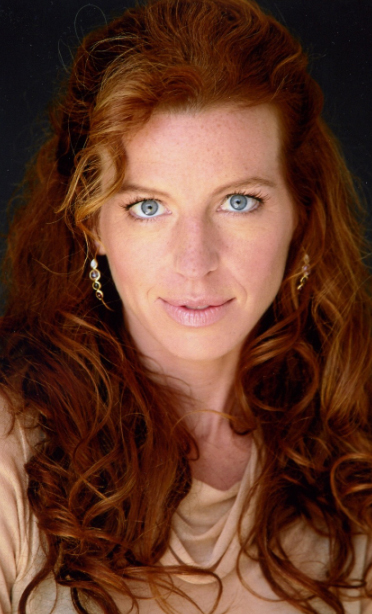
Any thoughts about your first films: Inescapable or First Impressions?

First Impressions I loved making. That was actually part of the material from which Henry cast me for Hollywood Dreams. That was part of the film that got me that role. This wonderful Jewish kid, Barton Caplan, filmed it, and he was so sweet. It’s a sweet male dating story, abou this young man who goes through a series of dates that don’t work out. Then he meets the women of his dreams – who then suddenly lets out a big fart. I know it sounds awful, but it is kind of charming. I was also appearing in the legitimate theater version of A Safe Place, the play made from Henry's movie, and Henry came to see me in that --- and together with the footage from First Impressions he wanted to cast me in Hollywood Dreams.

Inescapable was my first big role in a movie. But it was not a great film or a great representation of my work. It was one of those films I was really excited about because it was the first film I got paid for. I made $2,000 making that movie, and it was most I had ever been offered. But it did not turn out to be a great film.

While I have you, Tanna, is there anything else you’d like to say: something that you’ve always wanted to talk about but journalists never seem to ask?

Wow—that’s a really sweet question. Let me think. Well, I feel really lucky -- being the sort of being a golden-age-of-Hollywood-phile that I am, being able to work with Henry and with Noah Wylie on Queen of the Lot. There is nothing better than this kind of funny, wonderful romantic comedy from the 40s. Like Mr. Smith Goes to Washington, or anything with Jimmy Stewart or Cary Grant with all that very jaunty, back-and-forth, witty banter. And I feel that with Queen of the Lot is like this – and, oh -- to work with Noah, who is an exceptionally gallant and accommodating actor and partner to work with. I think this will be fun for audiences, too, becasue he and I found a really special connection – with our 40s-type banter and relationship. That is something that I think is hard to find nowawadys in most films. In the 40s they captured this a lot -- in dialog and relationship. But not so much now. Henry was really smart in the casting of this because Noah is amazing. He is an incredibly intelligent guy -- with such a sharp wit!

(All the photos above are from the film itself, except that of Mr. Jaglom, toward the top, which is cribbed from the film's website.)