Saturday, September 6, 2014

"It's always one person"--John Ennis' smart, heartfelt, all-over-the-place doc, PAY 2 PLAY


All over the place it may be -- jumping from the famous game of Monopoly to gerrymandering, street artists, ALEC, the work of those sleazy tools of the one per cent that make up the majority of our Supreme Court, the Koch brothers, a scandal named Coingate and a couple of riveting political campaigns you won't have heard of unless you're from Ohio -- but the new documentary PAY 2 PLAY, from filmmaker John Wellington Ennis, is also full of energy and intelligence and a heartfelt and necessary message that tells us to wake up and take control of our government. As we're told upfront and then again toward the finale, "It's not about left and right but instead about insiders and outsiders," the former of which are hellbent on never letting the latter in.

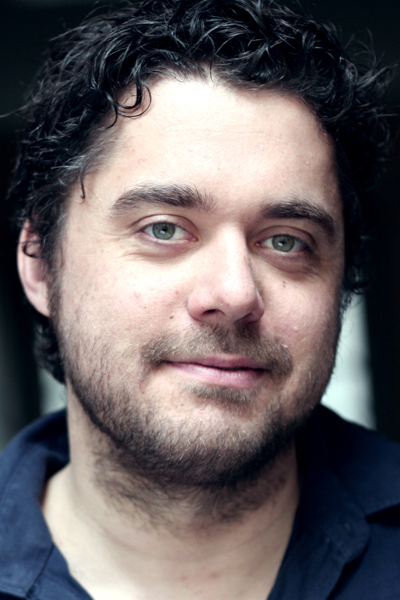
The birth of Mr. Ennis' daughter (the filmmaker is shown at right) seems to have galvanized him into action, the result of which is this documentary, in which he admits that his little girl is almost sure not to have the good life that so many of us have shared up until now. He talks to some of the usual suspects, progressive variety, from Noam Chomsky (below) to Van Jones, while covering territory other docs have trod previously.

Yet, as he bounces from one topic to the next, showing us the veritable orgy of greed and the plotting of the wealthy and corporate interests to increase their holdings against the work of a single person here and there and finally the coming together of the anti-Koch and Occupy movements and how this frightened the establishment into using anti-terrorist tactics to disperse peaceful protest, his theme of what a single person can accomplish begins to take on more meaning and resonance than is usual.

His concentration on the game of Monopoly (and its newer counterpart Anti-Monopoly), along with how he substitutes the usual things we see on the Monopoly board with newer views, more appropriate to our current times, makes for some additional ironic fun.

In a little aside, we also learn about the origin of the game (above). And it is not what you've probably been told via Parker Brothers.

The film's finest sections are devoted to political campaigns in which some "unknowns" -- Paul Hackett , Subodh Chandra and Surya Yalamanchili (above) -- gets into the political fray, work hard and, by virtue of their courage and dedication, manage to go much farther than anyone expected. Not far enough, as it usually turns out, but still....

From its outset and throughout, the theme of paying for influence is front and center, as the single thing most corrupt about our current political system, one that has only been made more encompassingly corrupt via recent Supreme Court decisions. (This movie is the most up-to-date so far, with references to both the recent McCutcheon and Hobby Lobby decisions.) Yet rather than taking a cynical, what's-the-use? attitude, Ennis insists that we and our work really matter. As former would-be politician Mr. Yalamanchili tells us, "It's always one person."

By the time we see Ennis and his daughter beginning to play the Monopoly game, then switching to Anti-Monopoly, as he tries to explain his political rationale to the three-year old, we can only laugh -- and hope. Pay 2 Play is actually a very heartening movie.

It opened yesterday, with almost no critical reviews to be seen. I wonder why? In any case, try to see this one, then think about what you, as one person, can do -- whether you're Tea Party or Progressive (and you two may be closer than you imagine).

Pay 2 Play can be viewed now in New York City at the AMC Loews Village VII, and will open next Friday, September 12, in Los Angeles (at Laemmle's Noho 7) and in Washington DC (at the Angelika Pop-Up). Surely DVD, VOD and streaming cannot be far behind.

Friday, September 5, 2014

Streaming: A don't-miss for genre fans--the multi-part, multi-directed THE ABCs OF DEATH


THE ABCs OF DEATH didn't make much of a wave theatrically (it may have done better via VOD), most likely due to the fact that this 129-minute movie is made up of 26 short films about death (often very bloody, gory, sexual and gross deaths) by 26 different directors, is, as they say, a mixed bag. A very mixed bag. Each short lasts around four to five minutes in length, so if you're suddenly stuck with a loser, it won't be long before you hit a winner. Or at least something passable. A few of the segments are simply no good.  (Ti West is at it again. When will this guy's reputation reflect the kind of low-end, empty cinema -- except for The House of the Devil, his single good film -- that he insists on churning out?)

A few are weak but passable, some are actually quite good, and several are simply marvelous -- the kind of transgressive, ground-breaking cinema that leaves your jaw on the floor -- and that makes this movie a don't-miss for genre fans and anyone who appreciates seeing landmark creativity at work. Of course, you have to put up with the not-so-hot to excavate these gems.

At the film's beginning we are told that each director was given a letter of the alphabet and then asked to choose a word beginning with that letter. Each then created a short tale of death relating to his/her chosen word, and each had complete artistic freedom regarding the content of their segment. Fair enough. But what a huge diversity we find in the style and content here!

From animation and claymation to live action, real to surreal, from straight-ahead storytelling to anything goes -- you simply have no idea what you're in for until it comes whooshing, zooming, clawing, or creeping at you. Beginning with the work of one of our favorite Spanish directors, Nacho Vigalondo (who got the letter A), and his murder, which is set to something rather special, and ending with Yoshihiro Nishimura (the fellow who drew the Z) and his wham-bam compilation of, well, just about everything under the Japanese Sun, this is a trip like few others.

Along the way, you'll delight to Ander Morganthaler's animated use of the letter K (as funny and inventive as simple, colorful line drawings can get) and swoon fearfully to Marcel Sarmiento's slo-mo, animal-loving letter D (above); France's Xavier Gens , using X, offers one of the best of the lot -- a cautionary tale about taking too seriously the message of the media, advertising and a stupid populace, while Mexico's Jorge Michel Grau, with the letter I, gives us a simple tale of death from the POV and voice of the victim (this one is quietly amazing and very moving).

There's plenty more good stuff. You'll have your own favorites. The point is, there are riches within this odd little movie, so explore. The ABCs of Death can be streamed now via Netflix and elsewhere, and is also available on DVD. 

Thursday, September 4, 2014

Streaming tip: Bertrand Tavernier's sweet and light-footed surprise, THE FRENCH MINISTER


Looking over the oeuvre of famed French filmmaker Bertrand Tavernier, you'd be hard pressed to come across a comedy. His newest film, THE FRENCH MINISTER (Quai d'Orsay), which came and went in theaters all too briefly last season, if not quite a full-fledged comedy, is possibly the most endearing and light-footed feature this storied and serious filmmaker has so far given us. There is often humor to be found in Tavernier's films, but here there's a wealth of it, beginning with the title performance by gifted French actor Thierry Lhermitte.

Basically, Bertrand's movie is a political satire (the filmmaker is shown at right), but it is not a particularly barbed one. The humor is almost entirely built into the characterizations on display, rather than arriving out of the situations. With actors as good as the fine ensemble cast rounded up for this movie, that humor is firmly rooted and bubbles up believably as we get to know this odd assortment of drone-like satellites, ever revolving around their sun of a minister -- who is, unfortunately, pretty much a son of a bitch.

As played by M. Lhermitte (shown below, right), this Minister (of Foreign Affairs) is possibly the most vain and narcissistic fellow in politics on either side of the Atlantic.

And yet... There is something just a tad endearing about the guy's vanity and self-esteem. We watch and learn of all this through the eyes and mind of a young speech-writer named Arthur, who has come to join, a bit reluctantly, the staff that serves this minister. Played by one of France's hottest young actors, Raphaël Personnaz (above, left), Arthur is smart but naive, and pretty much a lamb to some of the lions in this political den.

These would include the likes of Valérie, played by Julie Gayet (above, right), an actress whose connection with France's current President, François Holland, makes her role and performance all that much more succulent.

Also on staff is the quiet, near-sleepy old fellow, Claude, played by one of France's foremost actors Niels Arestrup, above, who nearly steals the movie by never raising his voice amidst the whirlwind -- literally and figuratively -- caused constantly by his boss.

The remainder of the ensemble is well-cast and up to snuff, but a word must be said for both Jane Birkin -- who plays a Nobel Prize-winning author whom our Minister insists on having to lunch -- and Anaïs Demoustier (above, right), who plays Arthus' live-in girlfriend. Ms Birkin always proves a delight; here she is once again, this time with a bit of a barbed edge, while Ms Demoustier is intelligent sweetness personified.

The movie never settles for standard comedic tricks. It has something else -- a little more serious -- in mind. By the end, you will have questioned your immediate and previous assumptions and maybe even rethought slightly your opinion of politicians and their actual worth. As with all of Tavernier's works, this one is a movie worth seeing and mulling over in retrospect.

From IFC Films, in French with English subtitles and running a very-easy-to-watch 113 minutes, The French Minister can be streamed now via Netflix and elsewhere and is also available on DVD.

Wednesday, September 3, 2014

Looking for a groundbreakingly transgressive motion picture? Try David Wnendt's WETLANDS


Whew! It's been awhile since we've seen anything quite like this one. From the opening scene -- in which the movie's heroine, Helen, who has terribly trying hemorrhoids, takes us down to an underground bathroom where fetid water and overflowing toilets skeeve us out -- the new movie WETLANDS, directed by David Wnendt, will almost immediately takes pride of place in our list of in-your-face, don't-see-'em-that-often, super-transgressive films. And it is, for much of its 105 minute running time, one hell of a lot of fun.

Mr. Wnendt, who also co-wrote the screenplay with help from Claus Falkenberg and Sabine Pochhammer, adapted from the novel by actress/writer Charlotte Roche, sees to it that we are almost immediately swept up in one of the most bizarrely entrancing scenes ever created of bacteria -- seen so up-close-and-personal that it's like we're in some updated remake of Fantastic Voyage. Then we settle down to really learning who our heroine is, what she wants and how she dreams and schemes and manages to get it.

Helen is played by an actress new to me, Carla Juri (above), but her performance is so indelible that I can't imagine we won't be seeing more of her (though, in terms of nudity and flesh, there's little you won't have seen by the end of this film).

Ms Juri is absolutely beautiful, that's for sure. But if her performance were not so rich and spiky and alternately nasty and lovely, the movie would not work even half as well as it does. Whether she is scratching one of those hemorrhoids (above) or being nicely serviced by a sudden and very attractive new boy-fuck (below), the actress makes her ever-alert and comic/near-tragic character one for the books.

Her parents split up when she was younger, and as do many children of divorce, she wants them back together at any price. Once her too intensive exploration of her nether regions gets her in some major physical trouble, she finds herself hospitalized -- which proves an almost too-perfect place for her various schemes to come to fruition.

Along the way, we meet her sweet best friend, Corinna (Marlen Kruse, above, left) and in the hospital, her ever-present and exceedingly helpful nurse turns out to be a gorgeous hunk named Robin (Christoph Letkowski, below, left). We also meet her mom and dad, both of whom prove as bad and bothersome as we might have expected, giving the grown daughter they've produced and badly raised.

Yet the filmmaker manages to properly share the blame here; even the smarmy adults have a redeeming moment or two -- including Helen's self-satisfied doctor (Edgar Selge, below), who gets a bit of a come-uppance, though in a manner that almost proves fatal to the giver. Wetlands finally wears out its welcome a bit sooner than we'd like. It's maybe 15 minutes too long, and ties up its loose ends too predictably. But boy, does it offer some fine, nasty fun (and hot, skeevy sex) along the way.

The movie, another good one from Strand Releasing, in German with English sub-titles, opens theatrically this Friday, September 5, here in NYC at the Angelika Film Center, and the following Friday, September 12 in Los Angeles at the Landmark NuArt and another six cities. Over the coming weeks it will play in around 25 locations across the country. You can see all of them, and their specific theaters, by clicking here.

Tuesday, September 2, 2014

Stream a multi-Emmy winner: the SHERLOCK series' slick and shallow "His Last Vow"


After a couple of seasons of lots of Emmy nominations but no wins, the British television series Sherlock -- which nicely updates Sherlock Holmes into the 21st Century -- cleaned up at the year's awards night for the episode titled His Last Vow: seven wins, the most of any program, including four at the so-called Creative Emmys last week (as though acting, writing and directing aren't "creative" enough) and three at the big ceremony (Benedict Cumberbatch, below, for lead actor, Martin Freeman for supporting actor and Steven Moffat for writing chores). You can view all three seasons now via Netflix streaming, including nine roughly 90-minute episodes, plus three of those Behind-the-Scenes studies that give fans who can't get enough their second helping.

TrustMovies gave up on this series in the middle of its second season -- not because it was bad but rather because it was good-but-too-much-the-same and thus a tad repetitive. All those sudden screen blasts of words, purporting to show us how Sherlock's mind works but instead showing us how clever were the moviemakers in reducing their Mr. Holmes to manageable, TV-friendly proportions.

To its credit, the series moves very fast. It will not bore (not right away, at least). And it is acted as well as you could want from those two Emmy-winners and just about everybody else on view. It is written by its "re-creator," Mr Moffat, with precision and style, and each episode is directed (His Last Vow by Nick Hurran) with class and as much finesse as can be filtered into 80-odd minutes of plot-heavy development.

What brought me back to another Sherlock viewing was the recent Emmy win and my wondering just what might have changed. Not much, but this third-season, third-episode installment was perfectly watchable fun: clever, slick and shallow. Shallow? How dare I! Well, it is.

As usual with the mystery genre, so much time and energy are spent on plot devices (and being as clever as possible in offering them up) that character -- real character, as opposed to the shorthand version shown us here -- is shorted rather badly. (That's the wonderful Lindsay Duncan, below, who starts the episode out in fine fashion.)

Terrible things happen in this particular installment (as in most of them) -- blackmail as nasty as any you might find, lies and betrayal, suicide and more -- and it is all treated as fodder for the plot surprises. Mystery fans will love that the writer does not dwell on things but touches them only fleetingly, then on to the next. But dwelling a bit is sometimes the best way to communicate depth of feeling. When everything passes by in similar fleeting flashes, everything carries the same light weight.

Also, things are tied up a tad too speedily and neatly once again. Moriarty makes an appearance; Mary, the love of John Watson's life (below), is given a few new shadings(!); and we're introduced to a fascinating character named Magnussen (Lars Mikkelsen -- yes, Mads' brother -- shown in photo at top) only to be relieved of him too easily and well before his character has nearly paid the expected dividends.

While Sherlock pays homage to its original, with sources and allusions in copious array, the whole series seems to have been written (acted, too) in shorthand. That may be the real reason why it delights many audiences with its brevity, while leaving others of us less enthused and feeling just a little bit empty.

Remarkable for its speed and style (it won Emmys for visual and sound editing, as well as for cinematography and music), Sherlock, via PBS and BBC, is certainly worth a watch. But begin at the beginning of Season One for the fullest understanding. You can stream it all now via Netflix and elsewhere.

Monday, September 1, 2014

Signe Baumane's ROCKS IN MY POCKETS: dark tales animated with colorful, ironic joie de vivre


A rather bizarre surprise, given its subject and themes -- women, education, suicide, depression, insanity and possible coping mechanisms -- ROCKS IN MY POCKET, the new animated film (her first full-length) from award-winning filmmaker Signe Baumane, proves a genuinely interesting and different kind of animated movie. This one is very time-and place-specific: Latvia in the early and later part of the century past. It is also a movie that is almost completely narrated by its protagonist: a young woman trying to ferret out her own identity and place in the world, even as she investigates the history and place of her grandmother in that same, stifling, what-will-the-neighbors-say? culture in which she has come of age.

Ms Baumane (shown at left) uses, I believe, her own heavily-accented Latvian voice to narrate her movie, and it is quite a winning one, bringing a sometimes wicked sense of humor, tartness and irony to the sound track. That voice is also sheerly enjoyable to hear, making what could be a rather heavy-going narration more of a pleasure than you might expect, had a typically American voice narrated the proceedings.

The animation, too, while made of fairly simple line drawings in various media, is so colorfully shaded and vividly imagined -- characters morphing into animal versions of themselves, a chicken wearing high heels -- that much of it gives extraordinary viewing pleasure.

The movie concentrates most on Signe herself (above, right), though it gives ample time to her grandmother (below, left) and to a number of other characters, mostly female but occasionally male.

There's cousin Linda (below, as a would-be bridal bird), the smart, beautiful and successful girl who grows into an utterly crazy young woman,

along with little Irbe (below) who hears voices intent on giving her perhaps not the best advice.

Craziness does seem to run in this family, and Baumane tracks it as best she can. She comes down hard on a society that favors conformism, laziness, the male prerogative, and the politically correct attitude -- which of course changes as one country after another conquers little Latvia.

The movie is "adult" in the best sense -- not overly sexual, though desire and need do figure in -- and more about sheer survival and making progress in a society in which women were supposed to be male "help-meets" and baby producers above all else.

If the lessons our heroine finally learns turn out to be less than profound -- friendship is a fine outlet by which to share life's pain; follow your dream and do what you most need to; take your drugs to help stave off their highs and lows of the bi-polar personality -- at least our girl seems to have come by these lessons honestly and via some hard work. Plus, the animation gives us all this in a most fertile and imaginative manner.

Rocks in My Pockets -- the title refers to what you'll need if you plan to drown yourself properly -- from Zeitgeist Films and running 89 minutes, opens this Wednesday, September 3, here in New York City at the IFC Center, and the following Friday, September 12, in Los Angeles at Laemmle's Royal theater. To view all currently scheduled playdates, with cities and theaters listed, simply click here.